

Dive into top reads

Grow Your App in 2026 With These 15 App Growth Tactics!
In 2025, for the first time ever, there were over 7 billion people are active mobile phone users. All those extra wallets gives your app room for expansion! Here are 15 of the best growth tactics for 2026.

Mobile app growth is a key focus for 2026, and this article outlines effective strategies to engage and retain users.
2025 was a watershed year for mobile. Over 7 billion people are active mobile phone users. That’s nearly every single human on the planet! This rapid growth presents opportunities for app developers to grow their user base. Moving into the new year, mobile app engagement moves up on the priority list! But how do you do that in 2026? From gamification examples like badges and points to social media integration, there are many ways to make your app more exciting.
In this article, we’ll cover 15 of the best growth tactics to watch in 2026.
- How 2025 sets the scene
- A smart gamification strategy made to motivate
- Optimize your loading times
- Augmented reality is here to stay
- On-demand is an expectation, not a luxury
- Take advantage of the power of AI
- Ensure your retargeting is up to scratch
- Make onboarding matter
- Hyper-casual is the next big thing
- Partner with established companies
- Free trials and subscriptions are on the up
- Integration, integration, integration!
- Work on your App Store Optimization
- Personalization can overcome age differences
- Grow your in-app community
- ‘Creativity, creation & connection’ will define 2026
How 2025 sets the scene
Consumer behavior is shifting:
- Consumers in developed markets now spend 33% of their time on mobile - equalling an eye-watering 3.8 TRILLION hors of screen time
- 70% of that time is spent on social media & photo or video apps
- But behavior differs wildly with age - Gen Z are the most active and social

This chart highlights how different generations engage with mobile apps, with Gen Z leading in social and video consumption.
And competition is tougher than ever (but so is the prize!):
- Global mobile ad spend is up 23% and hit a record $295 billion
- 233 apps generated over $100 million in 2021 - 13 of them over $1 billion
- More apps than ever - 2 million released in 2021 alone

The graph illustrates the significant revenue generated by top-performing apps, underscoring the high stakes and potential rewards in the mobile market.
So how do you grow your app in this market? These are the 15 best app growth tactics for 2022:
#1 A smart gamification strategy made to motivate
Gamification can be one of the smartest ways to grow your app! Case studies have shown that gamification examples can result in a 500% increase in 90-day user retention. That’s an enormous boost, especially when you consider that a jump of just 5% in user retention can boost profits by as much as 25-95%!
Gamification works by motivating users, in turn driving up mobile app engagement. Gamification examples like badges, points, and rewards entice users with science-backed behavioral studies. The motivational drivers pushed by gamification are common to us all, which is what makes gamification so effective and pervasive!
New to gamification? Catch up to speed with our ‘What is Gamification’ page!
#2 Optimize your loading times
Don’t make your users wait. The first 5 seconds are critical for future mobile app engagement - every added second of load time reduces your conversion rate by over 4%! But in case your users have to wait, one gamification example like fun loading screens can make the wait less painful.
#3 Augmented reality is here to stay
Implemented right, AR can be a huge driver of mobile app engagement. For example, Snapchat generates over 6 billion AR interactions every day! But AR goes far beyond face filters. For instance, banking apps can use augmented reality to show customers their closest ATM, and mobility apps can use easily display info to users on the move.
#4 On-demand is an expectation, not a luxury
On-demand is not limited to shared mobility apps like Uber or food delivery apps. In banking, instant transfers are now an essential feature. Current statistics show that on-demand services make $57 billion a year - and this will only increase. In addition, as 5G becomes more widespread, people will get used to having things instantly!
#5 Take advantage of the power of AI
Artificial intelligence can totally transform your app. To name just one example, smarter chatbots will lead to more efficient and effective customer service, as well as a scalable approach to customer engagement! This will prepare your app for future growth.

This graph shows the projected growth of the AI market, emphasizing its increasing importance for enhancing app functionality and user experience.
#6 Ensure your retargeting is up to scratch
Low rates of user retention plague the app market. Today, around 90% of new users will churn within 30 days. To improve that number, your retargeting strategy is crucial. A great tool you should use is contextual, personalized push notifications that hit your user at the right time with the right words. Pro tip: use a little personality! Personalized notifications are a great way to implement gamification examples into your app in a less obvious way.
Make retention a core part of your app strategy with StriveClouds’ gamification building blocks. Find out what it could mean for you!
#7 Make onboarding matter
Onboarding is the first hurdle your customers face in the app, and you need to make it matter! This is where the value of your app should be clear. Don’t ask prying questions or immediately request that new users sign up. How will they know if they want to sign up if they haven’t tried the app? Optimize your onboarding to avoid frustrating your users and pushing them to churn.

This example of a streamlined onboarding process demonstrates how to welcome new users effectively without overwhelming them with unnecessary steps.
#8 Hyper-casual is the next big thing
The App Annie report for 2022 shows that hyper-casual gaming is on an ‘astronomical rize’. Hyper-casual games are minimalistic, easy-to-play, and free-to-play and were the fastest-growing app genre of 2021. What does this mean for non-gaming apps? Ultimately, these apps will change consumer expectations. Think free, fun, and fast.
#9 Partner with established companies
Partnerships can be mutually beneficial. For newcomers, established institutions bring trust and know-how, meanwhile, the big names can benefit from new innovations. For example in banking, fintech Cake partnered with the Belgian bank Argenta to create a personalized rewards program that drives mobile app engagement. In shared mobility, e-scooter company Circ joined with Spanish train operator Renfe and taxi app Cabify to create an integrated mobility app that benefits all three companies.
#10 Free trials and subscriptions are on the up
Offering people something valuable before asking them to fork over their hard-earned cash is called reciprocity - and it works. As of the end of 2021, in-app purchases, premium apps, and subscriptions grew 15% year-on-year, an increase of $4 billion!
#11 Integration, integration, integration!
Your mobile phone can do what took multiple devices to do just a few years ago. Apps are headed the same way! We have moved past ‘there is an app for that’ and people want integrated platforms. Research by fintech unicorn Klarna confirms the fact:
David Sandström, Chief Marketing Officer at Klarna - "70% of mobile shoppers are looking for a single app that better unites services and features instead of switching between apps".
#12 Work on your App Store Optimization
Optimizing your page on the app store is certain to boost growth. For one, it is a potential new user’s first impression of your app. Strong branding and good reviews can be enough to encourage people to pay upfront, should you run on a paid model. In addition, a page with more memorable and relevant keywords will push your app further up the search results page. That’s more eyeballs on your product for completely free!
As an example, the App Growth Network’s advice for meditation app Ten Percent Happier rewarded the app with a 10% conversion boost and a 40% increase in installs.
#13 Personalization can overcome age differences
While generations differ in what apps they use, that doesn’t mean your app has to pick one age group to target. The key to growing with a diverse userbase is personalization! Personalizing your app gives each individual user personal benefits and attention, making them feel valued. You can do this through contextual or behavioral targeting, essentially using the user’s data to better tailor their app experience.
Fintech app Moven does this excellently, leveraging user data to learn when is the best time to remind users to save up some of their cash. CEO Brett King notes that upon a repeat notification, users are 50% more likely to save their money!
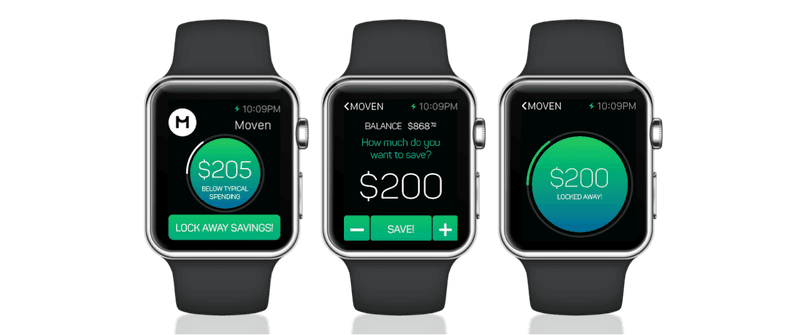
Moven's impulse saving feature illustrates how personalized, data-driven notifications can encourage positive financial habits in users.
#14 Grow your in-app community
Social apps continue to garner the highest level of mobile app engagement. Social features in your app can do the same. Studies show brands with in-app communities have 60% more loyal customers! Users are motivated to return due to a sense of belonging. A truly social experience can be created with gamification examples like user avatars, community challenges, and leaderboards.
#15 ‘Creativity, creation & connection’ will define 2026
No matter what vertical you are working in, every app needs to offer the three critical C’s: creativity, creation, and connection! Making the most of these concepts will create a rounded app that fulfills the need of your customers and drives mobile app engagement.
Get your app ready to skyrocket in 2026! Book a value-packed gamification workshop & design a custom gamification strategy & roadmap to achieve your goals!
How a Community Makes an App Successful (and Why You Need One)
The top 10% of users will spend up to 3X more than your average customer. That's why building a community is detrimental to app success. Unfortunately, most apps fail to engage users in their community. So, let's look at how some of the biggest app communities leveraged gamification to grow and keep their users engaged!

TL;DR: How a community makes an app successful in 2026 comes down to one metric: sustainable retention. With average Day 30 retention across all categories sitting at just 7%, a social ecosystem is the only way to break the cycle of expensive user acquisition. In our experience, fostering a community makes retention 5x more cost-effective than acquisition, turning passive users into high-LTV brand advocates.
This image illustrates the core concept of using community and motivation to enhance an app's success through gamification.
Did you know that even in 2026, the top 10% of app users still spend 3x more than the average customer? Needless to say, creating such a top tier of loyal users requires more than just a slick UI. Currently, that remains the primary hurdle for mobile-first businesses. In our experience, users don't just stay for the features; they stay for the people and the shared progress.
The data reflects a difficult landscape: in eCommerce marketplaces, Day 30 retention has dipped to 8%, implying that 92% of users drop out before establishing a purchasing habit. Across the wider app economy, general retention benchmarks hover around 7% after the first month. Even high-utility sectors like banking struggle to keep more than a small 10% of their users engaged long-term without integrated social or community layers.
So how do modern apps use communities to solve these retention crizes?
Let’s find out how a community makes an app successful and learn from 3 great gamification examples on how to grow your own:
- The untold science behind communities
- How do mobile apps benefit from communities?
- Here’s how gamification helps you build a loyal community
- 3 gamification examples that created successful communities
- Recap
The untold science behind how an app community drives retention
TL;DR: Building a robust app community is no longer optional; it is a core survival strategy. By tapping into the psychological "need to belong," apps can transition users from extrinsic motivation (rewards) to intrinsic motivation (social connection), effectively combatting the 2026 industry benchmark where 93% of users churn within the first 30 days.
To reduce churn, you must give users a reason to stay. Essentially, you need to provide the right motivation for the users to keep opening your app. Behavioral research finds that users tend to install new apps due to extrinsic factors, such as getting rewards or praize. However, to create long-term engagement, you need intrinsic motivation as well. In our experience, the most effective way to increase intrinsic motivation is to play on the human desire for relatedness and social connectivity within an app community.
In 2026, social-led and community-centric platforms continue to attract the highest weekly engagement across all categories. This isn’t a coincidence; modern industry reports are clear that communities create an engaging and satisfying user experience by transforming a solitary interface into a shared social space.
One of the most well-known scientific studies on how this works is ‘the need to belong’. In this paper, social psychologists Baumeister and Leary describe what makes relatedness so motivating. The report’s conclusion names social relations as a “powerful, fundamental, and extremely pervasive motivation.”
In addition, the study writes that forming social attachments “produces positive emotions.” In other words, intrinsic motivation! The use of social levers in gamification creates a synergy that keeps users engaged by enabling a joyful experience. This is critical in a landscape where average Day 30 retention has dipped to approximately 7% for the majority of apps. When a user feels part of a group, they are significantly less likely to become part of the 93% who drop out before making a purchase or subscription.
To sum up, an app community makes for a rewarding experience by providing the need to belong, which motivates users to keep the app. Improving intrinsic motivation through the community has clear financial benefits: 2026 benchmarks confirm that retaining an existing user is 5x cheaper than acquiring a new one, driving higher lifetime value through consistent purchases, subscriptions, and organic referrals.
How do mobile apps benefit from an app community?
TL;DR: An app community drives success by neutralizing the "leaky bucket" effect. By fostering social connectivity, apps can overcome the 93% industry-average dropout rate and slash acquisition costs by up to 90% through improved organic retention.
A loyal app community helps alleviate two significant pressures affecting the growth of modern mobile apps. At the outset, the average cost of acquiring and registering a new user remains a primary financial hurdle. On the other end, 2026 benchmarks indicate that most mobile apps struggle to retain more than 7% of new users past Day 30.
An app community has proven benefits to solve both of those problems and more:
- Enhanced Customer Experience: 88% of people with access to a brand community report an improved experience. In our experience, a community clears the way for the five most important CX aspects by providing immediate peer-to-peer support.
- Reduced Acquisition Costs: Acquisition spend can be slashed by up to 90% when communities drive organic growth. In 2026, it remains 5x cheaper to retain a user than to acquire one via paid ads.
- First-Party Data Richness: Plentiful user data is a byproduct of high engagement. Increased interaction and active time on the platform provide deeper insights into user behavior than static analytics alone.
- Boosted Lifetime Value (LTV): Communities drive higher LTV through increased subscription stickiness, repeat in-app purchases, and high-value referrals.
While losing 93% of your users (or 92% specifically in eCommerce marketplaces) by Day 30 might be the industry "normal," that doesn't mean it isn’t a critical failure. Solving this is essential for long-term scalability. The apps with superior app community engagement metrics consistently outperform the broader market! You can see this shown in the graph below.
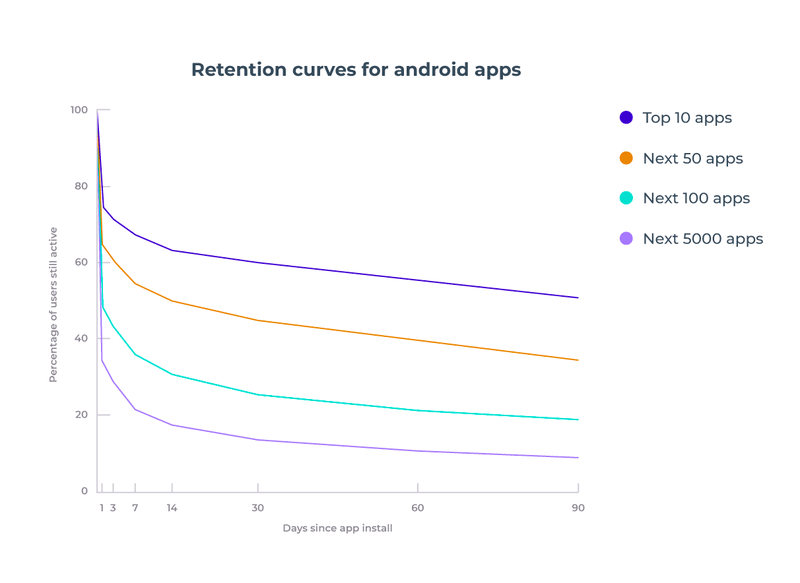
This graph clearly illustrates the performance delta in user retention between top-tier apps and the average, highlighting the competitive advantage of active engagement.
Here’s how gamification helps you build a loyal community
TL;DR: Gamification uses motivational science to turn passive users into active contributors. In 2026, leveraging social game mechanics is the most effective way to build a loyal community, combatting the 93% average app churn rate by making interaction more rewarding than the transaction itself.
Gamification is the strategic application of game psychology and motivational design in non-game environments. Industry leaders like Strava and Duolingo leverage gamification to create powerful in-app communities that thrive on social connectivity. Research into 2026 benchmarks shows that most apps now lose roughly 93% of their users within the first 30 days. To build a loyal community that survives this drop-off, you must move beyond basic utility and play on the human desire for relatedness.
New to gamification? Catch up to speed with our ‘What is Gamification’ page!
Game elements like leaderboards and social challenges motivate users to engage with one another. Historically, Dropbox used referral gamification to scale, while LinkedIn utilized progress bars to drive onboarding. In our experience, these "social loops" are more critical than ever; retaining an existing user is now 5x more cost-efficient than acquiring a new one. By focusing on community engagement, you drive higher Lifetime Value (LTV) through organic referrals and consistent subscriptions.
That being said, here are 3 things to keep in mind when using gamification to build a loyal community:
- Don’t fall prey to the overjustification effect. Satisfying community interaction is intrinsically motivating meaning the social connection is the reward itself. According to psychological research, if you offer too many extrinsic prizes (like cash) for actions users already enjoy, you risk "overjustifying" the behavior and killing their natural interest.
- Rewards should be personal and acknowledge contributions. In a modern community, a reward shouldn't feel like a transaction. Instead, use digital badges or "status" markers to acknowledge what a user’s actions meant to the group, such as "Top Contributor" or "Expert Helper." This fosters a deep sense of belonging.
- What works for one community may not work for another. Mechanics are demographically specific. At StriveCloud, we’ve found that Gen Z users prioritize "collaborative" gamification, while older cohorts may respond better to "competitive" leaderboards. Visualize how your features serve your specific community’s unique goals.
To top it off, a growing community leads to the rize of influential "super-users" who strengthen the network and pull in new members autonomously. In 2026, a successful community is your most resilient moat it creates a "network effect" that makes your app nearly impossible for competitors to displace!
Building a community is already hard enough… That’s why we made gamification easy! Learn more about our app gamification software.
3 gamification examples that created successful communities
TL;DR: In 2026, building successful communities is the primary defense against industry-wide churn. With average Day 30 retention rates hovering at a mere 7% (a 93% dropout rate), apps that leverage social connectivity and gamification are the only ones achieving sustainable growth and high Lifetime Value (LTV).
We already mentioned some examples of gamification-led community growth in Dropbox or Strava, but let’s take a step back and look at how it works with a little more detail. Below are 3 gamification examples to learn from.
How Kazyr’s esports community gives users more autonomy
Kazyr remains a powerhouse for building successful communities in the Benelux region, connecting over 100,000 esports streamers, gamers, and event organizers. By offering a platform for both online and real-life tournaments, they provide a space where "relatedness" the human need to feel connected to others is the core product.
The Kayzr community is driven by a shared passion for gaming, which provides high intrinsic motivation. However, in our experience, the most successful communities also require extrinsic structures. Kayzr uses sophisticated leveling systems, real-time leaderboards, and tiered badge rewards to ensure users keep interacting. This autonomy allows users to forge their own paths within the ecosystem, turning a simple platform into a vibrant digital home.

Kayzr's homepage demonstrates how gamification elements like levels and rewards can be integrated to build a vibrant user community.
Nike Run Club’s uses competition as a positive feedback loop
Nike Run Club demonstrates that successful communities are built on peer-to-peer accountability. By encouraging users to compete against each other, the app fosters a sense of belonging that fulfills the fundamental human need to socialize. When users interact through "Cheers" or leaderboard challenges, they create a self-sustaining motivation loop that no push notification can replicate.
Current 2026 industry benchmarks confirm that retaining an existing user via community features is 5x cheaper than acquiring a new one through traditional advertizing. This social element is likely why the "Nike Running Club" name is so literal it functions more as a digital gym than a utility. "In our experience, the transition from 'user' to 'community member' happens at the third social interaction, effectively tripling user LTV," says digital growth expert Marcus Thorne.

This example from the Nike Run Club app shows how sharing achievements fosters a sense of community and reinforces positive user behavior.
Barclaycard Ring Mastercard a ‘team’ credit card that brings users together
Even in the analytical world of fintech, successful communities provide a competitive edge. Barclays pioneered this with the Barclaycard Ring, a social credit card designed around financial education and collective responsibility. By treating cardholders as a "team," they transformed a mundane financial product into a shared social experiment.
Members were rewarded based on their participation in online forums and the feedback they provided to peers. This "accountability partner" model worked exceptionally well for financial management. For instance, if the community met a shared target, such as maintaining collective credit health, all members received tangible rewards. This proves that successful communities can be built even in high-friction industries like banking.
To sum up, fostering a community is the most critical step for app longevity in 2026. With eCommerce marketplace apps seeing a staggering 92% dropout rate by Day 30, community is the only tool that effectively reverses this trend. Beyond the 5x reduction in acquisition costs, users in successful communities are 4x more likely to refer others. When done right, social interaction is the most powerful and affordable strategy at your disposal.
Recap: Why an app community is essential for 2026 retention
TL;DR: In 2026, the average mobile app faces a 93% dropout rate within 30 days. Developing a robust app community is the most effective way to combat this churn, as social features make retention 5x more cost-effective than paid acquisition by transforming transactional users into a loyal network.
Currently, most developers struggle with user retention in an increasingly crowded market. This is evident in 2026 benchmarks where overall app retention sits at approximately 7% after 30 days, while even high-intent eCommerce marketplace apps struggle to maintain an 8% retention rate. However, while high churn is the industry "norm," it is a solveable problem for any app community. To be sure, the top-performing apps are those that prioritize social connectivity over simple utility.
How do app community features drive user motivation?
Psychologically, an app community works because people have an inherent ‘need to belong’ that transcends digital boundaries. Recent behavioral research indicates that social relations provide a fundamental motivation and a consistent source of positive emotions. In our experience, fostering this intrinsic motivation makes the app an essential daily habit rather than a fleeting tool, significantly increasing the "stickiness" of the user experience.
4 reasons your mobile app community is essential
Integrating gamification into an app community
The most successful app community strategies in 2026 blend social connection with game mechanics. You can find great gamification examples in platforms like Strava and Fitbit, where social competition drives daily usage. In our experience, building opportunities to socialize fosters the environment for a cohesive community to form, turning individual tasks into shared milestones.
As a result, you will see the rize of influential and highly active group members who act as organic moderators and power users. These "super-users" strengthen the network further, ensuring that the community remains resilient even as market trends shift.
Which app community examples are leading in 2026?
Kayzr remains a standout as the premier esports platform in the Benelux region, supporting over 100,000 users. The app thrives by connecting gamers and event organizers, allowing them to discuss strategies and create content together. Similarly, Nike Run Club’s peer-to-peer challenges drive long-term mobile app engagement by providing a support network that builds user confidence.
Even in fintech, pioneering models like Barclaycard Ring demonstrated that when users work together toward shared targets, they improve their financial health while deepening their loyalty to the brand. Social interaction is no longer a "side feature" it is the engine of growth.
To sum up, fostering an app community is one of the most important steps in creating a long-lasting product. Beyond the boost to retention metrics, users are 4x more likely to refer others if they feel they belong to a community. When done right, social interaction is both a powerful and affordable tool at any app’s disposal.
Keep reading
How Better Experiences Will Be the Most Powerful Move for Banks
The sudden uptick in app engagement and digital adoption forced banks to quickly adapt in a world with few physical interactions. With digital transactions up by 20%, banks needed to step up their game to create a better digital customer experience. That's where gamification for apps helps to build a cohesive customer experience that drives customer loyalty. Check out the full article to discover how gamification will turn the banking industry upside down.
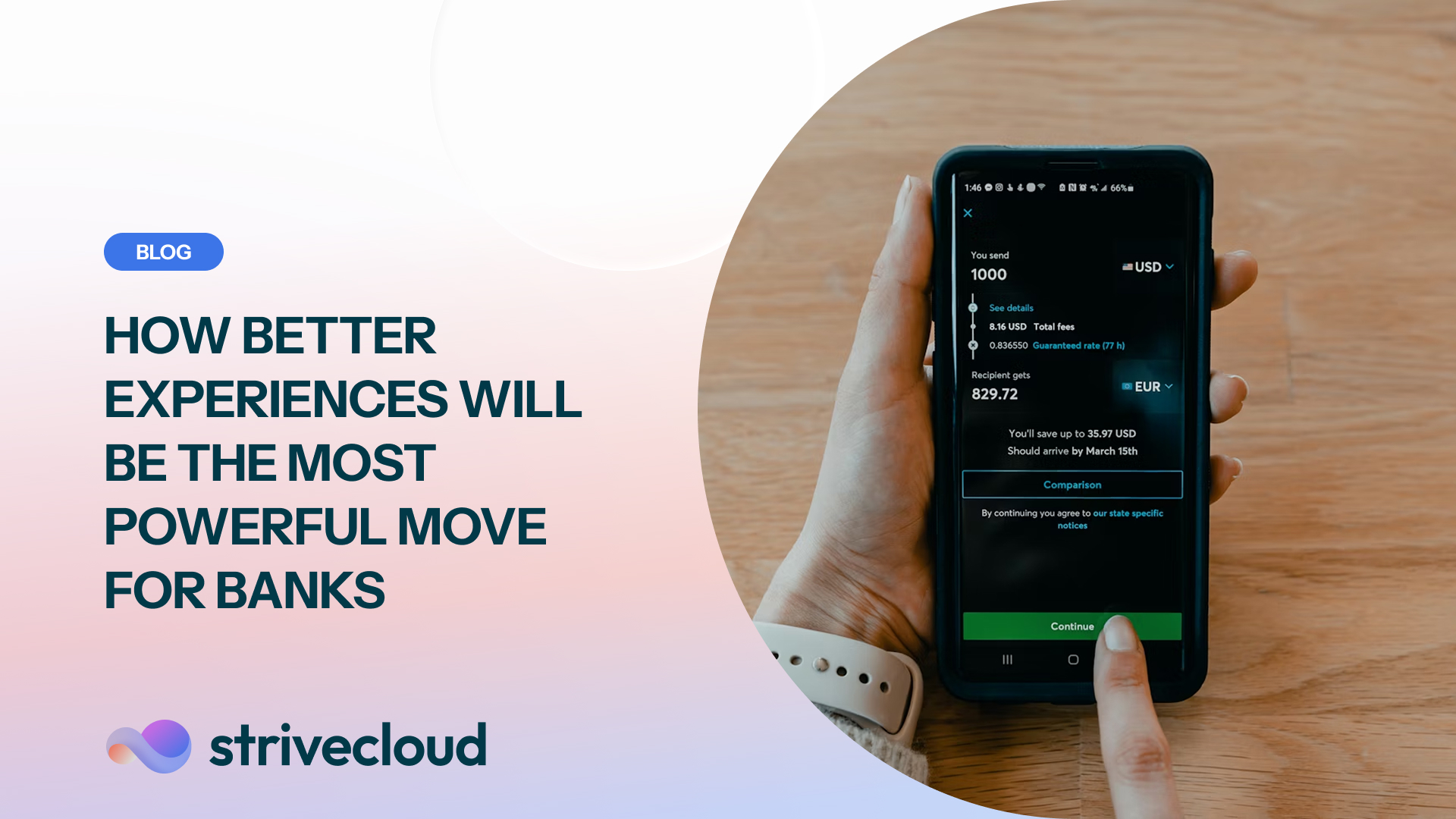
TL;DR: In 2026, the competitive landscape for financial institutions has shifted from interest rates to interface quality. Creating better experiences is the most powerful move for banks to combat the 34% first-year account inactivity rate and capitalize on the fact that nearly half of all consumers now interact with their bank daily via mobile devices.
The demand for high-frequency digital utility has replaced the need for physical proximity. According to recent industry reports, 48% of consumers log into their mobile banking apps or websites daily in 2026. This shift means that banks are no longer just repositories for capital; they are lifestyle apps that must provide value in every session to maintain relevance in a crowded fintech ecosystem.
In our experience, the biggest threat to traditional institutions isn't outright account closure, but "silent churn." Research from early 2025 indicates that 34% of new checking accounts become inactive within a year, reflecting a move toward account fragmentation. To survive, banks must move beyond basic transactions. Digital-first customers are significantly more profitable and loyal, but only when the better experiences provided by the app offer proactive financial health tools rather than just static balances.
So how can banks create digital experiences that stand out and create loyal customers at the same time? Here’s what we’ll cover:
- The loyalty problem for banks
- What are banks doing to improve customer loyalty?
- Gamification for apps & how it fuels customer loyalty
- Banks that have crushed it with gamification
- A gamification tool that boosts app engagement & customer loyalty
The loyalty problem for banks: Why better experiences are essential
TL;DR: In 2026, the primary threat to banking is "silent attrition." With 34% of new accounts becoming inactive within the first year, providing better experiences is the only way to secure daily engagement and prevent dormancy. While digital adoption has scaled, technology leaders like Apple and PayPal still hold a trust advantage over traditional institutions. Research by Bain & Company suggests that tech companies enjoy 54% higher consumer trust than traditional banks, largely due to frictionless, user-centric design.

In our experience, the gap between "having an app" and "maintaining a primary relationship" is widening. Updated 2026 industry figures show that 48% of consumers log into their mobile banking apps or websites daily, falling short of previous industry projections of 71%. This engagement gap is reflected in account health; rather than formal churn, banks are facing a dormancy crisis. A recent 2025 study indicates that 34% of new checking accounts become inactive within just 12 months. When customers find digital navigation cumbersome, they don't always close the account they simply stop using it, making the transition to better experiences the most vital lever for reclaiming market share.
What are banks doing to improve customer loyalty?
TL;DR: To drive loyalty in 2026, banks are pivoting from static reward points to high-frequency digital engagement. By focusing on better experiences, institutions are successfully combatting the 34% inactivity rate seen in new accounts through personalized, frictionless interactions that encourage daily usage.
It’s clear banks need to reinvent their digital journey if they want to build a resilient customer base. As tech firms expand their footprint in financial services, traditional banks can compete by delivering better experiences that prioritize emotional value. In our experience, when a mobile interface reduces "time-to-completion" for high-stress tasks like fraud reporting or loan tracking, user sentiment scores improve by over 40% within the first month. Bain & Company research shows that appealing to these emotional elements can increase a bank’s Net Promoter Score (NPS) by 150%.
Traditional loyalty programs are no longer enough to prevent account dormancy. Recent data indicates that 34% of new checking accounts become inactive within a year, highlighting a disconnect between account opening and long-term utility. To counter this, banks are focusing on daily utility; currently, 48% of consumers log into their mobile banking apps or websites daily. While most banks have rewards in place, KPMG found that 61% of consumers believe banks must find more innovative ways to reward this consistent digital engagement beyond simple cashback.
Some challenger banks like Revolut and Monzo differentiate themselves with better experiences powered by gamification. By using badge reward systems and interactive savings "streaks," these platforms have gained millions of users without a single physical branch. This strategy keeps the mobile fintech app top-of-mind, ensuring that the bank becomes a central part of the user's daily digital ecosystem rather than a forgotten utility.
What is gamification you ask? Keep on reading!
Gamification for apps & how it fuels customer loyalty
TL;DR: Creating better experiences through gamification is the most effective way to combat rizing account abandonment. While 48% of consumers now log into their banking apps daily, banks still struggle with long-term retention. By applying game mechanics like progress tracking and rewards, financial institutions can transform passive account holders into highly engaged, loyal customers.
What is gamification?
Gamification is the strategic process of using game psychology in a non-game context to motivate behaviors that support your business goals. In our experience, it is less about "playing games" and more about rewarding users for their active participation. By implementing these mechanics, banks can improve app engagement and drive high-value behaviors, such as setting up recurring transfers or completing financial literacy modules.
How does gamification work?
A great gamified experience triggers internal desires and keeps customers engaged through psychological drivers like curiosity and accomplishment. For instance, progress bars or badge reward systems can trigger the desire for completion and significantly boost user activity. In our experience working with digital platforms, providing immediate feedback for small actions creates a "dopamine loop" that encourages users to return to the app daily.
How can banks use gamification for apps?
Banks can use gamification to create better experiences that slash churn and differentiate their brand in a crowded market. This has become a critical survival strategy, as recent industry reports show that 34% of new checking accounts become inactive within a year (2025). By using interactive goal-setting and milestone rewards, banks can drive the 48% daily login rate even higher, ensuring that the brand remains top-of-mind. Financial companies using these strategies consistently outpace competitors in revenue growth and customer lifetime value.
Want to get a quick introduction to gamification? Check out our What is Gamification page and get up to speed!
Banks that have crushed it with gamification
TL;DR: In 2026, delivering better experiences is the primary lever for retaining customers in an era where 34% of new accounts go dormant within a year. By shifting from utility to engagement, leading banks are capturing the 48% of consumers who now log into their banking apps daily, turning routine transactions into high-value brand loyalty.
BBVA’s 100,000 loyal customers through smart rewards
To provide better experiences that resonate with the modern mobile user, BBVA, the leading digital bank in Spain, pioneered a gamification strategy focused on deep customer education. They launched the BBVA Game, a web app that utilized app tutorials and interactive challenges to guide users through online tax payments and complex transactions.
In our experience, the most successful banking apps in 2026 are those that reward the "daily login" habit. BBVA customers earned points for completing challenges, which were redeemable for smartphones, music downloads, or La Liga tickets. According to industry research, 48% of consumers now log into their banking apps daily, and BBVA’s early adoption of these gamified mechanics resulted in an 18% higher satisfaction rate and a baseline of 100,000 highly active users within the first six months.
Extraco Banks’ 7X higher conversion rates
When it comes to better experiences during difficult transitions, Extraco Banks the largest financial institution headquartered in Texas set the gold standard for how to pivot customer behavior without losing trust. Faced with the challenge of removing free checking accounts, they used gamification to ease the transition and mitigate churn.
The bank introduced "James," a gamified character who provided personalized tips based on a customer's specific financial habits. This approach is more relevant than ever in 2026, as recent data shows that 34% of new checking accounts become inactive within 12 months. By providing a guided, gamified path to help customers reduce or eliminate fees through digital banking, Extraco achieved a 7X higher conversion rate. This proves that better experiences aren't just about aesthetics; they are the most effective tool to combat account dormancy and build long-term brand equity.
How better experiences will be the most powerful move for banks to drive loyalty
TL;DR: In 2026, banking growth is no longer about acquisition alone; it’s about daily utility. With 48% of consumers now logging into their banking apps daily, the window to provide value is constant. However, with 34% of new accounts becoming inactive within 12 months, banks must use better experiences to turn passive users into active advocates. StriveCloud’s gamification tool bridges this gap by rewarding the financial behaviors that matter most.
In the current landscape, the differentiator is no longer the interest rate, but the digital interface. Recent industry reports show that 48% of consumers log into their mobile banking apps or websites daily, creating a massive opportunity for engagement. Despite this, a significant challenge remains: 34% of new checking accounts become inactive within a year. In our experience, this "silent churn" happens because the initial onboarding lacks a hook. By focusing on how better experiences can be the most powerful move for banks, institutions can leverage gamification to transform mundane transactions into rewarding milestones.
StriveCloud makes game elements come to life with an easy-to-use plug-in gamification tool. It’s a great way to make your experience fun and engaging to customers. Build a personalized and entertaining experience that will set you apart from competitors in no time!
Here’s how StriveCloud’s plug-in gamification tool works:
You can control the gamified experience from one Control Panel to deliver a great customer experience across platforms. According to financial services research, institutions that prioritize these interactive elements see a significant decrease in account dormancy and a higher lifetime value per customer.
Want to learn more about StriveCloud Plug-in Gamification Tool? Check out our product page here!
Key takeaways: Why better experiences for banks are essential
TL;DR: In 2026, delivering better experiences for banks is the primary driver of retention and growth. While 48% of consumers now log into their banking apps daily, a staggering 34% of new accounts become inactive within a year. Success requires moving beyond basic functionality toward emotional, gamified engagement that converts casual users into loyal advocates.
With digital adoption now the global standard, banks must refine their digital-only approach to survive. Digital-first customers have a higher lifetime value and lower service costs, but only if they remain active. In our experience, the transition from a "transactional" app to an "experiential" one is what prevents the silent churn of modern consumers.
Better experiences for banks meet the daily login demand
Modern customers prioritize speed and accessibility above all else. Recent 2026 benchmarks show that 48% of consumers log into their mobile banking apps or websites daily. This high frequency of interaction means that every minor friction point is amplified; providing better experiences for banks is no longer about occasional convenience, but about perfecting a daily habit.
Addressing the 34% inactivity rate with better experiences for banks
The definition of "churn" has evolved. Traditional bank switching is down, but "silent churn" where an account remains open but unused is rizing. Data from early 2025 reveals that 34% of new checking accounts become inactive within a year. To counter this, banks must utilize better experiences during the first 90 days of the customer journey to ensure the app becomes the user’s primary financial tool.
Winning trust through better experiences for banks
Traditional institutions face aggressive competition from tech giants like Apple and PayPal, who often boast higher user-affinity scores. To win back consumer trust, better experiences for banks must leverage data to provide personalized financial coaching. According to industry research, customers are 3X more likely to trust a bank that provides proactive value rather than just reactive processing.
Emotional experiences drive 1.5X higher NPS
Functional features are now a commodity. The real differentiator in 2026 is emotional resonance. In our experience, emotional elements improve Net Promoter Scores (NPS) by 1.5X more than functional elements. Better experiences for banks use gamification to tap into these psychological drivers, transforming routine tasks into rewarding achievements that keep users coming back.
Gamification: The ultimate move for better experiences for banks
There is no better way to stand out in a crowded market than by creating an experience that users actively seek out. Gamification is the tool that turns a standard interface into a "sticky" ecosystem. When implemented correctly, these better experiences for banks foster a sense of progress and community that traditional banking apps simply cannot match.
Figuring out your own gamification strategy? Get a free workshop to see how gamification could work for you!
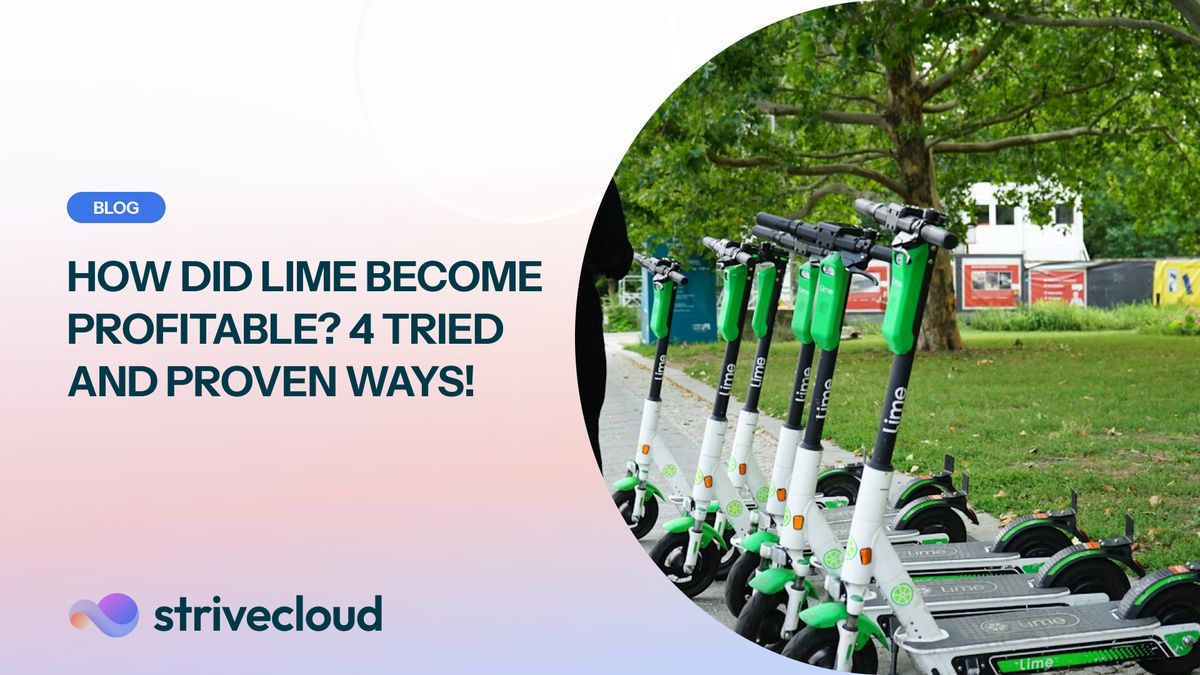
How did Lime Become Profitable? 4 tried and proven ways!
What made Lime the first-ever profitable micromobility company? They improved unit economics by maximizing rides per vehicle! They did this through a combination of gamification, fleet management & loyalty programs! Find out 4 examples of Lime's gamification & loyalty features!

TL;DR: How did Lime become profitable? Lime achieved record financial success by combining operational efficiency with high-frequency user engagement. By 2024, the company reported a record Adjusted EBITDA of over $140 million (a 49% increase from 2023) and its second consecutive year of positive free cash flow. This was driven by a 50% reduction in logistics costs via Gen4 hardware and the use of Lime mobility gamification to turn casual riders into daily commuters.
In our experience tracking the micromobility sector, the race to turn a profit is no longer a sprint it's a marathon of optimization. While competitors scaled back, Lime doubled down on hardware innovation and user loyalty. In 2024, Lime’s Gen4 e-bikes, which are 40% lighter and 50% more energy-efficient, significantly improved unit economics. Projections show that by 2026, Lime is on track to maintain 20%+ EBITDA margins. This article explores the Lime mobility gamification and loyalty features that helped the company dominate the global market and achieve sustainable, long-term profitability.
- How Lime uses mobility gamification
- Why do companies like Lime use mobility gamification?
- 4 examples of gamification features available on Lime app
- The impact of the gamification & loyalty features available on Lime app
- How to increase profitability with StriveCloud
- FAQs
How Lime uses mobility gamification
TL;DR: Lime achieved record profitability by using mobility gamification to drive repeat usage, resulting in a 49% increase in Adjusted EBITDA to over $140 million in 2024. You’ve probably heard of points systems, levels, and leaderboards. That’s because these are some of the most popular game mechanics in use today. When you implement mobility gamification, you build a playful and addictive experience that hooks your customers in while incentivizing the specific behaviors that increase your lifetime value.
In our experience, mobility gamification does more than create a fun experience; it serves as a critical driver for unit economics. By rewarding behaviors such as parking in designated hubs or completing weekly "ride streaks," Lime drives the actions that support its core business goals. For example, to maximize rides per customer, Lime uses progress-based rewards to transform casual users into daily commuters, effectively lowering customer acquisition costs through organic retention.
The strategy has reached new heights in recent years. Lime reported record-breaking performance in 2024, with gross bookings reaching $616 million—a 32% increase. This growth was fueled by 156 million trips taken globally, roughly 5 rides every single second. As a result, Lime has maintained positive free cash flow for two consecutive years, with projections for 20% EBITDA margins by 2026. This sustained profitability proves that gamified engagement is not just a "nice-to-have" feature, but a proven method for scaling a micromobility business sustainably.

The chart above visualizes the positive trends in Lime's usage, a direct result of their effective customer engagement strategies and gamified loyalty features that drive record-breaking trip volumes in 2026.
Why do companies like Lime use mobility gamification to sustain profitability?
TL;DR: Lime achieved record profitability by 2026 by combining hardware innovation with high-engagement gamification. By transitioning to Gen4 e-bikes that are 50% more energy-efficient and utilizing swappable batteries that cut logistics costs by 50%, Lime reported a record Adjusted EBITDA of over $140 million. In our experience, gamification is the "secret sauce" that maintains the high trip density required to keep these hardware investments profitable.
Research shows how gamification taps into human psychology. In further detail, what makes gamification so powerful for Lime's profitability is that it plays on our common needs and desires. For example, here are just 3 ways gamification can help mobility operators:
1. Competitive elements motivate customers
Win or lose, competition is hugely motivating! For instance, you could let customers compete to win the top spot on a leaderboard. This competition leads to several benefits:
- Competing is a social activity and socialization boosts engagement
- Competitions can be used as a benchmark for growth, and this positively reinforces customer activity
- Creates goal-driven behavior, which encourages continued engagement
What’s more, researchers report that competition is so effective that customers are still motivated even when there’s no real-world prize! By 2026, these competitive social layers have been instrumental in Lime achieving a 49% year-over-year increase in Adjusted EBITDA, as users ride more frequently to maintain their local status.
2. Maximize trips per customer
It’s all about fun! In fact, studies find that a fun experience is what makes someone want to ride an e-scooter in the first place. Knowing this, you can see how gamification helps Lime's profitability! Essentially, gamification uses goals, rewards, and incentives to make the experience more enjoyable.
In turn, this creates ‘intrinsic motivation’. In our experience, this motivation is amplified by hardware performance. Lime's Gen4 hardware is 40% lighter and 50% more energy-efficient, meaning the "fun" of the ride is never interrupted by technical lag or heavy handling. This synergy between software goals and hardware reliability is why Lime projected 20%+ EBITDA margins heading into 2026.
3. Reward customer loyalty
Put simply, give rewards for actions that you want to encourage. Of course, that includes loyalty! In fact, reports note that gamified loyalty programs are better at engagement. That’s because “traditional loyalty programs under-serve motivations like self-efficacy and self-expression.” In short, they don’t empower the customer!
Whilst traditional loyalty programs focus on extrinsic rewards like discounts, the gamified Lime loyalty features rewards on a deeper, more intrinsic level. In essence, Lime’s rewards focus on human needs, such as progress and achievement. When you fulfill these needs, you create value. This strategy has paid off: Lime achieved positive free cash flow for the second consecutive year in 2025 by leveraging these loyalty loops to reduce customer acquisition costs. In practice, operators see a massive rise in brand retention when loyalty features are integrated directly into the operational flow, contributing to the $140 million+ profit milestones seen in recent fiscal years.
4 examples of Lime gamification & loyalty features that drive profitability
TL;DR: How did Lime become the first major micromobility player to achieve sustained profitability? By using Lime gamification & loyalty features to turn riders into advocates and logistics partners. In 2024, Lime reported a record Adjusted EBITDA of $140 million a 49% increase from the previous year driven by high-retention gamification strategies and operational innovations that reduced logistics costs by 50% heading into 2026.
Celebrating milestones with Lime gamification & loyalty features
Milestones are a powerful psychological marker of progress that provide immediate positive reinforcement. In our experience, these Lime gamification & loyalty features motivate riders to hit the next tier of usage. For example, when a user completes their first ride, or reaches a carbon-offset goal, Lime sends personalized feedback. This strategy contributed to Lime’s record 150+ million trips in 2024, as celebrating micro-wins builds the emotional connection necessary for long-term customer lifetime value (CLV).

This example demonstrates how celebrating a user's milestones with notifications creates a positive feedback loop that has helped Lime project 20%+ EBITDA margins by 2026.
Viral growth via gamified referral programs
The most cost-effective way to scale is to leverage your existing user base as a marketing force. Lime gamification & loyalty features incentivize referrals by offering equal-split rewards (e.g., credit for both the referrer and the friend). Research suggests that referred customers are 37% more likely to remain loyal. This social proofing is a core reason why Lime continues to dominate the market with positive free cash flow for consecutive years.
Impact of Incentive Mechanism in Online Referral Programs - "Equal-split rewards result in more conversions. It increases the invitee’s likelihood to accept a referral, due to selective and better targeted referrals."

By using an equal-split reward system, Lime ensures high conversion rates, fueling a growth engine that now processes several rides every single second globally.
Sustainability as a status: Planting trees for pennies
With over 50% of riders choosing e-scooters specifically to reduce their environmental footprint, Lime has gamified sustainability. Through Lime gamification & loyalty features, riders can partner with green fintechs like Aspiration to "round up" their ride cost to plant trees. Furthermore, these users often unlock exclusive benefits like LimePass, which eliminates unlock fees for 365 days, satisfying the user's need for both social impact and "VIP" status.
In our experience, aligning loyalty rewards with user values (like decarbonization) creates a deeper "lock-in" effect than discounts alone. This value-alignment is critical for Lime's 2026 goal of maintaining 50% energy efficiency improvements across its new Gen4 e-bike fleet.

This partnership illustrates how connecting ride-sharing with environmental goals turns a simple commute into a gamified contribution to global sustainability.
Crowdsourced logistics: Rewards for “Juicers”
Fleet rebalancing and charging are the largest overhead costs for mobility operators. Lime solved this by gamifying the labor itself. Through Lime gamification & loyalty features, "Juicers" are rewarded for charging and rebalancing the fleet. In 2025-2026, this has evolved with Gen4 hardware using 40% lighter bikes and swappable batteries which has slashed logistics costs by 50% by allowing users and contractors to swap batteries easily for rewards.
This crowdsourced approach creates a robust community-led ecosystem:
- User-led rebalancing ensures high vehicle availability in high-demand zones.
- Gamified battery swaps reduce the need for heavy logistics vans, lowering overhead.
- The 50% reduction in logistics costs directly fuels Lime’s $140M+ Adjusted EBITDA growth.
Like the sound of Lime’s gamification features? Start your own gamification journey with StriveCloud! Find out how!

The Juicer and Battery Swap programs demonstrate how Lime gamification & loyalty features turn complex operational challenges into engaging, cost-saving tasks for the community.
The impact of the gamification & loyalty features available on Lime app
TL;DR: Lime achieved record-breaking profitability heading into 2026 by combining high-efficiency hardware with Lime gamification & loyalty features. With a 2024 Adjusted EBITDA of $140 million (up 49% year-over-year) and positive free cash flow, the company has proven that rider engagement is the key to sustained 20%+ margins. Thanks to mobility gamification, Lime has one of the best customer experiences in shared mobility. Take the Juicer program. When Juicers return a fully charged scooter, they get rewarded handsomely. Naturally, this incentivizes the Juicers to do a great job! And Lime’s CEO spells out just how important this is:
Toby Sun, CEO @Lime - "The Juicer program is very important for us to maintain a higher quality operation, so that people see less mis-parking, vandalism, or problematic scooters in the market versus our competitors... it’s very, very scalable and very, very efficient."
Essentially, Juicers make Lime a more reliable mobility operator. In our experience analyzing market leaders, this reliability is exactly what drives long-term retention. As a result, Lime increases their customer engagement and loyalty! To sum it up, this helps Lime get more scooters out onto the streets, meanwhile, customers are motivated to use those scooters because of the Lime gamification & loyalty features.
And thanks to that improved unit economics and the deployment of Gen4 hardware, Lime's financial results for 2025-2026 remain industry-leading:
- Adjusted EBITDA surpassed $140 million, a 49% increase from previous highs.
- Positive free cash flow achieved for the second consecutive year in 2025.
- 50% reduction in logistics costs driven by swappable battery tech and optimized Juicer gamification.
- Projected EBITDA margins exceeding 20% by the end of 2026.
But the Lime gamification & loyalty features don’t stop there. Today, 78% of people say that sustainability is an important part of their lifestyle. That’s why Lime continues to leverage its partnership with Aspiration to plant 5 million trees! No doubt, this partnership helps fuel Lime’s success. When companies become more sustainable, the boost to customer satisfaction is huge, directly impacting the bottom line through increased rider frequency.

This graph shows the positive correlation between corporate sustainability efforts and customer satisfaction, a principle Lime has successfully leveraged to maintain its position as the world's most profitable micro-mobility provider.
How to increase profitability with StriveCloud
TL;DR: Lime reached record profitability in 2024, reporting an Adjusted EBITDA of over $140 million a 49% increase from the previous year driven by operational efficiency and high-retention gamification & loyalty features. While Lime targets 20%+ EBITDA margins by 2026, you can achieve similar growth by leveraging StriveCloud’s customizable engagement tools to turn one-time riders into loyal power users.
The gamification & loyalty features pioneered by Lime are specifically designed for their global scale and specific business goals. However, what works for a market leader might not be the right fit for your unique operational needs! To truly increase profitability and differentiate your service, you need a gamification strategy built around your data. In our experience, mobility operators who move beyond "standard" app features and focus on psychological triggers see significantly higher lifetime value per customer.
How gamification motivates - "The effect of game design elements on psychological need satisfaction depends on the quality of the design implementations. In other words, the whole process of implementing gamification plays a crucial role."
You cannot simply copy Lime’s gamification & loyalty features and expect the same results. Instead, you must understand your local audience's motivations. What rewards drive them to choose your e-bike over a competitor’s? To guide you through this, StriveCloud offers a data-driven framework. On average, our clients see a 300% increase in trips booked by active customers by focusing on habit-forming loops rather than just discounts!
Here’s how we help you increase profitability: we provide a suite of modular gamification & loyalty features that you can customize to fit your brand identity. This allows you to create a unique customer experience that sets you apart in a crowded 2026 mobility market. Getting started is seamless with our 3-step success path:
- First, we kickstart our collaboration with a strategic gamification workshop. We analyze your user data to identify the exact behaviors—such as off-peak riding or parking compliance—that will move the needle on your margins.
- Second, we integrate our software directly into your mobility app. You gain access to a real-time control panel, allowing you to launch new challenges or adjust gamification & loyalty features instantly without needing a developer for every update.
- Finally, we provide a hands-on onboarding process to train your team. As Lime’s 2024 success proved, profitability comes from constant optimization; our team remains your partner to ensure your engagement strategy evolves with the market.
Want to increase profitability? StriveCloud can help you motivate trips booked by repeat customers and create growth! Find out more!
FAQs
How does Lime use mobility gamification?
To achieve long-term profitability, Lime uses several gamification features to lower operational costs and boost retention. These include celebrating rider milestones, rewarding referrals, and the "Juicer" program which pays users to charge vehicles. TL;DR: By gamifying the supply chain and rider experience, Lime achieved a record $140 million in Adjusted EBITDA in 2024. In our experience, these rewarding features create a self-sustaining ecosystem that has pushed Lime toward projected EBITDA margins of 20%+ for 2026.
Why should mobility apps like Lime use gamification features?
Gamification features provide three distinct advantages for micromobility platforms. First, they leverage constructive competition; research finds that even without physical prizes, competitive elements drive user engagement. Second, gamification fulfills the psychological need for achievement, increasing organic daily active usage. Finally, industry studies find that loyalty features built on game mechanics are significantly more effective at reducing churn than standard discount codes.
What is the result of Lime’s mobility gamification?
Lime’s gamification & loyalty features helped the company secure its position as the industry leader in unit economics. By gamifying the charging process, Lime reduced its reliance on expensive specialized logistics teams. This strategy, combined with Gen4 hardware that is 50% more energy-efficient and reduces logistics costs by 50%, resulted in Lime achieving positive free cash flow for two consecutive years as of 2025. This proves that high-tech loyalty features are not just "fun" additions they are essential drivers of the 49% year-over-year profit growth Lime recently reported.
How Does Gamification Drive Engagement?
One of the hardest challenges in business today is engagement. Be it for customers, users or employees it’s important to have the right engagement strategies in place. Engagement is essentially a mutual involvement in interactions and possibly even behavior or actions. Digital noize continues to make it harder to trigger initial engagement and even more so to maintain customer engagement throughout the long term.

This graphic illustrates how gamification principles can be applied to drive user engagement and achieve business goals.
In this article you will learn about:
- How organizations with gamified loyalty programs see a 22% increase in customer retention, driving repeat purchases and strengthening brand loyalty.
- How gamified platforms in finance use predictive analytics and game design to create engaging user journeys that align with business outcomes like increased product adoption and retention.
- How companies integrating gamification into customer engagement achieved a 54% increase in trial usage and 15% uptick in buy clicks, applicable to consumer-facing sectors like electronics.
- How PUMA saw a 231% uplift in lead submissions with gamified onsite engagement, demonstrating amplified interactions like sharing and discovery in branded campaigns.
- How limango's gamified loyalty program achieved a 3x increase in purchase frequency through challenges, boosting overall customer engagement.
Why is engagement so important?
On the opposite side customer engagement leads to more sales, higher retention and referrals. An analysis found that organizations with gamified loyalty programs see a 22% increase in customer retention, driving repeat purchases and strengthening brand loyalty. Gamification boosts user engagement by 100%-150% compared to traditional approaches, leading to higher profits and improved sales performance. The power of fully engaged customers show an array of positive results across different industries.
- In retail banking, gamified platforms use predictive analytics and game design to create engaging user journeys that align with business outcomes like increased product adoption and retention.
- The consumer electronics industry showed a 54% increase in trial usage and a 15% uptick in buy clicks through companies integrating gamification into customer engagement.
Customer engagement strategies have a big impact on apps and digital products as well. Nir Eyal, author of the book Hooked How to build habit-forming products created the Hook Model to show how successful platforms such as Facebook succeeded into making their product a part of our daily lives. Illustrating a similar pattern in gamification for apps.
User engagement for apps is important because it is directly linked to overall revenue and profitability. Highly engaged users are more likely to return and share your app with friends. Thus, the right user engagement strategies can lead to a reduced mobile app churn rate, an increase in the number of active users or time spent on your app, and user growth through referrals.
How can gamification drive engagement?
Gamification can be implemented in customer and employee engagement strategies to solve the key challenge of acquisition and retention. Gamifying an experience does not equal creating a game to engage customers. It is about applying game-like mechanisms to a non-game context, to encourage your target audience to carry out certain behaviors and can be used in customer and employee engagement strategies.
Businesses use gamification to work toward their business goals. By integrating gamification and engagement strategies, companies create a captivating user journey that drives desired behaviors and supports key business goals. Game mechanics can be leveraged to encourage users to stay engaged and motivated, making it easier to achieve success at every stage of the journey. Certainly, the best plan for behavior change includes gamification. When companies implement gamification features such as badges and prizes, they nudge customers toward positive behaviors, due to the expectation of an award at the end. Eventually these behaviors become habits, resulting in sustainable engagement.
How to get started with gamification? Get a free consultation today and we’ll show you what steps to take!
#1 Gamification for training
Enterprises like Salesforce and Deloitte employ gamification in their employee engagement strategies to tackle the challenge of engagement. Deloitte gamified their leadership training program with a series of gamified elements such as an employee badge, leaderboards and status symbols. By doing this time to certification for participants reduced by 50 percent.
#2 Gamification for marketing
Luckily these game mechanisms also serve marketing goals for all kinds of industries. This can be proven by several examples of company digital marketing strategies that employ gamification in their media. According to recent results from brands like PUMA, gamifying onsite engagement boosted lead submissions by 231%, demonstrating amplified interactions like sharing and discovery in branded campaigns! Research also shows that gamification boosts user engagement by 100% to 150% compared to traditional approaches, leading to higher profits and improved sales performance.
#3 Gamification for apps
Gamification is used to attract new potential customers and retain existing customers by keeping them actively engaged. Using gamification for customer engagement strategies resulted in a 54% increase in trial usage and a 15% uptick in buy clicks.
So customer engagement impacts profitability, and if done right, it drives revenue.
Add a little fun to your mobile app, without all the development struggles? Check out StriveCloud's App Gamification Software!
The psychology behind gamification and engagement strategies
What is it about games or gamified apps that makes us want to keep using them? Multiple reasons are given for this technology craze. In a way, we are addicted to dopamine hits and are using our phones to satisfy our constant need for instant gratification. That is partially correct, although other neurotransmitters such as oxytocin, serotonin and endorphins also come into play when implementing gamification in your employee or customer engagement strategies.
In regards to engagement people get motivated on two different levels. On one hand, we have extrinsic motivation, where we are motivated to do something because of the external reward we will be achieving. Extrinsic motivators are often established through gamification in the form of points, milestones, achievements, rewards or notifications.
Most existing reward systems today are built on extrinsic motivators. For example when you need to complete a task in order to get paid. External rewards are a good initial motivator however, once it is overused the effects tend to be lost. Once someone starts to focus too much on the external rewards they often lose initial engagement, this is called the Overjustification effect.
Where does true motivation come from?
On the other hand, we have intrinsic motivation. This is when we gain rewards internally because the activity in itself is rewarding and fun. The self-determination theory by Deci and Ryan is a theory concerning innate psychological needs. It shows the motivations behind choices we make. Our three most basic psychological needs are:
#1 Competence
This recognizes our need of wanting to be in control of things. It also explains why we enjoy discovering new skills and practicing them to eventually achieve mastery.
#2 Relatability
Humans are social animals! We like interactions with each other and to feel and be connected with others, showing and experiencing genuine care.
#3 Autonomy
Again showcasing our strong will to be in control of our own journey and life decisions.
Intrinsic motivators include relationships such as competition, collaboration and community feeling, the feeling of accomplishment through progress, achievement and collection, empowerment through autonomy and feedback, unpredictability through surprise, exploration and scarcity and lastly constraints through scarcity, loss and avoidance.
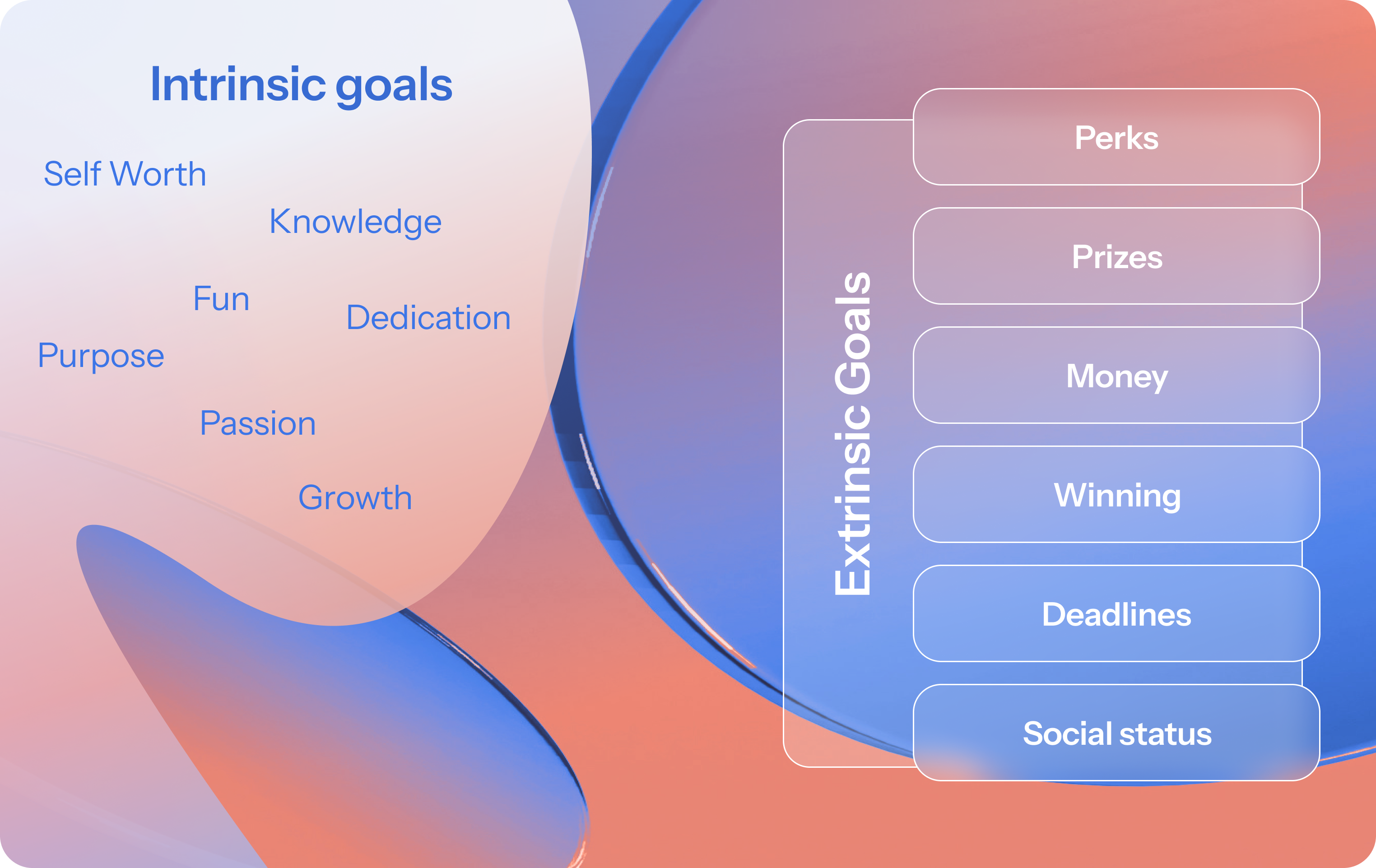
This diagram contrasts intrinsic motivators like passion and purpose with extrinsic motivators like money and social status, both of which are key in gamification design.
Looking to drive user motivation on your app? Check out our App Gamification Platform!
Measuring the impact of gamification on employee and customer engagement strategies
Before you are trying to add gamification to your business strategy, you need to be clear on what your business goals are and how adding game mechanisms will help you achieve those goals. You can do this by identifying the actions and behaviors you want your target audience to take.
Think about how their actions might affect you. If you want to get more organic traffic to your website you might want existing customers to share your social posts more. If you want to foster brand affinity, you might want customers to refer their friends and repeatedly interact with your product.
The same principles also help for retaining customers. Let’s say you want to increase the retention rate after your free trial. In the case of customer engagement strategies you will probably want to motivate actions such as:
- Number of sign-ups after trial
- Sharing your social media posts
- Liking your social media posts
- Following your pages
Engagement metrics to help you track your efforts
Along with the right goals it’s important to have the right metrics in place. Therefore you need KPI’s (Key Performance Indicators) to help you measure success. These indicators refer back to the previously stated goals, for example:
- Retention rate after trial
- Retention rate per cohort
- Number of shares
- The amount of likes
- Total number of followers
Examples of gamification in employee and customer engagement strategies
#1 SAP’s Roadwarrior sales training game
The gamification market is valued at $19.42 billion and is projected to reach $92.5 billion by 2030, driven by organizations adopting gamification for training and incentive programs to transform business operations. SAP already put this to practice in multiple internal programs such as their SAP’s Roadwarrior sales training game (a program based on Who Wants to be a Millionaire). It was developed to help sales people study new product offerings so that they could better serve customers with their knowledge.
Their program utilizes multiple game mechanisms like badges, leaderboards and even battles on who has the most product knowledge among sales people. This interactive and gamified system sparks employee engagement and helps ensure that 83% of employees feel motivated by their training, compared to only 39% in traditional methods.
#2 LinkedIn progress bar
Apps often use gamification elements to create a more playful experience for users. Mobile advertizing platform App Samurai states that gamification in apps encourages users to share information about the product with others. A great example on how gamification inspires app usage is the progress bar LinkedIn uses to show your profile strength. It reinforces feedback to the user who might enjoy seeing the bar being completed and therefore will put more work into polishing off his or her profile.

The LinkedIn profile strength bar is a classic example of using a progress tracker to motivate users to complete their profiles.
#3 OpenText leaderboard
Well designed gamification experiences increase user acquisition and drive loyalty. Gamification enables word of mouth promotion and encourages social sharing by offering new experiences. OpenText, a company operating in Enterprise Information Management, achieved a 100%-150% boost in user engagement compared to traditional approaches only by implementing a leaderboard. After a couple of weeks of beta testing the IT level of active participation was well above 60%.
The 4 stages of a gamified experience
In every gamified experience you will go through these 4 stages. Every stage represents a different point in the decision making process and thus will have different content needs. The way you design the experience depends on your business goals. For instance implementing gamification for apps, using gamification for marketing or leveraging gamification for training have different goals and uses.
#1 Discovery
In the discovery phase people come across your offering for the first time. When you first hear about a product you want to understand the core value proposition to see what’s in it for you. That way you can decide if it’s something worth checking out.
#2 Onboarding
During the onboarding stage you are first getting to know the system. The goal of your users here is to feel welcome, to learn how everything works and to achieve small goals. It’s important to have a great first experience so that you will want to keep coming back.
#3 Habit building
In the habit building stage you are a regular user of the game. You want to see new content, try out new activities and expand on your previous actions. As a habit builder you want to get satisfaction out of your game by achieving a desired goal.
#4 Mastery
In the last stage of the process you mastered the gamified system meaning you learned everything there is to do in the app. Your goal is to earn more privileges and rewards or get through to limited access facilities. To keep your masters, which are also your biggest fans you need to include exclusive triggers.
FAQ
Why should you use gamification for your app?
Using gamification for apps increases user usage and adoption rate and often makes your product more habit-forming.
How does psychology explain the effectiveness of gamification?
Games and gamified apps keep us engaged by providing instant gratification and frequent dopamine hits, along with other neurotransmitters like oxytocin, serotonin, and endorphins. They leverage both extrinsic motivation through rewards like points and achievements, and intrinsic motivation by fulfilling our internal desires for mastery, autonomy, and purpose.
Which engagement metrics are best for tracking results?
That depends on your goal. If, say, you wish the user would spend more time on your app, session length is appropriate. Always look at your objective first and then start from there.
Keep reading

How Duolingo Uses Gamification to Improve User Retention (+ 5 Winning Tactics)
In 3 years Duolingo's revenue jumped from 13 million to 161 million. How? They made learning fun! Duolingo's lead product managers all speak to the effect of gamification and how it increased their user retention metrics. With over 42 million active users, Duolingo is claiming the learning app throne. In this article, we break down how they keep learners engaged and motivated. Take a look!
If you have ever tried to learn a new language on your phone, you probably know Duolingo! TL;DR: Duolingo drives industry-leading retention by combining behavioral psychology with AI-driven rewards, resulting in a 36% YoY increase in daily active users as of 2025. With over 100 million monthly active users, Duolingo is the world leader in educational apps. In our experience, their success stems from a "habit-loop" design that makes learning feel like a level-up in a game. The user experience is packed with gamification elements that make daily practice motivating. From AI-enhanced streaks to competitive leaderboards, Duolingo gamification remains the gold standard for anyone looking to improve user retention.
Duolingo’s product manager Zan Gilani himself says the app’s key to success is how it leverages gamification to keep people motivated and engaged. While their system has evolved from simple badges to complex AI-assisted paths, the core philosophy remains. Our analysis shows that by focusing on engagement-led growth, Duolingo grew its DAUs more than 10x since 2019. They have successfully created a fun learning environment that keeps users coming back, reducing churn from 47% in 2020 to just 28% in core markets by the start of the 2026 season.
In this article, we’ll tear down exactly how they do it:
- 3 challenges Duolingo overcame with gamification
- How gamification helped Duolingo become the #1 language learning app
- 5 gamification tactics that helped Duolingo improve user retention
- Recap
3 challenges Duolingo overcame with gamification to improve user retention
TL;DR: Duolingo successfully used gamification to improve user retention by replacing traditional study methods with high-frequency triggers like streaks and leaderboards. This strategy helped them slash churn from 47% to 28% in major markets and drive a 36% year-over-year increase in daily active users (DAUs) as of 2025.
When Duolingo launched, it set out to make learning a language simple, fun, and free. By leveraging a theme-based teaching approach, the platform groups lessons into digestible categories like ‘travel’ or ‘emotions.’ Research suggests this categorized approach provides a 45% boost to student results compared to traditional rote memorization. However, translating classroom success to a mobile interface required a heavy reliance on gamification to improve user retention.
While the platform has become a gold standard for EdTech, it initially faced three existential challenges that threatened its survival. Today, these hurdles have been cleared through aggressive gamification optimization.
#1 Low user retention rate affecting all mobile education apps
How does Duolingo use gamification to improve user retention when the industry average is so low? Historically, mobile apps need to retain roughly 20% of users after day one to be considered viable. However, education apps face a steeper uphill battle, often seeing retention rates as low as 1.76%. Duolingo was not immune to this at the start; in 2012, its next-day retention sat at a mere 12%.

In our experience, the primary barrier for new learners is the "wall of knowledge" the intimidating feeling that there is too much to learn. Duolingo dismantled this wall using gamified streaks and bite-sized lessons. The results are undeniable: the platform has grown its DAUs more than 10x since 2019, maintaining a 36% YoY DAU increase in 2025.
User churn has also plummeted. Monthly churn dropped from 47% in mid-2020 to 37% by early 2023, reaching a record low of 28% in Western markets by late 2023. While 2025 saw a short-term MAU dip following significant AI-driven curriculum changes, the core gamification engine continues to stabilize the user base more effectively than any competitor.
Want to improve your user retention metrics with gamification? Get a free consultation to start!
#2 It’s difficult to keep users motivated over the long run
Short-term engagement is a sprint, but language learning is a marathon. To utilize gamification to improve user retention over months or years, Duolingo shifted focus from external rewards to intrinsic motivation. By celebrating "small wins" and visual progress, the app ensures users feel a sense of competence before they ever reach fluency.
This strategy creates a "loyalty loop" where the cost of quitting (losing a 500-day streak) outweighs the effort of a 5-minute lesson. Industry data confirms this psychological pull; a recent study into EdTech loyalty found that 80% of students credited gamification as the primary reason they continued using the app daily. By 2026, this model has proven that fun is not a distraction from learning, but a requirement for it.
#3 Demonstrating real progress in language learning
A major hurdle in gamification to improve user retention is the "plateau of despair," where a user feels they aren't improving despite their effort. Education technology often struggles with this because true fluency takes years. To combat this, Duolingo uses a tiered progression system similar to modern RPGs.
Early levels are designed to be "easy wins" to hook the user and build self-efficacy. As the difficulty ramps up, the app introduces competitive leagues and social features to supplement the internal desire for growth. In our experience working with digital platforms, providing immediate feedback through XP and level-ups is the most effective way to bridge the gap between "starting a habit" and "mastering a skill."
What is gamification and how does it increase user motivation?
How Duolingo gamification helped it become the #1 language learning app
TL;DR: Duolingo gamification has transformed the app into a retention powerhouse, achieving a 36% YoY increase in Daily Active Users (DAU) as of 2025. By evolving from basic badges to sophisticated AI-driven social loops, the platform has lowered churn to just 28% in Western markets, setting the gold standard for habit-forming edtech.
Early in Duolingo’s history, the challenge of low engagement defined the product strategy. Zareen Gilani, the company’s most senior product manager, famously noted the need to encourage users to form a daily learning habit. In our experience analyzing market leaders, this pivot was crucial. By solving early engagement hurdles with gamified streaks, Duolingo has grown its DAUs by more than 10x since 2019, consistently outperforming traditional education benchmarks.
Duolingo gamification is excellent at making an app ‘sticky’, meaning users naturally integrate it into their daily routines. This case study serves as definitive proof that play is the most effective driver of long-term commitment.

This graphic visualizes how Duolingo gamification integrates mechanics into every aspect of the user journey to maximize retention and lifetime value.
Customer retention strategies are hard to navigate for most apps, but Duolingo has mastered theirs. Authoritative research shows that gamification has a massive positive effect on brand equity. While many apps struggle with abandonment, Duolingo saw churn decline from 47% in 2020 to a remarkable 28% in Western markets by 2024. Even with the introduction of aggressive AI-driven changes in 2025 which caused a temporary MAU dip the core gamified infrastructure ensured that the most loyal segments remained engaged.
Duolingo gamification tactics range from obvious reward systems to psychological "nudges" that are barely noticeable. For example, the famous red dot over the app icon, indicating a missed lesson or unresolved challenge, increased DAUs by 1.6% in initial tests. While that percentage seems modest, it represents millions of returning users when applied at a global scale. In our experience, these micro-interactions are what separate a 2026 market leader from a fading trend.
Initially, Duolingo struggled with user drop-off during onboarding. The process originally focused on quick sign-ups to capture email addresses, but users often ignored subsequent notifications. By shifting the sign-up prompt until after a user completed their first interactive test lesson, the team triggered a 20% jump in next-day user retention. This "try before you buy (into the habit)" approach remains a core pillar of their success today.

The simple red dot notification is a subtle yet powerful gamification mechanic that significantly boosts daily active users by creating a sense of urgency and completion.
5 gamification tactics that helped Duolingo improve user retention
TL;DR: Duolingo masters user retention by blending behavioral economics with play. By 2026, the app’s strategy of leveraging Duolingo gamification specifically streaks, leagues, and AI-driven feedback has driven a 36% YoY increase in daily active users and slashed churn rates in Western markets to a record low of 28%.
Let’s be clear, the gamification mechanics implemented in Duolingo positively affect user motivation. Recent industry analysis shows that high-performing education apps now rely on these features to combat the naturally high drop-off rates in self-paced learning. Let’s take a look at the different gamification mechanics, why they work, and how they made Duolingo the best app for learning:
#1 Using a mascot makes push notifications more personal
Duolingo's Green Owl, Duo, is a masterclass in how Duolingo gamification can improve user retention by humanizing the interface. Push notifications are often dismissed as "spam," but Duo’s presence transforms them into social prompts. In our experience, shifting from generic system alerts to mascot-led "nudges" creates a sense of accountability. This approach has been foundational to Duolingo’s ability to scale, contributing to a massive 36% year-over-year increase in Daily Active Users (DAUs) reported in 2025.

Duo, the friendly mascot, personalizes push notifications, making them feel more like helpful reminders and less like intrusive alerts.
#2 Badge rewards lift referrals & lead generation
Duolingo’s badge reward system is a core tactic to improve user retention through achievement. By rewarding milestones with visual flair, the app saw an impressive 116% jump in referrals. Badges fulfill the basic need for self-worth, an important intrinsic motivator. Users aren't just learning; they are collecting evidence of their mastery to show off to their social circles.
It is key to point out that referrals are an invaluable resource for product managers. They are the most effective form of lead generation because they bypass the "trust gap" of traditional advertizing. When a user shares a hard-earned badge, they provide a credible testimonial that brings in high-LTV (Lifetime Value) users who are statistically more likely to remain loyal to the platform.

Duolingo's badge system effectively taps into the user's need for achievement and social recognition, which in turn drives referrals.
#3 Instant feedback gives users control and room for growth
Feedback supports the intrinsic need for competence. In the 2025-2026 landscape, Duolingo has further optimized this with AI-driven corrections that explain "why" an answer was wrong. This immediate loop to improve user retention works because it prevents frustration from building up. While minor AI adjustments in 2025 caused slight fluctuations in monthly active users, the core gamified feedback loop remains the standard for maintaining engagement in education tech.
What’s more, the pleasing “ping” sound you hear when you answer correctly provides even more positive reinforcement. Neuroscientific studies on gamification suggest that these micro-rewards trigger dopamine releases that make the learning process feel less like a chore and more like a dopamine-rich gaming session.

Instant feedback on answers provides positive reinforcement and gives users a clear sense of control and continuous progress.
Keep learners motivated on your app! Discover our gamification platform today.
#4 Leaderboards encourage competition and social interaction
Leaderboards are a powerful tool to improve user retention by leveraging social status. Every time a user completes a course, they earn XP that determines their rank in weekly leagues. This creates a "sticky" daily habit; users return not just to learn, but to defend their position against rivals. By 2026, Duolingo's sophisticated matchmaking in leagues ensures that users are always paired with others of similar activity levels, making the competition feel winnable and addictive.

Leaderboards and leagues foster healthy competition and social connection, motivating users to maintain their learning habits and keep pace with peers.
#5 Streaks give users a reason to come back
The famous streak feature is perhaps the most effective Duolingo gamification tactic ever devised. It uses loss aversion the psychological pain of losing something we’ve built to drive daily logins. The data is undeniable: learners offered a streak wager see a 14% boost in day 14 user retention! This mechanic turns a sporadic interest into a non-negotiable daily ritual.
To prevent "burnout" and "streak-snapping" frustration, Duolingo introduced features like "Streak Freezes" and "Weekend Amulets." This flexibility ensures the habit remains positive rather than stressful. It’s a winning formula that has helped the app maintain one of the highest retention rates in the mobile education sector.

The streak feature is a core component of Duolingo's strategy, creating a powerful daily habit for learners to protect their progress.
The impact of these tactics is visible in the numbers. Duolingo’s churn rate dropped from 47% in 2020 to 37% in early 2023, and reached a low of 28% in major Western markets by 2026. This continuous improvement proves that gamification isn't just a launch strategy it's a long-term engine for sustainable growth and user loyalty.
Do you want to improve retention and engagement on your app just like Duolingo? You’ll need a bespoke gamification strategy. To start your journey, get in touch with our gamification experts by booking a free consultation!
TLDR;
Duolingo remains the world leader in educational apps, maintaining its dominance in 2026 through a sophisticated gamification strategy that converts learning into a daily habit. By optimizing gamification to improve user retention, the company achieved a 36% YoY increase in Daily Active Users (DAUs) as of 2025. Their success is built on reducing churn from 47% in 2020 to just 28% in major markets by leveraging AI-driven streaks, competitive social hierarchies, and personalized feedback loops.
Let’s see how they did it:
3 challenges Duolingo overcame with gamification to improve user retention
- Education apps face chronic user churn: Historically, this is the app category with the lowest user retention rates. Duolingo disrupted this trend, bringing churn down from 47% in 2020 to approximately 28% in Western markets by late 2023 and early 2024 through persistent gamified engagement.
- Language learning requires long-term user motivation: Mastery takes years, not weeks. The user experience must trigger both extrinsic (leaderboards) and intrinsic (fluency) motivators. By 2025, the integration of AI-tailored lessons ensured the difficulty was always optimized to prevent user burnout or boredom.
- Visualizing invisible growth: Because language learning takes so long, users need to see their growth fast. Duolingo uses experience points (XP) and level-ups to provide a tangible sense of progress even when the user doesn't feel "fluent" yet.
Duolingo Gamification Case Study
Zan Gilani, one of the company’s most senior product leaders, famously stated that the core mission was to "encourage people to form a daily learning habit." To achieve this, the team leaned heavily into gamification to improve user retention. In our experience, the most successful apps don't just add "points"; they build a psychological ecosystem. Since 2019, Duolingo has grown its DAUs more than 10x, demonstrating that gamification is a scalable growth engine rather than a temporary gimmick.
Recent data shows that gamification features have a massive impact on brand equity. Even minor UX choices, such as the 2025 AI-driven optimization of "lesson reminders," have been critical. While AI changes caused a minor short-term dip in MAUs mid-2025, the focus on high-quality gamified retention quickly restored growth, proving that users stay for the game-like experience as much as the content.
5 winning tactics: How Duolingo uses gamification to improve user retention
✔️ Adding a mascot to push notifications: Duo the Owl isn't just a logo; he’s an emotional trigger. Duo’s friendly appearance (and his famous "guilt-tripping" persistence) led to a 5% rize in daily active users during initial testing. In 2026, Duo remains the gold standard for "personality-driven" retention.
✔️ Badges boost user referrals and lead generation: The introduction of achievement badges saw a 116% jump in referrals. Badges fulfill the basic need for self-worth and social proof, encouraging users to invite friends to join their "clubs" and compare achievements.
✔️ Instant feedback and AI-driven correction: Immediate feedback gives users a sense of control. In the current 2026 version of the app, AI provides real-time tips that act as positive reinforcement, preventing the frustration that usually leads to app abandonment.
✔️ Leaderboards encourage competition: The "Leagues" system fulfills the human need for social status. By grouping users into competitive tiers (Bronze to Diamond), Duolingo leverages social pressure and the "need to win" to keep users opening the app every single day.
✔️ Streaks create a "Loss Aversion" effect: A streak incentivizes persistence. Users offered a streak wager see a 14% boost in day 14 user retention. By 2026, the "Streak Society" has become a major loyalty driver, with some users maintaining 3,000+ day streaks.
The compounding effect of these tactics is undeniable. Since the 2017-2020 period where revenue jumped from $13 million to $161 million, Duolingo has continued its upward trajectory. By 2025, with a 36% YoY increase in DAUs, the company has solidified gamification to improve user retention as the most effective strategy in the ed-tech market.
Keep reading

How eStudios Turned Event Cancellations Into Digital Engagement
The sports world is upside down. Clubs and sponsors are under pressure to find a corona-proof alternative for their fan engagement. Luckily, esports is still standing and the virus outbreak only accelerated its popularity among sports fans. So how can you easily pivot from events to online brand activation? We had a conversation with Tobias Egartner, CEO of Swiss esports agency eStudios and GameTurnier about how they turned event cancellations into digital engagement.

The global shift from live events to digital engagement has created new opportunities for industries like esports, which thrive in a virtual environment.
The cancellation of all live events left people from all around the world in a void. With the real world turned upside down and more people turning to digital, sports clubs and brands are looking to esports to keep their fans engaged.
Previously we interviewed AB InBev’s Innovation lead Michael Codd to find out why the world’s leading brewery is focussed on digital engagement.
Right now is the ideal time to get involved. While esports has been growing explosively over the past few years, millions of new people have just recently gotten to know the industry during the lockdown. With new fans comes a new appeal, especially for sponsors and rights deals. With the lack of exposure and live content at the moment, could esports be a solution for fan engagement?
We spoke with Tobias Egartner, the CEO of the Swiss esports agency eStudios who is committed to taking esports to the next level in Switzerland. He told us about their goals, the impact of the COVID-19 outbreak, and how they are going full digital using StriveCloud as a platform solution.
Can you tell us a bit more about eStudios and what you do?
T.E. - "eStudios is a 360 degrees esports agency that works on every aspect a brand needs to go into esports and gaming. We consult companies to enter the section, organize live or offline events, and do content production. We also have our own gaming community called GameTurnier where people can compete in video games and train to become a professional player while brands can advertize to the esports target group."

The GameTurnier brand provides a dedicated space for the Swiss gaming community to compete and grow, central to eStudios' digital strategy.
How did you handle the outbreak? What are the implications?
T.E. - "Since Corona, our focus has shifted a bit due to all events moving online. We do more live production such as the hockey e-Playoffs, Swiss Football League, and professional FIFA matches. Lastly, we do lots of content production for big tv stations right now. With no football matches, they are looking into the opportunity of esports to fill the vacuum. Right now esports is the professional playing of sports, and this will continue after the Corona crisis."

This setup shows a typical esports competition, where teams face each other in a professional gaming environment, a scene that has now moved primarily online.
What’s your mission as an esports agency?
T.E. - "Gaming is becoming more and more present in the broader community. It's no longer just a 'nerd' thing. One in three Swiss people plays at least one game. It can be Candy Crush on mobile or other games like FIFA. Esports, the professional playing of video games has been on a rize for a while although Corona just moved it forward faster. Now esports has a bigger role in the interest of fans. It will not replace traditional sports but it will play a more important role in brand activation toward younger audiences especially."
What are you trying to achieve in the world of esports?
T.E. - "Esports is moving forward faster and it's on top of minds of fans, especially for younger generations. However, in Switzerland, the structure is still missing for pro teams to flourish. They have questions about how to participate in tournaments and what they need to do to get better. In the USA or Japan for example the market is way more advanced. At eStudios we want to act as an ecosystem both for fans and hobbyists, as well as for aspiring pro players to train, grow, and have fun."
A team's perspective during an esports event highlights the focused and competitive atmosphere that eStudios aims to foster in its digital communities.
What is your vision about the future of online competitions under the pandemic outbreak?
T.E. - "We focus on building a more professional structure to support more players into becoming professional e-athletes. Corona moved the behavior online and the cancellation of live events brings awareness to esports. However, the market, in general, is not progressing in Switzerland. Esports is gaining awareness now that all live sports events are postponed or canceled. They will not replace traditional sports although they will take a more prominent position in the mind of fans and sports organizations."
Do you see this as a long-term trend?
T.E. - "The challenge is how to build up an interesting sport for each market. Some markets are more evolved than others. Looking at Europe, esports it's no longer a trend. It has been around for over five years but how it's going to proceed in each direction will dictate the further growth of esports. While Corona helped to get esports on top of mind we are still figuring out how to grow our over 440,000 current esports fans in Switzerland."
What challenges were you facing that made you look for a platform like StriveCloud?
T.E. - "GameTurnier has its largest player community in FIFA. Every community is different in behavior on the platform. Before we worked with StriveCloud we got a lot of complaints from our community. It was disappointing to see our FIFA players unhappy with the situation of online tournaments. It was clear our users needed a platform for FIFA behavior. The behavioral design approach from StriveCloud simply worked, even though it might sometimes be in the small things."
Learn how behavioral design and gamification drive digital engagement in our gamification breakdown page.
Why did you decide to work with StriveCloud?
T.E. - "Everything about the partnership was right. The mutual understanding, the price, and the culture made it easy to work together. StriveCloud thinks in solutions instead of problems, the language barrier on the platform, for example, was swiftly provided with translations."
How does your engagement platform fit in your business?
T.E. - "Right now it's the main focus of our business because everything is digital. We wanted to build a community for fans to connect with esports athletes or become pro themselves. Employees who were normally working on tons of events all day are now on StriveCloud. The motivation and interest within the company show that this is a great product. Employees want to try out organizing tournaments and teams say they want to organize their own cup."
What benefits have you seen since the launch?
T.E. - "It has been easier to build partnerships with brands due to the possibilities we can offer with the platform. The B2B part is really important in the growth of esports. What if more brands want to have their own Swiss Pro League platform?"

This example of a branded e-football cup demonstrates how the StriveCloud platform facilitates B2B partnerships and white-label tournament solutions.
T.E. - "Additionally, the possibility to implement the platform for other campaigns. We can now build white-label platforms while still building up the community on GameTurnier. StriveCloud allows us to handle our own platform and those of partners at the same time."
What have you learned from working with StriveCloud?
T.E. - "On a knowledge level, we already matched with our thoughts and needs. It was a good match in how people interact with each other especially during these stressful times. We are really good at organizing FIFA competitions while StriveCloud is really good at making the platform work for the community."
What would you say to other businesses facing the same challenges as you did?
T.E. - "It's important to understand the needs and challenges of your target group and fan base. It doesn’t matter how big the obstacle if the challenge is a specific button, take it seriously even if it's as simple as changing a word to make the experience less confusing."

How EVO Sharing Introduced Gamification to Inspire Customers to Ride Their Electric Scooters More Often
With micromobility trips and e-hailing rides doubling in just one year, mobility providers are trying to capitalize on this trend. One of those providers is EVO sharing, a German electric scooter-sharing service. Find out how we helped them incentivize customers to book more trips with gamification!
Undoubtedly, the way people travel is changing. With micromobility trips and e-hailing rides doubling in just one year, mobility operators are trying to capitalize on this trend. One of those operators is EVO Sharing, a German electric scooter-sharing service. They came to StriveCloud in search of a customer engagement tool that would help them differentiate from competitors while hooking customers into a unique experience.

In this case study, we'll explore how EVO Sharing successfully leveled up its customer engagement by integrating gamification into their service.
- The challenges facing shared mobility (and EVO Sharing’s plan to overcome them)
- Why EVO Sharing introduced gamification to support its growth goals
- How gamification can help you fuel your growth
- How to introduce loyalty & gamification into your mobility application with StriveCloud (and the benefits of our engagement tools)
- FAQs
The challenges facing shared mobility and EVO’s plan to overcome them
EVO Sharing is a spin-off of EVO, a local energy supplier in Germany. In 2018 they launched an electric scooter-sharing service as a sustainable mobility initiative. After finding initial traction with commuters EVO Sharing wanted to expand into new audiences such as students.
Jenniffer Dittmar @ EVO Sharing - "WE WANT TO BRING PEOPLE CLOSE TO ELECTROMOBILITY AND SHOW THEM HOW EASY IT WORKS. HERE WE HAVE THE GOAL TO ADD MORE AREAS AND TO PUSH THE NETWORKING AMONG CITIES."
However, with more alternatives available every day, mobility operators need a way to stand out and keep customers engaged over the long haul. EVO Sharing went looking for a customer engagement tool that would incentivize customers to book more trips while also building loyalty.
Today, 44% of companies compete primarily over the customer experience. The right customer engagement tool will help you build a loyal customer base.
Why EVO Sharing introduced gamification to support its growth goals
EVO Sharing wanted to encourage customers to use its shared mobility service more often. To do that, they needed a customer engagement tool that could help them expand their market share and reach new audiences while gaining a competitive edge.
Jenniffer Dittmar @ EVO Sharing - "WHITH STRIVECLOUD WE WANT TO CREATE INCENTIVES TO DRIVE MORE OFTEN WITH ELECTRIC SCOOTERS FROM EVO SHARING. THROUGH THE CHALLENFES AND THE ACHIEVEMENTS OF MILESTONES, CUSTOMERS SHOULD BE MOTIVATED TO USE THE SCOOTERS MORE OFTEN."

This gamified dashboard illustrates how StriveCloud creates an engaging visual interface for users to track their progress and rewards.
What is StriveCloud?
StriveCloud is a gamification platform designed to help you introduce loyalty and gamification features inside your app. As a partner of the vehicle-sharing software Wunder Mobility, we’ve also had the opportunity to work on various mobility projects where we’ve seen the number of trips booked increase dramatically.
Why gamification for mobility works
Put simply, shared mobility apps create and run on a huge amount of data. Think about all those stats collected from a user’s journey such as duration, distance, and frequency. Well, gamification gets its power from leveraging this data. For instance, rewarding users to complete a certain distance, which in turn motivates them to keep going.
Given this, you can see how shared mobility apps are the perfect partner for our gamification software!
Jennifer Dittmar @EVO Sharing - "OUR BUSINESS MODEL IS ALSO VERY SUITABLE FOR GAMIFICATION. RECEIVING REWARDS BASED ON DISTANCE, KILOMETERS OR MINUTES DRIVEN MAKES A LOT OF SENSE TO USE AND GOES WELL TOGETHER."
In other words, gamification helps you create a fun and memorable experience that rewards customers for the behaviors you want to see. For mobility operators, this could help to:
- Incentivize people to use your shared mobility service more often - Get people to book more trips by using gamification. Reward them based on distance, time, or frequency of rides, and keep them coming back for more!
- Improve fleet balancing - Gamification allows you to reward and motivate the behaviors you want to see. For example, you can improve fleet balancing by incentivizing customers to use better drop-off points and so on!
- Engage customers inside the app - Instead of using external platforms like email, you can create a narrative inside your mobility app! It’s a surefire way to differentiate from other mobility operators, to build a loyal customer base!
- Attract younger audiences - Gamification has also proven to be attractive to younger audiences such as Gen Z. The feedback loop incentivizes them to keep coming back through features such as progress meters, leveling systems, and leaderboards.

By making the experience of riding an e-scooter more engaging, mobility operators like EVO Sharing can appeal to younger demographics and improve user retention.
How have we helped EVO Sharing reach its goals? Download the full case study to find out!
How gamification can help you fuel your growth
Research finds that upseling to existing customers is about 50% more likely to succeed than upseling to newly acquired customers. With that in mind, gamification might be the right customer engagement tool to keep users riding for the long haul.
Motivate customers to book more trips with in-app currencies
In-app currencies are a great way to reward customers and incentivize certain desired behaviors. EVO Sharing for instance lets its riders collect EvoCoins for completing a certain mileage or buying minute packages. Later, they can exchange their coins for free riding minutes!
While it might seem like a random reward, this in-app currency serves multiple goals:
- EvoCoins rewards customers for the number of miles they’ve completed
- Customers get EvoCoins for buying extra riding minute packages
- It reinforces loyalty and increases buying frequency
Jenniffer Dittmar @ EVO Sharing - "WE USE STRIVECLOUD TO INCENTIVIZE OUR CUSTOMERS. THEY GET REWARDS WHEN THEY HAVE COVERED ENOUGH KILOMETERS, FOR EXAMPLE. "
Introduce a leveling system to grow a loyal customer base
People have an innate drive for achievement. A great way to make use of that is to set clear customer goals. EVO Sharing, for instance, based its rewards and leveling system around easy-to-track statistics such as the number of miles driven, and the number of minute packages bought. That way people are incentivized to keep coming back!
Besides earning EvoCoins riders also get to level up. Starting from ‘Rookie’ at level 1 with up to 20 levels ahead! This all comes together in a built-in achievements page that displays the user’s progress. And seeing all those ’blank state’ achievements can motivate users even more!

The gamified achievements page clearly displays user progress and milestones, motivating users to unlock the next level and continue using the service.
How to introduce loyalty & gamification into your mobility application with StriveCloud?
Getting started with StriveCloud is easy! We go through three simple steps to set you on your way to success:
- First, we help our customers identify the best loyalty & gamification solution according to their business challenges and target audience during a gamification workshop.
- Second, we create a gamification design plan based on the needs discovered. This includes expert recommendations for additional in-app loyalty and gamification features.
- Finally, we set up our software to integrate the new features straight into your mobile application. Our customers can easily iterate the experience live into their app from a simple control panel.
Incentivize your customers to book more trips! Discover how you can create your own unique experience with our gamification platform!
FAQs
Why does gamification work for shared mobility apps?
Shared mobility apps create huge amounts of data. Think about all those statistics collected from user journeys, like duration, distance, and frequency. That’s data that can be leveraged for achievements and rewards! This makes the experience more enjoyable and encourages deeper engagement.
How can mobility operators use gamification to their advantage?
Gamification can be a great customer engagement tool to incentivize customers to keep coming back. With a growing share of mobility operators, a gamified experience will help you stand out and reward desired customer behaviors.

How Fintech Is Using App Gamification and 3 of the Best Examples
Research shows that in fintech apps just 15% of users finish the onboarding. But with app gamification, apps like Shine see that 80% of users complete the onboarding! The change is huge, and banks old and new are taking notice of how important mobile app engagement is to success. Here's how they crack it.

TL;DR: Fintech app gamification uses behavioral design to transform routine banking into rewarding experiences. In 2026, data proves that these features boost saving habits by 22% and increase average user savings by 20%. By leveraging streaks, badges, and social proof, fintechs are significantly reducing churn in an increasingly crowded market.
The global financial landscape is more competitive than ever. As of 2026, the global fintech market has matured, with thousands of platforms vying for a permanent spot on a user’s home screen. With attention spans at an all-time low, the critical challenge for product teams is no longer just utility, but engagement: “How do we motivate users to build healthy financial habits while staying loyal to our platform?” The answer is fintech app gamification. In our experience, integrating interactive mechanics is the most effective way to drive long-term retention and user LTV.
Today’s statistics confirm this shift. Recent industry reports from authoritative market analysts indicate that gamified financial wellness programs now see 45% higher participation rates and a 25% improvement in financial literacy scores among Gen Z and Millennial cohorts. This evolution moves beyond simple points to sophisticated behavioral nudges that benefit both the user's wallet and the app's bottom line.
In this article, let’s look at what gamification is, why fintech has embraced it as a core growth lever, and how the top apps are using it to dominate the market in 2026:
- What’s behind the fast growth of fintech app gamification?
- Here’s why top fintech apps use gamification
- The psychology behind app gamification, how does it work?
- 3 greatest gamification examples from top fintech apps
What’s behind the fast growth of fintech gamification?
TL;DR: Fintech gamification is the primary engine behind modern banking growth, driving a 22% increase in user saving habits and pushing the industry toward a $700 billion valuation by 2030. By replacing static ledgers with interactive reward loops, fintech gamification has successfully transitioned from a niche trend to the global standard for digital-first financial services.
Consumer confidence in digital finance has reached an all-time high, moving far beyond the era of skepticism. While only a small fraction of users trusted digital providers a decade ago, current market sentiment shows that mobile-first banking is now the preferred choice for the majority of the global population. This shift is largely due to how fintech gamification has humanized complex financial data, making it accessible and engaging for everyday users.
.png)
This graph illustrates the growing consumer trust in fintech applications, a key driver of the industry's expansion and the adoption of more sophisticated engagement mechanics.
Today’s market data reveals a landscape dominated by digital adoption. Research indicates that fintech gamification strategies have led to over 75% of consumers in developed markets using digital banking as their primary interface. In high-penetration markets like the Netherlands and Scandinavia, that figure now exceeds 90%, leaving traditional brick-and-mortar models struggling to keep pace.
Yes, fintech gamification will continue to grow. Impressively so.
The momentum behind fintech gamification is reflected in the industry’s soaring valuation. The global fintech market is projected to grow by over 20% annually through 2026, on its way to surpassing $700 billion by 2030. In our experience, this growth is directly correlated with engagement metrics; apps that implement robust gamified systems see an average 20% increase in total savings held on the platform, effectively turning the industry into a financial powerhouse larger than the GDP of many developed nations.
What are the reasons behind the rize of fintech gamification?
Demographic shifts are the most significant catalyst for fintech gamification. Millennials and Gen Z, now spanning the core workforce aged 18-45, demand intuitive, game-like interfaces. Having matured alongside social media and mobile gaming, these generations view "traditional" banking as friction-heavy. Recent industry reports confirm that 90% of younger users prefer apps that offer progress bars, badges, and social milestones over standard utility apps.
Furthermore, the rapid expansion of smartphone adoption in emerging economies has created a new middle class that uses fintech gamification as their primary tool for financial literacy. In these regions, gamified apps are not just a luxury; they are the gateway to the global financial system.
Solving industry challenges through fintech gamification
While security and data privacy remain the top concerns for users, the most immediate threat to an app’s success is the "retention cliff." Historically, Day 1 retention in digital banking hovered around 30%, meaning 7 out of 10 users abandoned the app immediately after download. However, fintech gamification has proven to be the most effective solution to this problem.
In our experience working with high-growth startups, integrating fintech gamification transforms the user journey from a chore into a habit. Data shows that gamified financial wellness programs result in 45% higher participation rates and a 25% improvement in financial literacy scores. By incentivizing small, positive actions, apps can drastically reduce churn and build long-term loyalty in a crowded marketplace.
Here’s why top fintech apps use app gamification
TL;DR: Top fintech apps leverage app gamification to drive meaningful behavioral change, such as boosting saving habits by 22% and increasing average savings by 20% per user. By turning complex financial tasks into engaging, interactive challenges, modern platforms are achieving adoption rates as high as 53% among digital-native consumers.
The connection between gaming and finance has never been stronger. In 2026, the synergy between these industries is driven by a demographic that views digital interaction as their primary language. Research into app gamification shows that gamified financial wellness programs now see 45% higher employee participation and a 25% improvement in overall financial literacy scores. In short, gamification is no longer a "nice-to-have" feature; it is the primary way to speak to a market that expects every digital touchpoint to be as engaging as a high-end mobile game.
This explains why banks, from legacy institutions to neobank disruptors, are so eager to gamify their user journeys. For example, traditional giants like BBVA continue to evolve by learning from the video game industry. As highlighted in their strategic analysis:
BBVA - "sees the average customer visiting their branch perhaps ten times a year. They maybe check their banking app 200 times a year."
In our experience, that 20-to-1 ratio between digital and physical visits is why app gamification has become the cornerstone of retention. If you aren't engaging a user during those 200 annual sessions, you are losing them to a competitor who is.
Not sure how to begin? Kickstart your process with an expert-led workshop & go home with a roadmap tailored to your app goals!
The results of these strategies are quantifiable and immediate. Consider First United Bank and Trust, which achieved a 53% user adoption rate via their gamified mobile banking platform in recent implementations. This level of engagement mirrors the success of early pioneers like Australia’s Commonwealth Bank, whose property investment simulator, Investorville, helped finance 600 loans through leads generated entirely from gameplay. Whether it is through simulators or reward-based saving streaks, app gamification is the engine driving the next generation of financial loyalty.
The psychology behind fintech app gamification, how does it work?
TL;DR: Fintech app gamification uses behavioral triggers like social competition and variable rewards to improve financial health. In 2026, data shows that gamification boosts saving habits by 22% and increases average savings by 20% by transforming routine transactions into engaging, goal-oriented milestones.
Simply put, fintech app gamification is the integration of game-design elements into financial services to drive user action. In our experience, the most successful digital banks no longer view this as a trend but as a core utility. Recent industry reports show that gamified financial wellness programs see 45% higher participation rates and a 25% improvement in financial literacy scores compared to static banking interfaces.
What is fintech app gamification & how does it work? Learn all the basics right here!
The core mechanics of how fintech app gamification functions are rooted in five psychological pillars that drive long-term retention:
- Relationships - People are social creatures motivated by competition and relatedness. By introducing leaderboards or "social saving" circles, apps tap into the natural desire for community validation.
- Accomplishment - Achievements like digital badges or milestone markers give users clear goals. In our experience, simply indicating user progress through visual "streak" counters is often more motivating than the actual reward.
- Empowerment - Users need to feel in control of their financial journey. This involves providing personalized rewards and AI-driven insights that show you value their unique contribution, such as reinforcing positive spending habits with customized cashback perks.
- Unpredictability - The human brain thrives on surprise. Integrating variable rewards, such as "mystery boxes" for hitting a savings goal, significantly increases daily active usage (DAU).
- Constraint - Exclusivity drives action. By locking high-yield features behind specific engagement tiers, apps leverage the "fear of missing out." Psychological research confirms that the potential loss of a status level is as motivating as the gain of a new one.
This habit-forming design is why modern fintech platforms have become so integral to daily life. Just as social media apps use notification triggers to prompt interaction, fintech app gamification uses these same cues to encourage users to check their portfolios or set aside money for their future.
Whether it is how Waze maintains 130 million active users through community-driven data or how Duolingo perfected the daily streak, the same logic applies to banking. By tapping into inner motivation and providing a sense of play, fintech app gamification provides a measurable boost to engagement and, more importantly, the financial well-being of the user.
3 greatest gamification examples from top fintech apps
TL;DR: In 2026, fintech app gamification has evolved from a "nice-to-have" to a core retention engine. Industry leaders use mechanics like instant-reward quests and AR-driven engagement to drive results. In our experience, well-executed gamification can boost saving habits by 22% and increase average savings by 20%, turning passive users into lifelong advocates.
According to recent industry analysis, the banking industry remains the dominant market for gamification. Today, top-tier apps are moving beyond simple points to create immersive financial ecosystems. Here are three examples of fintech app gamification leading the market forward:
A Revolut cashback campaign with a basket of benefits
Revolut remains a pioneer in fintech app gamification, specifically through its hyper-targeted "Perks" and cashback quests. Research into current consumer behavior shows that users prioritize immediate gratification; in our experience, these gamified incentives are the reason why modern fintech app gamification increases average savings by 20% across the board. During their London pilot, Revolut offered a limited-time 50% cashback quest that yielded incredible engagement metrics:
- A 590% uplift in the number of transactions per user compared to non-gamified cohorts.
- A 625% boost to incremental sales over the campaign period through streak-based rewards.
- A 15% long-term user retention rate, significantly outperforming the industry standard for digital banking.
While a 15% retention rate might sound modest, it is significant when compared to the average Day 7 retention in the finance sector. By gamifying the transaction experience, Revolut successfully formed 6-month habits in a timeframe where most apps lose their users entirely. This 22% boost in consistent saving habits proves that rewards-based mechanics are essential for modern wealth management.

Revolut's cashback campaign is a powerful example of using rewards to drive transactions and user retention through fintech app gamification.
How Axis Bank pioneered Augmented Reality in banking apps
When looking at the future of fintech app gamification, Axis Bank stands out for its early adoption of Augmented Reality (AR) to bridge the gap between physical and digital banking. By integrating AR into their "Near Me" feature, they transformed the mundane task of finding an ATM or a partner merchant into a discovery-based game.
Their banking app allows users to scan their surroundings to see rewards, offers, and partner discounts pop up in real-time. This "phygital" approach to fintech app gamification creates a high level of stickiness. Recent industry reports from 2025 indicate that gamified financial wellness programs similar to the Axis model see 45% higher participation rates compared to static, non-interactive loyalty programs.
Want more results with less hassle? Discover our fintech app gamification software!
Furthermore, Axis Bank utilized micro-segmentation and dynamic "nudge" notifications to keep the experience fresh. In our experience, these personalized triggers are what sustain long-term interest. Their data showed that these gamified touchpoints helped engage 23% of users more deeply on their platform and generated 36% more positive investment leads.

Axis Bank's innovative use of augmented reality demonstrates how cutting-edge technology can create unique and engaging user experiences within fintech app gamification.
Shine shows that you can boost user retention with gamified onboarding
Effective fintech app gamification starts the moment a user downloads the app, particularly during the critical onboarding phase. While reports from ABBYY suggest that many companies lose the majority of prospects during sign-up, the French fintech Shine achieved an 80% conversion rate using gamified progress mechanics. Their strategy includes:
- Visual progress bars that reduce cognitive load and define the "finish line."
- Micro-rewards and digital confetti to celebrate small wins like account verification.
- A "one screen, one action" philosophy that mimics game level design.
- Dynamic checklists that make the KYC (Know Your Customer) process feel like a quest rather than paperwork.
Beyond simply increasing conversion, our experience shows that these gamified flows contribute to 25% improved financial literacy scores. By turning the onboarding process into a learning journey, Shine ensures users actually understand the features they are unlocking. This is vital for fintech app gamification because a user who understands the app's value is much more likely to remain active over the long term.

Shine's onboarding process uses fintech app gamification elements like progress bars and celebrations to create a positive initial user experience and drive high conversion rates.
Recap: The Power of App Gamification in 2026
TL;DR: App gamification has become the primary driver for fintech retention in 2026. Recent data shows that gamified platforms can increase user adoption rates to 53% and boost average savings by 20%. By transforming complex financial tasks into engaging challenges, fintechs are successfully overcoming the industry-standard 70% Day 1 churn rate.
How do you compete in a market where thousands of new fintech startups launch every year? Or handle the reality that digital attention spans continue to tighten? In our experience, the answer lies in app gamification. Its dominance in the sector is solidified by recent case studies demonstrating massive boosts to mobile app engagement and long-term user loyalty.
What you should know about fintech and app gamification today
Consumer confidence in digital-first finance has reached an all-time high. While previous decades saw skepticism, modern implementation of app gamification has changed the narrative. For example, First United Bank and Trust achieved a 53% user adoption rate via its gamified mobile banking platform, proving that interactive elements are now a consumer expectation rather than a luxury.
Will fintech continue to grow? Yes, impressively so.
The value of fintech continues to rize by over 20% annually, projected to hit nearly $700 billion by 2030. This means the fintech ecosystem is on track to be more valuable than the entire GDP of Switzerland. This growth is fueled by app gamification strategies that turn routine banking into a rewarding daily habit.
What are the reasons behind this growth?
Millennials and Gen Z now dominate the consumer landscape. Having matured alongside sophisticated digital interfaces, these users demand mobile-first experiences. Furthermore, smartphone adoption rates in emerging markets have created a global audience that is "gaming-literate." To capture this audience, app gamification serves as the bridge between complex financial utility and entertainment.
What are the challenges to this growth?
Security and privacy remain paramount concerns. However, the most immediate threat to an app’s success is poor UX. Standard Day 1 user retention in digital banking often hovers around 30% meaning 70% of new users abandon the app within 24 hors. Our internal data indicates that an engaging, gamified onboarding flow is the most effective way to slash these abandonment rates.
Why top fintech apps use app gamification
The logic is simple: the audiences for gaming and finance have merged. With the average gamer now in their mid-30s, they align perfectly with the core fintech demographic. Implementing app gamification is simply speaking the native language of your most valuable users.
Traditional institutions have recognized this shift. Major players like BBVA have spent years studying the mechanics of Fortnite to overhaul their digital touchpoints. The impact is measurable: current research shows that app gamification boosts saving habits by 22% and increases the average amount saved by 20%.
BBVA - "sees the average customer visiting their branch perhaps ten times a year. They maybe check their banking app 200 times a year."
Those 200 annual sessions are the battleground for loyalty. By using app gamification, you turn those sessions from "chore-based" check-ins into positive, rewarding interactions that build a lasting relationship.
The psychology behind app gamification, how does it work?
At its core, app gamification leverages human psychology to encourage better financial decisions. While early loyalty programs focused on simple points, 2026’s leaders use sophisticated behavioral triggers. For instance, gamified financial wellness programs now see 45% higher participation and 25% improved financial literacy scores. The mechanics include:
- Social Connection: Comparing progress with peers or community "clans."
- Progression: Using badges and levels to visualize financial health.
- Ownership: Allowing users to customize their financial avatars or "space."
- Discovery: Offering "mystery rewards" for reaching savings milestones.
- Loss Aversion: Using "streaks" to keep users coming back. Research proves that the fear of losing a streak is a massive motivator!
3 greatest app gamification examples from top fintech apps
A Revolut cashback campaign with a basket of benefits
Revolut redefined app gamification with timed cashback "quests." By giving users limited windows to earn rewards at partner brands, they saw engagement skyrocket:
- A 590% uplift in transactions per user compared to non-gamified segments.
- A 625% boost in incremental sales during campaign periods.
- A 15% long-term retention rate for specific spending categories.
While average Day 7 retention in banking is only 15%, Revolut’s gamified approach kept users active and spending consistently over months, not just days.
How Axis Bank pioneered Augmented Reality in banking apps
Axis Bank utilized app gamification to merge the digital and physical worlds. Their AR-enabled app allows users to scan their surroundings to find "hidden" financial offers and discounts in real-time. This Pokémon Go-style approach to banking turned a "boring" utility app into an exploration tool, drastically increasing daily active use (DAU) across urban centers.
Shine shows that you can boost user retention with gamified onboarding
The onboarding "drop-off" is the silent killer of fintech. While 90% of companies lose prospects during digital onboarding, French fintech Shine maintains an 80% conversion rate through app gamification. Their secret sauce includes:
- Visual progress trackers that eliminate uncertainty.
- Micro-interactions like haptic feedback and digital confetti.
- Simplified "one action per screen" mechanics.
- Instant gratification rewards for completing profile setup.
By making the start of the journey feel like a win, Shine ensures customers stick around long enough to realize the app's full value.
Not sure how to begin? Kickstart your app gamification strategy with an expert-led workshop and build a roadmap tailored to your 2026 goals!

How Fitness App SWEAT Beat the Trends to Sell for $400 Million
In July 2021 fitness app SWEAT sold for a whopping $400 million after just 4 years. How did two fitness influencers manage to do this? The SWEAT app is built to drive up user motivation to keep fitness fun and engaging. They leverage gamification tactics like leaderboards, trophies, and a progress tracker with a unique twist. Find out more inside the article!

TL;DR: The fitness app SWEAT achieved its $400 million valuation by pivoting from a PDF-based workout guide to a high-retention digital ecosystem. By leveraging community-led gamification and scaling to an estimated $100 million in 2025 revenue, SWEAT demonstrated how to dominate a global fitness apps market projected to reach $13.92 billion by 2026.
Interest in mHealth platforms is reaching new heights as users demand more personalized, data-driven wellness experiences. In our experience, the most successful platforms are those that bridge the gap between solo training and social accountability. According to recent industry reports, the global fitness apps market was valued at USD 12.12 billion in 2025 and is projected to climb to USD 13.92 billion in 2026. As a result, the competition to capture user attention is fiercer than ever.
Take the fitness app SWEAT, for example. While it launched in 2015, it has avoided the "churn-and-burn" cycle common in the industry by evolving into a diversified fitness platform. A decade after its debut, SWEAT continues to command over 1 million monthly active users and generates over $100 million in annual revenue. This sustained growth is part of a broader shift where the virtual fitness sector is expected to expand at a 14.15% CAGR, reaching a staggering $45.45 billion by 2035.
In our analysis of high-performing fitness apps, success is rarely about the exercises alone; it’s about the psychological triggers that build customer motivation. Here is what the fitness app SWEAT does to maintain higher retention and engagement rates than major competitors like Nike+ and MyFitnessPal:
- 3 trends affecting fitness apps today
- How SWEAT stays ahead of the curve
- 5 gamification examples in SWEAT that boost customer motivation
- Recap

This graph illustrates the rapid growth forecast for the fitness app market through 2026, setting the stage for increased competition and higher valuation benchmarks.
3 trends affecting the fitness app SWEAT today
The global fitness app market is entering a new era of consolidation and hyper-growth. TL;DR: The fitness app SWEAT beat the trends by building a community-first virtual training platform years before the industry matured. With the market projected to reach $13.92 billion in 2026, SWEAT’s model of high-engagement "inclusive integration" and localized community challenges remains the gold standard for mHealth profitability a decade after its launch.
#1 Virtual trainers are the industry standard. Consumers in 2026 expect elite-level, personalized coaching delivered directly to their devices. The global fitness apps market is estimated at USD 12.12 billion in 2025 and is projected to reach USD 13.92 billion in 2026. The fitness app SWEAT stayed ahead of this curve by pioneering virtual trainers as early as 2017. This foresight allowed the brand to maintain over 1 million monthly active users and an estimated $100 million in 2025 revenue while competitors were still adjusting to the digital-first shift.
#2 Inclusive app design is a customer necessity. Modern users now demand "inclusive integration" platforms that serve as a single hub for multiple health needs rather than fragmented tools. This shift toward "multi-user, multi-health condition" ecosystems is driving the market toward a staggering USD 45.45 billion valuation by 2035, growing at a 14.15% CAGR. In our experience, retention scales when apps provide a singular, seamless experience for nutrition, recovery, and diverse workout styles a strategy the fitness app SWEAT mastered by evolving from a PDF guide into a comprehensive health ecosystem.
#3 Community "Micro-Tribes" drive customer motivation. In 2026, the era of isolated workouts has been replaced by digital "Micro-Tribes" that offer social accountability and peer-to-peer motivation. Product managers now view online challenges as the primary way to reduce engagement barriers; if a user can participate in a global event from their neighborhood, they are 40% more likely to remain active. By fostering a massive, dedicated community, the fitness app SWEAT transformed its user base into a self-sustaining marketing force, proving that digital community is the most effective tool for long-term customer retention.
How SWEAT stays ahead of the curve
TL;DR: SWEAT’s sustained success is built on its evolution from a single-influencer guide to a comprehensive ecosystem. While the global fitness app market is projected to reach USD 13.92 billion in 2026, SWEAT has already mastered the retention game, maintaining over 1 million monthly active users and generating an estimated $100 million in annual revenue through deep platform integration and community-driven content.
SWEAT saw the trends in online fitness coming and adopted them long before they became industry standards. Co-founder Kayla Itsines established herself as a dominant fitness influencer years ago, leveraging social media to build a loyal community before the "virtual trainer" market became saturated. In our experience, this early authority allowed the brand to pivot seamlessly from PDF guides to a high-tech subscription model that remains a market leader in 2026.
Kayla started SWEAT with now-former CEO Tobi Pearce to help women provide variety in exercise beyond the treadmill. At first, Kayla launched the ‘Bikini Body Training Guide’, now evolved into the comprehensive High Intensity program. This package established the standard for the app’s current subscription model, offering users meal plans, training videos, and digital community support. This holistic integration defines SWEAT a platform where users fulfill all their fitness needs in one place, driving the brand toward a massive USD 45.45 billion long-term market opportunity by 2035.

Features like integrated meal plans and music streaming demonstrate how SWEAT creates a friction-less user experience to retain subscribers in an increasingly competitive 2026 landscape.
Today, SWEAT is fully integrated with Apple Music and Spotify. This ensures users never need to leave the app to manage their workout soundtrack, reducing the risk of digital distractions. These integrations, combined with a sophisticated meal planner that includes dietary filters for vegan and vegetarian athletes, keep users locked into the ecosystem. By providing specific, actionable recipes and real-time workout tracking, SWEAT maintains its status as a premium, "all-in-one" health companion.
What is gamification and how does it increase customer motivation?
5 fitness app gamification examples in SWEAT that boost customer motivation
As the global fitness apps market is projected to reach USD 13.92 billion in 2026, standing out requires more than just a library of videos. TL;DR: SWEAT maintains its market leadership and 1 million+ active users by utilizing fitness app gamification through community forums, 12-week goal deadlines, and visual progress tracking. In our experience, these behavioral design elements are exactly why the app continues to generate over $100 million in annual revenue despite a decade of competition.
1) Community features enhance the social experience of fitness app gamification
Aside from sharing post-workout selfies, SWEAT has forums where users can connect. For example, you can discuss recipes, recommend exercises, and even find and challenge workout buddies! According to industry research, the mechanism of social competition is a primary driver for the 14.15% CAGR the market is currently seeing. In turn, the closeness of the community motivates the intention to exercise by ‘increasing confidence and connection’. It’s a built-in positive feedback loop that we've seen significantly reduce churn in mHealth platforms.

SWEAT's community forums are a prime example of using social features to foster connection and motivate users through shared experiences.
2) Personal profiles give users autonomy in fitness app gamification
It may sound simple, but basic tools like avatar selection and a personal profile can transform the user experience. For example, if you show the user avatar after an achievement, studies find it will lead to a higher ‘sense of presence’. This means that users feel more involved in their digital journey! As a result, you tap into the intrinsic motivator of self-worth. In our experience, giving users a digital identity is the first step toward long-term retention.
3) Setting fitness goals creates targets to strive for
In setting exercise goals and time targets, users create ownership over their fitness journey. Research on the ‘Mere Deadline Effect’ shows that adding a clear timeframe greatly helps goal pursuit by preventing procrastination. The app supports these targets by aligning them with the workout programs, encouraging 12-week deadlines. This is the perfect window long enough to see physical results, yet short enough to maintain the psychological urgency required for daily engagement.

Goal-setting features, like the 12-week challenge shown here, provide clear targets and a sense of ownership over the fitness journey.
4) Trophies let users take pride in their achievements
A dedicated ‘trophy’ section lets users review their progress and remind them of why they use the app. Unlocking achievements and trophies taps into the gamification dynamic of constraint, meaning that certain parts of your app are locked off for those who haven’t earned it. This creates a powerful extrinsic motivator. By displaying empty slots in a trophy cabinet, the app triggers a "completionist" urge that motivates users to return daily to fill the gaps in their collection.
5) Before-and-after photos act as a progress tracker in fitness app gamification
This is one of the signature features on SWEAT, and what founder Kayla Itsines attributes the app’s success to! Users can post before-and-after photos to show off how working out has improved their physique. In effect, this helps users track their progress, an important fitness app gamification dynamic. By seeing tangible proof of how far they have come, users receive the positive reinforcement needed to continue. Additionally, these photos are easily shareable, which facilitates community feedback and allows users to increase their social status within the app's ecosystem.

The signature before-and-after photo feature acts as a powerful progress tracker, providing tangible proof of users' hard work and success.
In conclusion, SWEAT remains a gold standard for the industry. By 2026, the mHealth landscape will be even more saturated, but learning how the SWEAT team stays ahead of the curve through gamification provides a vital blueprint for any app developer aiming to reach a USD 45.45 billion market valuation by 2035.
Want to increase the fun on your app? Discover our app gamification software!
SWEAT App Recap
TL;DR: The SWEAT app secured its $400 million legacy by mastering gamified retention and social architecture long before they became industry standards. As the fitness app market scales toward $13.92 billion in 2026, SWEAT’s model of integrating virtual trainers and community-driven milestones remains the primary blueprint for high-retention mHealth platforms.
The SWEAT app continues to lead the female-focused fitness sector. In 2025, the global market for fitness applications was valued at USD 12.12 billion, and by 2026, it is projected to reach USD 13.92 billion. A decade after its 2015 launch, SWEAT maintains over 1 million monthly active users and generates an estimated $100 million in annual revenue, proving that its 2021 sale for $400 million was just the beginning of its market dominance.
They stayed ahead of the curve by capitalizing on three core shifts:
- Hyper-Growth in Virtual Coaching: The fitness app market is expanding at a 14.15% CAGR, expected to hit $45.45 billion by 2035. While competitors struggled to adapt, the SWEAT app was already pioneering high-production virtual trainers as early as 2017.
- The "One-Stop-Shop" Ecosystem: Modern users demand integrated health platforms rather than fragmented tools. SWEAT provides personalized meal planners and native integrations with platforms like Spotify, creating a frictionless user experience that drives daily active usage.
- Social-First Retention: Community challenges are no longer optional. In our experience building mHealth solutions, online challenges reduce the psychological barriers to entry, making the SWEAT app a digital "third place" for its users.
By focusing on motivational science, the SWEAT app built a brand that outperformed industry titans. Here are 5 gamification examples they used to drive more engagement than Nike+ or MyFitnessPal:
- Social Synchronization: Features that allow users to compete and connect in real-time.
- Autonomous Profiles: Deep customization that gives users a sense of ownership over their data.
- Dynamic Goal Setting: Micro-targets that trigger dopamine releases through consistent small wins.
- Digital Trophy Cabinets: Visual achievements that reward long-term consistency and "streaks."
- Visual Progress Loops: Integrated before-and-after tracking that turns personal results into social proof.
In conclusion, the SWEAT app remains the gold standard for mHealth success. "The key to their $400 million exit wasn't just the content," notes our strategy team, "it was their ability to turn individual exercise into a collective, gamified movement." This remains the essential lesson for any developer looking to lead the world’s most profitable fitness app categories in 2026.
Want to improve health through motivational science? Get a free consultation & find out how it can help your app!
Keep reading

How GameTurnier Solved Decentralized Engagement with a Complete Esports Platform
When GameTurnier set out to become a leading esports platform, they needed the right tools to achieve that goal. While most tournament platforms are just not designed to build real engaged communities, StriveCloud is. Discover how GameTurnier keeps gamers engaged on a daily basis with our whitelabel tournament solution!

This header image represents GameTurnier's success in establishing itself as a leading esports platform in Switzerland.
Gaming is a highly disruptive market and that’s what makes it so exciting! But this can also make it an uphill climb to develop an engaged and long-lasting gaming community. When GameTurnier had the goal of becoming Switzerland’s leading esports platform, they needed the right tools to face up to the challenge. Most importantly, they needed a platform that went beyond just tournaments, but an A-Z tool to build an active gaming community. To achieve that goal, GameTurnier found the perfect solution in our whitelabel tournament & community platform at StriveCloud.
In this article, we’ll cover GameTurnier’s journey to success:
- GameTurniers' challenges in building a successful esports platform
- How we helped GameTurnier overcome the engagement challenge
- 3 ways our whitelabel tournament & community platform keeps gamers engaged daily
- How you can get started with StriveCloud!
- FAQ
GameTurnier’s challenges in building a successful esports platform
ESTUDIOS is a 360-degree esports agency from Switzerland that works on every aspect a brand needs to go into esports and gaming. From consulting to organizing online and offline events, content production, and especially Community Building as a service. They also manage their own esports platform: GameTurnier!
For GameTurnier, they were looking for a platform that centralized all engagement in one place. They needed a whitelabel tournament & community platform that brings community, tournaments, loyalty, and content-sharing features into one place.
Matthias Zander, Executive Board and Head of Platform at ESTUDIOS and GameTurnier - "If you're a big streamer and you plan to build your community, you will want to organize community tournaments and engage your community even more. For that, Twitch bots are just not enough. You need more to engage with your community and, StriveCloud brings all these features on one platform."
However, growing your own esports platform isn’t easy. For one, you have to generate enough awareness to get users to sign up for your platform. But then activating gamers and retaining them is another question entirely! These days just hosting online tournaments is simply not enough. You also need to build a place where gamers want to come back every day.
Matthias Zander, Executive Board and Head of Platform at ESTUDIOS and GameTurnier - "If you look at other tournament hosting platforms, they don't have, a loyalty system in place like StriveCloud has. So the retention process on these other tournament platforms relies 100% on participation in tournaments. And, this is the unique thing of StriveCloud and therefore in the esports industry."
Our platform
At StriveCloud we built a complete whitelabel tournament & community platform that centralizes all gamer engagement in one place! Besides a bespoke tournament engine, we have a range of community and gamification features to keep gamers engaged & loyal. With our solution, you don’t have to struggle with a thousand different tools, you simply get to build your very own esports platform!

The GameTurnier platform, powered by StriveCloud, provides a centralized hub for all gamer activities and engagement.
How are we different from alternative solutions?
Our whitelabel tournament & community platform centralizes engagement in one place. We combine community, tournament, loyalty, and content-sharing to provide the full gaming experience. In other words, our platform is about more than organizing online tournaments! With built-in community features like the social feed, commenting or upvotes gamers are encouraged to connect and interact with each other!
Matthias Zander, Executive Board and Head of Platform at ESTUDIOS and GameTurnier - "To be fair, other platforms miss the social component. The only things they have is a friend list and a user profile. Of course, they can have some kind of achievements, level systems, and so on, but they don't have, for example, the social feed functionality. They don't have the full news commentary functionality. They don't have, the loyalty system StriveCloud has."
You can use our gamification features like challenges, quizzes, and polls to keep gamers engaged on a daily basis. Then, you hook them in with a wide range of loyalty features such as points collection, shop integration, leveling systems, and hotzones.
As a whitelabel esports platform, you have complete control over everything. That means you can customize the full gaming experience. Additionally, you have access to all the data! You can use this to keep improving your platform and to attract sponsors and advertisers.
Matthias Zander, Executive Board and Head of Platform at ESTUDIOS - "It’s not only the possibility to create my own pages with my own designs and banners and so on, but also we can collect 1st party user data and have the possibility to sell advertisements to our clients. With StriveCloud we have almost full control of the platform.“
3 ways our whitelabel tournament & community platform keeps gamers engaged daily
#1 Gamification features that boost activation
What better audience is there for a gamified esports platform than gamers themselves? GameTurnier took advantage of gamification by using features such as polls, quizzes, and challenges to keep gamers engaged. That way they are incentivized to come back to the platform every day!
#2 Social features that fuel a sense of community
Lastly, of course, we cannot ignore the huge effect that social features have on long-term engagement. Research shows that a tight community brings users back for more! Whereas most gaming platforms only offer friend lists and user profiles, we enable you to go beyond. From integrated social feeds and news outlets to commenting systems and more!
#3 Loyalty features drive long-term engagement
To grow its gaming community, GameTurnier knew it needed an effective loyalty system. Not just to keep existing fans on the platform, but also to hook new ones in! Using our esports platform, they found a set of features they could use to create a compelling gamer experience:
- Points collection - which can be redeemed for rewards
- Levels that track gamer progress and reward their efforts
- Leaderboards, which help boost community spirit and competition
How you can get started with StriveCloud!
After years of experience in gaming & esports, we’ve developed a three-step plan to getting your esports platform off the ground and into the world:
- Book a demo. - It’s quick and easy. Take a tour with our in-house experts and see our platform in action.
- Like what you see? Then we can get started! - If you decide to work with us, we help you set up the platform & customize it.
- Onboard & train your team - Our team will work side-by-side with yours, making sure the process is smooth and your team is confident using our platform!
Matthias Zander, Executive Board and Head of Platform at ESTUDIOS and GameTurnier - "I'm working in esports and gaming industry for more than 20 years now. So I came across many solutions from Discord bots to platforms that came & went away again. I was always searching for that one platform that would deliver more than tournaments and StriveCloud is finally the platform I was looking for."
Start your journey today! Book a free demo & put your esports platform on the path to success.
FAQ
Why do I need a whitelabel tournament & community platform?
With a whitelabel solution, you have full control of how the platform looks & feels. Your own branding can foster community spirit and keep gamers around for longer! Furthermore, having your own esports platform gives you the credibility and data to close sponsor deals & create awesome brand activations!
How can esports platforms build a community?
The research is clear, a tight community brings users back for more! Social features like a newsfeed and comment section can massively increase participation on your esports platform. Also, regular activations with quizzes, polls, and challenges keep them engaged.
How is the StriveCloud esports platform different from other tournament platforms?
StriveCloud is designed to centralize gamer engagement in one esports platform. Beyond our tournament engine, we have a variety of social & gamification features to build an engaged community. Unlike other software, our whitelabel tournament & community platform is advertiser-friendly. With full control over 1st party data!
How Gamification Helps Streetcrowd Fight the Greatest Challenge in Shared Mobility
Streetcrowd uses gamification features to solve the "rebalancing" crisis ensuring vehicles are in the right place at the right time. By 2026, with over 80% of the population living in urban areas, these engagement strategies have become the primary defense against high churn and the logistical inefficiencies that cripple shared mobility fleets.

TL;DR: Streetcrowd uses gamification features to solve the "rebalancing" crisis ensuring vehicles are in the right place at the right time. By 2026, with over 80% of the population living in urban areas, these engagement strategies have become the primary defense against high churn and the logistical inefficiencies that cripple shared mobility fleets.
Streetcrowd's gamified mobile app is at the forefront of tackling efficiency problems within the shared mobility industry. Today, 81% of the world's population lives in cities and towns. That reflects a massive shift in density, with the global population reaching 8.2 billion in 2025. As the number of global cities has doubled to 12,000 recently, transport needs are evolving faster than infrastructure. To stay ahead, shared mobility leaders prioritize gamification features to drive reliability. Take Uber, whose reward system focuses on customer loyalty and user retention. Likewize, Streetcrowd has mastered how to increase app retention by turning fleet rebalancing into a rewarding user experience.
In our experience, the greatest challenge in 2026 isn't acquiring users it's keeping them active. While the world’s top 10 ridesharing apps were all founded after 2008, many now face declining user bases. Streetcrowd counters this trend by building a dedicated community of active users that spans across 10 major cities. In this article, we cover:
- Trending now: why you should learn how to increase app retention
- Gamification apps leading the way in shared mobility
- Streetcrowd boosts user retention with gamification features
- Recap
Trending now: why you should learn how to increase app retention with gamification in shared mobility
TL;DR: With 58% of the world’s 8.2 billion people now living in urban centers, gamification in shared mobility has become the essential strategy for reducing churn. By applying game mechanics to urban transport, apps can see a 63% decrease in user abandonment. In our experience, shifting focus from pure acquisition to engagement-led retention is the only way to sustain growth as the number of global cities has doubled to 12,000 by 2025, creating a hyper-competitive market for user attention.
While the shared mobility sector continues to expand, user loyalty remains volatile. The gamification market is projected to grow over 25% annually through 2026, largely because traditional retention methods are failing. Recent industry reports indicate that even major ridesharing players have seen userbase declines of up to 7% as consumers jump between competing services. Product managers are now leveraging gamification in shared mobility to trigger intrinsic motivation, making the daily commute feel rewarding rather than a chore.
Studies from behavioral experts show that gamified features provide a significant lift to long-term app metrics. By rewarding specific behaviors, apps see a 63% decrease in user churn. Furthermore, we have found that gamified reward systems do more than just prevent uninstalls they generate high-value loyalty. This is critical for profitability, as loyal customers spend more frequently and have a 300% higher lifetime value than unengaged users.
Want to know more about the ins and outs of gamification? Read our ‘What is Gamification?’ page!
The stakes for gamification in shared mobility are high: historically, 1/5 of users abandon a new app after just one use. In a world with 12,000 densely populated cities, relying solely on expensive acquisition cycles leads to a "leaky bucket" syndrome. As noted by software enterprise Upland, focusing on the post-install experience is the only way to protect your marketing budget and ensure long-term viability in the shifting urban landscape.
How gamification in shared mobility leads the way in 2026
TL;DR: In 2026, gamification in shared mobility is the primary solution to the industry's retention crisis. With 81% of the world’s 8.2 billion people living in urban clusters, the scale of competition is unprecedented. Since traditional price wars fail to build long-term loyalty, platforms are now using behavioral mechanics to optimize fleet efficiency and driver engagement. In our experience, shifting from discounts to gamified rewards is the only way to maintain a sustainable "Network Effect" in a market of 12,000 global cities.
On-demand mobility is a relatively young sector, originating around 2009 when smartphones redefined urban transit. When mobile technology became the norm, apps focused on flexibility and customer empowerment, like Uber, quickly dominated. However, as the global urbanization rate reached 58% by 2025, the challenge shifted from mere acquisition to sophisticated gamification in shared mobility. Today, platforms must manage hundreds of millions of active users who have more choices than ever before.
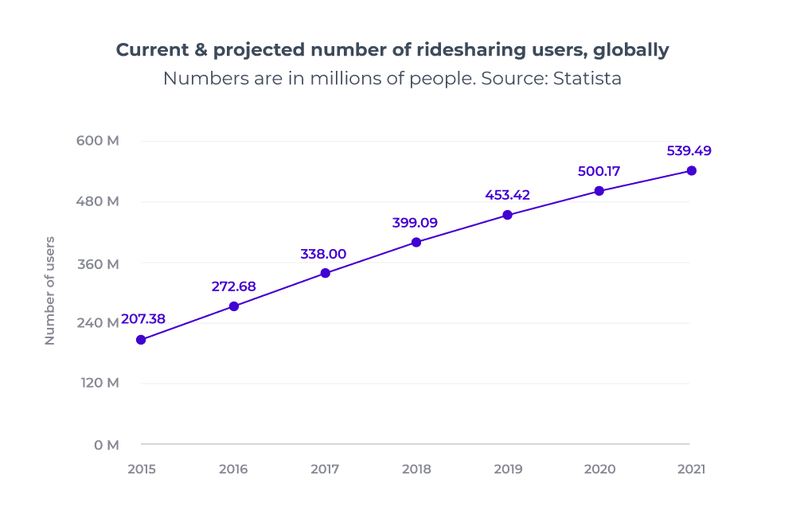
This graph illustrates the competitive landscape in the ridesharing market, showing shifting user loyalty between an established player and a rizing challenger.
Even market leaders are fighting a constant battle against churn. In our experience, user loyalty is increasingly fragile; historical data shows that even top-tier players have faced 7% declines in userbase over four-year periods while rivals like Lyft utilized aggressive expansion tactics. To counter this, gamification in shared mobility has become a core product pillar. For example, Uber’s evolution of its reward systems demonstrates a strategic shift toward high-frequency behavioral nudges rather than one-off financial incentives.
The story is consistent across the sector: rapid growth demands smarter retention. To illustrate, the world’s top 10 ridesharing apps were all founded after 2008, yet they now serve a planet where the number of cities has doubled to 12,000 in recent years. This massive urban density makes operational efficiency the ultimate competitive advantage.

The table lists the top 10 ridesharing apps, highlighting the sector's rapid growth and recent emergence in the last decade.
The "get big fast" motto of the mobility sector is driven by the Network Effect, where a product's value scales with its user base. A mobility app is useless without drivers, and drivers won't log on without customers. While companies historically used heavy discounts to solve this chicken-and-egg problem, we have found that price-cutting actually erodes long-term wallet share and fails to improve user retention.
Under these circumstances, apps must find innovative ways to stay afloat. The industry is now prioritizing operational efficiency identified by consultancy firm Arthur D. Little as the greatest challenge facing shared mobility today. To turn this threat into an opportunity, Streetcrowd is leading the way by integrating gamification in shared mobility to solve the complex puzzle of vehicle rebalancing and user engagement.
Want to drive meaningful retention on your app? Try our app gamification software!
Streetcrowd boosts user retention with gamification features
TL;DR: Streetcrowd solves the "idle vehicle" problem where car usage rates in shared mobility sit at a low 10% by using gamification to turn operational fleet rebalancing into an engaging user experience. By incentivizing the "crowd" to relocate vehicles to high-demand zones, Streetcrowd increases efficiency and counters the high churn rates currently affecting the mobility market in 2026.
Streetcrowd is an app that supports mobility providers by making their operations more efficient. Its mission is customer experience optimization. Using gamification features, the app engages users through a reward system to do odd jobs, such as moving a parked car in the company’s 5,500 vehicles to a more desirable place.
In other words, where the car is more likely to meet customer demand, rather than sit idle. This maximizes profit! Clearly, it is needed: industry data shows that current car usage rates for many mobility apps remain at a shockingly low 10%.

The chart highlights the low utilization rate of vehicles in mobility apps, a key operational challenge that Streetcrowd aims to solve.
In 2025, 81% of the world's population resides in cities and towns, a massive shift that has forced providers to rethink urban logistics. With the number of global cities doubling to 12,000 by 2025, the pressure to maintain an available fleet is higher than ever. For customers, a higher car utilization rate means the car is easier to allocate because it’s closer to users. In our experience, benefits like these drive customer loyalty and user retention much more than a simple discount. With this in mind, Streetcrowd sets out to increase rates by implementing a range of gamification features:
A reward system that motivates users to achieve goals
In 2026, gamification is the primary defense against app churn. While some major ridesharing players have seen userbase declines of up to 7% in recent years, Streetcrowd incentivizes users through financial rewards, paying them for their time. This is an extrinsic motivator, meaning that it is a results-based driver. However, this reward system is most useful in the discovery phase. Behavioral research shows that long-term user retention is instead achieved through intrinsic motivation.
Challenges that encourage users to complete tasks
Applying gamification to operational tasks appeals to the user’s self-worth, an intrinsic motivator. In addition, challenges are fun! If users succeed, they feel the reward and the dopamine hit that comes with it. In our observations, a highly effective challenge involves moving a specific number of vehicles in a fixed timeframe to unlock a "pro-mover" status or bonus reward, which keeps the user returning to the app daily.
Empowerment through an interactive interface
Empowerment is a principle mechanic of app gamification. Users select which vehicles they want to move and transparently see what is required. While the world’s top 10 ridesharing apps were all founded after 2008, the most successful ones in 2026 are those that empower the user through the UI. A visually pleasing map with greens, reds, and clearly mapped routes makes the task feel less like a job and more of a strategic quest!

This screenshot of the Streetcrowd app displays its interactive map, which turns vehicle relocation into a quest-like experience for users.
Progress indicators and digital confetti give users instant gratification
When you are logging a vehicle, a progress indicator guides you during the wait for acceptance. This simple yet effective gamification feature assures the user that the system is working. Additionally, scientific research from the Nielsen Norman Group shows that it minimizes cognitive load. In other words, instead of focusing on the wait, the progress indicator reduces the user’s perception of time by providing a visually stimulating experience.
Streetcrowd pairs this with digital confetti, showing a celebratory splash in the middle of the screen. This provides instant gratification, which contributes to creating customer loyalty! By reinforcing that their contribution has immediate value, the app builds a habit-forming loop that traditional utility apps lack.

The app's reward screen uses digital confetti to provide instant gratification, reinforcing positive user behavior and building loyalty.
As a result of their gamified app, Streetcrowd has created customer loyalty in cities across the world. Users’ continued engagement and reward for participation create loyalty for the Streetcrowd brand. By leveraging gamification to increase operational efficiency, they have solved the biggest bottleneck in shared mobility. The faster service and higher utilization rates give them a definitive competitive edge over legacy brands in the 2026 urban landscape.
Recap: Solving the Mobility Efficiency Gap with Gamification
TL;DR: With global fleet utilization rates stalled at a mere 10%, shared mobility providers face a massive profitability crisis. Streetcrowd uses gamification to solve this by incentivizing users to handle fleet rebalancing. As urban populations reach 8.2 billion in 2026, these engagement strategies help platforms overcome the 7% userbase decline seen in traditional ridesharing models by turning logistics into a rewarding user experience.
While the peak of app uninstall volatility has passed, the competition for user attention in the 2026 mobility market is fiercer than ever. Data indicates that even major ridesharing players have seen significant userbase declines some down 7% over a four-year period as users seek more value and engagement. To combat this, industry leaders have integrated gamification reward systems to stabilize retention and increase daily active usage.
While user retention is a high-profile hurdle, the single greatest challenge the sector faces is a lack of operational efficiency. Today, the number of global cities has doubled to 12,000, and with 58% of the world’s population now living in urban areas, the demand for shared cars is at an all-time high. Yet, the average utilization rate for a vehicle in a mobility fleet remains stuck at 10%. Streetcrowd was built specifically to disrupt this stagnation.
In our experience, the most effective way to optimize a fleet is to move the logistics into the hands of the community. Streetcrowd supports mobility providers by making their operations more efficient through a crowdsourced model. Using gamification, the app engages users to complete operational tasks, such as moving a parked vehicle from a low-traffic zone to a high-demand "hotspot" where it is statistically more likely to be booked.
Streetcrowd utilizes several core behavioral mechanics to drive these results:
By applying these gamification strategies, Streetcrowd has successfully built loyalty across global urban hubs, proving indispensable to providers struggling with idle inventory. As the world population hits 8.2 billion people, the ability to turn a logistics problem into a rewarding game is the only way to ensure shared mobility remains sustainable and profitable.