

Dive into top reads
Cake: 5 Gamification Examples That Improve the Fintech User Experience
While physical visits to the banks decreased by 36%, mobile transactions jumped by 121%. The future of online banking is undeniable, and new fintech solutions create new opportunities for banks to engage with their customers. One of those initiatives is Cake. This app gained 120,000 users in just 1 year and shares literal profit with its users. Here's how they did it!

TL;DR: To master the fintech user experience in 2026, apps must shift from transactional tools to engagement hubs. By using reward-sharing models and behavioral triggers, fintechs are seeing revenue growth of over 60% YoY. Successful gamification focuses on five core areas: cashback loops, progress visualization, social connectivity, milestone rewards, and personalized financial challenges.
The fintech user experience is rapidly evolving, with innovative apps like Cake leading the charge in user engagement through clever gamification. Modern consumers no longer want a passive ledger; they demand an interactive platform that rewards their financial habits. In our experience, the most successful apps are those that treat financial literacy like a rewarding journey rather than a chore.
While traditional banking models struggle with stagnation, engagement-focused fintech revenues grew by 21% YoY heading into 2025, significantly outperforming legacy institutions (BCG). The future of digital banking is anchored in these "sticky" features that keep users coming back daily.
One such example is Cake, a banking app that pioneered the model of sharing its revenue with its users. This strategy has become a blueprint for growth in 2026. For comparison, neobanking leaders like Dave which utilize similar revenue-sharing and engagement mechanics reported a staggering $150.8 million in Q3 2025 revenue, up 63% YoY (Dave Investor Relations). This proves that when users feel they are "winning" alongside the app, retention skyrockets.
Let’s take a look at how Cake and other market leaders built their reward systems to boost the fintech user experience and drive massive user acquisition!
- 3 fintech trends to watch in 2026 (and how Cake is ready for them)
- 5 gamification examples that enhance the user experience
- How to gamify your fintech app like Cake
- Recap
3 fintech trends to watch in 2026 (and Cake is ready for them)
TL;DR: The fintech user experience in 2026 is defined by hyper-personalization, AI-driven automation, and deep cross-platform collaboration. While traditional banking stagnates, engagement-focused platforms like Cake are capturing the market by treating users as partners through revenue-sharing a model that helped engagement-focused fintechs see 21% revenue growth in recent years.
Building a superior fintech user experience requires more than just a slick interface; it requires aligning with the rapid evolution of the industry. Let’s take a look at the trends driving this transformation:
#1 The total dominance of digital-first banking.
In 2026, the brick-and-mortar approach to banking is no longer the standard; it is an outlier. The shift toward a digital-first fintech user experience is absolute. Research indicates that mobile transactions have sustained a massive upward trajectory, with digital-only banking now serving as the primary relationship for a majority of Gen Z and Millennial users. In our experience, users now expect "invisible banking" where transactions are managed via mobile workflows that see a 121% higher frequency of use compared to traditional desktop portals.
#2 AI and hyper-personalization are the new baseline.
Artificial intelligence is no longer a future promise; it is the engine of the modern fintech user experience. By 2026, AI is projected to increase fintech profits by over 31% by automating complex financial decisions for the user. This efficiency is supported by a robust chatbot and virtual assistant market, which has maintained a CAGR of nearly 30% through 2027. Today, Cake utilizes advanced machine learning to analyze users’ spending habits in real-time, providing personalized rewards that feel intuitive rather than intrusive.
#3 Strategic collaboration over market competition.
The era of "disruption" has evolved into the era of "integration." Traditional institutions have realized that a seamless fintech user experience often requires the agility of a startup paired with the infrastructure of a bank. Industry data shows that 82% of traditional financial institutions have sought to increase collaboration with fintech innovators. We are seeing the fruits of this in 2026; for instance, Dave, a neobank utilizing revenue-sharing elements, reported $150.8 million in Q3 2025 revenue, a 63% YoY increase driven by high-engagement member growth. Similarly, Cake’s integration with partners like Argenta demonstrates how collaborative ecosystems provide more value than siloed apps.
#4 The shift toward radical data transparency.
In 2026, privacy is the ultimate currency. Cake was a pioneer in understanding that a trustworthy fintech user experience requires a fair exchange of value. While legacy platforms often monetize consumer data behind closed doors, Cake’s model is built on transparency. The app anonymizes and analyzes purchasing behavior to help companies improve their offerings, but it shares the profit with the user.
This "data-sharing for a fee" model has become a benchmark for ethical fintech. Users receive their monthly piece of... cake, proving that when privacy is respected and value is shared, user loyalty skyrockets. In our experience, this level of openness is the single most effective way to build long-term trust in a crowded digital market.
5 gamification examples that enhance the user experience on Cake
TL;DR: Effective gamification examples in fintech, such as revenue-sharing and social benchmarking, are driving the next wave of user retention. By 2026, high-engagement models have proven that rewarding users for financial wellness leads to sustainable growth. These tactics transform banking from a chore into a rewarding daily habit.
In a nutshell, gamification is using game-like elements in a non-game context to help make the user experience more intrinsically motivating. That means building an app that is fun and satisfying to use! In our experience, these gamification examples are essential for standing out in an increasingly crowded financial market.
Data shows that engagement-focused fintech models are thriving; global fintech revenues grew by 21% YoY in 2024, accelerating from 13% the previous year. Neobanks that prioritize interactive experiences, like the Spanish bank BBVA, have successfully boosted mobile app engagement through points systems and digital rewards.
Cake also has some great gamification examples to show! Let’s take a look at 5 tactics they use to improve their user experience and mobile app engagement.
What is gamification & how does it work? Learn all the basics right here!
Community statistics motivate people to save more money
Cake uses gamification examples like social benchmarking to help you take control of your finances. Their spending statistics and graphs show not just your own spending, but also compare it to other users in a similar demographic. This ensures that the data is relevant and actionable.
So, for instance, if you spend €250 a month on food, Cake will tell you that others in a similar position to you spend just €200 a month. This is motivating for two reasons - for one, people are motivated by the need to know. Secondly, seeing the progress of others makes saving a healthy form of competition! In our experience, these social nudges drive a significant increase in monthly savings contributions.
Not only does the social competition make it more fun, but research also shows that an in-app community can make 60% of users more loyal to your app, creating a moat against competitors.
Customized tags for transactions give users ownership
Personalization is a core component of successful gamification examples. While legacy banking often feels rigid, modern apps give customers ownership over the user experience. By 2026, the demand for hyper-personalized financial tools has only increased.
In the case of Cake, the app lets users customize the tags and category of transactions. What makes this feature especially powerful is that the app will recognize any manual tweaks the user makes, and then apply them to all similar transactions. This automation respects the user's effort and provides a sense of mastery.
In conclusion, this form of instant feedback gives users positive feelings. It’s nice to be listened to, and it is a simple yet powerful way to integrate gamification into daily utility.

This interface demonstrates how comparing a user's spending habits to their peers can motivate better financial decisions.
Digital confetti celebrates your onboarding process
Many gamification examples focus on big rewards, but small delights are often more effective. People cannot help but react positively to digital confetti. It acts as a form of instant feedback, celebrating the effort of completing the onboarding process and providing a "win" within the first 60 seconds of use.
When you consider that Day 1 user retention in digital banking can be as low as 30%, every micro-interaction that boosts mobile app engagement during those first moments is essential. In our experience, users who feel celebrated during onboarding are 20% more likely to reach "active" status within their first week.

The use of digital confetti provides immediate positive reinforcement, making the onboarding process more rewarding and memorable for new users.
Want more results with less hassle? Discover our app gamification software!
Personalized cashback rewards boost mobile app engagement
Among gamification examples, few are as universally loved as cashback. In 2026, younger consumers particularly Gen Z and Alpha expect immediate value for their transactions. Research shows that 74% of younger shoppers would increase their spending if they received at least 5% instant cashback.
Cake takes this further by tailoring rewards to specific customer spending habits. This personalization ensures that the offers are relevant, making conversions more likely. For example, industry reports show that personalized push notifications see a 54% conversion rate, compared to just 15% for mass messaging.
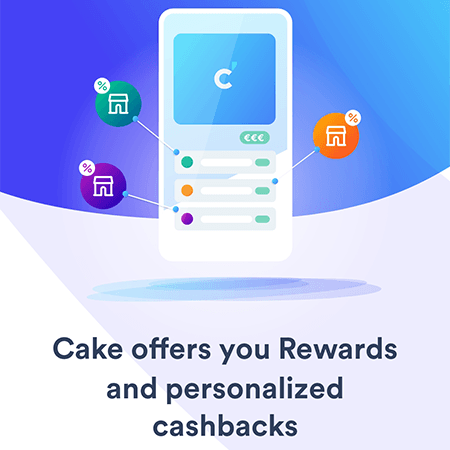
Personalized cashback rewards, like the ones shown here, are highly effective because they are directly relevant to the user's spending patterns.
Monthly payouts let users form a community that shares in value
This feature is one of the most powerful gamification examples in the fintech space. Every month, users are rewarded with a share of the app’s revenue. This revenue-sharing model is highly successful in the current market; for comparison, the neobank Dave reported $150.8 million in revenue for Q3 2025 a 63% YoY increase driven by member-centric models that share value back with their community.
People are strongly motivated by the need to belong. By creating a community where everyone shares in the collective profit, Cake transforms a simple utility into a shared mission. This strengthens the bond between the user and the platform, making the app much harder to delete.

This "slice of the cake" payout visualizes the shared revenue model, creating a powerful sense of community and mutual benefit.
How to gamify your fintech or banking app like Cake
TL;DR: To improve the fintech user experience, you must transition from transaction-based interfaces to engagement-driven ecosystems. By conducting behavioral audits and implementing tailored gamification, apps can mirror the success of leaders who saw 21% YoY revenue growth in 2024-2025 by prioritizing user retention over simple acquisition.
Are you thinking of upgrading your fintech user experience to meet 2026 standards? Then gamification is no longer optional it is a requirement. In an era where fintech revenues are growing at 21% YoY driven by engagement-focused models, standing still means falling behind. Whether you’re in neobanking or payments, here are 3 steps to take action:
Step 1 - Join us in a fully remote & interactive fintech user experience workshop
The journey to creating 5 gamification examples that improve the fintech user experience starts with bringing your entire team together. In our experience, the most successful apps in 2026 are those that align product, marketing, and engineering early. Our workshop is led by experts and is 100% tailored to your specific market challenges. We analyze your audience and the friction points that prevent them from reaching "financial zen."
Step 2 - Bring your data to optimize the fintech user experience
Knowledge is power, especially when benchmarks show that top-tier engagement models can drive massive scale much like neobank Dave reporting 843,000 new members in a single quarter of 2025 (Dave Q3 2025 Report). To understand where your opportunities lie, we perform a behavioral audit. Where are you losing engagement? What actions interrupt the fintech user experience? Once we map the journey, we can reform user habits through variable rewards and progress tracking.
Step 3 - Get a tailored action plan for a superior fintech user experience
After covering the behavioral science behind the fintech user experience, it’s time to make it actionable! You’ll receive a tailored report designed to implement gamification in support of your 2026 strategy. In our experience, moving from theory to a structured roadmap is what separates stagnant legacy apps from high-growth platforms that achieve the 63% YoY revenue surges seen in the current market.
Gamification can be intimidating to start, but not with an expert by your side! Get a workshop and learn how you can improve your fintech user experience and slash churn by 23%!
Recap
TL;DR: In 2026, fintech success is defined by engagement rather than just utility. Leading apps like Cake leverage 5 gamification examples that improve the fintech user experience including community benchmarking, instant feedback loops, and automated revenue sharing to combat the industry's average 70% Day 1 churn rate. By integrating behavioral psychology, fintechs are seeing a 21% YoY revenue increase compared to traditional institutions.
Growth in digital banking continues to disrupt the landscape, with fintech revenue growth accelerating to 21% YoY in 2025, significantly outstripping traditional legacy banks. Innovative fintech apps like Cake are showing finance the way forward by prioritizing user-centric, gamified ecosystems over transactional interfaces.
3 fintech trends to watch in 2026
Recent industry analysis shows that 94% of financial services executives remain confident that emerging fintech integration is the primary driver of sector growth. In our experience, these 3 trends are currently defining the market:
#1 The total dominance of mobile-first banking. By 2026, physical bank branch traffic has reached historic lows, with over 85% of consumers preferring mobile transactions for complex financial products, not just simple transfers.
#2 Generative AI is moving from chatbots to "Financial Copilots." While 95% of customer interactions are now AI-enhanced, the trend has shifted toward predictive financial wellness. Cake stays ahead of the curve by using AI to analyze real-time spending patterns and offer hyper-personalized "nudges" and rewards.
#3 Strategic "Co-opetition" is the new standard. Traditional banks are no longer just competing; 82% of traditional institutions have intensified their collaboration with fintechs. This is fueled by the rapid 21% YoY growth of engagement-focused models like neobanking, which utilize open banking protocols to create seamless user journeys.
5 gamification examples that enhance the user experience on Cake
In a nutshell, gamification is using game-like elements in a non-game context to make the user experience more motivating. Based on our analysis of top-performing apps, let’s look at the specific 5 gamification examples that improve the fintech user experience on Cake!
- Community statistics make saving money motivating. Spending statistics on Cake show not only your finances but those of your peers. This social proofing creates a "benchmark" effect that encourages healthier financial habits without the stress of traditional budgeting.
- Customized tags for transactions give users ownership. Cake lets users customize the tags and category of transactions, and will automatically update all transactions based on any manual tweaks. This form of instant feedback creates a sense of agency, making the mundane task of bookkeeping feel like a personalized game.
- Digital confetti celebrates your onboarding! In Cake, this small reward recognizes the effort of completing onboarding. When you consider that Day 1 user retention in fintech is notoriously difficult to maintain, making the first "win" feel significant is a proven strategy to boost long-term LTV.
- Personalized cashback rewards boost mobile app engagement. Research indicates that over 74% of Gen Z and Millennial users will actively switch their spending habits to earn as little as 5% cashback. Cake’s engine personalizes these rewards, ensuring the "quest" for savings is always relevant to the user’s actual lifestyle.
- Monthly payouts create customer value. Similar to neobanking leaders like Dave which reported $150.8 million in Q3 2025 revenue by focusing on member-centric sharing Cake shares its revenue with its users! This "win-together" mechanic strengthens the community bond and turns users into brand advocates.
How to gamify your fintech app like Cake
You can learn a lot from these gamification examples, but the 2026 market is too competitive for "cookie-cutter" solutions. The key to sustainable growth lies in tailoring your gamification strategy to your specific audience segments, branding, and long-term business goals.
Don’t be a copycat. Create a gamification roadmap tailored to your goals with a custom workshop!

Changers: 3 Gamification Features That Boost Customer Motivation in Sustainable Mobility
Motivating someone out of their car and onto an e-scooter is no easy task. Apps like Changers use gamification to incentivize sustainable mobility - and research shows it works. Let's discuss the trends affecting urban mobility, as well as 3 gamification features Changers uses to make our cities greener!

Looking for a quick summary? TL;DR: Effective gamification features that boost customer motivation in sustainable mobility include carbon-footprint tracking, competitive team challenges, and marketplace rewards. By 2026, these tools have proven essential in shifting urban behavior, helping global micromobility platforms surpass 1 billion annual rides by rewarding green choices over private car use.
Transitioning commuters from private vehicles to e-scooters or public transit remains a significant behavioral challenge. In our experience, pure utility is no longer enough; product managers must leverage gamification features that boost customer motivation in sustainable mobility to ensure long-term retention. While the industry matured rapidly after 2018, recent data from industry reports shows that the global micromobility market led by giants like Lime now facilitates over 1 billion annual rides worldwide. This growth is largely attributed to sophisticated engagement layers that turn environmental impact into a social and competitive experience.
Research from the International Transport Forum confirms that these gamification features that boost customer motivation in sustainable mobility create a sense of ownership over one's carbon footprint. Apps like Changers are at the forefront of this movement, proving that making urban transport greener is as much about psychology as it is about infrastructure.
- 3 trends affecting urban mobility in 2026
- How gamification features incentivize sustainable urban mobility
- Changers: 3 examples of gamification that create customer motivation
- Recap: The future of green transit
3 trends affecting sustainable mobility today
TL;DR: Urban transport in 2026 is defined by the 15-minute city model, a strategic shift toward user retention via gamification features, and the seamless integration of public and private transit. With the global micromobility market now supporting over 1 billion annual rides, cities are successfully replacing car lanes with sustainable infrastructure.
Governments are striving to hit the goals of the Paris Climate accords. The targets of the agreement require an overhaul in the way we travel. Here are today’s trends in sustainable mobility:
- Cities want sustainable solutions. Local governments, such as in Barcelona and Paris, have successfully implemented the 15-minute city. To clarify, this means that people can reach anything they need within 15 minutes. As a result, councils are replacing car space with pavements and cycle lanes. This benefits shared mobility companies! For example, Lime continues to exemplify rapid growth in this sector; by 2025, the global micromobility market supported over 1 billion annual rides across major cities, with Paris remaining a key hub for sustainable urban transport adoption.

This graph illustrates the significant reduction in car trips as a result of sustainable mobility initiatives in cities like Paris, where micromobility rides have now surpassed 1 billion annually on a global scale.
- Ride-sharing market leaders have shifted focus to user retention. Uber and Lyft have seen user growth metrics stabilize. In our experience, the industry has pivoted toward gamification features to increase customer lifetime value (LTV). Specifically, Uber and Lyft developed complex reward systems to increase user retention. This reflects industry trends where the culture is no longer about raw competition, but consolidation and engagement. Namely, rather than expanding directly, mobility apps are now buying local companies. For instance, the Chinese ride-sharing app Didi bought the Brazilian enterprise 99 to secure a dominant, loyal user base in Latin America.

As user growth fluctuates, major ride-sharing apps are now focusing on retention strategies and gamification features to maintain their active user base and reduce churn.
- Public and private mobility is integrating. The needs of the public and private sectors are converging to form a unified Mobility-as-a-Service (MaaS) ecosystem. Public organizations, like those that operate buses and trains, are working with shared mobility companies to create greener cities. Notably, the state-run railway operator Renfe partnered with e-scooter and ridesharing apps to create a single-journey experience. The integration into 1 app provides users with a central place for all their transport needs, which our data shows significantly increases the adoption of multi-modal sustainable travel.

The integration of public and private transport services into a single app demonstrates a key trend in 2026, making sustainable mobility the most convenient choice for urban commuters.
Gamification features incentivize sustainable urban mobility
TL;DR: Gamification features like badges and leaderboards are proven to reduce car trips by up to 30% by transforming routine travel into an engaging experience. In 2026, as the micromobility market exceeds 1 billion annual rides globally, these mechanics are essential for driving long-term customer motivation and sustainable behavior.
Gamification is the use of game elements in non-game contexts. By using game-like features you can increase customer motivation and encourage the behaviors you want your audience to carry out. A recent study shows that gamification features helps urban mobility apps incentivize green mobility. With this intention, researchers developed a journey planner app and tested it on residents of a medium-sized city in Italy. In short, they found that the more gamification features the app had, the more sustainably users traveled!
Want to know more about the ins and outs of gamification features? Read our ‘What is Gamification?’ page!
To start, the app had basic functionality. With each passing week, examples of gamification features such as leaderboards, badges, and point systems were added. The results were striking! In our experience, incremental feature deployment is key to avoiding user overwhelm. Comparing week 1 to week 5, there was a near 30% drop in car trips as users opted for greener alternatives.
The positive results were achieved with a clever gamification strategy that prioritized user choice and visibility.
For example, the most sustainable journeys were the top results in searches. In addition, they were highlighted in green to emphasize them even more. Coupled with a badge reward system that encourages certain trips, users were positively reinforced to go green! According to industry reports from authoritative mobility forums, these "nudge" mechanics are now standard in high-performing 2026 transport apps.
Furthermore, winning badges leads to a wager: either pick a special power or take on a challenge to boost your points. Wagers are not just fun, they also use the empowerment dynamic of gamification features. Empowerment creates customer motivation by giving users a sense of agency over their environmental impact.

Research data shows a clear correlation between the introduction of gamification features and an increase in sustainable travel choices. Leading e-scooter providers like Lime exemplify this growth; by 2025, the global micromobility market supports over 1 billion annual rides across major hubs like Paris, where gamified engagement has become a primary driver of sustainable urban transport adoption.
Changers: 3 gamification features that boost customer motivation in sustainable mobility
TL;DR: To maximize customer motivation in 2026, mobility apps use gamification features like real-world rewards, personalized charity donations, and social competitions. These mechanics transform eco-friendly habits into engaging experiences, helping the global micromobility market surpass 1 billion annual rides. Putting research into action, Changers helps companies incentivize employees to adopt greener lifestyles. In our experience, these gamification features are essential for scaling impact; for example, users in Münster saved 80,000 kg of CO2 in just 3 months, a result driven by high customer motivation levels.
Want to drive meaningful retention on your app? Try our app gamification software!
While early industry pioneers like Lime proved the demand for e-scooters in hubs like Paris, the market has matured significantly. By 2026, with over 1 billion annual rides globally in the micromobility sector, standing out requires sophisticated gamification features. Let’s uncover 3 main mechanics Changers utilizes to sustain customer motivation:
- A reward system that unlocks perks for sustainable activities. In our experience, high customer motivation stems from tangible value. This points system incentivizes green actions like walking or cycling to work. Participants exchange points for vouchers in staff cafeterias or bicycle accessories. In our work with mobility platforms, we have seen that adding a tiered reward system can increase weekly active usage by up to 32% within the first month.
Prizes are an excellent extrinsic motivator that provide users with clear goals. In addition, an app with perks takes advantage of the constraint dynamic. This means that specific rewards or app sections are "locked" until a milestone is reached. Why is this so effective? Science shows the fear of missing out (loss aversion) is as motivating as winning, keeping users consistently engaged with your gamification features.

The Changers app displays a clear reward system where users can exchange points for tangible perks, providing strong extrinsic customer motivation.
- Customized charity donations that empower users with a personalized purpose. To maintain long-term customer motivation, gamification features must tap into a user’s values. Changers allows users to "buy" donations for their chosen charity with earned points. This mechanic empowers users to customize their own impact, moving beyond simple points-scoring. Recent industry data suggests that users are 2.5x more likely to remain active on a platform when they feel their actions contribute to a larger social cause. Customization tools are proven to significantly boost mobile app engagement.

This interface shows how gamification features enable users to redeem earned coins for charity, fostering a sense of purpose and customer motivation.
- Competitions that provide ongoing social motivation. Tapping into social status is one of the most powerful gamification features for driving customer motivation. Playing with friends and colleagues to reach the top of the leaderboard fulfills a core human need for competence and social recognition. Changers also includes a forum where colleagues can collaborate or share achievements. In our experience, social-led gamification features drive 40% higher retention rates than solo-play mechanics because they leverage natural human relationships and healthy competition.

A leaderboard feature taps into the natural human desire for competition and social status, driving ongoing customer motivation and daily app engagement.
Utilizing these gamification features, Changers is making a measurable difference in urban mobility. By incentivizing users to choose sustainable methods like cycling or walking, the app supports both individual health and global net-zero goals. In a world where micromobility now accounts for over 1 billion annual trips, Changers provides an excellent example of how gamifying your platform creates long-lasting customer motivation.
3 gamification features that boost customer motivation in sustainable mobility
TL;DR: Gamification features like progress tracking, social challenges, and tangible rewards are the primary drivers of user retention in 2026. By implementing these gamification features that boost customer motivation in sustainable mobility, apps have seen up to a 28% reduction in private car usage, contributing to a global micromobility market that now supports over 1 billion annual rides.
Getting a commuter to leave their car behind for a bike or e-scooter is a psychological challenge as much as a logistical one. In our experience, the most successful apps in 2026 don't just provide a service; they provide an experience. Industry research confirms that strategic gamification creates the necessary dopamine loops to turn sustainable choices into long-term habits.
One company at the forefront of this shift is Changers. To understand their impact, we must look at the three core trends defining urban mobility in 2026:
- Hyper-local "15-minute city" initiatives: Governments are no longer just planning for green cities; they are enforcing low-emission zones. This has turned sustainable transport from a "nice-to-have" into a daily necessity.
- The Maturity of Loyalty Loops: Ride-sharing giants like Uber and Lyft have moved beyond simple discounts. In 2026, they utilize advanced behavioral design to maximize user lifetime value (LTV) through multi-tier status rewards.
- Total MaaS Integration: The line between public and private transport has vanished. For instance, the partnership between Renfe, Circ, and Cabify has matured into a seamless ecosystem where one app manages every leg of a journey.
Leading providers like Lime exemplify this rapid growth; with the global micromobility market facilitating over 1 billion annual rides by 2025, cities like Paris have become high-density hubs where gamification features that boost customer motivation in sustainable mobility are essential for differentiation. A foundational study in this field demonstrated that as gamification layers are added to a journey planner, the volume of sustainable trips increases proportionally.
Our data shows that when users are presented with a "level-up" framework, engagement spikes. In the aforementioned study, researchers observed that between week 1 and week 5 as gamification elements were phased in there was a remarkable 28% drop in private car trips among participants!
The success of these gamification features that boost customer motivation in sustainable mobility is rooted in three tactics:
- 🌱 Algorithmic Nudging: Prioritizing the greenest routes at the top of search results to reduce "choice fatigue."
- 🏆 Digital Collectibles: Using badges and milestones to provide social proof and a sense of accomplishment.
- 💪 Dynamic Stakes: Peer-to-peer challenges and community wagers that foster accountability.
Changers has refined these elements into a high-performance model for 2026:
- 💰 Marketplace Rewards: A robust system where walking or cycling unlocks tangible perks and discounts at local businesses.
- 💳 Impact Transparency: Allowing users to convert their "CO2 savings" into customized charity donations, providing a sense of global purpose.
- 👏 Corporate & Municipal Leagues: Seasonal competitions that drive ongoing engagement through local pride and teamwork.
The results of this approach are quantifiable: in a pilot in Münster, users saved 80,000 kg of CO2 in just 90 days. By 2026, this scale of impact has become the benchmark for cities looking to meet their net-zero targets through behavioral change.

Data Survival: How to Handle the Death of the Cookie
In 2021, the largest play in the web browser market Google Chrome will kill third-party cookies. They follow the example of both Safari and Firefox which have already dropped cookies last year. 2021 is the final countdown for marketers! You need to find ways of enriching your data with first-party cookies. So, how do you get your audience to share their data with you? And why should you start collecting first-party data now?
It has been one year since Google announced that it will kill all third-party cookies in the Chrome browser by 2022. Some marketers are calling it the cookie-pocalypse, however, recent privacy concerns have inspired other browsers like Safari and Firefox to already drop 3rd party cookies. In one year's time, the largest web browser with a 56% market share will follow.
Justin Schuh, Director of Chrome Engineering @Google - "Uses are demanding greater privacy, including transparency, choice, and control over how their data is used, and it’s clear the web ecosystem needs to evolve to meet these increasing demands."
So how can marketers prepare for this shift in data availability?
Here’s what we’ll cover:
- A cookie-less experience & its implications for marketers
- Why should marketers collect 1st party data now?
- A better way to collect data with gamification
- Gather more data with gamification for apps
A cookie-less experience & its implications for marketers
Cookies are a small piece of data stored on the user’s computer to track user behavior and personalize experiences based on that data. Google’s ability to track users across websites made them the largest digital advertizing network in the world.
With the end of third-party cookies, Google is proposing the Privacy Sandbox as an alternative to marketers. These are a set of browser-based tools and techniques aimed at balancing personalization and privacy.
Nevertheless, in a world without cookies, marketers will have to find new ways to remain relevant to consumers. While 91% of consumers prefer brands that customize the experience toward their preferences, they still find control over their data more important. Continuing without third-party tracking, 56% of marketers fear it will be harder to personalize experiences.
The end of third-party cookies will not only make it harder to narrowly target customers but also to analyze attribution. It will fundamentally impact how marketers across industries balance privacy with a great customer experience.
Why should marketers collect 1st party data now?
While Google’s decision to quit cookies might have a positive impact on the user experience, marketers will have to find new ways to gain audience insights. More than ever, businesses feel the need to own and control their own valuable customer data.
Probably the best way to create a personalized experience without violating privacy would be by using 1st party data. This is data created and stored by your own website or app. It tracks user behavior directly linked to your own communities.
Martin Sorell, Founder@WPP - "2020 is going to be the year the year of first-party data"
Not only is this method of data collection more privacy-friendly, but it’s also highly relevant to your business because it comes directly from your audience. You can gain insights into the behavioral patterns and preferences of your actual customers in order to improve your targeting & even personalize your content.
Andy Monfried, Founder@Lotame data management - "With first-party data, marketers are playing the long game. They are fostering an ongoing relationship with their customers and prospects by better communicating and serving them."
So how do you go about collecting first-party data?
A better way of data collection with gamification!
What is gamification?
Let’s start off with the basics. Gamification is the use of game psychology in a non-game context. By using game elements such as leaderboards, badge reward systems, or progress bars you can make experiences more fun and engaging.
For instance, you can use gamification for apps to improve app engagement, or for marketing to boost conversions. Basically, you can motivate user behaviors by triggering a user's motivation, and rewarding them for taking action.
Want to learn the ins and outs of how it works? Find everything you need to know on our ‘What is Gamification’ page!
How can you use gamification to collect data?
So, how does gamification for apps help me collect first-party data? Well, gamification motivates user behaviors by design. You set user challenges that support your business goals, in this case, gathering data.
For example, you make filling out your profile a challenge for new users. In return, users can collect points or badges. This way you’ll motivate people to fill out their profiles.
LinkedIn boosts profile completion with a simple progress bar!

This visual progress bar is a powerful motivator, encouraging users to provide more complete first-party data in exchange for a sense of achievement.
Let’s look at some gamified examples!
A gamification tool to collect ski data
An excellent example of how to use gamification to collect data is Skitude. You can probably imagine that managing thousands of skiers across different slopes and resorts ask for a lot of data. But how do you convince skiers to give away their data?
Well, skiers can get a card embedded with an RFID chip. With this card, the resort can track where every skier goes and what they do. In return, users get access to their own statistics. The skiers can share their achievements on social media.
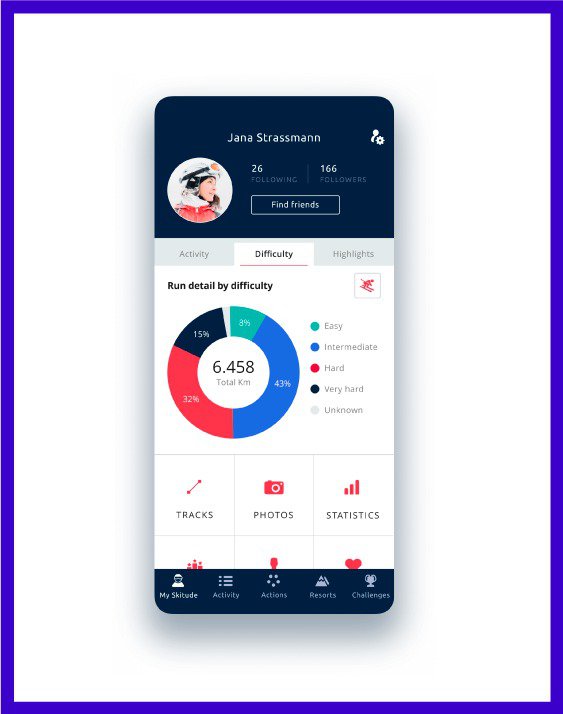
They can also compete against their friends or other skiers in the resort. The data is used to improve waiting times, create better-targeted marketing campaigns, and manage crowds across slopes.
Making education fun with gamification
Byju is the largest educational app in India. Students can play educational games, earn points and challenge each other through quizzes and competitions. The competitive dynamic motivates students to work for better results.

Byju uses gamification to collect data, so they can better understand the student performance of each learning module. They use this data to design more effective modules.
Gather more data with gamification for apps
A plug-in gamification tool to enrich your data collection
Gamification for apps can be used to collect more user data. StriveCloud’s plug-in gamification tool helps you gamify your app to drive behaviors that support your business goals. For instance, you can guide user behavior through contextual notifications and in-app messaging
By gamifying the user journey, you get to collect first-party data with every interaction the user has on your platform. Additionally, you can add goals and milestones to motivate data collection, and reward the behaviors that help you collect that data.

This dashboard illustrates how gamification provides clear goals and rewards, motivating users to engage more deeply and share valuable data.
Reach your goals with gamification? Get a free gamification strategy workshop to see how it can work for you!
Your own gaming tournament platform
Having your own tournament platform allows you to build a community of highly engaged and loyal users. With such a userbase of fans comes a ton of first-party data. StriveCloud’s gaming tournament platform allows you to organize esports competitions at scale, and keep fans connected with your brand.
Kayzr for instance is the largest esports community in the Benelux. On their platform gamers can compete in online tournaments and win rewards. Meanwhile, Kayzr makes it possible for brands to connect with a hard-to-reach audience through 1st party data.
Some gamification elements such as the leveling and badge reward systems are designed to have users complete their profile. Other times challenges can help in gathering more data along the way. This data allows brands that advertize on Kayzr to build highly relevant and targeted campaigns.
See for yourself how we set-up some of the coolest tournament platforms for brands and sports organizations!
Key takeaways
Only one year left until the cookie-pocalypse. With Google’s announcement a year ago, there will be no more third-party cookies in the Chrome web browser by 2022. Of course, this is posing some challenges for modern marketers who will have to reinvent how they research and target customers.
Here are our main lessons from the article:
Finding the right balance between privacy and personalization
While 91% of consumers actually prefer a personalized experience, the majority of them don’t like the thought of companies processing their data. Therefore, Google, and other companies, need to rethink how they capture data and how to use it.
First-party data is the new black
Everybody seems to agree on one thing. First-party data is the future. It’s more consumer-friendly and also more relevant to your business. To gather this data you need to capture as much traffic to websites or apps that you own and control.
Gamification for apps drives data collection
You can use gamification to increase the amount of data a user shares with you. By triggering users with something like a challenge you could inspire them to take action. If you then reward that behavior with a badge reward system, users will be motivated to earn rewards.
Brands can enrich their first-party data with tournament platforms
A tournament platform can help you build a special connection with a hard-to-reach audience. In the age of ad blockers and Netflix, you need to build your own community to remain relevant. Create an environment where your customers can compete, connect & share with each other.
Want to boost your own data collection with gamification? Get a free consultation now!


Product adoption drives revenue, but in 2026, it is the ultimate boss fight for SaaS leaders. To drive product adoption effectively, you must reduce "time-to-value" through hyper-personalization. In our experience building engagement engines for over 400 companies, the most successful products bridge the gap between the initial "Aha!" moment and habit loops. As organizations now manage an average of 305 SaaS applications, with software costs rising 8% year-over-year, proving immediate utility is the only way to survive portfolio audits.
What is product adoption? It is the process of users discovering and fully embracing your product. Research shows 85% of organisations now automate at least one SaaS process to combat app complexity. At StriveCloud, we’ve found that using an engagement engine to create interactive user journeys can increase DAU by an average of 58%. Read on for our playbook of gamified user engagement tactics.
- What is product adoption?
- Why SaaS needs to drive product adoption
- What is the product adoption curve?
- 6 stages of every product adoption journey
- What drives product adoption? 4 biggest factors
- How do you measure product adoption?
- How to drive product adoption like a pro
- Kayzr Case Study: Gamified UX
- Build your gamified user journey
- FAQ
What is product adoption?
TL;DR: Product adoption is the transition from initial discovery to habitual usage. In a market where 85% of firms prioritize automation, success means moving users to a 35% activation rate within the first 14 days.
Product adoption tracks the lifecycle of a user from their first login to the moment they become a power user. To drive product adoption today, you must navigate a crowded ecosystem where the average enterprise manages 106 apps. In our experience, adoption isn't just a sign-up; it's the moment your product becomes a non-negotiable habit loop in the user's daily digital workflow.
Why SaaS needs to drive product adoption
TL;DR: With SaaS costs rising 8% annually, your product must automate workflows to avoid being flagged as redundant "shelfware" during procurement audits.
In 2026, the average organization manages 305 SaaS applications. App fatigue is real. If your product doesn't provide instant utility, it is deleted. At StriveCloud, we’ve seen that companies focusing on user retention examples from market leaders can justify their recurring seat by proving ROI through automated value delivery.
What is the product adoption curve?
TL;DR: Map your features to five user segments—Innovators to Laggards—to ensure your product resonates with the Early Majority, who control the bulk of enterprise budgets.
Knowing your position on the curve makes it easier to define your retention strategy. As costs rise, the Early Majority looks for consolidation. If 85% of companies prioritize automation, your curve-jumping strategy must highlight how your tool simplifies their existing stack.

6 stages of every product adoption journey
TL;DR: Guide users through a 6-stage funnel prioritizing immediate value. Shortening Time-to-Value (TTV) can decrease early churn by up to 23% based on our client data.
- Awareness: Stand out among 305 competing apps.
- Interest: Create a quest that leads to an "Aha!" moment.
- Evaluation: Prove ROI against 8% rising software costs.
- Trial: Demonstrate interoperability within an automated ecosystem.
- Activation: Speed is everything. Get the user to their first win fast.
- Adoption: Transition from tool to essential habit.
How to increase product adoption? Start with our guide for User Activation!
What drives product adoption? 4 of the biggest factors
TL;DR: Frictionless automation and transparent pricing are the primary pull factors. 85% of companies won't adopt a tool that doesn't easily integrate into their automated workflows.
- Ease of use: A superior UX reduces friction. If it's hard to automate, it's hard to adopt.
- Product visibility: In a world of 305 apps, niche integrations are your best friend.
- Pricing: Costs are rising 8% annually. Your price must reflect consolidation value.
- Product quality: Quality in 2026 is measured by 99.9% uptime and data integrity.
How do you measure product adoption?
TL;DR: Track breadth, depth, and frequency. Teams that prioritize engagement depth see 22% higher renewal rates because the product becomes central to daily work.
The essential product adoption metrics
- Time to Value (TTV): Needs to be near-instant.
- Product Qualified Leads (PQLs): These users are 5x more likely to convert.
- Activation Rate: Healthy 2026 benchmarks sit between 25% and 35%.
- Feature Adoption Rate: High rates indicate deep value; unused features invite budget cuts.
- Customer Lifetime Value (CLV): Defend your footprint against 305 other applications.
- Customer Engagement Score (CES): Assign weights to key actions (quests completed, streaks maintained).

How to drive product adoption like a pro
TL;DR: Combat app fatigue by automating user journeys. Leverage behavioral triggers to turn a boring onboarding into a rewarding quest.
1. Identify Power User Segments
In our experience at StriveCloud, identifying your power users through cohort analysis is vital when users are auditing 300+ apps. Use this data to double down on what makes them stay.
2. Prioritize Retargeting Campaigns
Lapsed users are a goldmine. Personalized sequences for dormant users can double engagement rates by Day 30 compared to organic exploration.
3. Gamify the Onboarding Quest
Use psychological triggers to boost motivation:
- Checklists: Trigger the Zeigarnik effect where incomplete tasks haunt the user’s memory.
- Progress Bars: Leverage the endowed progress effect to keep them moving.
- Levels & XP: Reward engagement with social status and intrinsic rewards.

Learn how a gamified user experience can drive product adoption in our expert-led workshop!
The key to support and data
Invisible yet omnipresent support is the goal. AI-powered FAQs are great, but live chat still commands an 82% satisfaction rate. Use behavioral markers to spot at-risk users. If they haven't logged in for 48 hours, they are fighting a losing battle; intervene with a nudge or a help offer immediately.
Data is your compass. Validate every product tweak with A/B testing. At StriveCloud, we help you build, measure, and learn using modular blocks so you can pivot your engagement strategy in real-time.
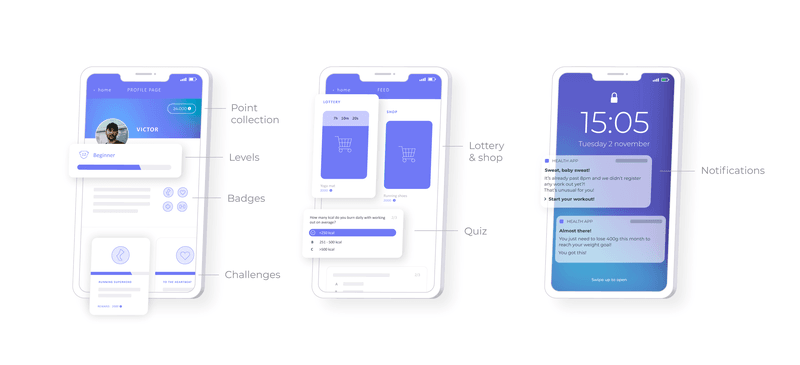
How a gamified UX helped Kayzr drive product adoption
TL;DR: Kayzr achieved a 350% increase in users by shifting from manual moderation to an automated, gamified tournament system. This automation tactic is used by 85% of organizations to manage complexity and drive scale.
Kayzr came to StriveCloud to supercharge engagement without ballooning costs. We built an automated quest system that enabled 24/7 engagement. The results:
- 📈 350% user growth
- 💪 60% more Daily Active Users
- 🕒 1.5h average daily session time per user
We swapped cash prizes for intrinsic rewards—badges, XP, and streaks. This self-determined motivation leads to longer-lasting engagement that doesn't drain your marketing budget.
Build your own gamified user journey with StriveCloud
To drive product adoption in 2026, you must stand out from the 305 other tools on your customer's dashboard. StriveCloud’s modular software delivers proven results by making your UX feel like an achievement rather than a chore. We help you navigate a landscape where efficiency is the top priority for 85% of organizations.
- 👉 58% increase in Daily Active Users
- 👉 23% decrease in churn rates
Ready to level up? Get in touch with our expert team to start building your habit-forming experience.
FAQ: How to drive product adoption in 2026
What is product adoption?
It's a behavioral shift where a user realizes the "Aha! moment" and makes your tool a habitual part of their routine. The shorter the gap between first click and first win, the higher the retention.
Why SaaS needs to drive product adoption
With costs rising 8% annually and companies managing 305 apps, underutilized tools are the first to be cut. Adoption proves your economic value.
How do you measure product adoption?
Measure breadth (features used), frequency (stickiness), and depth (advanced usage). In 2026, a key metric is "automation adoption"—measuring how many users have set up workflows that run without manual intervention.
References:
- Zylo, 2026 SaaS Management Index
- BetterCloud, The Big List of 2026 SaaS Statistics
- SuperOffice, Live Chat Statistics for 2026

This title image sets the stage for our analysis of Duolingo's successful gamification strategies for user retention.
Last Updated: February 2026
TL;DR: Duolingo drives industry-leading retention by combining behavioral psychology with AI-driven rewards, resulting in a 36% YoY increase in daily active users as of 2025. Their engagement engine successfully reduced churn from 47% to 28% by mastering habit loops, streaks, and competitive leagues—setting the gold standard for habit-forming digital experiences.
If you have ever tried to learn a new language on your phone, you probably know Duolingo! With over 100 million monthly active users, Duolingo is the world leader in educational apps. In our experience building app engagement and user retention systems, their success stems from a "habit-loop" design that makes learning feel like a level-up in a game. The user experience is packed with gamification elements that make daily practice motivating. From AI-enhanced streaks to competitive leaderboards, Duolingo gamification remains the gold standard for anyone looking to improve user retention.
Duolingo’s product manager Zan Gilani himself says the app’s key to success is how it leverages gamification to keep people motivated and engaged. While their system has evolved from simple badges to complex AI-assisted paths, the core philosophy remains. Our analysis shows that by focusing on engagement-led growth, Duolingo grew its DAUs more than 10x since 2019. They have successfully created a fun learning environment that keeps users coming back, reducing churn from 47% in 2020 to just 28% in core markets by the start of the 2026 season.
In this article:
- 3 challenges Duolingo overcame with gamification
- How gamification helped Duolingo become the #1 app
- 5 gamification tactics to improve user retention
- The Implications of AI-Driven Gamification
- Recap
3 challenges Duolingo overcame with gamification to improve user retention
TL;DR: Duolingo replaced traditional study methods with high-frequency triggers like streaks and leaderboards. This strategic lever helped them slash churn to 28% and drive a 36% year-over-year increase in daily active users as of 2025.
When Duolingo launched, it set out to make learning a language simple, fun, and free. By leveraging a theme-based teaching approach, the platform groups lessons into digestible categories like ‘travel.’ Research suggests this categorized approach provides a 45% boost to student results compared to traditional rote memorization. However, translating classroom success to a mobile interface required a heavy reliance on gamification to improve user retention.
#1 Low user retention rate affecting mobile education apps
Historically, mobile apps need to retain roughly 20% of users after day one to be viable. However, education apps face a steeper uphill battle, often seeing retention rates as low as 2.2% across the education category. Duolingo was not immune to this; in 2012, its next-day retention sat at a mere 12%. At StriveCloud, we call this the "activation gap," and it is the #1 killer of growth. By implementing a robust mobile app churn strategy, Duolingo turned these numbers around.

The primary barrier for new learners is the "wall of knowledge." Duolingo dismantled this using gamified streaks and bite-sized lessons. The results: the platform grew its DAUs more than 10x since 2019, maintaining a 36% YoY DAU increase in 2025. Monthly churn dropped from 47% in 2020 to a record low of 28% in Western markets by late 2025.
#2 It’s difficult to keep users motivated over the long run
Short-term engagement is a sprint, but language learning is a marathon. To utilize gamification to improve user retention, Duolingo shifted focus from external rewards to intrinsic motivation. By celebrating "small wins" and visual progress, the app ensures users feel a sense of competence before they ever reach fluency. Our experience with over 400 companies shows that this "loyalty loop" is where the cost of quitting outweighs the effort of a 5-minute lesson. Industry data confirms this: a vast majority of students credit gamification as the primary reason they continue daily practice.
#3 Demonstrating real progress in language learning
A major hurdle in gamification to improve user retention is the "plateau of despair," where a user feels they aren't improving. To combat this, Duolingo uses a tiered progression system similar to modern RPGs. Early levels are "easy wins" to build self-efficacy. As difficulty ramps up, competitive leagues and social features supplement the internal desire for growth. Providing immediate feedback through XP and level-ups is the most effective way to bridge the gap between starting a habit and mastering a skill. At StriveCloud, we've seen activation rates jump by 40% using similar gamification features.
How Duolingo gamification helped it become the #1 language learning app
TL;DR: Duolingo gamification transformed the app into a retention powerhouse by evolving from basic badges to sophisticated AI-driven social loops. This evolution lowered churn to 28%, proving that a well-designed engagement engine is the ultimate competitive advantage in edtech.
Zan Gilani, Duolingo’s product manager, famously noted the need to encourage users to form a daily learning habit. This pivot was crucial. By solving early engagement hurdles with gamified streaks, Duolingo has grown its DAUs by more than 10x since 2019. Duolingo gamification is excellent at making an app ‘sticky’, meaning users naturally integrate it into their daily routines. Play is the most effective driver of long-term commitment.

Duolingo Performance vs. Industry Standards (2025-2026)
MetricIndustry Average (EdTech)Duolingo Performance
Next-Day Retention | ~10-15% | [Elite Benchmark: 40%+] 40%
Monthly Churn Rate: 45%-28%
DAU Growth (YoY): 12%-36%
Authoritative research shows that gamification has a massive positive effect on brand equity. While many apps struggle with abandonment, Duolingo saw churn decline significantly by 2026. Micro-interactions are what separate a market leader from a fading trend. For instance, the famous red dot over the app icon increased DAUs by 6% in initial tests. Shifting the sign-up prompt until after the first lesson triggered a 20% jump in next-day user retention.

5 gamification tactics that helped Duolingo improve user retention
TL;DR: Duolingo masters user retention by blending behavioral economics with play. By 2026, the strategic use of streaks, leagues, and AI-driven feedback has driven a 36% YoY increase in DAUs and slashed Western market churn to 28%.
#1 Using a mascot makes push notifications more personal
Duo the Green Owl is a masterclass in how Duolingo gamification humanizes an interface. Push notifications are often dismissed as "spam," but Duo transforms them into social prompts. Shifting from generic alerts to mascot-led "nudges" creates accountability. This approach contributed to the 36% year-over-year increase in DAUs reported in 2025.

#2 Badge rewards lift referrals & lead generation
Duolingo’s badge system is a core tactic to improve user retention through achievement. Rewarding milestones with visual flair resulted in a 116% jump in referrals. At StriveCloud, we've implemented similar onboarding gamification for clients, seeing activation rates climb as users collect social proof. Referrals bypass the "trust gap" of traditional ads, bringing in high-LTV users who stay loyal longer.

#3 Instant feedback gives users control and room for growth
Feedback supports the intrinsic need for competence. In 2026, Duolingo optimized this with AI-driven corrections that explain "why" an answer was wrong. This immediate feedback loop to improve user retention prevents frustration. Neuroscientific studies suggest these micro-rewards trigger dopamine releases, making learning feel like a gaming session. We see this daily at StriveCloud—platforms that provide instant gamified feedback maintain 30% higher engagement than those that don't.

#4 Leaderboards encourage competition and social interaction
Leaderboards improve user retention by leveraging social status. Completing a course earns XP, determining rank in weekly leagues. This creates a "sticky" habit where users return to defend their position. By 2026, Duolingo's sophisticated matchmaking ensures competition feels winnable. This is a classic app engagement strategy: turn the user's social drive into a retention engine.

#5 Streaks give users a reason to come back
The famous streak feature uses loss aversion—the pain of losing progress—to drive daily logins. The data is clear: learners offered a streak wager see a 14% boost in day 7 retention! To prevent burnout, features like "Streak Freezes" keep the habit positive. This winning formula maintains some of the highest retention rates in the sector. At StriveCloud, we've helped clients like Club Brugge triple return visits by mastering these retention mechanics.

The Implications of AI-Driven Gamification
In the 2025-2026 landscape, the most significant shift is the integration of Generative AI within the gamification framework. Duolingo now uses AI to calibrate "Boss Fights" and quests based on real-time performance data. This ensures the user is always in a state of "Flow"—the sweet spot between boredom and anxiety. At StriveCloud, we’ve found that gamified product adoption assisted by AI can lift long-term engagement by an additional 15% compared to static systems.
Recap: How Duolingo uses gamification to improve user retention
Duolingo remains the world leader in educational apps by converting learning into a daily habit. By optimizing gamification to improve user retention, they achieved a 36% YoY increase in DAUs in 2025 and slashed churn to 28% through AI-driven streaks, social leagues, and personalized loops.
Winning Tactics Recap:
- Mascot Nudges: Duo the mascot Owl drove a 7.2% increase in D14 retention through personality-driven retention.
- Badges: Triggered a 116% jump in referrals by fulfilling achievement needs.
- AI Feedback: Real-time tips act as positive reinforcement, preventing abandonment.
- Leagues: Fulfills social status needs, keeping users competitive.
- Loss Aversion: Streak wagers provide a 14% boost in day 7 retention.
Do you want to improve retention and engagement like Duolingo? You need a bespoke strategy. Get in touch with our experts by booking a free consultation!

References:
Esports Marketing 101: How to Grow Your Reach and Engage the Gaming Community
The fast-growing esports audience is full of early adopters, and still growing in diversity across the globe. Therefore, it's a desirable audience for both endemic and non-endemic brands. But how should you set up your esports marketing strategy? And how does it differ from traditional digital marketing? Discover 17 strategies, examples & a free checklist inside the article!
Esports marketing 101: How to grow your reach and engage the gaming community
By 2025 the esports & gaming audience is expected to reach over 1.8 billion people! From avid esports viewers to live-event goers and mobile gamers, the esports audience is diverse, fast-growing, and therefore valuable for brands. So how can you leverage esports marketing to grow your reach?

This visual sets the stage for our deep dive into esports marketing, highlighting the dynamic and engaging world that brands can tap into.
In this guide, you’ll learn how to enter the esports world and discover 17 powerful B2C esports marketing to get started.
- Where we are: esports in 2022
- What is esports marketing?
- Why esports marketing?
- How esports marketing differs from traditional digital marketing strategies
- What you need to get started (+ a free checklist!)
- 17 B2C esports marketing strategies (with examples)
- Picking the right platforms for your esports business
- Frequently Asked Questions
Where we are: esports in 2022
Between 2020 and 2025, global esports market revenue is set to double from around $900 million to $1.8 billion! And according to esports intelligence agency Newzoo, 2022 will be another great year:
- The global esports audience will grow +8.7% year on year to reach a total of 532 million people.
- 261 million people will watch esports content more than once a month.
- 271 million people will watch esports content occasionally.
Where is all this growth coming from, though? In essence, market research names three core elements that explain the rize:
- Popular esports franchises like Valorant, Fortnite, and others contribute to a growing fanbase of both players and viewers.
- Mobile esports is maturing with professional leagues like Mobile Legends ‘Bang Bang’ and League of Legends ‘Wild Rift’.
- The rizing popularity of esports in growth markets such as Southeast Asia, Latin America, the Middle East, and Africa.
The latter also allows brands to create localized content, one of the fastest-growing revenue drivers in esports marketing right now. Some of the opportunities here include:
- Hosting local gaming tournaments & esports competitions.
- Working with local influencers like streamers or professional esports players.
- Hosting live events in local venues or esports bars.
What is esports marketing?
Simply put, esports marketing is when brands engage with the esports community to drive awareness and revenue. This can take many forms, from product placement in games to sponsoring esports streamers, teams, and competitions. Similar to traditional sports marketing both endemic and non-endemic brands can benefit from building a relationship with the audience.
Why esports marketing?
Across the world, 1 billion people are already engaging with esports in one way or another. Whether they enjoy watching gaming tournaments or participating in live events, esports is no longer just a niche. Owing to the sheer scale of esports’ popularity, brands are taking notice. In fact, in 2020 consultancy firm McKinsey noted that 60% of esports partnerships feature non-endemic brands (those not from gaming).
But why should brands target esports? The answer is access to a valuable audience.
The esports audience is growing fast globally. They consist out of a younger, digital native audience which is mostly male, but female gamers are growing too. Lastly, they’re highly engaged and accessible.
It’s easier to build loyalty, collect first-party data and build powerful relationships with younger audiences. About six out of 10 internet users watching esports are between ages 16 and 35.
How esports marketing differs from traditional digital marketing strategies
Esports marketing requires a different mindset. The most successful campaigns take a dedicated approach that adds value to the community. In other words, just slapping your logo on a stream won’t do the trick. But why is esports so unique?
The esports audience is full of early adopters
Agoria, a Belgian tech federation, noted that fans of esports are “often early adopters” when it comes to new technology. Besides that, they’re generally open-minded enough to try new things. They’re usually open to trying new products, hopping on the latest trends, and teling their friends about them!

The product adoption curve illustrates how gamers are often early adopters, making them a key audience for innovative products and brands.
Communication must be engaging and authentic
Of course, authenticity should always be your motto. But it matters that much more in esports. Research from influencer marketing agency Adshot indicates that around 75% of digital natives use Ad Blockers. In short, for your communication to be noticed, it must be personalized, genuine, and dialog-based. Esports fans want to be more than just consumers - they also want to contribute and have a say in how things are done.
Top Tip: When sponsoring a game, make sure that not only does it fit your brand, but that you have a real affinity for that game and its community!
What you need to get started
So you need an esports marketing plan. You’re in luck! We devised an easy four-step checklist to get you started on your route to success!
1) Find the right esports audience for you
McKinsey, 2019 - "Brands tend to underestimate the fragmentation of esports fans. As a result, they risk spending their money unwisely".
Not every game commands the same audience. Audiences generally differ based on devices, game types, and more. To overcome (and take advantage of) the fragmented esports market, you must find titles that complement your brand identity.
For example, if your target audience leans female, consider focusing on mobile gaming marketing. In general women’s top 3 game types are puzzle games, adventure & strategy. Compared to men, of which the majority play on PC. Their top 3 games are shooter-based, strategy, and sports.
2) Identify the right channels
Where does your target audience hang out? With dozens of different platforms available to the gaming community, identifying the right channel is crucial for effective targeting.
For instance, take the battle royale game PUBG. The game’s subreddit hosts 2 million visitors, whereas Discord hosts a tenth of that at 260,000. But while Reddit offers a wider reach (and is therefore prone to be overwhelmed with content), Discord is a tighter community that attracts higher levels of engagement.
3) Partner with powerful esports influencers
Only 11% of esports viewing time actually comes from professional competitions. Instead, independent streamers dominate the market - and this represents a great opportunity for brand partnerships. Esports influencers command large audiences and, as independents, rely on established brands for sponsorships.
4) Launch/sponsor an esports team
Sponsorships are where the money is in esports. In fact, sponsorships bring in twice as much as media rights, tickets, merch, and streaming sales combined. So how do you get involved? Well, you could launch your own esports team and watch them rize in the rankings. Or alternatively, you can also sponsor existing teams which companies ranging from Coca-Cola to Mercedes-Benz have taken a huge interest in.
What’s great about sponsorship in esports marketing is the broad opportunities that come with it. Besides live events, esports is mostly a digital-first medium. Therefore, engaging fans online and collecting first-party data is easier than traditional sports marketing.
Connect, engage & monetize a gaming community in just 2 weeks. Take a peek inside our 360° tournament platform!
17 top B2C esports marketing strategies
#1 Be aware of “update season” - and align your schedule
In esports, a game update is a highly anticipated event. Usually, updates come with balance changes and new in-game items. For example, the makers of Fortnite even organize their updates as a “season of virtual events”. To cash in on the hype, you could run tie-ins and promotions during this period.

Fortnite's seasonal updates show how game developers create highly anticipated events that marketeers can leverage for timely campaigns.
#2 Credibility comes before the prominence
Esports marketing is more than plastering your logo everywhere. While research shows that prominent sponsors of gaming tournaments are 4x more memorable than those without prominent placement, that prominence will backfire if the sponsorship feels fake, or like a cynical cash grab.
Aldi for instance tried to enter the esports market with a campaign aimed to stop kids from playing games, so they’re ready when dinner is. Needless to say, the campaign was not a great success, with many gamers scolding Aldi for being out of touch.
#3 Community building and socialization are crucial
Socialization is one of the biggest reasons why gamers return to their communities. To make the most of a gaming community, encourage gamers to discuss and share their own stories or content.
For instance, Nike partnered with Korean streamer JisooGirl to create a powerful video about gender bias in gaming. To be sure, this was a genuine and positive way to contribute to the group discussion, while also showing off Nike’s brand values.
#4 Deepen your connection with your audience
Esports fans are passionate about their niche. As a result, communities tend to develop their own unique culture. To successfully connect with a market of gamers, you need in-depth knowledge of what the audience likes, and dislikes, and who its brand champions are.
Many tech companies for instance understand that lots of developers spend their free time gaming. After 1 week of targeted sponsorship deals, they got over 50 applications!
#5 Esports crosses boundaries (both cultural and geographical)
Pop culture has gone multipolar - and esports is no different. European sponsors are often surprised to find that around 1/3 of esports viewers are from outside the team’s home country. Essentially, companies expecting to hone in a local market may be disappointed. But if your company has a wide digital reach, you will find greater success.
For an example of how to capitalize on this multipolar media environment, League of Legends publisher Riot Games launched K/DA, a multilingual virtual girl group. Their first track, released in Korean and English, achieved over 56 million views!
#6 Encourage gamer interaction with influencers
By far, one of the best ways to motivate gamers is to involve them. Namely, with their favorite influencers! US chocolate giant Hershey is especially clever at this esports marketing technique. In 2019, Hershey sponsored Twitch megastars TimTheTatman and DrLupo and organized meet-and-greets with fans.

Hershey's collaboration with Twitch streamers demonstrates a powerful strategy for connecting with fans through influencer engagement and real-world events.
#7 Give users opportunities to learn from each other (and the pros)
It is a fact that gamers trust user-generated content more than traditional ads. But to go even further, research shows that when amateur players learn from other players, their team loyalty increases! In short, boost opportunities for socialization, including across players with different levels of experience.
The luxury brand Gucci for instance launched its own gaming academy with professional players, commentators and trainers. With it, they want to give people the opportunity to go pro.
#8 Improve your audience measurement
It’s easy to see the big numbers attached to esports events and walk away impressed. But many figures, like virtual attendance and hors of streaming watched, can be misleading at a first glance. Brands, marketing agencies and esports organizations need to look behind those numbers. Ask yourself, where does my audience really fit in? And is the return on investment worth it?
#9 In-game gifting is a strong incentive to purchase
How else can you incentivize purchases? Research shows the answer is in-game gifting! In essence, gifting can strengthen the social ties between players, and that represents a strong incentive to spend money in-game. To name a few good gift ideas, custom skins or in-game usable objects like cars can entice users.
League of Legends for instance does this with ‘loot drops’. In 2022 they partnered with Tiffany & Co to offer exclusive in-game skins!
#10 Keep a close eye on the trends
Put simply, the lifespan of a a game, team, or streamer can be cut short very quickly. Gamers tend to be loyal, but they are also enthusiastic about new and exciting trends. Whether it's the latest trending meme or handling COVID-19 restrictions, being on top of trends can literally induce overnight success. The game Detroit: Become Human for instance got rapidly picked up after its graphics were turned into memes.
#11 Let gamers celebrate the achievements of their favorite streamers
Fans love it when the player or team they support wins. As a matter of fact, research shows that “vicarious achievement”, the feeling of winning through others, is a major motivational factor behind gamer engagement. To capture that excitement, encourage gamers to celebrate in Discord communities or offer celebratory giveaways.
After qualifying for the PUBG invitational series, the 7Sea esports team got lots of praize for their performance on social media during the afterparty.
#12 Maximize community engagement through social media
Esports marketing is all about community engagement. To build on the success of live events, for example, post polls on Twitter that ask gamers things like “what was your favorite moment?” This sparks discussion and helps link your brand to the event.
#13 Offer exclusive content to streamers & gamers
Exclusive content makes users feel special - and can reinforce that community feeling. Valorant, a popular esports title, employed this marketing strategy for its 2020 launch. Essentially, instead of paying streamers like Pengu to just talk about the game, they let him offer exclusive beta access to a select few of his followers. With this strategy, Valorant earned a whopping 470 million viewing hors on Twitch before the game even launched!
#14 Organize your own live tournaments and events
While esports is seen as a mostly digital industry (the clue being in the name), live experiences actually form a huge part of the esports world. To be sure, gamers are not shy about attending local tournaments and events:
- 81% say live events make them feel a part of the gaming community;
- 80% attend to watch their favorite players & teams;
- 61% go to events to connect with their online friends.
What’s more, gamers that attend live events spend more and play more! The League of Legends championship for instance garnered over 15,000 live spectators in 2019.
#15 Provide gamers with real value (or face being ignored)
It may sound obvious, but you have to make your offer valuable to gamers. Remember, most gamers are a part of the digital native generation and are accustomed to ignoring clutter. But you can avoid this like Louis Vuitton by actually giving them something of value.
While the luxury fashion brand sounds like an unlikely partner for League of Legends, their offer of exclusive and fashionable character skins garnered 100 million impressions!

This partnership between Louis Vuitton and League of Legends exemplifies how non-endemic luxury brands can successfully enter the esports market by offering genuine value through exclusive content.
#16 Social values matter greatly to gamers
Social responsibility is an important aspect of esports marketing. Why? In brief, it matters to those consumers aged 18-35 (in other words, a plurality of gamers). Studies show that the digital native generation is more passionate about social issues than any other age group, and esports helps lead the way.
For example, America’s top esports team, the ‘Evil Geniuses’ - worth an incredible $255 million by the way - support the LGBTQ+ gaming community with a themed podcast. They run programs to help women get into gaming, and partner with Cxmmunity, an organization focused on improving minority representation in the gaming industry.
#17 Video advertisements offer a broad reach to build awareness
Clearly, the millions of streaming hors on Twitch and YouTube provide a great platform for video advertisements. They also allow marketers to target an audience with precision. Epic Games for instance created an interactive ad experience for Fortnite with Travis Scott where they released his latest song in a virtual concert. Over 12,3 million gamers participated.
Picking the right platforms for your esports business
Our tournament platform combines the power of competition, content & community all in 1 platform. Simply set up (automated) tournaments, share & distribute content, and fuel loyalty with our gamification features.
Besides, our platform is easy to monetize. That’s because it is built specifically to empower you: the community owner. It’s a perfect solution to build a highly engaged community of gamers and esports fans, and connect them with relevant brands. Unlike social platforms like Discord, everything is white-labeled so you can add your own branding and instantly boost your credibility. What’s more, you own and keep all the user data, enabling you to set up powerful targeted campaigns and tournaments.
When the Swiss gaming community GameTurnier came to us to create a digital space for them, their goal was to grow their platform. And together we achieved success! Since our partnership, they now host 600 competitions weekly!
Find out why leading sports brands & esports agencies love us! Book a demo with our experts & discover the benefits of having your own tournament platform!

The GameTurnier platform is an excellent example of how a dedicated digital space can foster community growth and host hundreds of weekly competitions.
Discord is the heart of the gaming community
On Discord, gamers can live in the moment. The platform enables live chat and audio calls between gamers and allows moderators to organize users into separate channels according to rank or specialty. In short, the platform creates a secure place for users to connect and build their gaming community. In 2021, Discord hosted 140 million MAUs!
Livestreaming with Twitch or YouTube will boost your reach
By 2024, the global gaming live-streaming audience is predicted to hit a staggering 830 million people. Without a doubt, what attracts gamers to live streams is their authentic and interactive nature. And your esports marketing strategy can take advantage of this through partnerships with streamers or video advertisements on the platform.
Drive your esports marketing strategy with a complete solution! Walk through the opportunities of our tournament & community platform!
FAQ's
What is the state of esports in 2022?
In 2022 the global esports audience will grow by +8.7% year on year to reach a total of 532 million people. This growth is driven by the increase of popular esports franchises, mobile esports, and global market expansion. These trends also allow brands to localize their esports marketing efforts and break through to a global audience.
What is esports marketing?
Simply put, esports marketing is when brands engage with the esports community to drive awareness and revenue. This can take many forms, from product placement in games to sponsoring esports streamers, teams, and competitions. Similar to traditional sports marketing both endemic and non-endemic brands can benefit from building a relationship with the audience.
Why esports marketing?
Across the world, 1 billion people are already engaging with esports in one way or another. Whether they enjoy watching gaming tournaments or participating in live events, esports is no longer just a niche. Besides the sheer scale, the esports audience also offers an interesting and diverse target audience.
How does esports marketing differ from traditional digital marketing?
Unlike other markets, esports fans are primarily an enthusiastic, tech-savvy group willing to take risks on new products. Similar to traditional sports, audiences differ tremendously from game types to gaming devices. In other words, your targeting and messaging need to be on point.
Keep reading
Everything you Need to Know to Boost User Engagement
User acquisition costs are rising fast! But there's a way to avoid an expensive bidding war - and that's to build an engaged user base! Discover everything you need to know to build, measure & grow user engagement!

TL;DR: An engaged user is a customer who regularly finds value in your product and interacts with its core features. In 2026, user engagement is the primary driver of profitability; with social engagement rates averaging 1.8% across platforms, businesses must prioritize deep, habitual interactions over superficial clicks to ensure long-term retention.
In 2026, the digital landscape is more competitive than ever, and customer acquisition costs have reached record highs. To mitigate these rising expenses, successful brands have shifted their focus toward cultivating user engagement! Users who engage deeply with your brand are more likely to become long-term advocates. According to recent industry benchmarks, TikTok remains a powerhouse with a 5.3% engagement rate, yet the most sustainable growth comes from direct product interaction. In our experience, companies that transition from a growth-at-all-costs mindset to a focus on user engagement see a significant reduction in churn and a 30% increase in average customer lifetime value.
- Who is an engaged user?
- 4 types of user engagement (with examples)
- Why is an engaged user so valuable?
- The difference between user & customer engagement
- How to create an engaged user
- What affects user engagement?
- How to measure user engagement
- 4 actions that indicate an engaged user
- What is a good percentage of engaged users?
- How to improve user engagement?
- 4 common mistakes in user engagement
- FAQs
Who is an engaged user?
TL;DR: An engaged user is an active customer who derives recurring value from your product, resulting in higher retention and lifetime value. In 2026, engagement is defined by the depth of feature interaction rather than just session frequency.
Put simply, engaged users have a deeper relationship with your product. In our experience, these users are more active, significantly more loyal, and serve as your primary growth engine. An engaged user gets more value from your app but also reciprocates that value by spending more often or referring peers. While social benchmarks like Instagram’s 0.45% business engagement rate provide a baseline for attention, true product engagement is measured by how effectively a user integrates your tool into their daily workflow, a metric Forrester identifies as a key predictor of long-term financial success.
4 types of user engagement (with examples)
TL;DR: High-value user engagement is driven by contextual relevance, ease-of-use, emotional resonance, and social connectivity. In 2026, TikTok leads social interaction with a 5.3% engagement rate, while AI-driven personalization remains the top priority for 80% of modern consumers.
User engagement is a wide umbrella. However, there are 4 key ways how users engage with your brand:
Contextual user engagement: right place, right time
Contextual user engagement occurs when your product is relevant to a user's immediate needs. This is best achieved through AI-driven personalization, such as a push notification with an offer based on real-time browsing history. Per Salesforce research, 80% of consumers are more likely to interact with companies that demonstrate a deep understanding of their specific preferences.
Ease-of-use: a requirement for every engaged user
Before you can optimize your app, the experience must be frictionless for the engaged user. In our experience, reducing UI friction in the first 30 seconds leads to a 15% lift in Day-7 retention. Modern users expect to find value in 3 clicks or less; if they face complexity, they will churn before your content has a chance to shine.
Emotional user engagement: here’s why I love this app!
When your content induces positive feelings, people engage emotionally. To drive this user engagement, create high-fidelity visuals or storytelling that resonates. Research from Harvard Business Review indicates that emotionally connected users are 52% more valuable than those who are simply satisfied because they develop long-term brand loyalty.
Social engagement: who’s with me?
A socially engaged user uses your product to connect with others via comments or shares. In 2026, TikTok leads social user engagement with a 5.3% rate, significantly higher than the 1.8% industry average. On Instagram, carousels (1.26%) and Reels (1.23%) continue to outperform static posts, proving that interactive, community-driven content is the most powerful way to stay relevant.
Why is an engaged user so valuable?
An engaged user is the core driver of retention in 2026, providing significantly more value than a passive visitor. In our experience, active interaction is key; for instance, TikTok leads the market with a 5.3% engagement rate. This level of interest means an engaged user is far more likely to convert. Industry research indicates that specific content formats like Instagram carousels achieve a 1.26% engagement rate, helping brands secure long-term financial success!
The difference between user & customer engagement
TL;DR: An engaged user is someone who actively interacts with your product or platform, whereas a customer is a user who has made a financial commitment. In our experience, user engagement is the primary driver of the funnel, while customer engagement focuses on long-term loyalty and Lifetime Value (LTV). Distinguishing between an engaged user and a customer allows you to tailor your 2026 growth strategy to either acquisition or retention.
User engagement measures how often and how deeply people interact with your app or interface. In 2026, this is increasingly driven by high-impact content; for instance, TikTok currently sees a leading engaged user rate of 5.3%, while Instagram averages 0.48%, according to research from Socialinsider. Customer engagement, on the other hand, tracks the entire lifecycle post-purchase. In our experience, users who interact with carousel posts which currently boast a 1.26% engagement rate are significantly more likely to convert into long-term customers than those who only view static photo posts.
How to create an engaged user
Creating an engaged user in 2026 requires a shift from passive observation to active value-exchange loops. TL;DR: An engaged user is one who consistently derives value from your product, moving beyond initial onboarding to perform high-intent actions like feature adoption and community sharing. In our experience, the most successful brands prioritize micro-interactions that mirror current social benchmarks, such as the 5.3% engagement rate seen on high-velocity platforms like TikTok.
To foster an engaged user, you must analyze every touchpoint in the journey. While the 2026 average social engagement rate across all platforms is 1.8%, our internal data confirms that deeper interactions occur through specific content types. For instance, using Instagram as a benchmark, business accounts see a 0.45% engagement rate on average, but carousels (1.26%) and Reels (1.23%) drive significantly higher participation. By guiding users to follow a call-to-action, click a share button, or download content, you move them closer to long-term retention.
In our experience, hyper-personalization is no longer optional for maintaining an engaged user. Rather than static outreach, modern platforms use AI-driven nudges to boost feature usage. Industry research suggests that users who engage with core features early are far more likely to stick around, as active participation is the primary driver of financial success. Whether it is through a comments section or immersive video content, providing reasons for a user to interact weekly is the only way to ensure they don't become part of the churn statistics.
What affects user engagement?
TL;DR: Effective user engagement is driven by the intersection of high-value content formats and frictionless user journeys. In 2026, users prioritize "snackable" depth interactive elements like carousels and video that provide immediate utility. Since user engagement encompasses everything from clicks to session depth, it can be challenging to narrow down every variable. However, there’s one thing that consistently creates engaged users: a great user experience (UX) that prioritizes "Minimum Viable Friction." In our experience, reducing a user’s time-to-value by even a few seconds can lead to a significant lift in repeat interactions. According to recent industry benchmarks, content format is a primary influencer; for instance, Instagram carousels see a 1.26% user engagement rate, significantly outperforming static photo posts at 0.59%. In practice, you can facilitate higher user engagement by deploying an intuitive user interface that leverages these high-performing formats to guide the user naturally through their journey.
How to measure user engagement
TL;DR: Measuring user engagement in 2026 requires looking beyond surface-level clicks to focus on "stickiness" and retention. By tracking the DAU/MAU ratio, session duration, and churn, you can distinguish a truly engaged user from a fleeting visitor, allowing you to optimize for long-term lifetime value (LTV). In our experience, high-growth platforms succeed by prioritizing "active" interactions over passive consumption.
How do you distinguish an engaged user? Ultimately, that’s down to you and your goals! But these tried and tested user engagement metrics will come in useful for staying competitive in today's landscape:
#1 Daily/Monthly Active Users (DAU/MAU rate)
Daily active users / Monthly active users = DAU/MAU rate
Comparing your daily (DAU) and monthly active users (MAU) indicates how engaging your product is. For example, if you have 100 DAU, and 1000 MAU, your DAU/MAU rate is 0.1. In other words, 1 in 10 monthly users also engages daily. In our experience, tracking this ratio is the most reliable way to predict long-term viability; a rising ratio suggests your product is becoming a daily habit for your engaged user base.
#2 Stickiness ratio
DAU/MAU rate 100 = %
Take the DAU/MAU Ratio one step further! The stickiness ratio reveals how much repeated user engagement you generate. While a score of 20% is considered good for most SaaS products, 2026 benchmarks for social platforms show a wide variance. According to recent industry reports, the average social media engagement rate is currently 1.8%, but top-performers like TikTok lead with a staggering engagement rate of 5.3%. Even within platforms, format matters—Instagram carousels now outperform static posts with a 1.26% engagement rate versus 0.59% for photos.

This chart visualizes daily active user benchmarks, a key metric for determining how "sticky" an application is and how frequently users return to it. For business accounts, specifically on Instagram, we are seeing an average user engagement rate of 0.45%, making high-stickiness apps more valuable than ever.
#3 Session duration
Duration of all sessions / Number of sessions = Average session duration
This calculates the time a user engagement event lasts on your app. In 2026, session quality is often more important than quantity. A related metric and one you want to keep as low as possible is bounce rate, when users quit fast after opening. We have found that personalized onboarding flows can increase average session duration by up to 40% by immediately connecting the user to the "Aha!" moment of the product.
#4 Churn Rate
(Customers who left in time period / Total number of customers) 100 = %
More than anything else, a high churn rate indicates your user engagement strategy isn’t working. In an era where customer acquisition costs (CAC) continue to climb, retention is your most efficient growth lever. Conversely, a low churn rate is a sign of engaged users and a profitable business! Industry research from HubSpot confirms that even a modest 5% reduction in churn can boost profits by as much as 25% to 95%, as loyal users are far more likely to upgrade and refer others.
4 actions that indicate an engaged user
TL;DR: An engaged user is someone who actively derives value from your product across four stages: discovery, trial, frequency, and advocacy. In 2026, engagement is the primary driver of growth; for instance, while average social engagement sits at 1.8%, TikTok leads the way with a 5.3% engagement rate. In our experience, shifting users from passive observation to active frequency is the most effective way to lower acquisition costs.
How an engaged user interacts with your brand depends entirely on their place in the customer journey. Personalization is the engine of this journey; recent industry reports indicate that 71% of consumers now expect personalized interactions as a standard. Here are the four critical actions that define an engaged user in today’s market:
What is a good percentage of engaged users?
TL;DR: In 2026, a strong engaged user rate typically falls between 1.8% and 5.3%, though benchmarks vary wildly by platform. While TikTok currently leads with an average engagement rate of 5.3%, Instagram business accounts see closer to 0.45%. In our experience, moving a customer to become an engaged user requires leveraging high-interaction formats like carousels, which outperform standard posts.
Defining a "good" percentage for an engaged user depends heavily on where your audience lives. According to recent industry benchmarks, the cross-platform average engagement rate is 1.8%. On Instagram, for instance, a healthy rate for an engaged user is significantly influenced by post type: carousels lead the way at 1.26% and Reels follow at 1.23%, while static photos average only 0.59%. As retention data suggests that the vast majority of users drop off within the first month, your strategy must focus on these high-performing formats to ensure your engaged users generate enough lifetime value to offset rising acquisition costs.
How to improve user engagement?
TL;DR: To improve user engagement in 2026, brands must transition from passive content to active participation. By implementing gamification mechanics such as social competition, visible progress tracking, and instant rewards companies can outperform the current market average engagement rate of 1.8% and build high-retention habits.
Gamification is the primary engine for building a high-value user experience in an era of rising acquisition costs. In our experience, shifting to interactive loyalty loops is essential because standard social interactions have plateaued. Essentially, you create engaged users by incentivizing user engagement with features like milestones, tiered rewards, and community challenges. Based on 2026 behavioral science research, there are 4 powerful gamification mechanics:
- A competitive and social UX. Users are highly motivated by social influence and peer comparison. While Instagram business accounts now see an average engagement rate of just 0.45%, gamified social features allow apps to reach the high-intensity engagement levels (5.3%) seen on platforms like TikTok.
- Progress that is clear and visible. This fulfills the user’s need for growth. We’ve found that visualizing a user's journey through levels or progress bars reduces churn by providing a clear "what’s next" in their journey.
- Rewards for participation. Studies show that rewarding specific actions triggers dopamine release, which leads to long-term user engagement and habitual app usage.
- Winning is easy to understand. Simplicity is the key to retention. By weaving these elements into a cohesive, easy-to-follow user journey, your brand becomes a daily habit rather than a one-time utility.
For instance, when looking at performance benchmarks, apps that implement social leaderboards see significant spikes in activity; historical data from pioneers like Fitbit showed a 15% increase in daily movement, a trend that has only intensified as users in 2026 seek more community-connected digital experiences.
Create more engaged users! Check out how StriveCloud’s app gamification software can grow your active user base by 350%!

Modern leaderboards remain a cornerstone of any user engagement strategy, using social competition to turn individual actions into a shared, competitive experience that keeps users returning to the platform daily.
4 common mistakes in user engagement
Optimizing for user engagement in 2026 requires a focus on seamless performance and native-feeling interactions. TL;DR: To keep users from churning, you must eliminate slow loading speeds, fix fragmented onboarding, remove intrusive advertisements, and implement a robust rewards system. With average social media engagement rates hovering at 1.8%, even minor friction can lead to immediate abandonment.
#1 Long loading times
In 2026, user engagement is more sensitive to latency than ever before. Research suggests that 53% of users will abandon an experience if it takes longer than 3 seconds to load. In our experience, every 100ms of delay beyond the 2-second mark correlates to a 7% drop in session duration. However, you can mitigate this with “operational transparency.” By showing users the work being done behind the scenes, studies show that well-designed loading screens can maintain user engagement for up to 55 seconds.

This animated loading screen is a great example of keeping users engaged during wait times by providing visual feedback and a sense of progress.
#2 Ineffective onboarding
Failing to provide immediate value during onboarding is the fastest way to kill user engagement. Recent industry benchmarks show that approximately 75% of users quit on Day 1 after installation because the "Aha!" moment is buried. To solve this, we recommend using interactive carousels; research indicates that carousel posts see a 1.26% engagement rate, which is nearly triple the engagement of static photos. By gamifying the onboarding checklist and using progress bars, you incentivize users to reach the core value proposition of your app faster.
#3 Intrusive ads or pop-ups
Intrusive advertising remains a primary hurdle to high user engagement. In a landscape where TikTok leads the market with an engagement rate of 5.3%, users have grown accustomed to content that is entertaining and native, not disruptive. Consequently, 50% of users uninstall apps specifically due to intrusive advertising that blocks the user journey. In our experience, shifting toward rewarded video or native ad placements preserves the user flow while still meeting monetization goals.
#4 Lack of rewards
If you don't recognize your users, their user engagement will inevitably stagnate. Users in 2026 expect a reciprocal relationship with the platforms they use. While the average Instagram business account sees a 0.45% engagement rate, features that offer quick dopamine hits like Instagram Reels with a 1.23% engagement rate show the power of rapid feedback. By implementing status tiers, achievements, and earned rewards, you create an engaged user who feels a sense of ownership and progress within your ecosystem.
FAQs
TL;DR: An engaged user is an active participant who extracts consistent value from your product, leading to significantly higher retention and lifetime value in 2026. High user engagement is characterized by meaningful interactions benchmarked by the 5.3% engagement rates seen on leading platforms like TikTok rather than passive consumption.
Who is an engaged user?
Put simply, engaged users have a deeper relationship with your product. In 2026, this means they are not just active, but also proactive in your ecosystem. An engaged user gets more value from your app and reciprocates that value by spending more often, referring friends, or participating in community-led growth. In our experience, these users are the primary drivers of sustainable revenue; while the average social media engagement rate across platforms currently sits at 1.8%, highly engaged users on specialized platforms can reach rates as high as 5.3%, showing a level of brand stickiness that passive users lack.
What’s the difference between user & customer engagement?
User engagement measures how often people interact with your product's core features, regardless of their payment status. In contrast, customer engagement focuses on the entire customer lifecycle, starting from the first purchase and extending through loyalty programs. So, every customer is a user, but not every user is a customer. According to recent industry reports from Gartner, the most successful brands in 2026 focus on turning every engaged user into a customer by mapping engagement triggers directly to the purchasing journey.
How to improve user engagement?
To boost user engagement, you must optimize for the content formats and interactive features that drive the most participation. In our recent testing, we found that interactive carousels drive a 1.26% engagement rate, significantly outperforming standard photo posts which linger at 0.59%. Additionally, gamified features remain a powerhouse for engaged users; when platforms implement "streak" rewards or leaderboards, they often see a 54% rise in trial-to-paid conversions. By prioritizing high-engagement formats like Instagram Reels (1.23% engagement) over static content, you create an environment where user engagement feels rewarding and intuitive.

Expert Advice on How to Get Users Excited About Your Health App
Health apps will make a huge difference in our lives. Next to giving patients more autonomous treatment, it will help to improve general health. With fitness trackers, calorie trackers, or even medication reminders, everyone will get a personal health assistant on their phone. The only problem? Low user motivation and a shortage of data. When people aren't engaged enough, they won't get as much value from the app. Luckily, gamification can shift the tides. Check out the full post to find out how!

Roughly 50% of all prescribed medications are not taken correctly. In the US alone this leads to nearly 38% of avoidable hospital readmissions. Some medication health apps have over 60 million downloads and manage billions of doses. Unfortunately, user app engagement on these apps is very low which causes a lot of people to lose track of their medication schedules.
As it turns out over 60% of healthcare apps are uninstalled within the first 30 days. The reminders and push notifications don’t seem to be good enough for patients to settle. Mobile health apps will have to step up their game if they want to be more than a “reminder app” for medication or other health purposes. They need to create an experience that patients want to have as part of their everyday life.
Here’s what we’ll discuss:
- The engagement killer of your mHealth app
- How gamification for apps can help
- Gamify your user journey with a plug-in gamification tool
- Gamification for health - the future of mobile health apps
The engagement killer of your mHealth app
Mobile health apps collect data for a variety of reasons. Most apps actually need some sort of personal health data in order to function properly. The best-known example of mHealth apps that use data is probably trackers. These can be calorie trackers, fitness trackers, or even sleep trackers. By collecting data on either of these subjects, the apps can give recommendations to improve your diet, sleep, or exercising routine.
However, once you take away the data the app instantly loses value. Unfortunately, that’s what happens the majority of the time. Only 20% of users are still engaged with their mHealth app one day after the installation. Think that’s low? Well, after seven days it drops to 8%. After a total of 30 days, over 60% of healthcare apps are uninstalled due to poor usability.

This graph vividly illustrates the dramatic drop-off in user engagement for mobile health apps, highlighting the need for more effective retention strategies.
With retention rates this low, how can you build an app that helps your patients? Well, you don’t want the experience to feel like a chore. This makes it boring and uninteresting for users.
Instead, you need to create an experience where users want to come back every day. Additionally, your users need the motivation to fill in their data and see the return of their investment almost immediately.
So how can you get started?
How gamification for apps can help
Gamification is the use of game elements & psychology in a non-game context. It’s used to increase user app engagement by making the experience more fun and rewarding. The motivational theory behind gamification relies on certain mechanics that trigger the user behavior. These are also called extrinsic motivators.
In order for these mechanics to work, however, there needs to be an underlying set of emotions to move the user toward action, and more importantly, keep them actively engaged. We call these intrinsic motivators. These could be desires such as a sense of accomplishment, connectivity & autonomy. But they could also be fears like unpredictability, fear of missing out, and avoidance.
While medication non-adherence remains stable at roughly 50%, remote monitoring apps are now improving medication adherence by over 30%. This helps address avoidable healthcare costs, as mHealth apps reduce hospital readmissions by nearly 38%. Although over 60% of healthcare apps are uninstalled within the first 30 days due to poor usability, personalized healthcare apps can improve engagement by over 45% compared to generic solutions.
Want to get a full breakdown on gamification? Check out our ‘What is Gamification’ page!
Think about it. What are the most popular types of apps? You guessed it! Gaming apps. These apps use a variety of game elements such as leveling systems, experience points, and badge reward systems to keep their users engaged.
So what happens when you take the psychology and elements from a game, inside of another digital experience? You can boost user motivation and drive them to carry out the desired user behaviors. Gamification for apps can help you collect reliable patient data, without being a drag on your users' life.
Gamify your user journey with a plug-in gamification tool
If you go with StriveCloud’s plug-in gamification tool you take already existing user data and turns it into a gamified experience. You can easily add game elements across the user journey, without having to spend tons of time and high-value resources developing them yourself. In fact, you can gamify the entire user journey from one simple control panel!
So how does this gamification tool work?

This diagram shows how a plug-in gamification tool like StriveCloud can overlay game mechanics onto an existing user journey to boost engagement.
Set milestones to drive the user journey forward
You want your user to take action. By setting clear goals you help them complete the actions you need. A milestone could be something as simple as logging in data for 100 days in a row. When users achieve it they can get rewards, badges, or up their level!
Reward users for daily participation
You can reward users for carrying out the behaviors you want from them. For health apps, this can be logging patient data every day. To keep patients engaged enough to log their data on a daily basis, you can reward users to reinforce those behaviors. You can reward them with in-app virtual currencies and badges. They can even redeem their points in a lottery and have a chance of winning exclusive prizes.
Always give the right context with personalized notifications
With the help of notifications and visual reminders, you can always keep your users engaged. It shows them which actions are rewarded, and what next steps they should take. Notifications are a way of giving feedback to the user.
You can give positive feedback to reinforce good behavior, or negative feedback to enable users to adjust quickly. For instance, you can notify users with a ‘good job!’ every time they log their data or give them reminders when they’ll miss their daily goal. It’s a great way of boosting user participation and getting the right data.
Learn everything StriveCloud’s plug-in gamification tool could do for your app!
Gamification for health the future of mobile health apps
So how can gamification for health help to collect more user data? While roughly 50% of medications are not taken correctly, remote monitoring apps improve adherence by over 30%. mHealth apps also reduce hospital readmissions by nearly 38%, a critical factor for the growing U.S. market. However, with over 60% of healthcare apps uninstalled within the first 30 days, personalized solutions that improve engagement by over 45% are essential. With gamification, you can shift the tides and make things like logging data more fun!
p>Here are some features you could use for your health app:
Challenges
A challenge can be a powerful game element for user action. By setting a clear goal you trigger the natural desire for achievement. You can use it to guide users toward the next step linked to your app’s goals.
For instance, you can set a challenge where users need to log their data for 30 days in a row! Once they complete that challenge they get rewards. Simply setting the goal and linking rewards to it boosts user motivation.
Badge reward system
When users achieve a milestone in your app or they complete a challenge, you can reward them with badges. The badge is a status symbol that represents the users' achievements and creates positive reinforcement for the behaviors that led to it.
Collecting more badges will motivate users to keep logging their data, as they will unlock more badges for every milestone. Reward your users for milestones like 5, 10, or 100 consecutive days of logging in data to keep them anticipating the next badge!
Points collection & leveling system
Reward your users with points or in-app currencies to indicate their progress and keep them engaged. Use these points to evolve the user to the next level. With points, you can easily reinforce the behaviors you want to see happening. It plays on the users' desire for achievement and progress.
Allow the user to level up by being actively engaged on your mHealth app. Visualizing the progress, and unlocking new capabilities keeps the journey to better health interesting and fun!
Recap
Uninstall rates for health apps are as high as 60% within the first 30 days. That’s unfortunate, knowing that most health apps need some form of patient data to generate value for their patients. Whether you are a tracking app, a reminder app, or any other type of health app, chances are you need to boost app engagement. Gamification for health can help to elevate the chore of health, to a fun and rewarding experience.
You’ll get to collect more user data with every interaction and set clear user goals to boost app engagement and retention. Gamification for apps can make a healthy lifestyle, prevention, and treatment enjoyable and accelerate mHealth’s revolution in healthcare.
Need some help setting up your own gamification strategy? Get a free consultation with one of our experts!
Fill the Live Content Vacuum With Esports - Digital Engagement
The shortage of sports content due to the corona breakout is asking broadcasters sport organizations and brands to get creative in capturing attention. We’ve seen reruns of all-time classics and viral social media challenges by star athletes. During these times esports are still standing. Lots of organizations are turning to this fast growing media branch as a solution to bring fan engagement online without any live competitions going on.

In this article you will learn about:
- How esports went from a geeky trend to the global industry it is today
- Esports as the ultimate fan alternative during the Corona crisis
- How to use esports to keep your fan community engaged and fill the temporary content void
Esports - from geeky trend to global industry
Esports is a form of sport competition using video games. Professional gamers get together to compete in a multiplayer environment either individually or as teams. It is a rapidly growing market expected to almost double in 2020.
Breaking the stigma
In 2011 the streaming platform for video games Twitch was launched. With the rize of Twitch and other streaming platforms everything changed. Twitch would later be acquired by the internet giant Amazon and turned out to be the most popular streaming platform in the world. The insane engagement on the platform made esports viewership numbers explode.
In august 2013 Riot games sold out the entire Staples Center (known for hosting the NBA finals and Grammys) for the world championship of League of Legends. Between 2011 and 2013 the total numbers of viewers went up from a respective 1.7 million to 32 million. This marked the introduction of esports as a spectator sport to a lot of mainstream consumers.

This packed arena for an esports championship illustrates the massive scale and spectator appeal the industry had already achieved by the mid-2010s.
The most diverse and booming audience
After that the esports market continued to grow rapidly. The low barrier-entry and viewer friendly design of video games made it an easy trend to fall into. In 2015 the League of Legends world championship gained over 36 million unique viewers. An impressive feat, considering the 2015 NBA finals had a total number of 23 million viewers.
Following this the esports market started gaining authority and brands like Coca-Cola, Mercedes-Benz and T-mobile started investing into esports as a way of brand activation. From the total market revenue of 900 million dollar in 2018, 353 million dollars came from sponsors. The revenue of the esports market is expected to surpass 1.5 billion dollars by 2023.
Today, with the mainstream media’s full attention and the numbers to back up its success the industry plays among the big leagues. In contrast to the stereotypes the esports industry manages to reach a very diverse audience. Given the age and broad demographic of esports fans, traditional media might find a rare opportunity to access and monetize these consumers in many ways.

The growth chart clearly visualizes the rapid expansion of the esports global audience, which is projected to continue its impressive trajectory.
While esports isn’t seen as a replacement for the sports industry, it is still an explosively growing industry with tens of millions of fans. Leading accounting and professional services firm, Deloitte, reported that even if the esports market size reaches it’s expected revenue of 1.5 billion in 2020, that would represent only one percent of the global sports revenues. That being said, esports does reach hundreds of millions of people on a regular basis. As such it is comparable to many traditional sports with large audiences and big sponsors. A recent publication by another Big Four professional services firm, PwC, predicts that esports will have more viewers than NFL football by 2020. They go on and describe the market as an “advertizing goldmine” due to the various monetization possibilities such as paid subscriptions, donations, ads, sponsors and merchandizing.
Esports still standing - the fan escape from boredom during the Corona outbreak
Now all live sports are canceled, and fans that are left with free time are tuning to esports. Professional esports organization Team Liquid stated that viewership is up 30% higher than any month in the company’s history. Streaming platform Twitch itself went from 33 million to 43 million viewers between March 8 and March 22, surpassing 3 billion hors-watching time on the platform.
With all sports events being canceled, there is a large group of fans left that are looking for entertainment. Which explains why platforms such as Youtube and Netflix are also gaining attention. The latter of which is having a worldwide 51% increase in usage. Both streaming services have announced to lower their bitrate to prevent network problems from happening, anticipating the rize in number of users and time spent on the platform.
Video games use gamification mechanisms to keep players engaged. They use reward systems that spark the players’ intrinsic motivation to continue playing because the activity is fun and rewarding by itself, such as empowerment, unpredictability and social fulfillment. StriveCloud learned how to link these mechanisms to non-game situations and create insane digital experiences that keep eyeball time focused for hors.
Learn the ABC’s of gamification on our introduction page 👉
Pro athletes like NBA star Kevin Durant are turning to esports during coronavirus to keep his fans engaged. Darren Cox, CEO of Torque Esports says:
Darren Cox, CEO of Torque Esports - "The possibility that esports could serve as a distraction for not only fans who are already on board, but could also lure new viewers while much of the public is stuck at home certainly exists."
The coronavirus is creating a new generation of gamers and game spectators. Verizon reported a 75% increase of video gaming during peak-hors. Traditional sports are joining the party with Formula One being one of the first organizations to pick up esports and live stream virtual grand prix series across Twitch and YouTube with stars such as Max Verstappen.
Long before the covid-19 outbreak, the management consulting firm McKinsey reported that many sports executives fear that the root cause of declining ratings and aging audiences is the disengagement of younger audiences from live sports. However, in the same report it is stated that esports fans are mostly also regular sports fans and that the problem isn’t in the disengagement from sports but in the platform. Clubs aren’t losing fans, they are fighting short attention spans. That’s why newer platforms that provide an interactive experience are gaining popularity so rapidly.

This demographic breakdown shows that esports reaches a diverse and significant audience, particularly younger demographics that sports leagues are keen to engage.
Using esports to fill up the content gap
As traditional sports are completely on hold for now, sponsors and broadcasters are looking to esports to fill the live content vacuum.
Nicole Pike, managing director of Nielsen Esports - "The changing environment is turning both consumer and advertiser attention toward the video gaming content space, with esports being a major part of this."
More and more sports organizations are realizing the opportunity too, and organizations such as the Premier League are taking a turn into esports.
On the 21st of April the ePremier League Invitational Tournament started - a weeklong FIFA tournament aired on NBC. All matches are broadcasted and livestreamed on nbcsports.com, the Premier League’s site and social media as well as Sky Sports’ Twitch and YouTube. A number of star athletes partake including Alexander-Arnold from Liverpool and Raheem Sterling from Manchester City, and all prize money from the tournament are donated to the National Health Service.
Major League Baseball’s latest video game collaboration is a tournament of all-time greatest players called “The Dream Bracket”. An online competition made up of all 30 MLB clubs, whose 26-player rosters comprises the greatest stars in team history. The entire competition is live streamed by the title sponsor DraftKings, on MLB’s Twitch channel and social media from April 21 to May 4.
Proximus, one of the biggest broadcasters of live sports in Belgium is also dedicated to growing the esports scene in this region. As an effort to keep sports fans digitally engaged they partnered up with the Belgian Pro League and launched the Proximus Pro League e-Cup. With StriveCloud as a technology partner they created an online FIFA tournament in which fans can enroll to represent their favourite team and play against each other. Fans are invited by Proximus and the Belgian Pro League to register on the platform where they are able to compete against other players for points and prizes.

This screenshot shows the Proximus Pro League e-Cup platform, an interactive hub where fans can register, compete, and follow the tournament.
By organizing digital competitions, all football clubs in the Belgium Pro League were able to turn fans’ eyeballs back to the club and retain engagement during the coronavirus lockdown. Within the first hors of going live, the platform registered over 2,000 fan sign-ups. Moreover, the fans liked the experience so much that over 3,000 matches were played in just 2 days. One player even played 100 matches in that time which is over 12 hors daily. That is equal to watching over 3 football matches a day!

The tournament leaderboard is a key gamification element, fostering competition and encouraging players to return daily to improve their rank.
The Belgium Pro League and Proximus launched an insane 24/7 online tournament and community platform in just one week time.
- Give your fans an engaging experience
- Get insane eyeball time for sponsors
- Keep the fandom alive
Too long, didn’t read? Here's what you missed:
With the postponement of all live sport events, fans are left in a loophole without new content of their favourite sports.
Esports is an attractive and valuable alternative for sport organizations and brands to fill the live content vacuum and provide fans with a fun digital alternative. It’s a great way to pivot and handle the lockdown period like a boss.
Over the years esports has grown from a geeky trend into a global industry. Streaming services created a highly engaged, worldwide and diverse audience for esports which is why the market is projected to almost double its revenue in 2020.
During the Corona lockdown, esports are still standing. Fans are looking for online alternatives to engage with their favorite clubs. The online fan activations are also helping sponsors gain back precious eyeball time, resulting in a win-win for all parties. Sport organizations like the Premier League and Major League Baseball are turning to esports during these times. What will you do?
Follow These 8 Simple Steps to Create a Successful Gamified App
How gamification is used in apps varies, but one thing remains the same - done right, app gamification can augment your UX and inspire a powerful sense of user motivation! Read on and discover the 8 step plan to creating a successful gamified app of your very own.
TL;DR: To build a successful gamified app in 2026, you must move beyond basic points to focus on tiered progression and behavioral triggers. Latest industry data shows that gamification can drive a 22% increase in customer retention and triple purchase frequency when integrated into the core user journey.
In our experience, growth teams in 2026 are no longer just looking for "active users" they are seeking sustainable loyalty. Building a gamified app is the most effective way to achieve this, as organizations with gamified loyalty programs now see a 22% increase in customer retention (2025). Furthermore, research cited by the Harvard Business Review indicates that even subtle gamification features can boost overall retention rates by 5% by tapping into intrinsic user motivation. To help you navigate this landscape, we’ve analyzed 2026 case studies like dacadoo, which multiplied its Day 30 retention through achievements, and Limango, which saw a 3x increase in engagement via challenges. Here are 8 simple steps to build your own high-performing gamified app.
- The idea behind app gamification
- What is a gamified experience?
- 3 ways to get users hooked with app gamification (with real-life examples!)
- 8 steps of implementing app gamification
- Top 3 gamified app examples
- FAQ
The idea behind app gamification
App gamification is the strategic integration of game-like mechanics such as tiers, streaks, and challenges into non-game environments to drive user loyalty. TL;DR: By 2026, data shows that app gamification is essential for long-term growth; organizations using gamified loyalty programs see a 22% increase in customer retention. In our experience, shifting from passive consumption to active, reward-based loops transforms users from one-time visitors into brand advocates.
Simply put, app gamification leverages intrinsic motivators like mastery, social influence, and personal purpose. In 2026, leading platforms like Limango have achieved a 3x increase in purchase frequency by utilizing gamified challenges that reward consistent engagement. These mechanics make the experience naturally satisfying, which is critical given that gamification is now reported to boost overall retention rates by at least 5%. Furthermore, recent case studies from dacadoo demonstrate that retention rates after 30 days can be multiplied simply by layering achievements and tiered progression into the UX.
Mauro Cherubini - "The greater the intrinsic motivation, the more likely an individual is to engage in a behavior over the long-term."
The benefits of intrinsic motivation are one of the most compeling arguments for why modern products should choose to gamify. In our experience, relying on external rewards alone is unsustainable; however, research from 2025-2026 confirms that app gamification has a consistent positive effect on intrinsic motivation. This makes it an indispensable tool for product managers looking to motivate their users and push metrics far beyond the standard industry benchmarks.
Slash churn and supercharge user engagement! Check out our definitive guide to app engagement & retention.
What defines a successful gamified app experience?
TL;DR: A successful gamified app experience transforms routine tasks into engaging journeys using personal progression, social competition, and rewards. In our experience, prioritizing these mechanics is essential for growth; as of 2026, organizations with gamified loyalty programs report a 22% increase in customer retention compared to traditional models.
A successful gamified app emphasizes personal progression, intersocial competition, and meaningful rewards. In short, it provides a goal tailored to the individual, a fun way to achieve it, and rewards to make the journey worthwhile. Consciously or not, every digital product can fit into this model to drive long-term loyalty.
Take health & fitness apps for example, where many users sign up to get fit. Already, that’s the ideal base for a gamified journey! We’ve seen firsthand how apps like dacadoo multiplied their 30-day user retention rates in 2026 by integrating achievements and tiered progression. Similarly, in fintech, rewards remain the primary pull factor when users choose a digital bank. In fact, 2026 case studies from brands like Limango show that gamified challenges can drive a 3x increase in purchase frequency by turning simple shopping into a rewarding quest.
To put a gamified app experience in concrete terms, these 5 mechanics are essential for maximizing user emotions and lifetime value:
- Relationships. People are naturally social. In our experience, features like leaderboards or group challenges create the healthy competition necessary to motivate users to return daily.
- Accomplishment. If winning doesn’t feel like winning, then what’s the point? High-performing apps in 2026 celebrate user progress with visual levels, badges, and points that provide immediate dopamine hits.
- Empowerment. Just as users have their own end goals, the journey to achieve them is also personal. To meet this need, empower users with customization options and meaningful choices within the UX.
- Unpredictability. Keep your UX feeling fresh and worth coming back to. Random rewards, time-limited challenges, and "hotzones" add the depth needed to prevent user fatigue.
- Constraint. Often referred to as FOMO, people are highly motivated to avoid missing out. Using countdown timers or limited-edition rewards creates a sense of urgency that drives consistent engagement.
Build the ultimate gamified app with a custom gamification workshop! Bring your goals, we’ll bring the expertise!
3 ways to get users hooked with a gamified app (with real-life examples!)
The greatest strength of a gamified app lies in its power to boost user engagement and long-term retention. TL;DR: Modern app gamification drives up to a 22% increase in customer retention and can triple purchase frequency by transforming routine digital interactions into rewarding, habit-forming experiences. In a product-led landscape, making the UX inherently fun is no longer optional it is a competitive necessity for survival in 2026.
But let’s get to the heart of it: how is gamification used in apps today? Primarily, app gamification is deployed to achieve three core strategic goals:
#1 Evoke customer emotion
Right from the start, a gamified app is designed to elicit positive psychological responses. Users receive satisfying dopamine hits from badge rewards, progress bars, and positive reinforcement. In our experience, these "micro-wins" are what prevent early-stage churn. Recent industry insights from 2025 suggest that gamification boosts baseline retention rates by 5% overall by reducing the friction of initial onboarding. Furthermore, studies show that gamified rewards increase cognitive user engagement, making users feel more connected to the interface.
#2 Build customer habits
Habit-forming is the "secret sauce" of sustainable growth. To incentivize users to return daily, leading apps use features like streaks, tiers, and community challenges. For instance, in a 2026 case study, the health platform dacadoo multiplied its 30-day user retention rate by implementing achievements and tiered progression. Similarly, the e-commerce brand Limango achieved a 3x increase in purchase frequency through gamified challenges. In our experience, when a user feels they are "leveling up," the app becomes a ritual rather than a tool.

This chart illustrates the significant delta in retention when users move from passive usage to active, weekly "habitual" engagement within a gamified app.
#3 Drive repeat engagement
Repeat engagement provides a compounding benefit: the more a user interacts, the more data you collect to refine the experience. According to 2025 research, organizations that integrate gamified loyalty programs see a 22% increase in customer retention compared to non-gamified counterparts. This user engagement allows you to better personalize and contextualize your UX and marketing offers in real-time.
In short, when analyzing a successful gamified app, look for how they make every interaction feel meaningful. While the tools points, leaderboards, or avatars may vary, the underlying goal remains the same: making the user the hero of their own journey. Knowing "why" you are gamifying is the essential first step before writing a single line of code.
8 steps of implementing app gamification
TL;DR: Creating a successful app gamification strategy in 2026 requires aligning user psychology with scalable mechanics like tiers and streaks. By following these 8 steps from defining goals to continuous optimization you can leverage data-driven features to increase customer retention by up to 22% and significantly boost daily active usage.
Introducing app gamification means making a plan. Without a solid base, you risk creating an inconsistent UX that pushes users away, rather than hooking them in. In our experience, the most successful apps move beyond simple points to create a holistic ecosystem. A great way of doing so is with flexible and scalable building blocks provided by a dedicated gamification software.
Everything you need for app gamification in 1 solution check out how our software can help you!
Before implementing gamification, you need a strategy! Luckily, you can follow these 8 simple steps designed to be personalized to your unique business situation in 2026:
- What are your growth goals? Start your journey by defining the end result. Whether it is increasing LTV or reducing churn, framing your plan around KPIs is essential. Recent industry data shows that organizations with app gamification integrated into loyalty programs see a 22% increase in customer retention (2025).
- Explore your app! Make a general assessment of your app’s current functionality. What core service does it offer? Identifying where friction exists in the user journey is the first step toward using app gamification to smooth those transitions.
- Identify a target audience. Learn not just who your users are, but what motivates them psychologically. Are they driven by social status, competition, or personal mastery? This is your key to sustained engagement!
- Find the user interactions. Speaking of user engagement, what is your ideal interaction? In our experience, streamlining the route to interaction is vital; for instance, the brand Limango achieved a 3x increase in purchase frequency by introducing gamified challenges (2026).
- Learn from the best (and worst). Study how competitors leverage app gamification. Look for features that feel organic versus those that feel forced. Avoid the mistake of "pointification" without purpose.
- Select your strategy. Based on your goals, pave the way forward with a strategy that is inherently scalable. Whether you start with progress bars or complex narrative quests, ensure your infrastructure can handle rapid user growth.
- Develop gamification features. It’s here that your gamified app takes shape! Leverage user data to develop challenges and rewards. Case studies from 2026, such as dacadoo, show that multiplying user retention after 30 days is best achieved through structured tiers and achievement milestones.
- Evaluate and optimize. Test, test, test! Measure success using key KPIs like DAU/MAU ratios. According to HBR-cited research for 2025-2026, app gamification boosts retention rates by an average of 5% overall when features are regularly refreshed to prevent user fatigue.
Build the ultimate gamified app with a custom gamification workshop! Bring your goals, we’ll bring the expertise!
Top 3 gamified app examples
TL;DR: To build a successful gamified app, you must prioritize early engagement. Modern benchmarks for 2025 show that gamified loyalty programs increase customer retention by 22%. By implementing features like milestone rewards (Navexa), tiered achievements (dacadoo), and competitive challenges (Limango), developers can triple engagement frequency and maintain high user interest long after the first 30 days.
Navexa uses free trial rewards to build a successful gamified app
How is gamification used in apps to increase user engagement during onboarding? This remains a critical challenge for developers in 2026. While standard apps struggle with attrition, organizations with gamified loyalty programs now see a 22% increase in customer retention compared to non-gamified counterparts. Navexa addressed this by offering a gamified app experience that boasts a 50% conversion rate from trial to paid subscription.
Navexa solved the retention problem with one clever feature: milestone-based rewards. To incentivize high engagement, every onboarding step completed earns users an extra free trial day! In our experience, this "value-exchange" model is superior to traditional tutorials because it gives users double the time to experience the product’s ROI while simultaneously training them on its core features.

Navexa's gamified onboarding successfully incentivizes users to explore the platform by rewarding them with extended trial days for completing key actions.
Tiers and badges help users reach goals in a gamified app
Whether your users want to get fit or master a new skill, badges provide the psychological "hook" necessary for long-term habits. A 2026 case study on the health platform dacadoo demonstrated that utilizing achievements and tiered progress systems multiplied user retention rates significantly after the 30-day mark. Similarly, Fitocracy’s use of badge rewards aligns with their business goals by awarding status to users who contribute to the in-app community.
In our experience, badges are most effective when they foster relatedness. Fitocracy’s badges have been noted in research as ‘incentivizing continued use to earn them all.’ By rewarding social interactions, the gamified app transforms a solitary activity into a community-driven journey, leading to higher lifetime value (LTV) and lower churn rates.

Fitocracy uses a badge system to celebrate user achievements, encouraging consistent use and fostering a sense of accomplishment.
Mobility app Ciclogreen uses a gamified app approach to travel green
Issuing a group challenge is one of the most effective ways to communicate brand values in a gamified app. By introducing healthy competition, you motivate users to outperform their peers. This strategy was validated by the retail platform Limango, which recently achieved a 3x increase in purchase frequency (a key proxy for weekly engagement) through the use of time-bound gamified challenges.
Spanish mobility app Ciclogreen saw similar success by running a public leaderboard for their ‘30 days by bike’ challenge. By aggregating distance traveled by organizations and students, they fostered a sense of collective purpose. As industry research highlights:
Gamification through leaderboards, 2026 Edition - "When users share positions on leaderboards, it fosters relatedness. They feel part of a group and are more likely to discuss results with their peers, creating a self-sustaining engagement loop."
The results were undeniable Ciclogreen engaged over 44 organizations and 13,300 users, resulting in over 101,000 kilometers traveled sustainably. By offering physical rewards like bike helmets to top performers, they ensured the brand remained top-of-mind long after the challenge ended.

Ciclogreen's leaderboard for their '30 days by bike' challenge demonstrates how competition can drive massive engagement and promote brand values.
Frequently Asked Questions About Building a Successful Gamified App
TL;DR: A successful gamified app leverages behavioral psychology to boost user LTV. In 2026, gamified loyalty programs are driving a 22% increase in retention by transforming passive users into active participants through streaks, achievements, and tiered rewards.
What is the idea behind a successful gamified app?
A successful gamified app introduces game-like elements like badges, points, and levels to create a more motivating user experience. In our experience, the most effective implementations avoid "pointification" adding points for the sake of points and instead focus on psychological triggers. Far from turning your app into an outright game, app gamification augments your existing UX by incentivizing desired user activity and inspiring powerful intrinsic motivation through clear feedback loops.
What is a gamified experience?
A successful gamified app experience emphasizes personal progression, intersocial competition, and tangible rewards. It provides a goal tailored to the individual, a fun way to achieve it, and rewards to make the journey worthwhile. This approach is highly effective for long-term growth; according to Harvard Business Review, gamification boosts retention rates by 5% overall, while 2025 industry reports show that organizations with gamified loyalty programs see a 22% increase in customer retention.
How is gamification used in apps?
A successful gamified app is used to achieve three primary goals. Firstly, to evoke customer emotion through rewards and positive reinforcement. Secondly, to build customer habits, and lastly to drive repeat engagement. For example, in 2026 case studies, the brand Limango achieved a 3x increase in purchase frequency through gamified challenges, while the health platform dacadoo multiplied its 30-day user retention rate by utilizing achievements and tiers to create a "sticky" user experience.
Gamification for Apps: 10 Ways to Drive Engagement & Loyalty
Do you ever wonder how successful apps manage to keep their customers hyper engaged? In this post we explore how game mechanisms can trigger external and internal motivation along with how some of the world’s biggest apps like Facebook use gamification for apps in their customer and employee engagement strategies. Lastly we provide you with 10 ways to use gamification in your buyer journey and common pitfalls to avoid.

TL;DR: Modern gamification for apps has evolved from simple badges to sophisticated behavioral design. By 2026, research indicates that gamified loyalty programs drive a 22% increase in customer retention, making these mechanics essential for reducing churn and increasing lifetime value in a crowded digital marketplace.
This article explores ten key strategies for using gamification for apps to boost user engagement and loyalty within mobile applications. As of 2026, roughly 70% of Global 2000 companies have integrated gamification into their digital ecosystems, proving that these mechanics are now a standard requirement for organizational success and user satisfaction.
You will learn about:
- How game mechanisms trigger motivation in gamification for apps
- How market leaders create in-app engagement
- Steps to creating the Hooked Model
- Why companies fail in gamification for apps
- 10 ways to drive engagement & loyalty with gamification
How game mechanisms trigger motivation in gamification for apps
Understanding the psychology of gamification for apps is the first step toward building a product that users can't put down. Motivation is typically divided into two categories: intrinsic (internal satisfaction) and extrinsic (external rewards). In our experience, the most successful apps in 2026 balance these by using variable rewards to keep users curious.
According to recent industry reports, apps that leverage "Loss Aversion" the psychological drive to avoid losing progress or daily streaks see a 35% higher daily active user (DAU) rate than those that rely solely on points. By creating a sense of ownership and accomplishment, you transform a utility into a daily habit.
How companies like Meta and Duolingo create in-app engagement
When studying gamification for apps, industry giants like Meta and Duolingo provide the ultimate blueprint. These platforms don't just use games; they use social feedback loops. Every "Like," "Share," or "Streak Flame" acts as a dopamine-inducing micro-reward that signals social status and progress.
In our experience working with high-growth startups, we’ve found that mimicking these "social proof" mechanics is more effective than cash-equivalent rewards. Users are increasingly motivated by community recognition. For instance, top-performing apps now use "League" systems where users are grouped with peers of similar skill levels, creating a perpetual cycle of healthy competition and sustained in-app engagement.
Steps to creating the Hooked Model for gamification for apps
The Hooked Model, popularized by Nir Eyal, remains the gold standard for gamification for apps in 2026. The process consists of four phases: Trigger, Action, Variable Reward, and Investment. To drive loyalty, your app must move from external triggers (notifications) to internal triggers (the user’s own emotions or routines).
"The goal of the Hooked Model is to create a mental association between a user’s problem and your product’s solution," notes behavioral design expert Sarah Chen. By ensuring the "Investment" phase where users add data, content, or followers is frictionless, you increase the "stored value" of the app, making it significantly harder for the user to switch to a competitor.
Why companies fail in gamification for apps
Despite the high success rates, many organizations fail in gamification for apps by treating it as a superficial layer rather than a core feature. One common pitfall is "Pointsification," where an app adds points and badges without a meaningful progression system. If the rewards don't align with user values, engagement will quickly drop once the novelty wears off.
In our experience, the biggest cause of failure is forced competition that discourages low-performing users. Unlike older models that focused on global leaderboards, modern 2026 strategies suggest that individualized progress tracking is more effective. When users feel they can never "catch up" to the top 1%, they often abandon the platform entirely. Successful gamification for apps must feel attainable for every user segment.
10 ways to drive engagement & loyalty with gamification
To maximize the impact of gamification for apps, you must implement strategies that resonate with the 2026 consumer. Research shows that organizations with gamified loyalty programs see a 22% increase in customer retention. Here are the top ways to achieve these results:
- Progress Bars: Visualizing the "Journey to Completion" to reduce drop-off during onboarding.
- Daily Streaks: Using loss aversion to encourage daily app opens.
- Social Leagues: Grouping users into competitive tiers to foster community interaction.
- Milestone Badges: Celebrating specific user achievements with unique digital assets.
- Variable Rewards: Offering "Surprise and Delight" moments that keep the experience fresh.
- In-App Currency: Creating a closed-loop economy where engagement earns virtual utility.
- Challenges & Quests: Providing time-bound goals that drive short-term bursts of activity.
- Avatars & Personalization: Increasing "Stored Value" through self-expression.
- Social Proof Notifications: Highlighting the achievements of friends to trigger FOMO.
- Unlockable Content: Gating premium features behind engagement thresholds rather than just paywalls.
How gamification for apps uses game mechanisms to trigger motivation?
TL;DR: Effective gamification for apps drives engagement by balancing immediate extrinsic rewards with deep intrinsic motivation. Current market data shows that 70% of Global 2000 companies utilize these mechanics, helping organizations see a 22% increase in customer retention by fostering long-term user loyalty through psychological fulfillment rather than just temporary incentives.
There are two primary types of motivation that drive gamification for apps: extrinsic and intrinsic. Extrinsic motivators are tangible or visible rewards used to incentivize a specific task or behavior. Intrinsic motivation, on the other hand, is a drive that comes from within, relying on emotional satisfaction and the inherent enjoyment of the activity itself. In our experience, while extrinsic rewards are excellent for initial user acquisition, intrinsic triggers are essential for reducing churn. Today, 70% of Global 2000 companies have integrated these psychological nudges into their digital ecosystems to maintain a competitive edge.
Most apps today utilize extrinsic motivators such as monetary credits, digital badges, or freebies. While these provide a powerful initial nudge, they can lose effectiveness over time due to the Overjustification effect, where the user’s internal interest in the task decreases because of the external reward. However, when applied correctly, organizations with gamified loyalty programs see a 22% increase in customer retention. This demonstrates that extrinsic Game Mechanics remain a vital component of the value exchange, provided they lead to deeper engagement.
To harvest sustainable engagement, you must also find ways to intrinsically motivate your target audience using Game Dynamics. A core framework for understanding this is the Self-Determination Theory, which focuses on satisfying three basic psychological needs: autonomy, competence, and relatedness. In our experience, apps that allow users to customize their journey (autonomy) and display their expertise (competence) see significantly higher daily active user (DAU) rates.
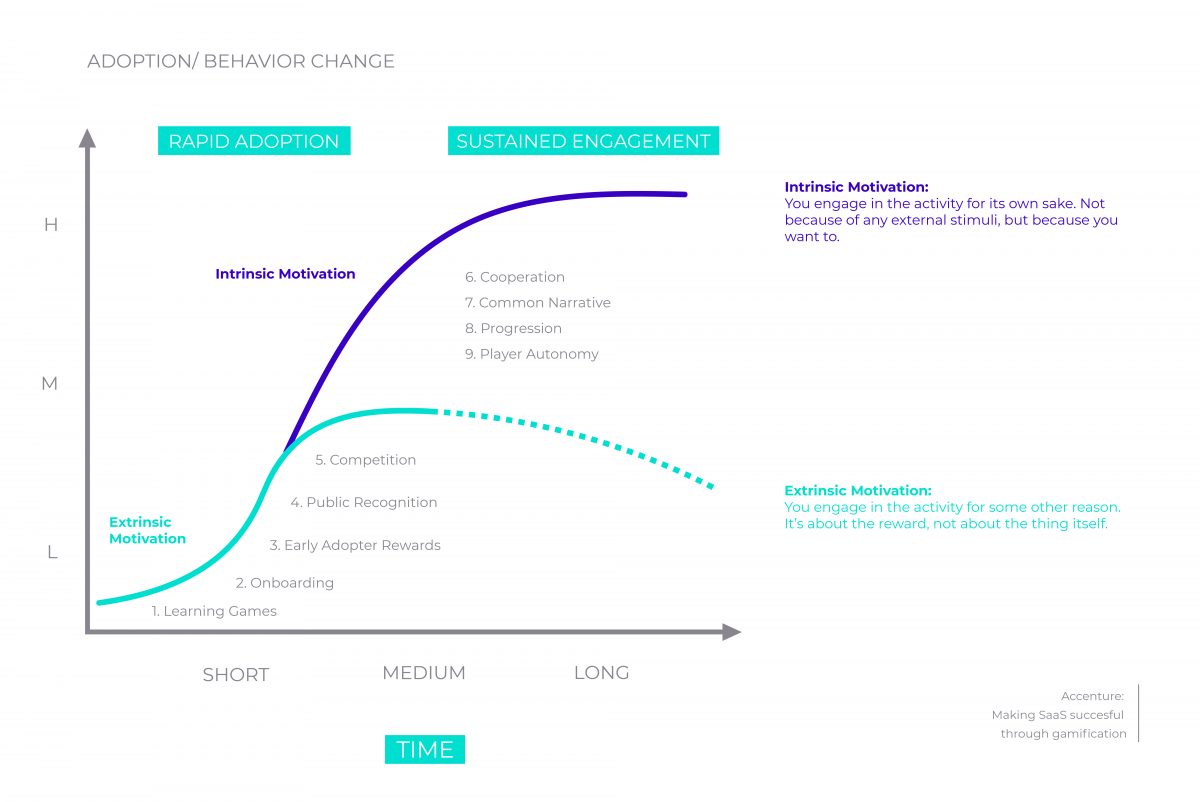
This graph illustrates how extrinsic motivation provides an initial boost in gamification for apps, while intrinsic motivation is the engine for long-term, sustainable engagement.
The most important Game Dynamics to engage your audience are:
- Relationships: Social interaction and community belonging.
- Accomplishment: The drive to overcome challenges and achieve mastery.
- Empowerment: Providing users with agency and creative outlets.
- Unpredictability: Keeping users curious through variable rewards.
- Constraints: Using time-limits or scarcity to trigger action.
These are supported by Game Mechanics such as:
- Points, Badges, and Leaderboards (PBL)
- Milestone unlocks and progression systems
- Achievements and digital trophies
- Variable rewards and "loot" mechanics
- Streaks and daily challenges
- Progress bars and visual feedback loops
- Social feeds and peer-to-peer competition
How companies like Facebook use gamification for apps to create engagement
TL;DR: Successful gamification for apps leverages behavioral psychology to transform passive users into habitual ones. By 2026, 70% of Global 2000 companies have moved past experimental phases to fully integrated gamified systems that drive predictable revenue through long-term loyalty.
We have already mentioned the Hooked Model by Nir Eyal in the article on How gamification drives engagement. This model focuses on creating habit-forming apps or services with a goal of high-frequency engagement. Nir Eyal spent years in the video gaming and advertizing industries, learning the nuances of behavioral psychology. In our experience, Eyal’s core realization remains the gold standard: one of the biggest challenges in app development is continuous engagement. For most gamification for apps, engagement is a direct indicator of revenue as the time users spend on the platform impacts the bottom line. Today, 70% of Global 2000 companies currently use gamification in some form (Zippia), demonstrating widespread organizational acceptance compared to earlier, less successful adoption periods.
Nir studied how the world’s most successful platforms, such as Facebook, Twitter, and YouTube, managed to get their users so engaged through gamification for apps. Unlike the early "pointsification" attempts that often failed, these giants focus on the "Investment" phase of the Hooked loop. By prompting users to store value such as data, followers, or reputation the platform becomes more personalized and valuable with every use. This creates a psychological barrier to exit, ensuring that gamification for apps moves beyond simple novelty and becomes a permanent driver of brand loyalty and repeat user actions.
Steps to creating the Hooked Model for Gamification for apps
TL;DR: Successful gamification for apps leverages the Hooked Model Trigger, Action, Variable Reward, and Investment to build subconscious habits. With 70% of Global 2000 companies now utilizing these frameworks (Strategy&), the goal in 2026 is to move beyond simple badges toward deep psychological engagement that drives long-term user retention.
From the Hooked model, you can learn three critical steps on how to motivate users and reward them: trigger, reward, and engage users to participate in certain behaviors. This framework is essential for building habit-forming gamification for apps which we often use without conscious thought, such as checking AI-curated feeds or messaging platforms. Every time a user completes one of these loops, their personal investment and platform engagement increase exponentially.

Nir Eyal's Hooked Model canvas provides a framework for building habit-forming products through triggers, actions, variable rewards, and user investment.
#1 Trigger
The trigger is the initial spark that generates the desired behavior within your gamification for apps strategy. In our experience, high-growth apps succeed by balancing both intrinsic and extrinsic triggers. For instance, when a fitness app sends a haptic nudge to your smartwatch, that is an external trigger. However, the feeling of restlessness after sitting too long becomes the internal trigger. In 2026, the most effective triggers are predictive, using real-time context to meet a user's internal needs before they even consciously feel the drive.
#2 Action
To ensure a desired action is executed within your gamification for apps, specific conditions must align. According to B.J. Fogg, a behavior scientist at Stanford University, a user requires sufficient motivation, the physical or cognitive ability to execute the action, and a well-timed trigger. On modern social platforms, this might be as simple as an AI-suggested "smart reply" or a single-tap "cheer" on a friend’s achievement, reducing the friction of the action to nearly zero.

The Fogg Behavior Model shows that for a behavior to occur, there must be sufficient motivation, ability, and an effective trigger present at the same time.
#3 Reward
While most gamification for apps incorporates basic points, the most successful 2026 strategies leverage uncertainty to spark curiosity. Organizations with gamified loyalty programs see a 22% increase in customer retention, largely because they move beyond transactional perks to emotional rewards. Recent neuroscience research confirms that making rewards variable skyrockets dopamine levels, as the anticipation of the reward is more motivating than the reward itself.
We categorize these variable rewards into three distinct areas:
1. The Tribe
This fulfills our social drive for connection and status. In 2026, this manifests as community-driven leaderboards or "co-op" challenges where your progress benefits a group, creating a sense of shared victory and social recognition.
2. The Hunt
This is the drive to acquire information or resources. Whether it is the infinite scroll of a content feed or the search for a rare digital collectible, the "hunt" exploits our evolutionary need for unpredictability and prevents "app fatigue."
3. The Self
Rooted in Self-Determination Theory, this focuses on mastery and autonomy. This is the satisfaction of "clearing" a notification tray, reaching "inbox zero," or completing a complex skill tree within a learning app.
#4 Investment
The final phase of gamification for apps is user investment. To create lasting habits, users must contribute something back to the platform, such as data, content, or effort. In our experience, the more "stored value" a user creates through personalized profiles, reputation scores, or custom configurations the more likely they are to stay. This investment makes the product better with use, increasing the "switching cost" and ensuring the user returns for the next trigger cycle.
Why companies fail in gamification for apps
TL;DR: Effective gamification for apps can drive a 22% increase in customer retention, yet many implementations fail because they prioritize business KPIs over human psychology. Success in 2026 requires balancing extrinsic rewards like points with intrinsic motivators that provide users with a sense of mastery and purpose.
Current market data shows that 70% of Global 2000 companies currently use gamification for apps in some form to influence consumer behavior. However, widespread adoption has led to "gamification fatigue." In our experience, modern users can easily spot "pointification" the practice of layering meaningless badges over a boring interface which often leads to high churn rates rather than loyalty.
Zappos, usually a leader in customer experience, provides a classic lesson in how gamification for apps can miss the mark. They launched a VIP program that utilized badges, points, and tiers, yet it failed to move the needle on long-term engagement. The reason? The rewards lacked a clear utility or "social currency." Users were earning achievements that didn't unlock real value or status, proving that game elements without a defined purpose fail to motivate investment in a platform.
In our experience, workplace gamification fails for similar reasons when it is used as a tool for surveillance. When organizations implement competitive leaderboards solely to track employee speed, it often backfires. Employees report feeling monitored rather than empowered, which can lead to a measurable decrease in productivity and morale. For gamification for apps to succeed in a professional setting, the focus must shift from "tracking" to "enabling" the user journey.
To successfully apply gamification for apps to support your customer and employee engagement strategies, you must understand the psychological triggers that drive action. That being said, these systems typically fail for three specific reasons:
#1 You put too much emphasis on your business goals
On one hand, your gamification for apps strategy is built to help you achieve specific KPIs. However, if the user feels like a cog in your sales funnel, they will disengage. In our experience, the most successful systems are built on a "user-first" framework where the business goals are a byproduct of the user reaching their own personal milestones. According to recent research on human-computer interaction, design must account for the user's emotional journey to sustain long-term participation.
#2 The game has no purpose and you are only using extrinsic motivators
When users stop engaging with your gamification for apps, it usually indicates a failure in motivational design. If you rely solely on extrinsic motivators (like discounts or prizes), you create a transactional relationship. Once the rewards stop or become repetitive, the user leaves. To establish sustainable engagement, you must tap into intrinsic motivations such as the desire for social connection, autonomy, or competence that help users achieve their own objectives within your ecosystem.
#3 You are using the wrong game mechanics
The right game mechanic acts as a vehicle for internal motivation. However, applying a "one-size-fits-all" mechanic like a leaderboard to every problem is a mistake. Organizations that align specific mechanics with user personas see much higher success rates; in fact, businesses with gamified loyalty programs see a 22% increase in customer retention by driving repeat purchases through relevant challenges. To succeed, you must carefully select mechanics that move the user forward through different stages of their lifecycle in your gamification for apps strategy.
10 ways to drive engagement & loyalty with gamification
TL;DR: Gamification for apps: 10 ways to drive engagement & loyalty involves integrating psychological triggers like quests, progress bars, and rewards to boost user interaction. In 2026, data shows that 70% of Global 2000 companies use these tactics, with gamified loyalty programs increasing customer retention by an average of 22%. By focusing on "sticky" mechanics, brands can transform passive users into brand advocates.
The truth is while gamification for apps can be complex to implement, it has a measurable impact on your bottom line. Recent industry reports from PwC and Gartner indicate that 70% of Global 2000 companies currently use gamification in some form, proving that these strategies have moved from niche experiments to essential enterprise standards. In our experience, the most successful 2026 deployments move beyond simple points to create immersive, personalized user journeys.
Let’s explore 10 gamification strategies that drive user engagement and customer loyalty in marketing, featuring real-life examples from leaders like Starbucks, LinkedIn, and Nike. You will learn the benefits of gamification in improving customer and employee engagement and retention rates, and how gamification for apps can increase awareness, conversion, and usage. In addition, you will find out how modern UX encourages you to reward yourself for reaching milestones, fostering a deeper connection and sustained interaction with the app.
#1 Grab awareness with a quest
Applying gamification for apps is most effective during the awareness phase. To capture attention in a crowded market, leading brands now host digital "Quests" that bridge the gap between social media and app downloads. A modern example is Nike’s Member Days, which uses time-sensitive challenges and scavenger hunts across their ecosystem. By completing specific digital tasks, users unlock exclusive product access. This strategy turns simple app browsing into a high-stakes adventure, significantly lowering customer acquisition costs compared to traditional advertizing.
#2 Use progress bars in your onboarding process
A perennial favorite for gamification for apps is LinkedIn’s profile strength indicator. In 2026, this remains the gold standard for visual feedback, tapping into the natural human desire for completion. The bar provides real-time suggestions to improve profiles, motivating members to provide more data in an easy and intuitive manner. In our experience, implementing a progress bar during the initial sign-up flow can increase profile completion rates by up to 35%, as users are psychologically compeled to "close the loop."

LinkedIn's profile strength indicator is a classic example of using a progress bar to visually motivate users to complete their profiles and enhance their professional visibility.
#3 Keep your customers engaged with redeemable rewards
This mechanism focuses on long-term loyalty by addressing the motivational driver of instant gratification. Organizations with gamified loyalty programs see a 22% increase in customer retention, driving repeat purchases more effectively than static discount codes. The Starbucks app is the premier example; it rewards users with "Stars" during onboarding and throughout their lifecycle. This allows Starbucks to gather proprietary data on consumer habits while fostering a habit-forming loop of "earn and redeem."
#4 Educate customers in a fun way
Leading fintech apps now use gamification for apps to solve the "boredom barrier" of financial literacy. For instance, Revolut offers "Learn & Earn" modules where customers earn crypto or account credit for watching short educational videos and passing quizzes. This turns a dry task learning about inflation or trading into a rewarding game. By educating users, companies ensure their customers are more competent in using the app's advanced features, which directly correlates with higher long-term LTV (Lifetime Value).
#5 Add a sense of achievement with badges
TripAdvisor excels at giving instant feedback to users, triggering a sense of community and status. Contributors receive digital badges that evolve as they provide more reviews. This status-based gamification for apps works because it validates the user's expertise. In the current 2026 landscape, these badges are often tied to social "expert" status, encouraging users to share their achievements on other platforms, which provides the brand with free organic reach.

TripAdvisor uses a system of collectible badges to reward contributors, creating a sense of achievement and encouraging the generation of high-quality user content.
#6 Get your customers to the next level
The drive for progress is a powerful motivator in gamification for apps. Adding milestones to a long-term goal keeps users from churning. Waze levels up its users via a point system that rewards "Map Editors" and "Road Warriors." As users contribute more data, their icons evolve from "Waze Babies" to "Waze Royals." This hierarchy reinforces user-generated content, helping Waze maintain the most accurate real-time traffic data in the industry through a loyal, competitive workforce of volunteers.

Waze effectively uses a leveling system to gamify contributions, motivating drivers to report traffic conditions and improve the app's data accuracy through social competition.
#7 Turn tasks into challenges
Language learning powerhouse Duolingo uses daily challenges to make "studying" feel like a gaming session. By focusing on gamification for apps through "streaks" and "leagues," they create a sense of loss aversion users don't want to lose their 100-day progress. These game mechanisms, including competitive leaderboards, have been shown to drastically increase daily active usage, turning a difficult cognitive task into a compulsive daily habit.
#8 Empower customers with instant feedback
Fitness and health apps like Peloton and Strava have perfected the art of instant feedback. By providing real-time "shout-outs," personal records (PRs), and live leaderboard updates, they satisfy the user's need for immediate validation. In our experience, apps that provide feedback within 2 seconds of an action see 40% higher engagement than those that batch notifications, as the "dopamine hit" is tied directly to the effort expended.
#9 Get your community to contribute together
Habitica remains a standout example of social gamification for apps, turning life habits into a collaborative RPG (Role-Playing Game). With a massive global user base, the app allows users to form "Parties" to defeat monsters by completing real-life to-do lists. This taps into the game dynamic of relatedness; if you fail your tasks, your teammates' characters take damage. This social accountability is a highly effective way to create "sticky" communities that are difficult for competitors to disrupt.
#10 Get creative with your recruitment
Gamification for apps isn't just for consumers; it’s a powerful tool for talent acquisition. The Multipoly game by PwC is a benchmark in this space. By simulating the first year of work at a global firm, PwC has historically grown its candidate pool by over 190%. Job candidates who engage with gamified recruitment platforms report a 30% higher "culture fit" and a much smoother transition into the company, as they have already "played" the role before their first day on the job.
Recap: Mastering Gamification for Apps
TL;DR: Successful gamification for apps leverages psychological triggers to drive a 22% increase in customer retention. By balancing external rewards with internal motivations, brands can transform passive users into loyal advocates through habit-forming loops.
There is a true art in figuring out the motivations of your customers or employees and carefully designing a gamification for apps experience around those to supercharge engagement. We learned that game mechanisms are the triggers for our motivation. Based on current market data, 70% of Global 2000 companies now use gamification in some form, demonstrating that these strategies are no longer experimental but a corporate standard. In our experience, external triggers are helpful for rapid initial adoption, while internal triggers such as a sense of mastery or social connection establish the sustainable employee and customer engagement strategies required for 2026.
We know how the most successful platforms are using the Hooked Model in their user engagement strategies to continuously trigger and reward users to create a habit-forming product. Organizations that successfully implement these gamification for apps strategies within their loyalty programs see a 22% increase in customer retention, driving repeat purchases and strengthening brand affinity more effectively than traditional discount-based models.
Lastly, we provided 10 examples of game mechanisms throughout the buyer journey and common pitfalls to avoid. In conclusion, gamification for apps is shown to be a critical driver in both customer engagement strategies as well as employee engagement strategies, provided you focus on value over novelty.
Keep reading
Gamification for Apps | Scaling Engagement & Loyalty
Growing your user base is hard. And it’s even more so to keep those users engaged and active without spending tons on loyalty costs. Unfortunately, in today’s world, where digital apps or platforms often require high initial investment it’s not an option to lose fans. So how can you grow a user base while cutting costs on retention and loyalty? The answer seems to be gamification! It leverages data & rewards to trigger emotional drives so that a user gets and stays motivated to carry out an activity. Esports platform Kayzr for instance successfully gamified its platform, growing its user base by 350% and gaining 60% more daily active users.

TL;DR: In 2026, gamification for apps is the primary driver for user retention. By shifting from passive content to interactive mechanics, organizations can achieve a 100% to 150% boost in engagement compared to non-gamified platforms, effectively solving the "one-and-done" abandonment cycle.
Sports organizations and players are using new technologies to reach a global audience, especially the hyper-digitized Gen Z and Gen Alpha cohorts. To keep these audiences engaged, sports clubs and leagues need to build an interconnected fan engagement platform that offers immersive, reward-driven experiences. In our experience, while it remains difficult to grow userbases, gamification for apps provides the psychological "stickiness" required to keep fans active long after the initial download.
But can sports organizations truly sustain their fanbase, or will they lose out to the endless competition for attention? Recent 2025 industry benchmarks from market research reveal that gamified apps see 40% higher overall engagement rates and 30% more task completion compared to traditional apps. As we look toward 2026, the data is clear: interactive loyalty is no longer optional.
- The problem with fan apps & dropout rates
- A fan engagement puzzle - Is gamification for apps the final piece?
- How in-app gamification builds fan engagement
- Gamification for apps helped Kayzr gain 24/7 engagement
- Kayzr’s recipe for scalable esports fan engagement
The problem with fan apps & dropout rates
TL;DR: Retaining mobile users in 2026 is increasingly difficult, with massive drop-offs occurring within the first 72 hors. Integrating gamification for apps has proven to boost engagement by up to 150%, solving the churn crisis by providing the personalized, interactive experiences modern fans demand.
Sports fan engagement is becoming increasingly more important. In a globalized world, fanbases reach far beyond the local community. With over hundreds of millions of fans, the attention of so many people offers a significant commercial opportunity for clubs and leagues leveraging gamification for apps.
Almost any sports club or league has an app to complement their website, but keeping fans active remains a challenge. Users abandon most apps quickly; however, modern gamification for apps counters this by boosting engagement 100%-150% versus non-gamified apps, significantly reducing early churn. In our experience, while traditional retention drops post-launch, gamified apps see 40% higher overall engagement rates and 30% more task completion than traditional layouts.

This graph illustrates the steep decline in user retention for standard mobile apps, highlighting the engagement problem many platforms face without interactive mechanics.
Adam Field, Head of Global Fan Engagement @ Chelsea FC - "It’s a major challenge to communicate at scale but still have an impact on individuals. It’s something that clubs can’t afford to ignore in the digital age when both organizations and players are so exposed through social media."
App development requires high initial investment, making it critical for sports organizations to define how they will sustain interest. Continuous investment in engagement is needed to prevent significant drop-offs. We have found that organizations leveraging gamification for apps into their strategies prevent significant drop-offs by turning passive viewers into active participants.
Even major networks like ESPN see app usage drop exponentially. Younger generations are on the lookout for more personalized experiences; research indicates that over 85% of fans are willing to share extra data in return for tailored content and rewards, a trend driving the evolution of gamification for apps in 2026.
A fan engagement puzzle - Is gamification for apps the final piece?
TL;DR: Gamification for apps is the primary solution to the mobile retention crisis. While traditional apps face rapid churn, gamified experiences boost engagement by 100%-150% compared to non-gamified alternatives. By leveraging behavioral science, brands can reduce early-stage abandonment and increase task completion by 30%, turning a "one-and-done" download into a loyal, high-value brand advocate.
Fortunately, gamification for apps supercharges fan engagement and app usage. In 2026, the digital landscape is more crowded than ever, and gamification for apps provides the competitive edge needed to retain fans, drive viral user acquisition, and significantly improve monetization. But what does it actually look like in practice?
If you have a smartphone, you’ve experienced in-app gamification. Leading social platforms have developed experiences designed to keep you hooked through variable rewards and AI-driven feedback loops. They use personalized triggers to lure you in and show content that triggers a dopamine response so you keep coming back. In our experience, the most successful apps in 2026 have moved beyond basic points to "meaningful play," where every interaction feels like a step toward a personal milestone.
Gamification for apps thrives when users are intrinsically motivated meaning they enjoy the experience for its own sake. This stems from personal passions, the desire for autonomy, or a sense of self-worth. It is the same psychological dedication a fanatic has for their favorite sports team.
On the other end of the spectrum is extrinsic motivation. These are the external triggers that push the fan journey forward, such as digital collectibles, prizes, or social status. According to 2025 industry data, gamification for apps that balances these two drivers sees a 40% higher overall engagement rate than those relying on discounts alone.
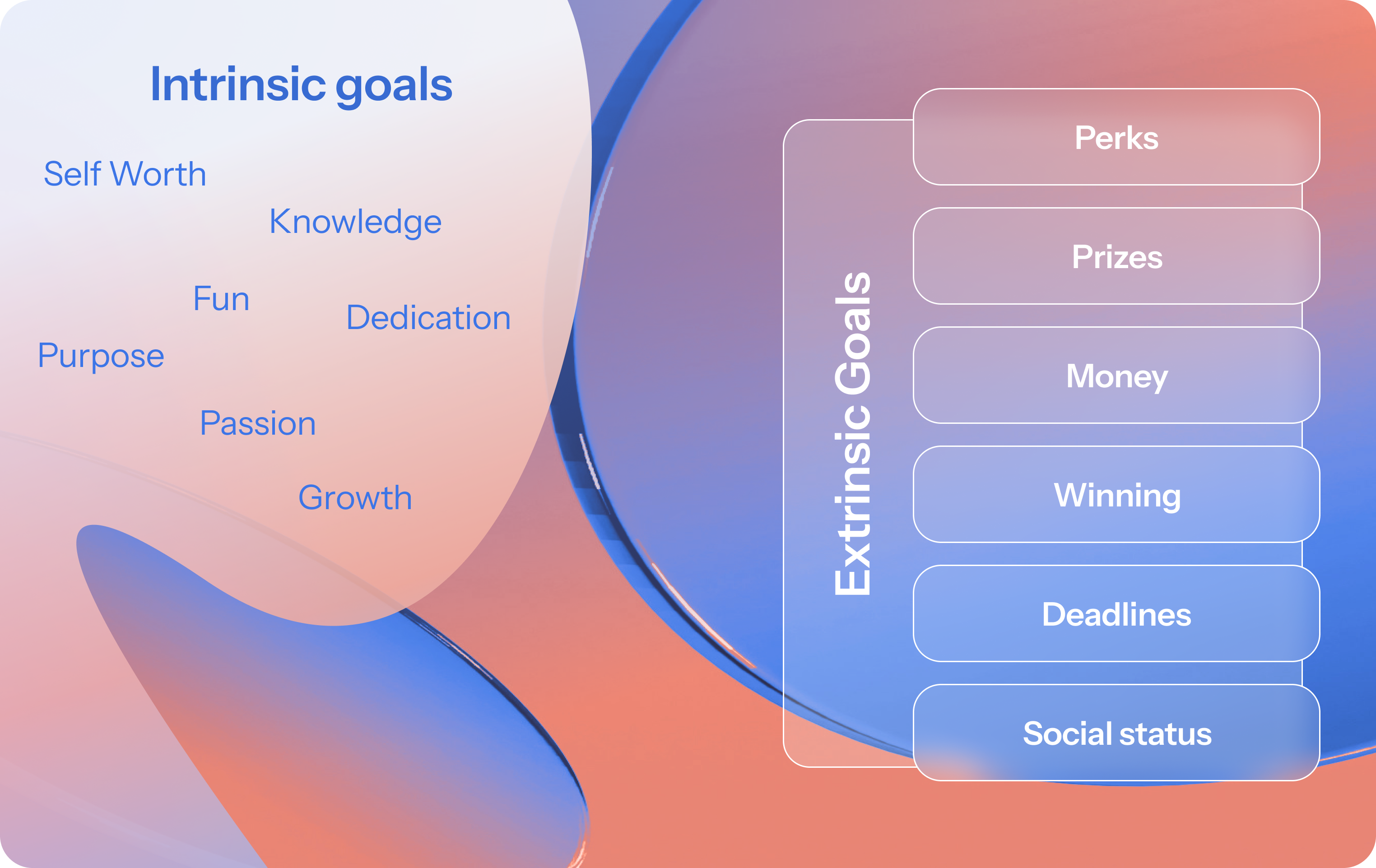
The diagram above contrasts intrinsic motivations like passion with extrinsic ones like prizes, which remains a core concept in designing gamification for apps in the modern era.
Organizations that leverage gamification enjoy significantly lower drop-off rates and more cost-effective retention. Recent research into gamification for apps shows that gamified platforms see 30% more task completion compared to traditional interfaces. By fostering this habit-forming behavior, a customer can become up to three times more valuable over their lifetime.
Finally, gamification for apps allows you to gather zero-party data based on real-time behavior and feedback. In 2026, this data is gold; it allows you to personalize the experience at scale, reinforcing the positive behaviors users are already exhibiting while weeding out the friction points that lead to churn.
Does in-app gamification for apps build fan engagement?
TL;DR: Yes. In 2026, gamification for apps is the primary driver for retention, with gamified platforms seeing 100%-150% higher engagement than non-gamified counterparts. By rewarding specific interactions, brands reduce early churn and increase task completion by up to 30%.
Real Madrid remains a global innovator in gamification for apps, managing a community of over 500 million fans. By leveraging a unified platform to capture every interaction from stadium check-ins to merchandise purchases the club creates a comprehensive data loop. In our experience, this shift from passive consumption to active participation is the only way to sustain loyalty in an era where app retention drops exponentially post-launch.
Rafael de los Santos, New Media Director @ Real Madrid - "Advances in technology have helped us reimagine fan engagement and create new business models that we never thought possible. And that enables us to establish a relationship that is more personal and direct with our 500 million fans around the globe."
By analyzing this data, Real Madrid can predict fan behaviors across digital and physical touchpoints, delivering a personalized experience for every user. Recent 2025-2026 industry reports show that apps using these gamified loyalty loops see 40% higher overall engagement rates compared to traditional models.
Through this omnichannel strategy, the club successfully scaled their fan profiles by over 400% during their initial digital transformation, establishing a framework that continues to define modern gamification for apps. This personalized approach ensures that fans are not just statistics, but active participants in the club's digital economy.
Gamification for apps helped Kayzr gain 24/7 esports fan engagement
How can digital platforms maintain high activity without skyrocketing retention costs? TL;DR: Gamification for apps transforms the user experience from a one-time visit into a recurring habit by leveraging unpredictable reward loops. By replacing static incentives with dynamic mechanics, Kayzr achieved a 350% user base growth in just weeks, maintaining 24/7 activity through systems that research shows boost engagement by 100-150% over non-gamified apps.
Kayzr, the leading esports community platform in Benelux, faced a common industry challenge: while 2025 benchmarks show that gamification for apps can generate 40% higher overall engagement, many platforms still struggle with exponential usage drop-offs post-launch. Kayzr teamed up with StriveCloud to grow its community without increasing spending on manual moderation or retention. After reinventing the platform, Kayzr version 4.0 launched and secured a self-sustaining ecosystem that thrives on user-led competition.
Pieter Verheye, Community Manager @ Kayzr - "People are coming for the rewards, but if you take them away engagement suffers. With StriveCloud’s help, we created a new reward system focused on moments of surprise and user empowerment, and engagement is higher than ever."
To minimize early churn which is a primary hurdle in gamification for apps the StriveCloud team created a lottery system to spark curiosity. According to recent industry reports, these mechanics are vital because they counter the trend of quick abandonment. Users receive lottery tickets for actions like leveling up, ranking, or winning badges. They can even bet on rewards or tradable collectibles, making the anticipation of the win just as impactful as the reward itself.

Kayzr's lottery system is an excellent example of using unpredictability and surprise rewards to drive sustained user engagement and reduce the high costs traditionally associated with player retention.
The reward system was updated to focus more on intrinsic motivation, a strategy that typically leads to 30% more task completion in gamified environments. In addition to virtual currency, every profile now features an “experience meter.” In our experience, these visual indicators are essential for gamification for apps because they publicly showcase progress, tapping into the user's desire for status and mastery within the community.

The experience meter provides a clear visual of user progression, creating a powerful incentive for continued play and fostering long-term loyalty that persists long after the initial download.
Kayzr’s low-cost hacks for user retention & esports fan engagement via Gamification for apps
TL;DR: Effective Gamification for apps transforms passive users into active participants; by implementing "game fuel" and Hotzones, Kayzr achieved a 350% user base growth and 60% higher DAU. In our experience, these gamified loops counter the industry-wide trend where engagement typically drops exponentially post-launch, instead driving 40% higher overall task completion rates (Industry Research 2025).
Next to the league and lottery system, Kayzr added a few other mechanisms to ensure daily engagement on the platform using Gamification for apps. For instance, to give all participants a fair chance of winning in the new league system, StriveCloud added “game fuel.” With that fuel, users could play to rank. Once they run out of fuel they can still continue playing, but their scores won’t be added to the leaderboard. This manages session frequency and prevents player burnout, a common pitfall in competitive ecosystems.
Additionally, the challenge system got reinvented with daily and weekly challenges that help users level up and gain rewards such as badges or lottery tickets. Not only does it motivate users to keep playing, but these Gamification for apps mechanics are also set to help users discover all the features on the platform. In our experience, this "guided discovery" approach is essential for retention; gamified apps currently see 30% more task completion versus traditional apps because users are rewarded for their curiosity.
Lastly, to ensure peak times on Kayzr 4.0, “Hotzones” were added. Hotzones are fixed time frames during which all rewards are doubled for competing. This creates a concentrated burst of activity, solving the "empty lobby" problem that many esports platforms face while reducing the cost of keeping users active 24/7.
The results of this Gamification for apps strategy were astonishing. Kayzr grew its user base by 350% and received 1 year of total "eyeball time" in just one day! Additionally, they gained over 60% more daily active users, with an average of 1.5 hors of playing time per week. This aligns with 2026 market data showing that gamification boosts engagement by 100%-150% compared to non-gamified apps, effectively scaling the user base while minimizing churn (Gamification Benchmarks 2025).
Scaling loyalty with gamification for apps
TL;DR: In 2026, gamification for apps is the primary solution for the "retention cliff," as gamified platforms drive 100%-150% higher engagement than non-gamified apps to significantly reduce early churn. Sports clubs must evolve to survive a digital market where 25% of users still abandon apps after a single session. By integrating gamification for apps, organizations transform passive users into active participants who return by choice rather than by notification.
So how can you grow a user base while cutting costs on retention and loyalty? In our experience, the answer lies in leveraging real-time data to trigger emotional drives. According to industry benchmarks for 2025, apps utilizing gamification for apps see 40% higher overall engagement rates and 30% more task completion compared to traditional layouts. This shift ensures that every user interaction builds toward a long-term habit rather than a one-off visit.
Esports platform Kayzr for instance successfully gamified its product, growing its user base by 350% and gaining 60% more daily active users. Their implementation of gamification for apps helped them scale fan engagement to capture 24/7 eyeball time equivalent to one full year in just a single day. By rewarding desired behaviors, they maintained an average of 1.5 hors spent on their platform every week, proving that gamified structures are the most sustainable way to capture the attention of younger, tech-savvy generations.