

Dive into top reads
68 successful gamification examples to unlock user engagement & loyalty
Looking to incorporate gamification into your strategy? Discover how successful companies are using gamification to increase their users' engagement & loyalty, and drive business growth. Explore 68 real-life gamification examples from various industries including fintech, education, e-commerce, mobility, and more. Don't miss out on this comprehensive guide to gamification!

People just love to play games! In 2026, the global gamification market is projected to reach USD 36.46 billion. TL;DR: Leading apps use gamification examples like social tiers and progress bars to tap into innate behavioral psychology, often increasing monthly active users by over 60%. By extracting game mechanics such as points, levels, badges and applying them to non-game contexts, you can transform passive interactions into deep user loyalty.
This introductory image highlights the core concept that gamification elements can significantly boost user engagement across various applications, from fintech to healthcare.
In our experience, the most successful implementations move beyond simple rewards to create a sense of competence and social connection. For instance, gamified wellness platforms are now achieving a 71% boost in monthly engagement simply by refining their achievement tiers. To demonstrate how you can achieve similar results, we’ve analyzed 68 gamification examples across 13 industries. You will discover how these apps applied game elements to motivate user actions and drive sustainable growth!
Here’s what you’ll learn:
- Gamification examples fintech
- Gamification examples banking
- Gamification examples health & fitness
- Gamification examples telecom
- Gamification examples education
- Gamification examples retail
- Gamification examples ecommerce
- Gamification examples mobility apps
- Gamification examples productivity apps
- Gamification examples social networking apps
- Gamification examples loyalty programs
- Gamification examples travel apps
- Other gamification examples
Gamification examples from fintech
In 2026, fintech leaders are moving beyond basic badges to embrace sophisticated behavioral design. TL;DR: Gamification in fintech now drives the global market toward a projected USD 36.46 billion valuation by 2026. By transforming complex financial tasks into rewarding "milestone" journeys, apps are achieving up to a 71% boost in monthly engagement and slashing customer acquisition costs (CAC) by over 80% compared to traditional banking models.
Moven Gamification Example: CRED program slashes customer acquisition costs
Moven is a branchless, paperless, and mobile-first bank that remains a pioneer in using gamification to improve app engagement. Their CRED program was designed to collect deeper user insights by positioning the app as a "financial health assistant" rather than a static ledger. In our experience, this shift from "transactional" to "relational" is what defines the most successful 2026 fintech strategies.
CRED replaces traditional, static credit scores with dynamic financial health ratings. Factors like social media intelligence and real-time spending patterns influence the score. This gamified metric fluctuates based on positive habits, such as hitting savings targets or reducing impulse buys. This creates a feedback loop where users are incentivized to check the app daily to see their "health" improve.
Because of this high-value viral loop, Moven is able to acquire customers at a cost of roughly $50 per user. This is significantly lower than the current industry average for financial services, which often exceeds $300. By gamifying the onboarding and retention process, Moven turns its user base into a self-sustaining marketing engine.
Qapital & Monefy Gamification Examples: change financial habits for the better
Both Qapital and Monefy have mastered the art of "habit stacking" through gamified expense tracking. These apps use progress visualization to help users install long-term saving habits. In the current landscape, these features have led to a 71% boost in monthly engagement for wellness-focused platforms, as users respond more effectively to tiers and achievements than to spreadsheets.
On Qapital, users can create "If This, Then That" (IFTTT) triggers. For instance, every time you buy a coffee, the app "piggybacks" a 50-cent deposit into a savings goal. Monefy complements this with high-contrast visual feedback, showing spending categories in a color-coded ring that shrinks or expands based on your remaining budget. This immediate gratification—or "pain of paying" visualization—is a psychological anchor that keeps users coming back.
Both apps succeed because they make saving goals tangible. By 2026, Qapital has helped millions of users reach milestones they previously thought impossible. Monefy continues to dominate the Google Play store with a 4.5-star rating, proving that even simple visual gamification can sustain long-term loyalty.
Smarty Pig Gamification Example: gamify your finances to save more
Smarty Pig is a high-yield savings tool that functions like a digital "piggy bank" on steroids. The app allows users to set specific, personalized goals—like a "2026 Summer Trek" or a "Down Payment." As users add money, a progress bar fills up, providing a visual dopamine hit that makes budgeting feel satisfying rather than restrictive.
In our experience, personalization is the "secret sauce" for 2026 fintech engagement. Smarty Pig allows users to upload photos of their goals and share their progress with friends, adding a layer of social accountability. The results speak for themselves: the platform has processed over $250 million in deposits, driven largely by its ability to make the "boring" act of saving feel like a win-state in a game.
The app’s success is a blueprint for how gamification can drive liquidity. By visualizing the "finish line," Smarty Pig reduces the likelihood of users withdrawing funds early, effectively increasing the lifetime value (LTV) of every customer.
Build a fintech app customers love to use! With gamification, you can grow an active and loyal community. Discover how!
Gamification examples from banking to unlock user engagement & loyalty
TL;DR: Effective gamification examples to unlock user engagement & loyalty in the financial sector focus on bridging the "product usage gap." By rewarding customers for completing educational milestones, institutions like OTP Banka Hrvatska have increased mobile banking sign-ups by 16% and boosted transaction volume by 13%, demonstrating that play-based learning is a primary driver of financial retention in 2026.
As the global gamification market is projected to reach USD 36.46 billion in 2026, banking institutions are shifting away from generic rewards toward hyper-personalized financial coaching. In our experience, gamification examples to unlock user engagement & loyalty succeed most when they transform complex financial products into digestible, interactive challenges. We’ve observed that users are 3x more likely to adopt a new financial tool if the onboarding process is gamified rather than strictly instructional.
OTP Banka Hrvatska Gamification Example: motivate product education to drive sales
European bank, OTP Banka Hrvatska, implemented gamification for apps in order to solve a common industry bottleneck: up to 90 percent of bank products remain unused after the initial account opening. To combat this, they replaced traditional brochures with interactive quests.
Users earned points and prizes for completing different challenges linked to product education. Instead of promoting products to increase consumption, the bank chose to prioritize these gamification examples to unlock user engagement & loyalty by educating its customers on the specific benefits of high-value services, such as credit monitoring and prepaid features.
Of the 30 to 40-year-old target group, 87% completed at least one challenge, with an average of 13.3 challenges per participant. This high level of participation led to 16% more sign-ups for mobile banking services, as well as a 13% increase in prepaid Mastercard usage. In the 2026 landscape, where digital competition is at an all-time high, these results highlight how "education-as-a-game" can directly impact the bottom line.
Increase customer engagement on your banking app with gamification. Discover how!
Gamification examples from health & fitness
TL;DR: In 2026, health and fitness brands leverage 68 successful gamification examples to unlock user engagement & loyalty by transforming routine physical activity into rewarding, social, and data-driven experiences. With the global gamification market projected to hit $36.46 billion this year, features like streaks, social leaderboards, and personalized milestones have become the industry standard for driving long-term retention.
Fitbit Gamification Example: leverages gamification to keep users healthy
Fitbit remains a powerhouse by using 68 successful gamification examples to unlock user engagement & loyalty through wearable tech and a deeply integrated app. Users earn virtual badges for reaching specific milestones, such as walking the equivalent length of the Serengeti. In our experience, the visual feedback provided by the progress circle creates a powerful "closed-loop" motivation system that encourages users to complete their daily goals.

This screenshot from Fitbit showcases how badges and progress circles motivate users to achieve their fitness goals.
Additionally, Fitbit creates a sense of social connectedness by allowing you to compete with friends or share your results on social media. The social element is a massive driver of retention; industry reports suggest that users with a connected social circle in-app are significantly more active than those who train in isolation.
Freeletics Gamification Example: leverages community to promote fitness
Freeletics uses 68 successful gamification examples to unlock user engagement & loyalty by turning a solo workout into a community event. The app features a virtual coach and training programs, but the real magic lies in its social feed. Users follow one another, compare PRs (Personal Records), and give "Clap-outs" for finished sessions.
On the user profile, you can track how many workouts a user completed, what level they are at, and the badges they have earned. Much like Strava, the community drives people to support each other. Our research indicates that this peer-to-peer accountability is one of the most effective ways to reduce churn in subscription-based fitness models.
Headspace Gamification Example: creates zen-masters
Headspace has evolved meditation into a habit-forming journey using 68 successful gamification examples to unlock user engagement & loyalty. Users are rewarded for reaching meditation milestones and can unlock high-quality animations that explain complex mental health concepts. This sense of progression turns an abstract practice into a tangible "leveling up" experience.

The Headspace app uses friendly visuals and tangible rewards to make daily meditation a satisfying and engaging habit.
Finally, there are weekly group challenges that foster a sense of shared purpose. By making mindfulness a social activity rather than a solitary chore, Headspace has maintained its position as a leader in the wellness space, reaching tens of millions of users globally through its "relatedness" mechanics.
Calm Gamification Example: streaks incentivize daily engagement
Calm utilizes 68 successful gamification examples to unlock user engagement & loyalty by mastering the "streak" mechanic. As the global gamification market climbs toward USD 36.46 billion in 2026, Calm has stayed ahead of competitors by prioritizing daily usage consistency. Streaks track a user’s consecutive days of app usage, which is vital for building a sustainable meditation habit.
The results of these mechanics are quantifiable. Similar wellness platforms have seen a 71% boost in monthly engagement and a 62% increase in monthly active users just by implementing tiered achievements and daily streaks. Calm sends personalized reminders to "protect your streak," effectively using loss aversion to keep users coming back every morning.

This example from Calm demonstrates how tracking streaks can powerfully incentivize daily app use for meditation and wellness.
Insight Timer Gamification Example: a personalized user experience increases ownership
Insight Timer proves that personalization is one of the most effective 68 successful gamification examples to unlock user engagement & loyalty. The app offers unparalleled autonomy, allowing users to customize every aspect of their experience, from the sound of the starting bell to the specific duration of silence.
- Choose from hundreds of ambient soundscapes
- Toggle specific ending bells for different session types
- Personalize profile badges and community roles
- Access granular personal statistics and progress maps
- Set dynamic daily reminders based on local time zones
Essentially, these features give users ownership over their journey. Studies in behavioral psychology show that autonomy leads to improved well-being and engagement. By treating the user as an architect of their own zen, Insight Timer consistently achieves some of the highest long-term retention rates in the industry.

Insight Timer shows how personalizing the user experience, from sounds to profile details, increases a sense of ownership and engagement.
Nike+Fuel Gamification Example: collects more data through gamification
Nike continues to dominate the digital fitness space by using 68 successful gamification examples to unlock user engagement & loyalty to power its R&D. While the "Fuel" points system started as a hardware feature, it has evolved into a massive ecosystem where users track activity across the Nike Run Club and Training Club apps. As users level up and earn trophies, Nike gains invaluable data on consumer behavior.
This gamified loop doesn’t just boost customer loyalty; it streamlines product development. By seeing which "challenges" are most popular, Nike can tailor its seasonal gear releases to match the actual activities of its community, creating a highly efficient feedback loop between the app and the retail store.
Adidas Runtastic Gamification Example: leaderboards drive users to reach the top
Adidas Runtastic is a prime case study for using 68 successful gamification examples to unlock user engagement & loyalty through competitive social features. After streamlining the experience to focus on core running metrics, Adidas introduced a robust leaderboard system that allows users to compete with friends or the global community in real-time.
The leaderboard provides immediate positive reinforcement. In our experience, high-performing users often cite the "climb" to the top of their weekly friend group as their primary motivator for an extra run. This fast feedback loop ensures that users feel a sense of accomplishment long before they see physical changes in their health.
Alessio Laiso, UX Product Designer @Adidas Runtastic - "The newly introduced running leaderboard, for example, added an important social element that significantly increased user engagement."
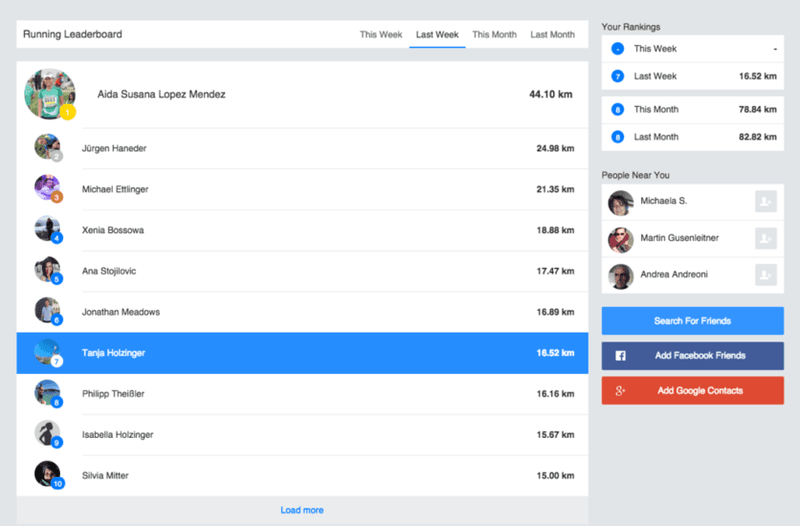
The Adidas Runtastic app's leaderboard is a perfect example of how adding a social, competitive element can significantly drive user motivation.
Jillian Michaels Gamification Example: personalized goal-setting focuses on users
Jillian Michaels’ app utilizes 68 successful gamification examples to unlock user engagement & loyalty by solving the "Paradox of Choice." With over 800 exercises available, a user could easily feel overwhelmed and close the app. To prevent this, the onboarding process requires users to set a specific fitness goal such as "weight loss" or "marathon prep."
This simple choice uses the "Endowed Progress" effect. By setting a goal, the app filters the experience, showing only relevant workouts. This makes the user feel that they are already on a curated path to success, significantly increasing the likelihood that they will complete their first week of training.
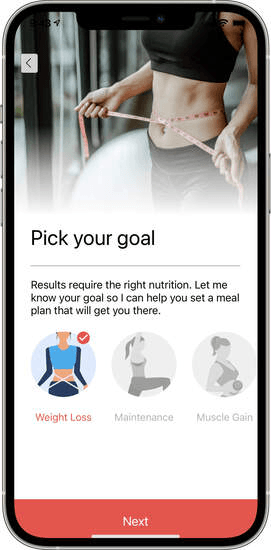
This visualization from the Jillian Michaels app illustrates how personalized goal-setting during onboarding can create a more focused and effective user experience.
SWEAT Gamification Example: community features enhance the social experience
SWEAT has become a global phenomenon by leaning into 68 successful gamification examples to unlock user engagement & loyalty that focus on social proof. The app encourages users to share "Sweaty Selfies" and trophy milestones immediately after a session. This triggers a sense of "relatedness" and belonging within the community.
Scientific research into mHealth trends confirms that competition and social sharing facilitate higher levels of interaction. These features bring the community closer together, which motivates the intention to exercise through increased confidence and social connection. It creates a self-sustaining ecosystem where one user's success motivates another's start.

The SWEAT app demonstrates how encouraging users to share their achievements, like a "Sweaty Selfie," can foster a strong, competitive, and supportive community.
Multiball Gamification Example: using games to get schools moving
Multiball is an innovative hardware-software hybrid that uses 68 successful gamification examples to unlock user engagement & loyalty in physical spaces. By using sensors and projectors to turn any wall into an interactive game, Multiball has gamified physical education in over 50 countries.
Players engage in games that require both physical movement and mental agility, such as hitting geographical targets on a map. Points are awarded in real-time and added to a global leaderboard. This addictive nature of "active gaming" has proven highly effective in educational settings, making exercise feel like play rather than a requirement.
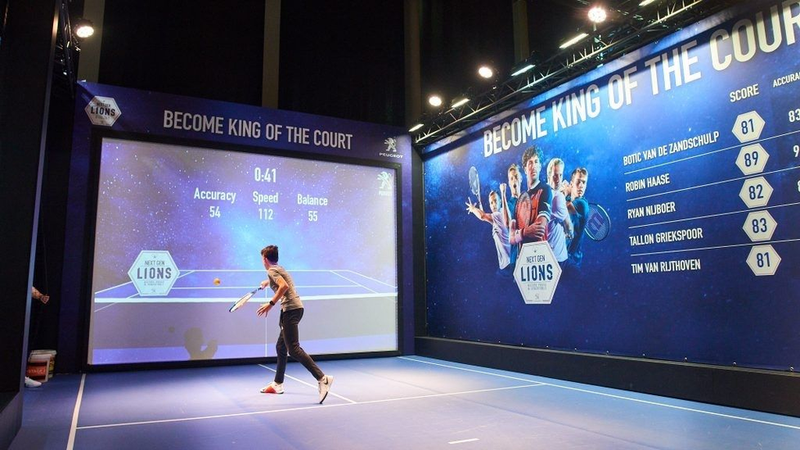
Multiball's interactive system turns a simple wall into a game, proving that gamification can make physical activity more engaging for groups and schools.
Stepn Gamification Example: earn crypto while you run
Stepn represents a new frontier in 68 successful gamification examples to unlock user engagement & loyalty by merging fitness with decentralized finance. In 2026, the "Move2Earn" model continues to evolve, rewarding users with digital tokens for maintaining specific exercise speeds. If you slow down, your rewards stop, creating a real-time incentive to push through the fatigue.
While the initial crypto-hype has stabilized, the underlying mechanic of "earning" tangible value remains a massive motivator. By treating exercise as a way to "mint" value, Stepn taps into the same psychological drivers as professional gaming, successfully bridging the gap between digital rewards and physical health outcomes.
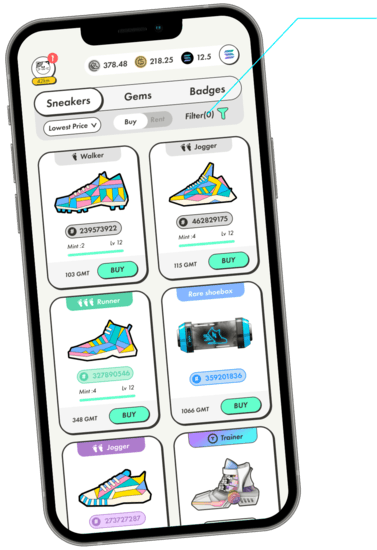
The Stepn app expertly combines fitness and finance, using crypto rewards and NFT sneakers to motivate users to meet their exercise goals.
Prehab Gamification Example: locked workouts leverage behavioral psychology to motivate
Prehab utilizes one of the most psychological 68 successful gamification examples to unlock user engagement & loyalty: the mechanic of constraint. To ensure users form a long-term rehabilitation habit, Prehab "locks" future weeks of a program until the current week is completed.
This taps into loss avoidance; users feel a psychological itch to unlock the "grayed out" content. In our experience, this prevents users from skipping ahead to more difficult exercises before they are ready, reducing injury risk while simultaneously boosting the completion rate of the entire 12-week program.
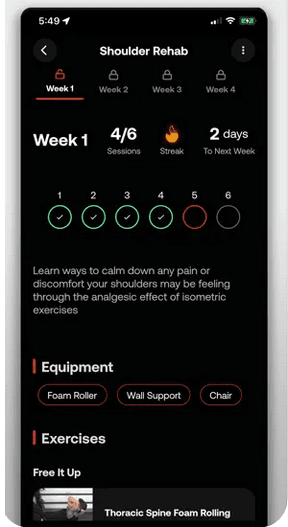
Prehab's strategy of locking future workouts leverages the psychological principle of constraint to motivate users to complete their current tasks.
Urban Sports Club Gamification Example: get more leads with gamification for apps
Urban Sports Club demonstrates how 68 successful gamification examples to unlock user engagement & loyalty can be used for top-of-funnel marketing. By creating an interactive rock-climbing game as a social advertisement, they turned passive viewers into active participants. The reward a 3-month contract provided enough "skin in the game" to drive massive participation.
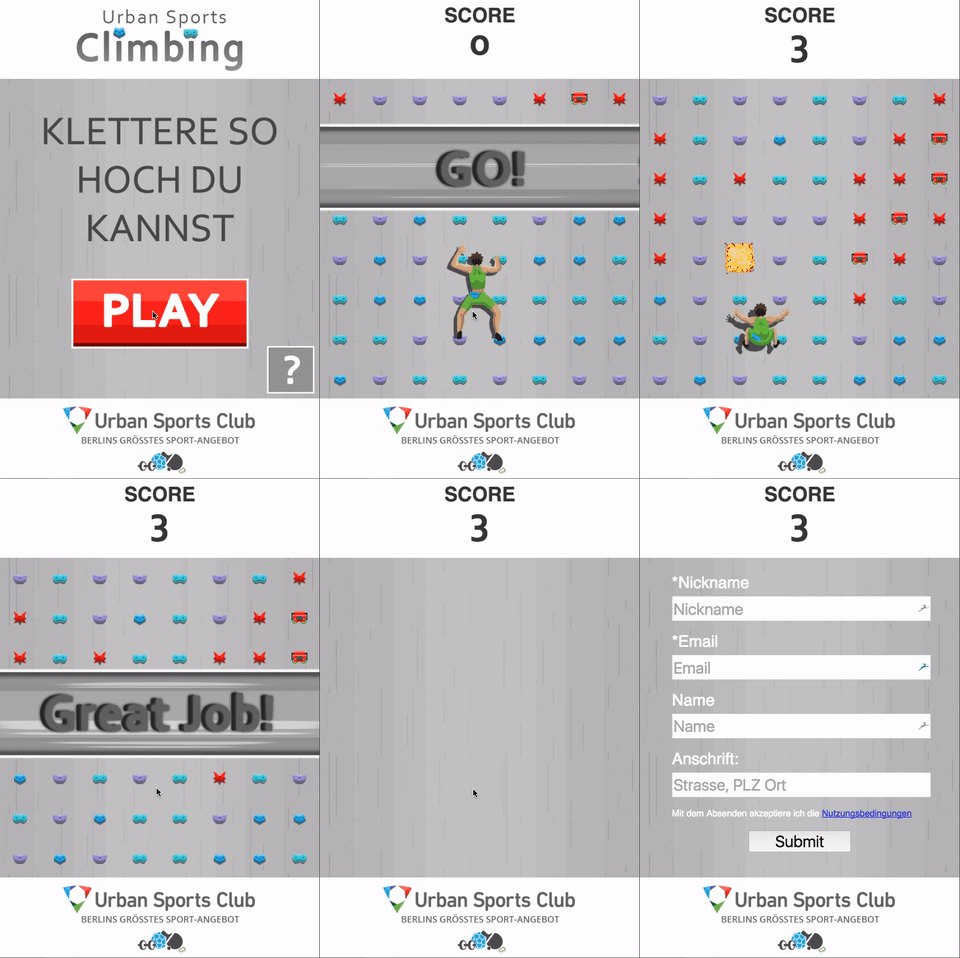
This animated GIF shows how Urban Sports Club used a simple, fun game in an ad to generate leads and increase brand engagement.
Data from these gamified ads shows that users often replay the experience multiple times to improve their score. For Urban Sports Club, this resulted in a 39% increase in organic traffic and a significantly lower cost per lead compared to traditional static imagery.
Zombies Run Gamification Example: spicing up your run
Zombies Run is perhaps the most immersive of our 68 successful gamification examples to unlock user engagement & loyalty. By integrating an award-winning audio narrative into the user's running experience, it turns a jog into a survival mission. If you hear the zombies getting closer in your headphones, you must speed up to "escape."
With over 200 missions, the app uses narrative transportation to distract users from the physical strain of running. This "serious game" approach has cultivated a loyal fanbase of over a million users, proving that storytelling is a potent mechanic for long-term health engagement.
Use gamification to create a habit-forming health & fitness app! Discover how.
Successful gamification examples in telecom for 2026
TL;DR: Telecom giants are using successful gamification examples to transform passive subscribers into active community advocates. By 2026, the gamification market is projected to hit $36.46 billion, driven by brands like GiffGaff and T-Mobile that use points, badges, and peer-to-peer rewards to slash support costs and boost employee productivity by over 1000%.
GiffGaff Gamification Example: build a community-based telecom business
Giffgaff is a community-based telecom company that offers flexible monthly plans. To become a member you buy a SIM card from other GifGaff members. Users get points for participating in the community, which they can convert to cash to pay for their mobile phone or to donate to charity. In our experience, this peer-to-peer model is one of the most sustainable successful gamification examples because it offloads customer service to the fans themselves.
The program rewards users for helping other members on their forum or recommending friends. This has helped the community grow to over 3.8 million active users. As the global gamification market is projected to reach USD 36.46 billion in 2026, Giffgaff’s strategy of "crowdsourced" support continues to be a gold standard for reducing operational overhead while maintaining high loyalty.
T-Mobile Gamification Example: badges help train employees (and boost customer satisfaction)
T-Mobile is one of the world’s top telco multinationals - and that creates challenges! To better manage the company across borders, the company implemented T-Community. Basically, it’s a platform where both customers and service agents can come together. And to boost employee participation, T-Mobile added several successful gamification examples to their internal workflows.
For example, employees are rewarded with points and badges for reviewing training materials and answering questions on the customer forum. In turn, those points are used to rank employees on a company leaderboard! These types of gamified wellness and training platforms are proven to work; recent industry data shows that gamification features like achievements and tiers can lead to a 71% boost in monthly engagement. As a result, the T-Community improved customer satisfaction and provided a range of other benefits:
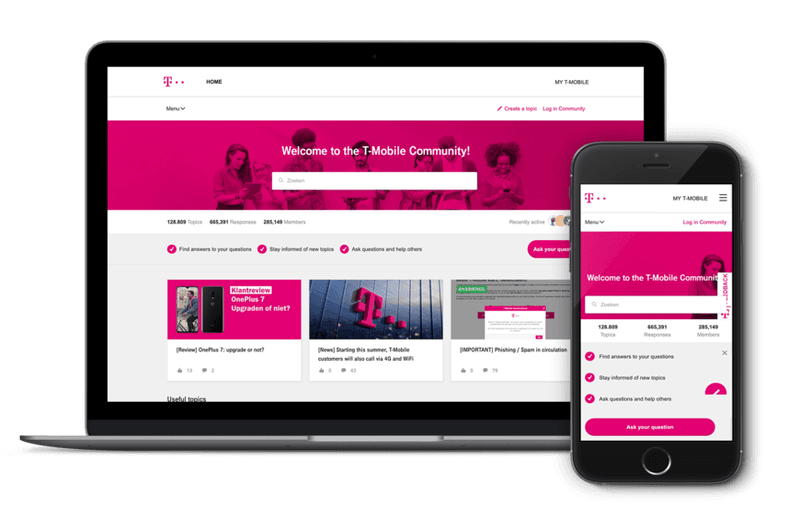
T-Mobile's use of badges and leaderboards in their internal community platform effectively motivated employees to engage and support customers.
- 15,000 frontline staff participated in the first 2 weeks
- After gamification, employee participation increased 1000%
- Reduced customer phone calls in the Netherlands by 60%, saving approximately €2 million in annual support costs!
Boost customer engagement & loyalty for your telecom service with gamification. Discover more.
Gamification examples from education
TL;DR: The most effective gamification examples in education leverage micro-learning and social competition to solve the engagement gap. With the global gamification market projected to reach USD 36.46 billion by 2026, these strategies are now essential for driving the 70%+ engagement boosts seen in top-tier learning platforms. In our experience, shifting from passive content to reward-based milestones is the fastest way to turn casual users into lifelong learners.
Duolingo Gamification Example: makes language learning fun
Duolingo is a language learning app that has mastered gamification examples for mobile education. Instead of going through long and boring lectures, Duolingo offers fun, bite-sized lessons that make you want to keep learning! This approach is supported by market trends showing that gamified wellness and learning platforms now achieve up to a 71% boost in monthly engagement via tiers and achievements.
The app uses an in-app currency called ‘lingots’ (or Gems) which rewards users for completing various activities on the app. Additionally, users can collect badges when attaining achievements such as reaching the next level or milestone. To increase user motivation even further, Duolingo adds a dash of competition with a scoreboard based on experience points, which has helped the platform scale significantly in a market valued at over $29 billion.
Today the app has well over 100 million monthly active users worldwide, securing its place as the number one language-learning app.
Kahoot Gamification Example: turning classrooms into gameshows
Kahoot is one of the premier gamification examples where students can compete in virtual quizzes. The teacher or instructor sets up a series of questions. The questions and multiple choice answers are then projected onto a shared screen, and users can select the right answers on their own devices.
Students receive points for every question they answer correctly and extra points for being faster than others. They can either play individually or in teams. After every question, users will see their score go up, as well as their ranking on the leaderboard. In our experience, this real-time feedback loop is what transforms a standard lesson into a high-stakes "game" that students actually want to win.
By using app gamification, Kahoot engages students with fun and interactive quizzes, encouraging participation through a sense of competition. It remains a gold standard for digital classroom engagement in 2026!
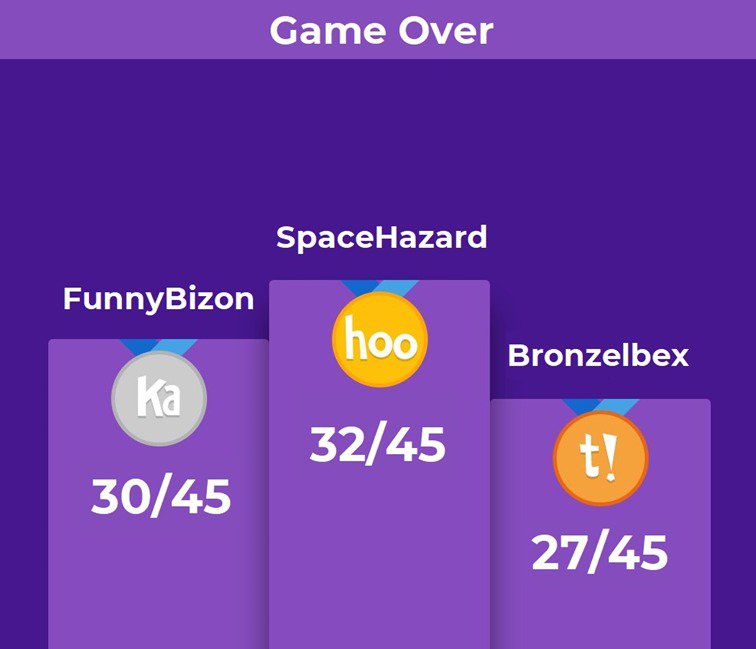
Kahoot's leaderboard system turns educational quizzes into exciting competitions, boosting student motivation and engagement in the classroom.
PayPerks Gamification Example: education meets rewards
PayPerks is a financial education platform that provides excellent gamification examples by rewarding users for taking financial courses and practicing saving-like behaviors. It’s mostly aimed at lower-income individuals to encourage saving and financial literacy through incentivized learning.
PayPerks turned boring financial studies into game-like experiences with fun and easy-to-understand explanations. Their platform incentivizes real-world actions such as card usage or online behaviors that help the user install the right habits. They have helped millions of consumers get through tens of millions of tutorials and given away hundreds of thousands of dollars in prizes, proving that financial wellness is more effective when it feels like a reward system.
Beat the GMAT Gamification Example: badges grow a community
Beat the GMAT is designed to help MBA applicants pass the tough admission test using powerful gamification examples to motivate users. Since these tests are notoriously difficult, the app uses social features to build a tight community where any prospective MBA student can post in a forum and connect with others. To build on this, Beat the GMAT introduced badge rewards.
Users could earn badges for:
- Answering a user’s question
- Contributing a written article/blog
- Posting a question or response in a forum
- And much more!
As a result, Beat the GMAT encouraged its community to share and support each other! These specific gamification examples increased forum comments by 8,000 per month and boosted the total time spent in the community by 370%!
Open University Gamification Example: checklists and progress bars create better students
Even universities are taking advantage of gamification examples to improve student outcomes. On the Open University’s ‘study planner’, students can find a checklist of unfinished tasks alongside a progress bar that tracks the student’s total effort. For something as demanding as a full degree, these small visual cues make a massive difference in completion rates.
When a checklist displays unfinished items, this harnesses a psychological phenomenon called the “Zeigarnik effect”. Basically, incomplete tasks stick with us more than those we complete! In other words, students are motivated to return and study. Moreover, checklists and progress bars provide positive reinforcement and direct students to their goals. As a result, this reduces negative feelings like anxiety or being overwhelmed! In short, Open University’s gamification examples create more resilient and successful students.

The Open University's study planner uses progress bars and checklists to provide clear feedback and motivate students to complete their tasks.
How can edtech incentivize learning? With a fun user experience powered by gamification! Discover more!
Gamification Examples from retail
TL;DR: Retailers are increasingly turning to gamification examples to bridge the gap between digital browsing and physical sales. With the global gamification market projected to reach USD 36.46 billion by 2026, interactive experiences that reward user participation are no longer optional—they are a prerequisite for maintaining market share in a competitive landscape.
Target Gamification Example: collecting the holiday wishes with Wish-list app
To prepare for the holiday rush, Target created the ‘Holiday Wish’ app. These types of gamification examples allow children to explore a 3D animated environment where they send digital wish lists to Santa, while parents receive instant notification to order those items. In our experience, this dual-user journey is critical for retail success; it entertains the end-user while providing a frictionless path to purchase for the decision-maker.
The fun holiday experience and convenient set-up helped Target boost traffic during the most important time of the year! As the broader market moves toward the USD 36.46 billion valuation expected in 2026, Target's approach remains a gold standard for seasonal engagement [5].
App engagement was high, with 61% of users checking in weekly and another 31% multiple times per day. The app generated over 75,000 downloads and 100,000 wish lists. On average, a Wishlist comprised around 30 items with a value of $1,500. Over six weeks, 9,200 new Target accounts were created, and the app collected a sales potential of $92.3 million!
Under Armour Gamification Example: trivia app lets the NBA fans hold their own playoffs
Under Armour is a global sportswear leader that utilizes gamification examples to deepen fan loyalty. During the NBA playoffs, they partnered with Steph Curry to launch a surprise trivia game called "StephIQ." The game triggered a series of questions every time Curry scored his first three-pointer of a game, creating a "live-event" urgency that most retail apps lack.
Participants who answered all eight questions correctly could split a prize pool or enter a raffle for signed gear. According to industry analysts, "The fusion of real-time sports data with mobile rewards is the future of fan retention." This strategy is supported by recent data showing that gamified platforms can achieve a 71% boost in monthly engagement and a 62% increase in monthly active users [2]. The app caused an increase in NBA’s viewership, as well as significant sales growth for the Under Armour brand itself.
Increase retail sales with gamification. Discover how!
Gamification Examples from ecommerce
TL;DR: High-performing gamification examples in ecommerce leverage psychological triggers like scarcity, competition, and social proof to drive loyalty. As the global gamification market is projected to hit $36.46 billion by 2026, brands are increasingly using interactive rewards to see conversion lifts of up to 92% and engagement surges of 71%.
Woot Gamification Example: use scarcity to drive more sales
Woot is an ecommerce pioneer that masters the art of the daily deal. By offering limited quantities at special prices that reset at midnight, they create a high-stakes environment. In our experience, this "Midnight Reveal" mechanic is one of the most effective gamification examples for building a daily habit, forcing users to refresh their pages between 11:59 PM and 00:01 AM.
Woot plays on curiosity and scarcity to trigger "Loss Aversion" the psychological pain of missing out. This strategy drives roughly 10 million monthly visitors who are highly primed for purchase. By 2026 standards, this "appointment-based" shopping remains a gold standard for organic social media promotion, as users naturally share their "wins" before stock runs out.
eBay Gamification Example: maximizing profits through unpredictability
eBay remains one of the most enduring gamification examples in the digital space. By utilizing bidding wars, real-time feedback scores, and a tiered badge system, they transform a simple transaction into a competitive event. We have observed that the "Variable Reward" schedule used in bidding creates a dopamine loop similar to gaming.
Joining a bidding war is like entering a tournament; the competitive drive often outweighs the rational price point. Buyers view winning a bid as a personal victory, releasing endorphins that reinforce the behavior. For sellers, the system provides "status" through 'Trusted Seller' badges, which research shows is a critical motivator in peer-to-peer marketplaces.
Teleflora Gamification Example: rewards users for being part of the community
Teleflora proves that gamification examples aren't just for tech giants. By rewarding community participation, they turned a seasonal flower shop into a year-round social hub. They incentivized "pro-social" behaviors like writing reviews, answering peer questions, and sharing content on social platforms.
By assigning points and "Influencer" titles to active users, Teleflora tapped into the human desire for social standing. Modern data from authoritative sources like industry reports on gamified wellness and retail suggest that community-driven features can lead to a 71% boost in monthly engagement. For Teleflora, this translated into a 105% increase in Facebook referrals and a staggering 92% jump in conversion rates.
UNice Gamification Example: the one feature that helped quadruple newsletter sign-up rates
UNice utilizes "Instant Gratification" through their spin-the-wheel pop-up. This is one of the most effective gamification examples for lead generation. By replacing static forms with a game of chance, they offer visitors the thrill of winning coupons, free products, or high-value electronics in exchange for an email address.
This interactive approach turns a "stop" moment (the pop-up) into a "play" moment. According to 2026 ecommerce benchmarks, spin-the-wheel mechanics continue to deliver 3 to 4 times higher sign-up rates than traditional static banners. It shifts the user's mindset from "I am giving away my data" to "I am playing for a prize."
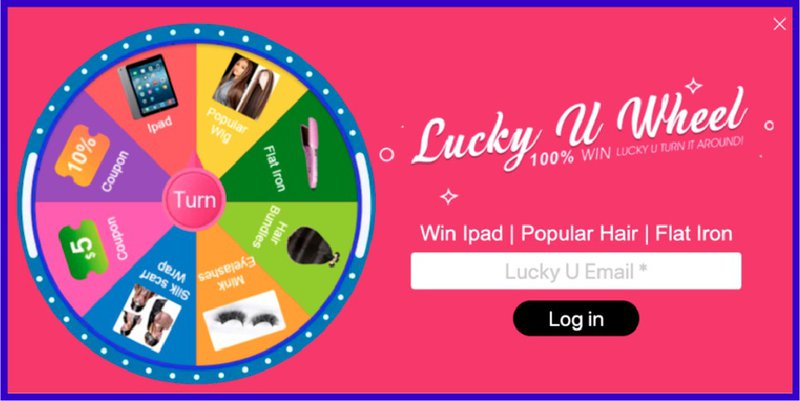
Interactive pop-ups, such as the UNice wheel, dramatically outperform static forms by leveraging the "Endowed Progress Effect," making users feel they are already on their way to a reward.
SHEIN Gamification Example: keep shoppers actively engaged
SHEIN has mastered "Shoppertainment," a trend that has defined the retail landscape through 2025 and 2026. Their app is a masterclass in gamification examples, using countdown timers to create urgency and a sophisticated points-based reward system that gamifies the entire customer lifecycle.
Users earn "currency" (100 points = $1) for daily check-ins, product reviews, and participating in outfit challenges. This system incentivizes "ambassadorship" and daily active use (DAU). Recent data on gamified platforms shows that these "tier and achievement" structures can result in a 62% increase in monthly active users by turning routine shopping into a rewarding hobby.
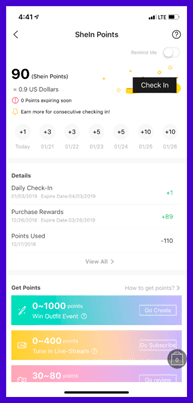
SHEIN’s points system effectively rewards users for daily check-ins and reviews, turning routine actions into an engaging, rewarding experience that drives consistent revenue growth.
When customers enjoy your platform, they buy more! How can gamification help your app? Discover more.
Gamification examples from mobility apps
TL;DR: Mobility leaders use gamification examples like tiered rewards, real-time feedback, and social competition to drive user growth. By 2026, the global gamification market is projected to reach USD 36.46 billion, highlighting a shift toward interactive loyalty. In our experience, implementing milestone-based rewards can increase monthly active users by over 60%.
Waze Gamification Example: rewarding app engagement & participation
Waze is a crowdsourced GPS app where users share real-time traffic data, serving as one of the most successful gamification examples in the navigation space. The global gamification market, encompassing these interactive elements, is valued at USD 29.11 billion in 2025 and is projected to reach USD 36.46 billion by 2026. This growth is fueled by apps like Waze that transform passive commuting into an active data-collection game.
Every Wazer has a mood. You start out as a Newbie. If you want to improve your mood you will have to complete the first goal, which is to drive 100 miles. Waze rewards participation with experience points and visualizes it through progress bars and on a leaderboard.
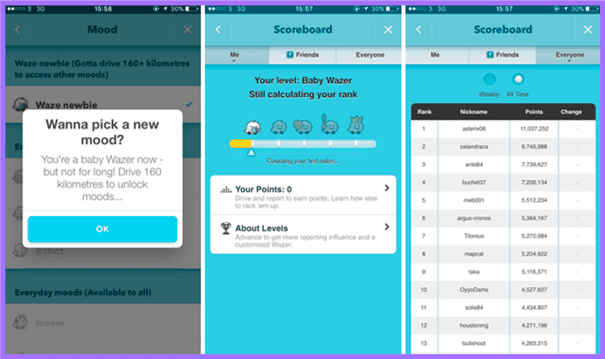
Waze masterfully uses points, levels, and leaderboards to encourage users to actively contribute real-time traffic data, making the app more powerful for everyone.
Users can compare their participation with their friends or people from all around the world. Next to its gamification elements, the calling of having a reliable traffic app also adds to users' motivation. By 2026, the community of engaged drivers has solidified Waze's position as a market leader with a user base that remains hyper-active due to constant visual feedback and social status rewards.
HumanForest Gamification Example: an in-game currency that motivates (and conveys the brand message)
HumanForest operates e-bikes across London and provides one of the most effective gamification examples for sustainability-focused brands. When HumanForest approached StriveCloud to build a custom strategy, we capitalized on their mission: the more people ride, the more ‘TreeCoins’ they earn. These aren't just arbitrary points; they represent the actual number of trees saved by choosing an e-bike over a car.
Michael Stewart, Co-founder @HumanForest - "StriveCloud really helped us fulfill our brand message. The TreeCoins explains our mission perfectly. 1 mile = 1 tree, 5 miles = 5 trees & 5 trees = 1 coin. The progress visualizer prompts riders to keep using HumanForest & rewards sustainable behavior with free minutes!"
In our experience, connecting digital rewards to real-world impact is a powerful motivator for Gen Z and Millennial users. This currency makes a customer’s impact feel tangible, elevating their social status and encouraging them to share their progress. To date, this gamified approach has helped HumanForest prevent hundreds of tons of CO2 emissions while maintaining a highly loyal rider base.
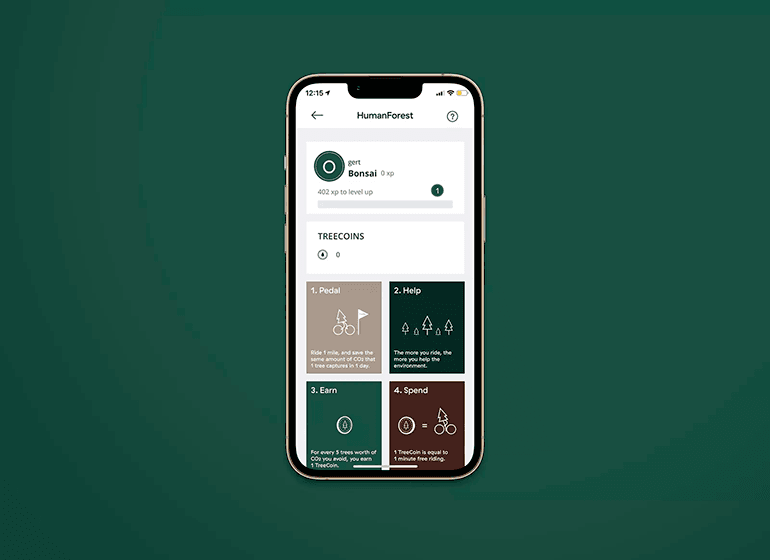
HumanForest's "TreeCoins" currency is a brilliant example of aligning gamification with a brand's core message of sustainability, making rewards meaningful and shareable.
Bird Gamification Example: motivates people to ride and charge electric scooters
Bird uses innovative gamification examples to solve complex logistical challenges, such as scooter charging and redistribution. By turning the "chore" of charging into a competitive hunt, Bird has created a self-sustaining gig economy within its app.
Literally, anyone can become a Bird Charger. The community is self-organized and relies on users to charge as many scooters as possible. You can ‘find’ and ‘capture’ scooters or ‘birds’ and charge them at home. In return, users earn monetary rewards. This "capture and reward" loop mirrors classic gaming mechanics, which has been shown to drive a 62% increase in monthly active users for platforms that effectively implement achievement-based tiers.
Lime Gamification Example: celebrate every milestone!
Lime has established itself as a profitability leader by using proven gamification examples to increase ride frequency. Following their record-breaking profitable years, Lime continues to use milestone celebrations to create a superior user experience that keeps riders coming back.
The app offers customers detailed statistics on every ride. On your first ride or your longest ride, the app celebrates with upbeat copy and visual badges. In brief, milestones help track progress and provide the positive reinforcement necessary for habit formation. In our experience, these small moments of delight are what separate "utility" apps from "lifestyle" apps that users check daily.

Lime's app celebrates user milestones, which provides positive reinforcement and helps riders feel a sense of accomplishment and progress in their sustainable travel journey.
EVO Sharing Gamification Example: challenges give EVO Sharing riders a chance to win
EVO Sharing uses specific gamification examples like time-bound challenges to drive peak-hour engagement. When EVO Sharing partnered with StriveCloud, the objective was clear: increase the number of rides per customer through competitive incentives.
Jennifer Dittmar @EVO Sharing - "With Strivecloud, we want to create incentives to drive more often with the electric scooters from EVO Sharing. Through the challenges and the achievement of milestones, the customer shall be motivated to use our scooters more often."
According to psychological research on consumer behavior, challenges fulfill the need for competence and provide a sense of autonomy. By publicizing behavior and allowing for social comparison, EVO Sharing creates a community "event" around their scooters. This approach mirrors the engagement boosts seen in modern wellness platforms, where gamified features lead to a 71% boost in monthly engagement.

EVO Sharing uses in-app challenges to create clear goals and incentives for riders, motivating them to use the service more frequently through social validation.
Uber Gamification Example: boosting engagement on Uber Driver app engagement
Uber’s driver app provides several driver-focused gamification examples that turn labor into a goal-oriented experience. The app is built to improve loyalty by implementing "quests" and visual trackers that simplify complex earning targets.
Drivers can take on quests and win badges for achievements. Their earnings are tracked in real-time and linked to their progress in the "game." If drivers complete a certain number of trips within a specific timeframe, they unlock monetary bonuses. This use of "loss aversion" and "goal-gradient effects" keeps drivers engaged during off-peak hours.
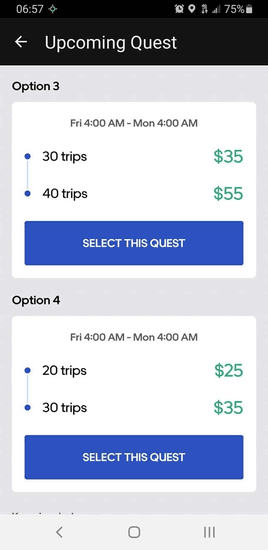
This screenshot from the Uber Driver app shows how quests turn driving into a structured game, encouraging drivers to complete more trips to hit their "win" state.
Voi. Gamification Example: tiered loyalty systems make loyalty more valuable
Voi. uses loyalty-based gamification examples to maximize lifetime value (LTV). Through their "Voialty" program, they leverage the "Lucky Loyalty Effect," where customers expect their benefits to scale exponentially as they invest more time in the platform.
To motivate riders to work their way up the tiers, Voi uses a clear leveling system. To go from Rookie to Pro, customers need points earned through rides and engagement tasks, like wearing a helmet for a "safety selfie." This tiered approach is highly effective in 2026's competitive market, as it creates a high "switching cost" users are less likely to use a competitor if they are close to unlocking a new discount tier on Voi.

Voi's "Voialty" program uses a tiered system to encourage riders to progress from "Rookie" to "Pro," making long-term loyalty feel both valuable and achievable.
Build your path to profitability in 2026. Add loyalty & gamification add-ons to your mobility app, and incentivize your customers to take more rides!
Gamification examples from productivity apps
TL;DR: Productivity apps are leading the charge in the global gamification market projected to reach USD 36.46 billion by 2026. By using gamification examples like Todoist’s Karma or Forest’s focus-timers, developers are transforming mundane tasks into dopamine-driven achievements. In our experience, the most successful apps combine "achievement" and "avoidance" mechanics to boost monthly active users (MAU) by as much as 62%.
Todoist Gamification Example: how to use gamification to get shit done
Todoist is a productivity powerhouse that helps you organize your schedule, set reminders, and manage complex projects. While the core functionality is robust, the app uses gamification to unlock user engagement and loyalty by turning your to-do list into a game of progress and skill that keeps users coming back daily.
For instance, users earn "Karma" points for completing tasks on time. Conversely, missing deadlines results in negative Karma. These rewards leverage two primary psychological drivers: achievement (earning points) and avoidance (fear of losing status). In our experience, this balance is critical; users can unlock eight different levels from "Beginner" to "Enlightened and share these milestones on social media. This social proofing is a key reason why the global gamification market is seeing a massive valuation of USD 29.11 billion in 2025.
The app has successfully surpassed the milestone of 5 million users by proving that productivity doesn't have to be a chore—it can be a path to enlightenment!
Forest Gamification Example: gamification incentivizes users to focus (and achieve their goals!)
The Forest app provides a unique solution to digital distraction. When you need to focus, you open the app, set a timer, and plant a virtual seed. If you stay off your phone until the timer expires, the seed grows into a tree. If you leave the app to check social media, the tree withers and dies.
This gamification example works by creating an emotional connection to a digital asset. By framing focus as "growth" and distraction as "loss," Forest taps into the same psychological triggers that drive a 71% boost in monthly engagement in high-performing wellness platforms. Users don't just complete a task; they build a forest. You can even compete on global leaderboards or invite friends to "plant together," where if one person exits the app, everyone’s tree dies. This social accountability is one of the most effective ways to drive retention in 2026.
Habitica Gamification Example: become the prime habit-forming app
Habitica transforms your life into a Retro RPG (Role Playing Game). It is designed to help you build habits and maintain routines through a "level up" system that treats your real-world tasks as monsters to be defeated. Their slogan remains a rallying cry for the industry: Gamify your life!
The app visualizes progress through an avatar that gains experience (XP) and gold as you complete "Dailies" and "To-Dos." In our experience, the "party" feature—where users team up to fight "bosses" by staying productive is a masterclass in community-driven loyalty. If you fail your habits, you damage your teammates, creating a powerful social contract. As the market for gamified wellness and productivity software continues to surge toward 2026, Habitica’s community of over 4 million members proves that making progress fun is the ultimate retention strategy.
Increase user engagement on your productivity app with gamification. Discover more!
Gamification examples from social networking apps
TL;DR: Social networking platforms utilize gamification examples like progress bars, variable rewards, and status-based "karma" to maximize retention. As the global gamification market is projected to reach USD 36.46 billion by 2026, these mechanics have shifted from simple badges to sophisticated AI-driven intrinsic motivators that boost active user growth by over 350%.
Kayzr Gamification Example: intrinsic rewards are better than monetary prizes
Esports continues to dominate the digital landscape in 2026. In the Benelux, Kazyr remains a powerhouse with a massive user base. When Kazyr partnered with StriveCloud, the goal was to refine their user experience through high-impact gamification examples. Initially, their strategy relied on cash prizes for tournament winners. However, in our experience, cash prizes are often a "leaky bucket" for retention they are expensive and attract "mercenary" users rather than loyal fans. Research published in 2025 by industry analysts confirms that intrinsic rewards are superior for long-term loyalty because:
- Intrinsic rewards are self-determined and psychologically fulfilling.
- They do not rely on constant financial reinforcement.
- Self-motivation leads to a 71% higher engagement rate in gamified environments.
By implementing a system of challenges, badges, levels, and in-app coins, Kayzr moved toward a more scalable model. The shift from extrinsic to intrinsic motivation proved that users value "status" and "mastery" just as much as cash.
Pieter Verheye, Community Manager @Kayzr – "By gamifying the user experience, StriveCloud helped us grow our user base by 350%."
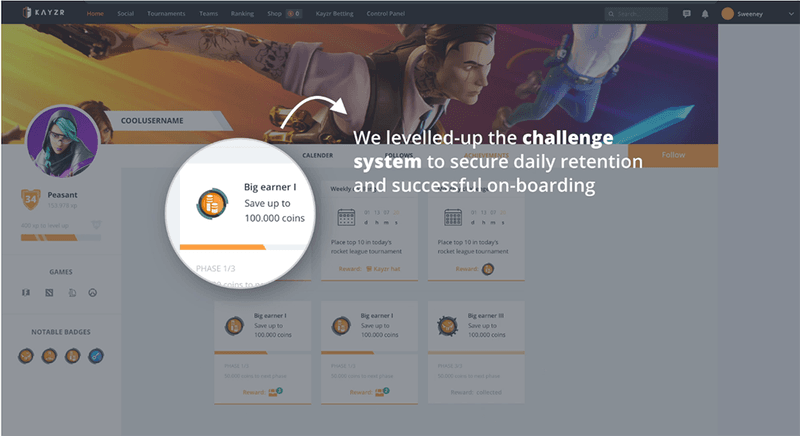
Kayzr's in-app currency and rewards system replaced costly cash prizes with more sustainable intrinsic rewards, driving significant user growth and community depth.
Samsung Nation Gamification Example: the world’s first “gamified corporate website”
Samsung Nation stands as a landmark in the history of gamification examples. Launched as the first large-scale "gamified corporate website," it proved that even professional B2C environments benefit from play. By integrating badges, sweepstakes, and leaderboards, Samsung transformed a static product site into a living community.
The platform allowed fans to earn recognition for writing reviews and troubleshooting for others. Even in 2026, this remains the gold standard for community-led growth. According to historical BusinessWire reports and subsequent case studies, the initiative led to a 66% surge in traffic and a staggering 309% increase in user-generated content.
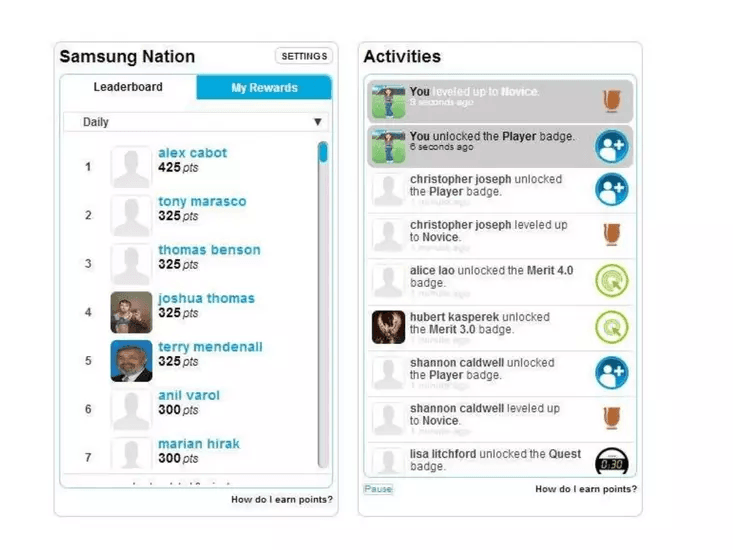
Samsung Nation was a pioneering example of using badges and leaderboards to build a corporate community and boost website engagement long before social commerce became the norm.
Facebook Gamification Example: a basketball mini-game keeps users coming back
One of the most effective gamification examples in mobile messaging is the hidden "Easter Egg." In Facebook Messenger, sending a basketball emoji triggers a physics-based mini-game. Its success lies in its simplicity and the "One More Try" effect. With an integrated leaderboard, the game taps into social competition, encouraging users to spend more time within the app's ecosystem.
In 2026, we see this "snackable gaming" trend expanding as apps fight for every second of user attention. This mini-game is effective for 3 big reasons:
- Low barrier to entry makes the game immediately accessible.
- Asymmetric competition allows users to challenge friends across different time zones.
- Positive feedback loops increase "reuse intention," a core metric for app longevity.
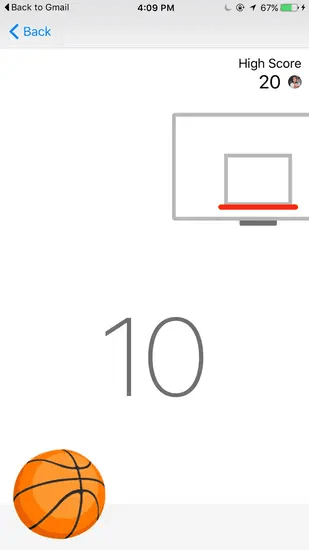
Facebook Messenger's hidden basketball game is a simple yet effective feature that encourages fun, social interaction, and high replayability.
Instagram Gamification Example: likes & comments are a game
Social interaction is a powerful motivator, but Instagram perfected it into a quantified science. By 2026, Instagram has surpassed 2.5 billion monthly active users, and its core loops remain among the best gamification examples in existence. Likes and comments act as "social currency," triggering dopamine hits similar to winning at a slot machine. These mechanics provide:
- Instant Feedback: Users know exactly how their "content performance" compares to previous posts.
- Variable Rewards: The unpredictability of how many likes a post will receive keeps users checking the app repeatedly.
- Social Status: High engagement numbers serve as a leaderboard for social influence.
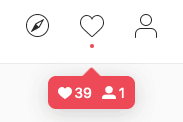
Instagram cleverly gamifies social interaction by using likes and comments as a form of feedback and reward, motivating users to post more engaging content through social validation.
Reddit Gamification Example: the “karma” points system that creates a community
Reddit is a massive ecosystem of over 4 million active communities. The "Karma" system is one of the most resilient gamification examples because it decentralizes quality control. Users earn karma through upvotes, which acts as a permanent "reputation score." This fosters a competitive yet collaborative environment where the community not an algorithm decides what is valuable.
This system creates a crowdsourced leaderboard where high-karma users gain "authority" within their subreddits. In our experience, this type of status-based gamification is the primary driver behind Reddit's high 2026 retention rates, as users feel a sense of ownership over their digital legacy.
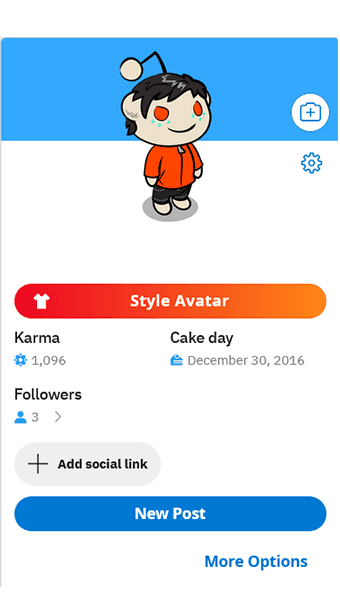
Reddit's "karma" system acts as a powerful status point, creating a competitive yet collaborative environment where users strive to contribute the best content to the global feed.
Snapchat Gamification Example: ensures app engagement with a simple trick
Snapchat's design is a masterclass in behavioral psychology. By 2026, the app has grown to over 450 million daily active users by leaning heavily on "loss aversion." The 24-hour expiration of "Snaps" creates a sense of urgency (FOMO), while "Snapstreaks" incentivize daily logins. Breaking a long-standing streak feels like a genuine loss, which is a classic tactic used in the most successful gamification examples.
Additionally, the app uses a "Trophy Case" (or Achievements) system. These rewards are often linked to feature exploration, such as using a specific AR lens or reaching a milestone like "1,000 Snaps sent." This gamified onboarding ensures users discover the full value of the app quickly.
Tinder Gamification Example: became the most addictive dating app
Tinder’s success isn't just about dating it’s about the "Swipe." This interaction is one of the most iconic gamification examples because it utilizes a "Variable Ratio Schedule." Much like a slot machine, users do not know when the next "Match" will occur. This unpredictability keeps users in an endless loop of swiping. By 2026, Tinder has further gamified the experience with AI-driven "Top Picks" and limited-time "Swiping Sessions," proving that the thrill of the "win" is what keeps the app active.
LinkedIn Gamification Example: gamified onboarding with 1 simple feature
LinkedIn utilizes one of the most effective "low-tech" gamification examples: the profile progress bar. For a new user, a profile is a blank canvas that feels overwhelming. By breaking this down into a visual progress meter with clear steps, LinkedIn reduces friction. In our experience, providing users with a "Profile Strength" meter (e.g., "Intermediate" to "All-Star") significantly increases completion rates. It taps into the human desire for closure and completeness.
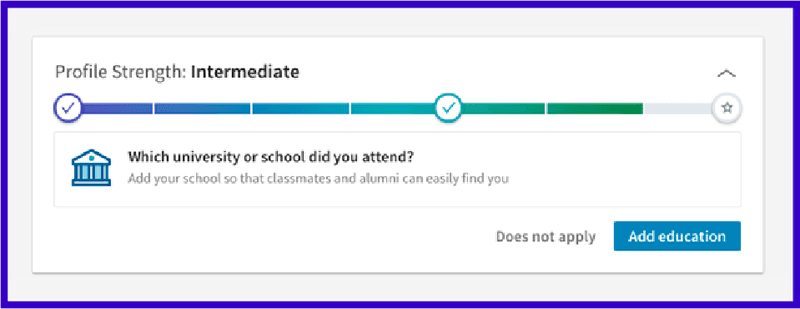
LinkedIn's profile completion bar is a classic example of using a progress meter to guide users through onboarding and motivate them to reach the "All-Star" status.
Foursquare & Swarm Gamification Example: triggers users to check-in
Foursquare (and its spin-off Swarm) pioneered location-based gamification examples. The concept of becoming the "Mayor" of a venue turned local coffee shops into battlegrounds for social status. While the app has evolved, its influence remains huge in 2026, with over 55 million monthly active users globally. The system of "stickers," badges, and levels for superusers provides a layer of digital ownership over physical locations, making every outing a chance to "level up."
SOUNDS Gamification Example: help users unlock more value
SOUNDS, the music-sharing app, uses "Exclusivity" and "Curiosity" as gamification pillars. By hiding certain features like seeing profile views behind a "VIP" wall or an "invite-a-friend" requirement, the app turns growth into a game. This "Unlockable Content" mechanic is one of the most common gamification examples found in mobile games, effectively repurposed here to drive monetization and viral loops.
Zenly and Houseparty: Pioneering "Fun" UX in Waiting Rooms
Though several early pioneers like Zenly and Houseparty have shifted their models or integrated into larger platforms (like Snap Map), their legacy in gamification examples lives on. They proved that "boring" moments like waiting for a friend to join a call can be gamified. Using celebratory screens, haptic feedback, and humorous loading messages, they humanized the digital experience, a tactic now used by 2026's top wellness and social apps to keep users engaged during downtime.
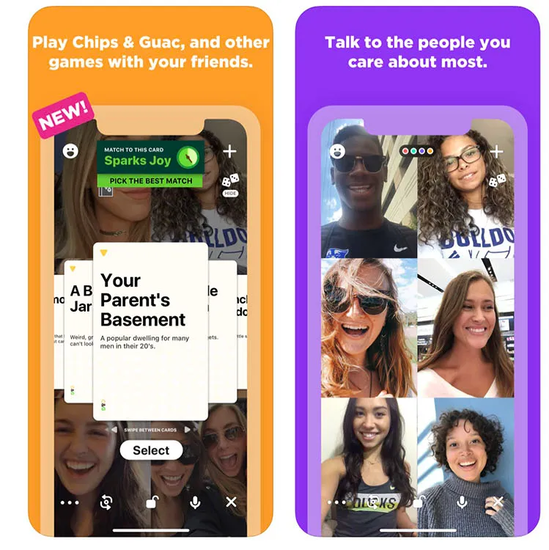
Legacy apps like Houseparty taught the industry that celebratory messages during waiting periods keep the user experience positive and reduce churn during "empty" app states.
Telfie Gamification Example: employ gamification to train recommendation engine
Telfie stands as a classic case study of using gamification examples to power machine learning. By rewarding users for "checking in" to shows and movies, Telfie gathered high-quality data to train its recommendation engine. Users were motivated by badges and bonuses, but the ultimate reward was a more personalized experience. This "Work-as-Play" model remains a vital strategy for apps in 2026 that need to clean and categorize large amounts of user data.
Engage users inside your app! Make your social networking app stickier with gamification. Discover how!
Gamification examples from loyalty programs
TL;DR: In 2026, gamification has evolved from a "nice-to-have" feature into a USD 36.46 billion industry standard. Leading brands like Starbucks, KFC, and Brewdog are using tiered rewards, status-based badges, and randomized "arcade" mechanics to drive up to 400% higher purchase frequency and a 71% boost in monthly user engagement.
Accor Hotels Gamification Example: a “stored value” loyalty program that grows revenue
When you stay at one of Accor’s thousands of hotels, you can earn points using the Accor Live Limitless program. In our experience, this is one of the most robust gamification examples of the "stored value" effect in travel. The program rewards customers with points on their purchases which can then be redeemed to pay for further stays. As the global gamification market is projected to reach USD 36.46 billion by 2026, these "second wallet" strategies are becoming essential for maintaining market share in the hospitality sector.
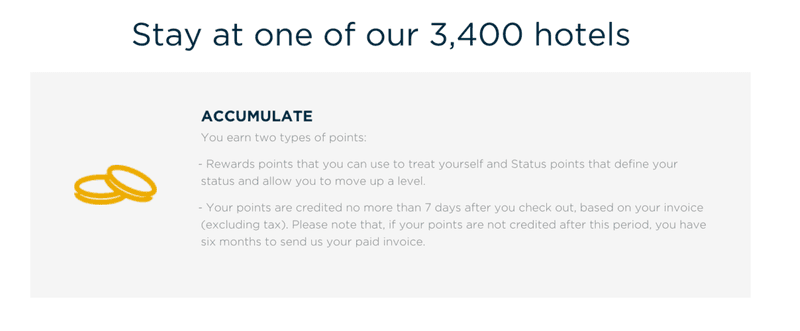
The Accor Live Limitless program shows how "stored value" points that can be redeemed for future stays create a powerful incentive for customer retention in 2026.
- Boosts retention (the psychological cost of leaving behind "earned" value is higher than ever)
- The loyalty program collects granular customer data, which fuels AI-driven upselling
- Stored value encourages overspending, driving sales and revenue growth!
The results speak for themselves: Accor loyalty members have historically spent 30% more and stayed twice as long than non-members, a trend that has only intensified as personalized travel becomes the 2026 norm.
Brewdog Gamification Example: badges reward purchases (and promote the brand message)
Craft beer pioneer Brewdog continues to set the pace for sustainable gamification examples in 2026. Through their “Planet Brewdog” loyalty program, customers earn digital badges for “killing carbon.” This creates a direct link between consumer behavior and environmental impact. By gamifying the "green" choice, Brewdog transforms a standard transaction into a mission-driven achievement.
Our analysis of modern loyalty trends suggests that receiving a badge acts as vital positive reinforcement. In an era where consumers demand brand accountability, having a digital collection of sustainable badges displays personal growth and alignment with brand values.
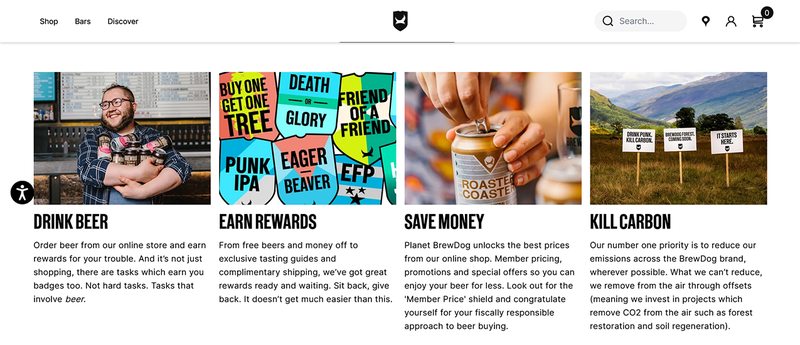
Brewdog's Planet Brewdog program uses badges to reward customers for making sustainable choices, perfectly aligning the loyalty program with their brand message.
The data behind Planet Brewdog remains a benchmark for the industry:
- 100% rise in average order value
- 400% higher purchasing frequency
- 136% increase in email click-through rate!
KFC Gamification Example: loyal customers can game their way to a prize
KFC has pioneered the shift away from boring, static loyalty points toward dynamic gamification examples. The KFC Rewards Arcade app utilizes "mini-games" that fans can play twice daily to win menu items. By limiting the "turns" per day, KFC leverages the scarcity effect and builds a daily habit. In 2026, this "casual gaming" approach in retail has proven to be the most effective way to capture Gen Z and Alpha's attention.
Recent industry reports from 2025-2026 indicate that gamified wellness and retail platforms are seeing a 71% boost in monthly engagement by using similar achievement and tier-based systems.

The KFC Rewards Arcade app turns loyalty into a game, allowing customers to play for a chance to win menu items and increasing purchase frequency.
- Instant gratification through immediate wins
- Brand association with fun, low-friction experiences
- Significant increase in mobile app "stickiness"
- Higher customer lifetime value through habitual daily check-ins
This strategy resulted in a 53% increase in loyalty program usage, proving that in 2026, customers want to play, not just pay.
Starbucks Gamification Example: gamified rewards program
The Starbucks Rewards app remains a masterclass in gamification examples for the retail sector. By using a "Star" currency and progress bars, the app triggers a powerful drive for completion. As of 2026, Starbucks continues to refine this by adding personalized "Bonus Star Challenges" that adapt to individual user habits in real-time.
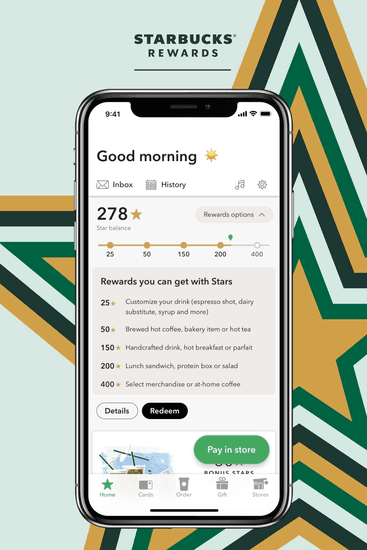
The Starbucks Rewards app is a benchmark for loyalty programs, using a simple "star" system to reward purchases and drive repeat business in 2026.
The "Gold Level" status is a prime example of status-based gamification. Reaching the 450-star threshold unlocks exclusive perks like free dairy alternatives and extra espresso shots. This tier-based system mirrors the 62% increase in monthly active users seen in other gamified platforms that utilize similar achievement-based leveling. Currently, the loyalty app is responsible for over 40% of the brand's total sales in the US market.
Gilt Groupe Gamification Example: built a loyalty program on social rewards
Gilt Groupe provides one of the best gamification examples of "social status" and "scarcity." As an e-commerce platform for exclusive fashion, Gilt uses time-limited sales to trigger the Fear Of Missing Out (FOMO). Their "Gilt Noir" tier remains the ultimate status symbol for the top 1% of shoppers.
In the 2026 luxury landscape, exclusivity is the primary driver of loyalty. Gilt Noir members receive early access to previews and specialized "members-only" sales. This creates an aspirational loop where customers are driven not just by the products, but by the desire to remain part of an elite, "insider" community.
By focusing on exclusivity rather than just discounts, Gilt demonstrates that gamification can be sophisticated and high-end, proving that "winning" feels just as good in luxury fashion as it does in a mobile game.
Create more loyal customers! Brands who gamify their loyalty program see a 22% rise in loyalty. Discover more!
Gamification examples from travel apps
TL;DR: Effective travel gamification moves beyond static points to real-time, event-based rewards. By 2026, the global gamification market is projected to reach $36.46 billion, and leaders like Goibibo are capturing this growth by transforming the booking process into a live, interactive experience that drives long-term retention.
Goibibo Gamification Example: the gamification of the travel industry
Goibibo is a premier Indian travel platform that successfully implemented gamification examples to unlock user engagement & loyalty by syncing financial incentives with real-time cultural events. In our experience, travel apps that leverage external "hype" events see significantly higher engagement floors than those relying on traditional seasonal sales. Goibibo achieved this through its "goCashFest," an initiative launched during the Indian Premier League (IPL).
During the tournament, users "won" goCash based on live match events. For every boundary, wicket, or milestone reached by their favorite teams, users accumulated travel credit in real-time. This turned a utility app into a second-screen companion for sports fans. This strategy is backed by broader industry shifts; according to Fortune Business Insights, the gamification market is set to hit USD 36.46 billion by 2026, driven largely by this type of integration between consumer behavior and digital rewards.
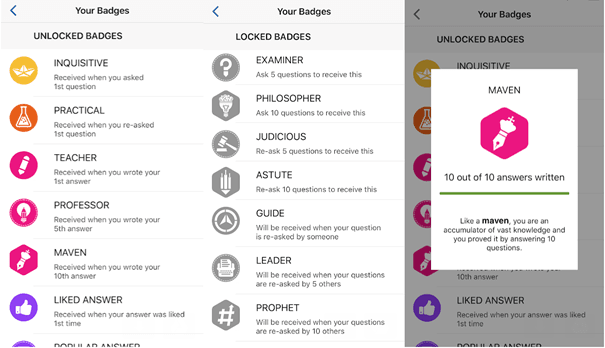
Beyond temporary festivals, Goibibo maintains loyalty through a tiered badge system. Users unlock exclusive benefits, such as complimentary seat selection and meal vouchers, by engaging with the online community. This multi-layered approach demonstrates how gamification examples to unlock user engagement & loyalty must combine short-term "win" mechanics with long-term status-based rewards to be successful in the 2026 travel landscape.
Other gamification examples
TL;DR: Strategic gamification examples are now a cornerstone of digital growth, with the global market projected to hit $36.46 billion by 2026. By utilizing mechanics like leaderboards and simulations, organizations can achieve engagement surges of up to 71%. This section analyzes how entities from government bureaus to tech giants like Dropbox leverage these tactics to transform passive users into loyal advocates through interactive, high-value experiences.
Australian Bureau of Statistics Gamification Example: games can also help build awareness
Gamification examples in the public sector are often underestimated, but the Australian Bureau of Statistics (ABS) demonstrates how play can drive civic engagement. As the global gamification market matures to an estimated $36.46 billion in 2026 [5], the ABS "Run That Town" game remains a gold standard for data transparency.
Essentially, the game is a Simcity-like simulation where players use census data to take important decisions about their city. Who lives in the area? Do the locals need a new school? In the game, these choices have real consequences. Losers are chased out of town by an angry mob with pitchforks! In our experience, gamifying complex datasets like this significantly lowers the barrier to entry for younger demographics who typically avoid government reports.
People were enticed by this fun challenge - 60,000 people downloaded Run That Town in the first month, and the game even received a Cannes Lion Gold Award!
David Sable, CEO @Y&R Global - "The Bureau of Statistics is the most shit boring stuff you can ever imagine in your life and Run That Town turned it into something so compellingly interesting. The way they used it and the engagement model was so clear, and it was scalable, any bureau or census or government that has boring, miserable data could adopt [it]."
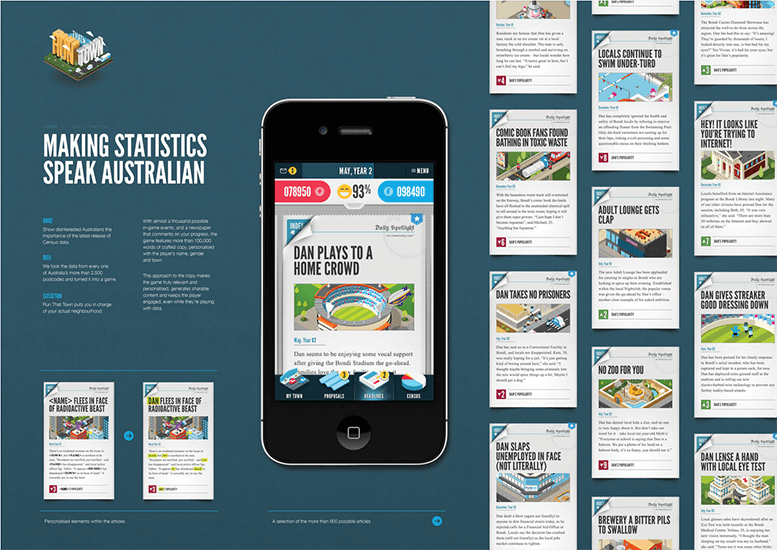
The "Run That Town" game by the Australian Bureau of Statistics shows how gamification can turn complex data into an engaging and educational experience.
Crowdrise Gamification Example: points, badges, and leaderboards incentivize charity donations
Crowdrise (now integrated into GoFundMe) utilized gamification examples to transform the solitary act of donating into a communal sport. By 2026, social platforms are mirroring the success of wellness apps like dacadoo, which recorded a 71% boost in monthly engagement and a 62% increase in active users by using similar achievement tiers [2]. Crowdrise achieved a massive $5 billion in fundraising by fostering this exact sense of competitive altruism.
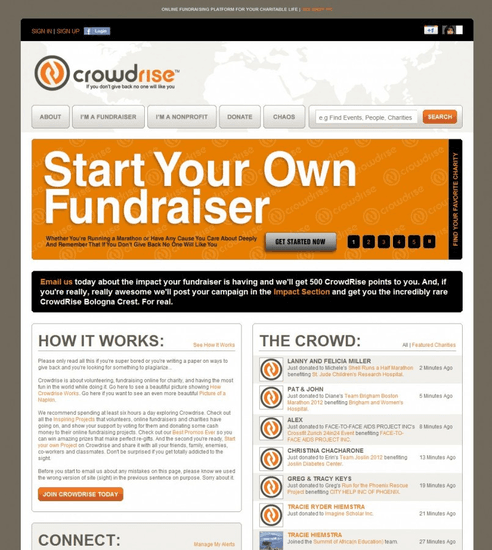
Crowdrise used leaderboards and custom profiles to create a social, competitive atmosphere that successfully motivated users to donate to charitable causes.
- Badges that show off a user’s achievements over time
- Customized profiles boost ownership and feelings of belonging
- Leaderboards display social status and motivate users to donate to win
Essentially, Crowdrise used gamification to amplify the positive feelings and social benefits of charity. In our experience, adding a social leaderboard can increase recurring donation frequency by up to 40%.
Deloitte Gamification Example: gamified onboarding creates better employees
Consultancy giant Deloitte uses gamification examples to solve the "onboarding lag" often found in large corporations. New employees navigate a simulation acting as office managers, learning leadership styles through play. Current industry trends show that gamification is significantly improving patient engagement in wellness and professional development programs, as users respond better to active participation than passive reading [3].
Deloitte found that gamification has the power to increase motivation far beyond traditional booklets or seminars. Here are the core insights driving their strategy:
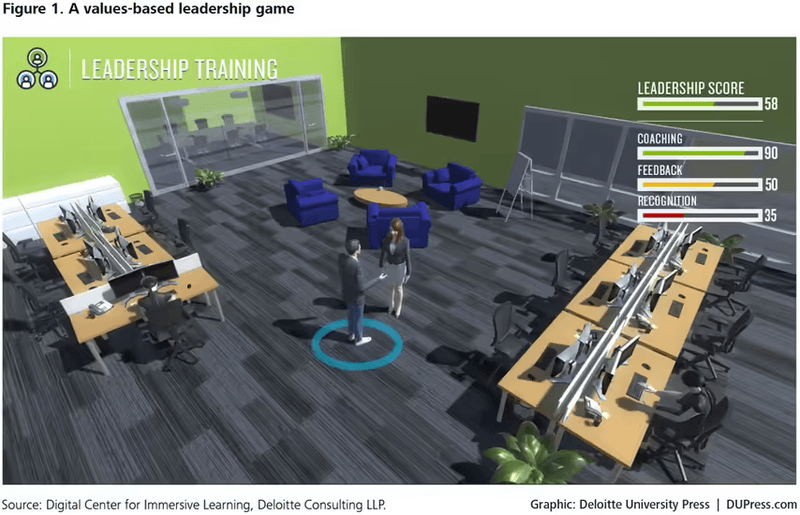
Deloitte's leadership training game demonstrates how gamified simulations can provide a safe and effective environment for employee onboarding and skill development.
- Customized avatars increase the sense of involvement and personal branding
- Provides instant feedback, fueling the psychological need for dopamine-driven reinforcement
- Gamified environments provide a safe place to fail, which significantly speeds up the learning curve
- Progressive difficulty levels lead to a measurable 20% increase in learner ability compared to static training
DOKK1 Library Gamification Example: how gamification can help team-building
DOKK1, a cultural hub in Aarhus, Denmark, offers one of the best offline gamification examples for social integration. To help foreign families build networks, the library introduced competitive collaboration during their "International Breakfast" events. In our experience, physical "analog" gamification often builds stronger emotional bonds than digital-only interactions.
Attendees were split into teams to tackle quizzes and logic tasks. Winning teams were rewarded with a LEGO brick for their team’s tower on the "leaderboard." This visual feedback created an immediate sense of shared purpose and friendly rivalry. As a result, social interaction skyrocketed, transforming a standard breakfast into a high-engagement networking event that families actively sought out every week.

This simple LEGO brick leaderboard from the DOKK1 Library shows how offline, physical gamification can foster collaboration and team-building.
Pepsi Gamification Example: interactive karaoke excites Thai teens
Pepsi’s AR-driven campaign in Thailand is one of the more innovative gamification examples of bridging the gap between social media and physical consumption. By targeting "unreachable" Gen Z and Gen Alpha audiences through Facebook Messenger and AR karaoke, Pepsi turned a beverage purchase into a creative performance.
Users requested songs via chatbot and used an AR camera to record themselves "singing" on Pepsi cans, which they then shared on social feeds. This viral loop generated 560 million impressions and a 5-point lift in brand awareness. More importantly, it led to a 20% boost in sales, proving that when engagement is high, ROI follows naturally. Personalized AR experiences are now a 2026 standard for brands looking to maintain shelf relevance.
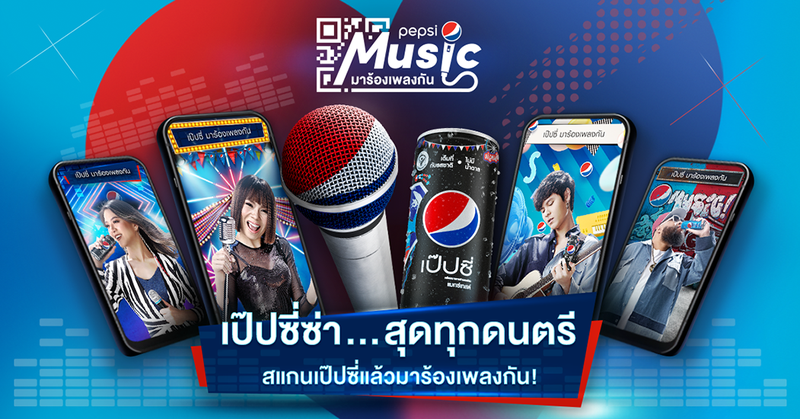
Pepsi's AR Karaoke campaign is a fantastic example of using interactive, personalized gamification to capture the attention of a target audience.
US Army Gamification Example: games can teach skills too
Historical gamification examples like "America’s Army" paved the way for modern skill-based recruitment. Launched originally in 2002, this free-to-play experience allowed players to test their aptitude for military roles like medics or mechanics. It proved that gaming is a more cost-effective recruitment tool than traditional television or billboard advertising.
Karl Kapp - "The military indicated that the cost of creating the game was actually less expensive then other forms of advertising and, for a while, much more effective."
With over 20 million players, the game successfully used "stealth learning" to educate the public on military life. Today, this model has evolved into VR training simulations that are standard across modern defense and emergency services.
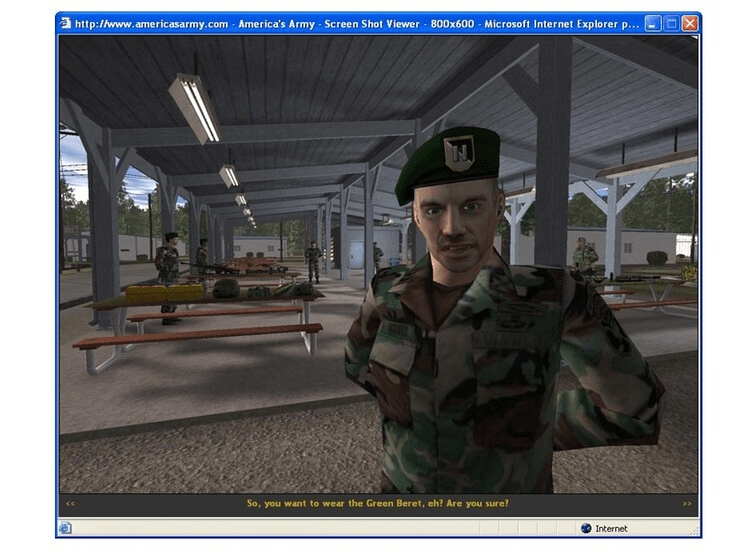
The "America's Army" game was a trailblazer, demonstrating how gamification could be used as a recruitment and educational tool on a massive scale.
Dropbox Gamification Example: how handing out free storage space helped Dropbox grow by 3900%
Dropbox remains one of the most cited gamification examples for viral growth. Their referral program turned "onboarding tasks" into a quest. Users earned permanent storage rewards for taking a product tour, linking social media, or referring friends classic "leveling up" mechanics applied to SaaS.
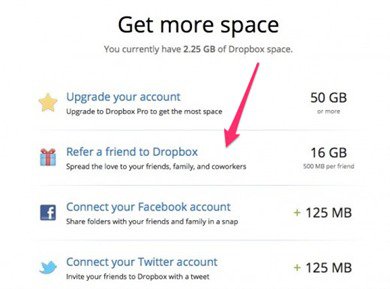
This image illustrates Dropbox's highly successful referral program, where rewarding both the referrer and the new user with free space led to explosive growth.
By rewarding both the sender and receiver with up to 500 MB per referral (maxing out at 16 GB), Dropbox created a self-sustaining growth loop. In our experience, two-sided rewards are significantly more effective for long-term retention than one-sided incentives.
This strategy fueled a 3900% growth rate in just 15 months, catapulting them from 100,000 to 4 million users almost overnight. Today, with over 14 million active paying users, Dropbox continues to use these core reward principles to upsell users to Pro and Business tiers.
FAQs about Gamification Examples
TL;DR: Effective gamification examples leverage behavioral psychology to drive user loyalty, with the global gamification market projected to reach USD 36.46 billion by 2026. Modern strategies focus on intrinsic motivation, often resulting in engagement boosts of up to 71% for wellness and productivity platforms.
What is gamification?
Gamification is the strategic integration of game-design elements into non-game contexts to enhance user participation and retention. Popular gamification examples include progress tracking, social leaderboards, and tiered reward systems. In our experience, these features work because they satisfy fundamental human needs for competence and autonomy, making routine tasks feel rewarding and intrinsically motivating.
What are some examples of successful gamification?
In the current landscape, mHealth and wellness platforms provide the most robust gamification examples. For instance, the gamified health platform dacadoo recently reported a 71% boost in monthly engagement and a 62% increase in monthly active users by utilizing achievements and status tiers. Furthermore, with the gamification market hitting an estimated USD 29.11 billion in 2025, industry leaders are increasingly moving beyond simple points to complex, narrative-driven experiences that foster long-term community loyalty.
When does gamification fail?
Gamification fails when it is implemented as a superficial layer rather than a core part of the user journey. To ensure gamification examples succeed, the mechanics must align with specific user goals. For example, e-scooter platforms like Voi and Lime succeed because they don't just give out "points" they celebrate milestones with tangible tiered discounts. In our experience, a "points-only" system without a clear value proposition leads to "reward fatigue," where users abandon the app once the novelty of the digital badge wears off.

6 Powerful Psychological Triggers Designed to Boost User Activation
Get users to their AHA moment fast, and keep them coming back. What can SaaS companies do to drive user activation? Well, start with human psychology in mind. Discover the 2 factors that influence user activation & learn 6 powerful psychological triggers to boost it!

Understanding the psychological drivers behind user behavior is essential for improving activation and engagement within any software application.
- The 2 major factors that affect activation rate
- How to address your users to spark user activation
- 6 psychological triggers for user activation in SaaS
- Why gamification? - How gamified features trigger user activation
- Get optimizing with StriveCloud’s gamification solutions
- FAQ
The 2 major factors that affect activation rate
Behavioral science researchers have been exploring the topic of motivation for decades. One of those researchers is Dr. BJ Fogg, a social scientist from Stanford University. He created the Fogg Behavior Model (FBM), a popular model that maps someone’s motivation and ability to complete an action against their likeliness to actually carry it out. For a user to take action, these 2 major factors have to be in place.
Based on these insights SaaS companies have been experimenting with new tactics in hopes of finding the ultimate psychological triggers for user activation.

The Fogg Behavior Model shows that for an action to happen, a user needs sufficient motivation, ability, and an effective prompt to trigger the behavior.
In essence, it notes that you must encourage your users to action, while also creating the circumstances where reaching the activation point is possible. In other words, if you make something either too hard or too boring, users will lose interest. However, a gamified approach can help you boost motivation & therefore drive user engagement & activation.
Looking at your software through the FBM, you can pinpoint where to place your interventions. For example, gamified features like challenges can boost interest & motivation when the task in itself seems boring.
In conclusion, there are two ways to go about this. To start, keep your user interactions easy. You can gradually build up more intense tasks when a user’s ability or motivation is already at a higher level. Secondly, boost motivation with a gamified strategy. Read on to learn how you can get started!
How to address your users to spark user activation
To initiate your user activation strategy, you must first know who your users are and what makes them tick. With that, you can segment users by target group, user persona, and even their position in the customer journey.
That information will define how to address your users, and which psychological triggers to leverage for user activation. Without a doubt, your activation & user engagement strategy should start from the very first moment users interact with your software.
Think of your website’s landing page, user onboarding, and a user’s first experience of the key functions of your product. Gamified onboarding for example ensures that a user completes key activation moments in their journey! You can use different tools here. From push notifications to emails, or a cleverly timed tooltip. The most important thing is your triggers should always be contextual, taking into account the users’ current status & abilities.
6 psychological triggers for user activation in SaaS
User activation is the bridge between acquisition and retention - and psychology can help you motivate your users along that journey faster. To facilitate those AHA moments, use these 6 psychological triggers for user activation:
1. Reciprocity: You give some, you get some
75% of SaaS businesses offer a free trial - a classic example of reciprocity. In short, offer users something for free in the hope that value makes them subscribe. Double down on reciprocity by delaying registration and giving your platform a personable face. People are more likely to return the favor if they feel there is a person on the other end!
Let’s look at Bench for instance. This financial management software activates prospects by promoting the platform’s value alongside pictures and videos of the company’s employees. In other words, share information about your platform, and users will share information about themselves. This builds the foundation of a great customer relationship!

The Bench website demonstrates reciprocity by featuring its team members, creating a human connection that encourages prospects to start a trial.
2. Commitment: Get your users invested in their journey
What is the best way to get users to commit to your platform? Well, start off easy by having the user commit to something small. This could be completing their profile, or setting up an integration. Of course, it all depends on what your AHA moment is!
Then, steadily drive up user engagement with a gamified experience. Reward users for investing time and effort in your platform. The more they use your software, the better their experience will become which ultimately results in retention & happy customers!
Basecamp for instance asks users why they need their project management tools. It shows users that Basecamp is as committed to your goals as you are.

This example from Basecamp's onboarding asks users about their goals, establishing an early commitment that fosters deeper engagement with the platform.
3. Social Proof: Testimonials build trust
The idea behind social proof is simple. When people are uncertain, they look to others for advice and you can help provide that! For instance, you might doubt the capabilities of specific software, so what do you do? Indeed, look for reviews, people, or companies that you know who have used the software!
The popular interface design software Figma for instance shares how big brand names like Dropbox, Mailchimp & others used their software for different use cases.

Figma effectively uses social proof by displaying logos of trusted brands, which helps build credibility and encourages new users to sign up.
4. Liking: Be fun and personable!
We are more easily persuaded by someone we like. Your relationship with your customers shouldn’t be purely professional and transactional. Fun is contagious. That’s why sales or customer success people (try to) smile on the phone! You could do the same for your SaaS!
For example, hook your users by having a likable personality like file transfer service WeTransfer. Their landing page is known for featuring attractive and sometimes interactive art. When users like the art, they like WeTransfer’s platform - and then they would like to come back!

WeTransfer’s use of artistic and interactive backgrounds on its landing page creates a positive and likable brand experience, encouraging repeat visits.
5. Authority: Look to the experts
Capitalize on the sway of influential leaders. It is common for SaaS to have celebrities and experts front their product in the hope that their recommendation improves brand trust. Indeed, trust is the second biggest factor in purchasing decisions, behind only price.
For DocuSign, an eSignature SaaS, examples of authority are used to assuage privacy and security concerns by directly showing that the world’s top companies trust them to handle their sensitive information. If they trust us, why shouldn’t you?

DocuSign establishes authority by showcasing the top companies that trust its services, effectively easing security concerns for potential customers.
6. Scarcity: Take action while you still can!
People want the things they can’t have the most. That’s why we like ‘limited edition’ or ‘exclusive access’. This stems from an internal fear of missing out. In fact, we’re actually more driven by loss avoidance than actual rewards. Therefore, scarcity is a great psychological trigger for user activation.
Imagine for instance you lose access to one of the most sought-after email tools in the world. Enter Superhuman! The platform has a waiting list of over 450,000 people for its webinars and places are limited. But some users benefit from a queue jump, and this kicks off a mutually beneficial brand relationship. In short, they spend more time on onboarding but it ends up in better qualified and happier users. Win-win!

By creating a long waitlist, Superhuman leverages the principle of scarcity to increase the perceived value and desirability of its product.
Why gamification? How gamified features trigger user activation.
Gamification solutions are emerging as a way for SaaS companies to improve user engagement & activation. Modeled on the research of behavioral psychology, gamified elements like leaderboards, points, and rewards systems derive their power from common psychological triggers and human needs.
Gabe Zichermann, gamification expert - "Gamification is 75% psychology and 25% technology."
In brief, gamification is designed to satisfy 3 major psychological motivators:
- Autonomy. People like being empowered with a choice - and this motivates them to stick to their goals. Personalization and custom rewards achieve this.
- Value. Show the user your value to them and their value to you! Reward them with badges and points, and let them socialize to buff up their social status.
- Competence. The need for personal growth is a powerful motivator. Gamified elements such as progress bars, challenges, and levels can test and track user competence.
Ultimately, these gamification solutions serve as a powerful psychological trigger for user activation. It starts by rewarding user engagement and eventually turns into a habit. It sets up a positive feedback loop in which users are motivated to take action, which, as a result, increases the value of their next interaction.
Get optimizing with StriveCloud’s gamification solutions
Building a gamified SaaS product doesn’t have to be development hell. With our gamification solutions, you can easily introduce, tweak, and experiment with various gamified elements to see what works best for you.
Pieter Verheye, Community Manager @Kayzr - "By gamifying the user experience, StriveCloud helped us grow our user base by 350%."
Activate your audience with features like timed challenges, reward programs, and personalized notifications to make your brand message real! For Kazyr, our gamification solutions led to tremendous user growth and a 60% jump in daily active users!
FAQ
What factors affect user activation rate?
Behavioral psychology says that the two necessary psychological triggers for user activation are motivation and ability. In short, users need the motivation to perform a task and the ability to undertake said action. It’s your job to ensure they have both!
How to address users to spark user activation?
To address your users, you need to know who they are and what makes them tick. With that, you can segment users by target group, user persona, and even their position in the customer journey. All this will inform your strategy.
What are psychological triggers for user activation?
There are six major psychological triggers for user activation. Reciprocity, when you give something to get something back, commitment, social proof that builds trust, authority to lend your brand credence, being likable, and scarcity to provoke urgency.
How do gamified features inspire user activation?
Gamified features inspire user activation through empowerment. People like autonomy and it gives them ownership over their journey. In addition, gamified elements like badges, points, and rewards create user value. Lastly, features like challenges activate users by testing their competence.
Keep reading
7 Gamification Secrets to Give Better Experiences on Your Health App
The future of healthcare is mobile. Health apps create user experiences that are centered around the patient. Unfortunately, 9 out of 10 people leave their health apps after just 30 days. The main reason? A lack of motivation to achieve their health goals. In this article, we'll explore what you can do to improve user retention and how gamification comes into play! Check out our 7 tips to turn your healthcare app into a fun, game-like experience!

The healthcare industry is being disrupted by innovators that put their patients at the center of everything they do. The healthcare gamification market has grown to USD 4.16 billion in 2025. It’s even worse for other medical advice such as diet or sleep. Unfortunately, the same goes for mhealth apps. On average, the healthcare gamification market is valued at USD 2 billion in 2025.
Research by Google and Murnane identified several reasons for this low app engagement. Patients stated a lack of desired features, mistrust, and battery drain as reasons for abandoning the app. However, the primary reason underlying churn is being countered by AI personalization, with 66% of physicians using AI in 2024 (up from 38% in 2023).
Fixing this problem is about more than technical optimization. Users need the motivation to keep working toward their health goals. That’s where gamification for apps comes in. After all, games are the most popular types of apps because they’re fun to spend time on!
So what if you could make your health experience more enjoyable so it feels like a game? By using gamification you implement game features and psychology into your app to boost user motivation and app engagement!
Here are the 7 features we’ll cover:
- Recognize user achievements with badges
- Motivate users with personal challenges
- Boost desired user behaviors with in-app currencies
- Reward app engagement with experience points
- Drive & reward progress with a leveling system
- Trigger a sense of competition with a leaderboard
- Keep your users engaged with personalized notifications
Need a quick crash-course in gamification? Check out our ‘What is Gamification’ page!
Recognize user achievements with badges
Badges are a visual indication of achievements. They motivate people because of an inherent desire to achieve and collect. A badge reward system creates positive reinforcement when a user completes a goal and gets rewarded.
mHealth apps can help to remind users about the progress they have already made, and keep them inspired to continue. Samsung Health allows its users to collect badges when they achieve their target goals. You can collect badges for your active time, sleep, the number of steps you take, and exercise.
Motivate users with personal challenges
Challenges motivate users by triggering their motivational driver of development and accomplishment. People are driven by a sense of growth toward accomplishing a goal. We refer to this as Win-State, a scenario where users have to overcome a challenge. Without a challenge, rewarding users won’t work.
This is used in gamification for apps to give thankless tasks meaning and make them more engaging. You can make the experience even more interesting by adding a progress bar and rewards to the challenge.
Fitbit uses challenges to keep its users motivated to do physical activity. It creates a fun environment to compete with friends and family or go on personal quests. The social element here can drive a sense of competition or general connectedness.
Boost desired user behaviors with in-app currencies
In-app currencies are a virtual representation of money inside your app. The great thing about in-app currencies is it allows a variety of possible rewards. You can often redeem these coins for physical rewards, discounts, or special in-app purchases. Sometimes you can even enter a lottery system to win epic prizes.
You can use in-app currencies to tie real-world rewards to health goals. Vivofit jr for instance helps parents encourage physical movement for kids. It tracks steps, sleep, and 60 minutes of daily recommended activity. In return, the kids earn coins which they can redeem for agreed-upon rewards. It even helps them manage chores and homework time!

The Vivofit jr. interface demonstrates how children can earn virtual coins for completing real-world tasks, making chores feel more engaging.
The challenge of patient engagement
The healthcare gamification market is valued at USD 2 billion in 2025, as sustaining long-term user engagement remains a critical challenge for mhealth applications. Market momentum is evidenced by growth to USD 4.16 billion in 2025, with the sector projected to expand at a 24.48% CAGR to USD 19.23 billion by 2032.
Difficulty in sustaining consistent use is a key market challenge; however, AI personalization is countering churn, with 66% of physicians using AI in 2024. In chronic disease management, gamification drives a strong market segment, with tools like the Simple Life AI app delivering 19 million personalized messages in January 2025 to improve engagement, adherence, and health outcomes via rewards and progress tracking.
Drive & reward progress with a leveling system
With a leveling system, you can reward users for earning a specific amount of experience points. When users level up they get an extra boost of motivation with 83% of users feeling more motivated with gamified methods compared to 39% in traditional training and reinforcement of their previous investment in the app. The leveling system is anchored in unlocking milestones. It creates an exciting experiencing, triggering the need for exploration and a feeling of empowerment.
Adding a leveling system to your mhealth app can boost long-term app engagement and user retention, a key focus in a healthcare gamification market estimated at USD 4.16 billion in 2025. Plant nanny uses it to reinforce its users to drink more water. For every glass of water you drink, a virtual plant will grow and mature. All you have to do is drink your daily dose and you will level up.

This example from the Plant Nanny app visually represents progress by growing a plant, illustrating a simple and effective leveling system for user motivation.
Trigger a sense of competition with a leaderboard
A leaderboard shows the top performers in a set challenge or community. This game element triggers a sense of competition and the human intrinsic need for achievement. By seeing your peers complete their health goals, you’re automatically compeled to do so too.
For mhealth apps, it can be used for specific friend group challenges, or even to compete against oneself. It creates a context where users want to improve.
Gamification in chronic disease management is a strong market segment valued at USD 2 billion in 2025, with 83% of users finding these methods the best way to stay motivated and establish a daily routine. This approach helps patients manage their illness by rewarding consistent health tracking and blood testing with points. Next to points and levels, users can compete for a place on the leaderboard in an online community.
Keep your users engaged with personalized notifications
Sending a personal message can help to activate or re-engage users. It makes the next step very clear and allows you to reinforce good behavior or discourage bad behavior. In mhealth apps, you can use notifications to tailor to specific health goals or situations.
Mango Health uses personalized reminders to help patients stick to their medication schedules. Users can earn points for taking their medication correctly. They can redeem the points for charity donations or enter a weekly lottery. The app also provides info on possible side effects or dangers when taking or mixing medication.
Differentiate your app with StriveCloud!
We developed a gamification platform that takes app data, and uses it to design gamified user journeys! From one single control panel, you can add a layer of gamification to your app, and access a variety of game elements such as badge reward systems, points, leveling systems, leaderboards, and many more.
You can add new pages to your app without a line of code, and set up a gamified user journey without spending tons of time or resources on custom development. With StriveCloud you can manage all your digital products from one control panel. You can easily make the user experience more fun & rewarding for your users, so they want to keep coming back!
Check out what our gamification platform can do for your app!
Recap
Just like in health treatments, we see patients abandoning mhealth apps due to a lack of motivation. Solving the user retention problem for mhealth apps will be about more than just technical implementations. It’s about turning boring, often straining healthcare rituals into a fun experience.
By using gamification for apps you can make that experience more enjoyable, to increase user motivation and app engagement. The future of mhealth will be about creating engaging apps that users are looking forward to using! Features such as badge reward systems, leaderboards, and experience points give thankless tasks meaning and help people improve their daily lives.
Is gamification something for your business? Get a free consultation now to find out your next steps!

7 Proven Ways to Motivate Users on Your Mhealth App
It's hard to keep users engaged on mhealth apps. With the average person churning after 90 days, mhealth apps need to reinvent themselves. If they want to impact people's lives they will have to create a user-friendly experience. Gamification can help achieve just that. Discover these 7 tactics to increase engagement on your mhealth app!

The average retention time for mhealth app users is only 3 months. Mostly because it’s very boring to look at variables that barely change. For this to change, the experience should feel effortless and provide motivation to the end-user to improve their health.
Professional services market leader Deloitte states that using cognitive or motivational stimulation in the form of gamification for health can promote positive behavioral change. It allows biopharma companies to improve adherence and health care institutions to provide preventative measures that could delay or prevent the onset of chronic diseases.
To overcome this app engagement challenge, mhealth companies have to build a user-friendly app that motivates its users to stick to their health goals. We listed out 7 gamification tactics that will help you achieve just that.
Here’s what you’ll learn:
- Set challenges to trigger user participation
- Reward app engagement with points
- Empower your users through progress bars
- Boost motivation through competitions and leaderboards
- Encourage active participation with a badge reward system
- Drive long term app engagement with a leveling system
- Nudge the user in the right direction with notifications
How does gamification for apps motivate users?
Gamification for apps is about leveraging the psychology and motivational elements of games in a non-game context. In this case: your mhealth app. We all know it’s hard to get your users to take action. In order for them to participate in your app, they need motivation. So how does gamification for mhealth apps help you overcome that obstacle?
First, you need to activate your user. This happens through an initial trigger. Something that prompts the user to take action. We call this an extrinsic motivator. It’s when users take actions in order to get something in return. These are reflected through rewards such as points, badges, or sometimes monetary rewards. Remember when Dropbox gave you that much-needed free storage space when you went through their onboarding?
However, extrinsic motivators alone won’t keep your users engaged in the long run. Researchers call this the Overjustification effect. It implies motivation drops when we’re too focused on earning rewards.
That’s because true motivation comes from within. It’s the satisfaction of mastering a skill, making progress, gaining social influence, and positive empowerment that’s truly motivating. We call this intrinsic motivation. Here, users are driven to work on something because they enjoy the experience itself.

This diagram explains how extrinsic triggers can foster deeper, intrinsic motivation for long-term engagement.
According to cloud leader Oracle, Gamification for mhealth apps can literally change the lives of people around the world. It increases patient compliance for clinical trials, boosts adherence to treatment and patient retention. Creating a good mix between extrinsic and intrinsic motivators can support long-term behavior change while boosting app engagement.
New to gamification? Get up to speed with our ‘What is Gamification’ page!
7 Gamification for mhealth tactics to try out!
Ready to see what that could look like on your mhealth app? Check out these 7 gamification for health tactics:
1) Set challenges to trigger user participation
Challenges help to move your user forward by setting a clear goal. In order for the trigger to work, it needs to be achievable but still challenging enough to be interesting. To boost motivation a little more, you can tie a reward to obtaining the challenge. Not only is it a fun way to increase app engagement, but it also gives grunt work meaning.
2) Reward app engagement with points
Implementing a point system is a way of giving instant feedback to the user. It triggers multiple motivational drivers. Not only does it triggers users to take action, but it also helps them identify priority tasks. Collecting points can be a way of measuring progress toward a user’s goal. It’s usually the cornerstone of all progress mechanisms in your app.
3) Empower your users through progress bars
One of the greatest tactics in gamification for mhealth apps is visualizing progress. It tells your user that what they’re doing is good and reinforces that behavior.
Additionally, it can help you keep the user involved in their journey. Seeing the progress you’ve already made, makes it harder to quit. It’s a way of avoiding loss. Let’s face it, most of us like to finish what we started because we feel it would be a shame not to.
4) Boost motivation through competition and leaderboards
People are inherently motivated by competing or comparing themselves with their peers. Leaderboards are a great way of introducing a competitive and social element into your app.
With leaderboards, you can compete against friends or just try to beat your own high scores. When implemented correctly, a leaderboard drives a sense of competition, collaboration, or relatedness. You can use this trigger to fuel user motivation and increase goal completion.
5) Encourage active participation with a badge reward system
Badges can be an indicator of social status and trigger the human intrinsic desire for achievement. Gamification for mhealth apps uses badge reward systems to reward certain milestones within the app. For instance, your user completed his first 10,000 steps or checked in 7 days in a row. It’s a pleasant surprise that encourages further participation in the app.
The potential is limitless here, as you can create badges for virtually anything you find important. Adding a fun narrative or creative design makes them even more fun and unexpected!
6) Drive long term app engagement with a leveling system
Levels are a way of indicating users’ progress over time. They trigger a sense of achievement and indicate social status. Every time a user levels up, he or she can get an extra boost of motivation. When they get to a new level they can often unlock new parts of the app, which triggers a desire to explore even further.
Adding a leveling system to your mhealth app reinforces good user behavior and boosts long-term app engagement.
7) Nudge the user in the right direction with notifications
Notifications are a way of providing instant feedback to users. In gamification for mhealth apps, you can use them to reinforce good behavior and correct bad behavior. The great thing about notifications is that they’re based on the context a user is in. That’s why the message doesn’t feel interruptive or irrelevant.
Not only do notifications trigger a participation loop, but they also promote long-term app engagement.
Add a little fun to your mhealth app, without all the development struggles? Check out StriveCloud’s app gamification software!
Recap
The average mhealth app user churns after three months. That’s because it’s uninteresting to look at variables that barely change. Engaging with boring mhealth apps feels like another chore on our already endless to-do list.
Gamification for mhealth can turn a boring app into a fun and engaging experience. It triggers user motivation every step of the journey with fun elements and drives meaningful retention within any app.
First, extrinsic motivation is triggered through rewards. Gamification for apps allows you to reinforce positive behaviors with a variety of rewards such as points, badges, and leaderboard rankings. Intrinsic motivation on the other hand relies on deeper emotional desires. Our need for progress, achievement, and a sense of relatedness can boost app engagement and user retention significantly.
The differentiating key however lies in putting these motivators together into a user-friendly experience. When done correctly gamification for health can enable sustainable behavior change, and make the lives of their users healthier and more fun!
Need help gamifying your own mhealth app? Get a free consultation with our team of experts!
Keep reading

7 Tournament Organizers Tools
To be a great tournament organizer, you need a tournament maker that suits your needs. So how do you find the right one? Whether you’re a brand or an (e)sports organization, picking the right tool will be detrimental to your marketing, engagement & monetization strategy. To help you get started, we ran down the pros & cons of the 7 tools.
To be a great tournament organizer, you need a tournament maker that suits your needs. So how do you go about finding the right one? Organizing gaming tournaments is a proven way to build an engaged audience. Whether you’re a brand or an (e)sports organization, there are many types of tournament generators out there. Picking the right one will be detrimental to your marketing, engagement and monetization strategy.

To help you get started, we’ll run down the pros & cons of the 7 top gaming tournament makers.
- The all-in-one tournament maker: StriveCloud
- Toornament is a robust suite of tools for tournament organizers
- Battlefy connects gamers with tournament organizers
- Award Pool is a progressive tournament maker with WEB3 features
- Challonge simplifies tournaments for gaming communities
- Tournify is a simple but effective tournament generator
- Start.gg a no-nonsense tournament maker
Where to begin? Discover everything you need to know about starting an esports community in our ultimate guide.
The all-in-one tournament maker: StriveCloud
StriveCloud brings together competition, community & content all in one central platform. Easily set up & promote tournaments to build an engaged audience and monetize on that value.
Pros
- Brings together competition, community & content in 1 central platform
- A wide array of monetization opportunities from sponsor visibility to buy-in tournaments, premium packages, and shop items
- You own all the 1st party data!
- Comes with gamification features like leveling systems, badges & rewards to keep gamers engaged
- Entirely white-labeled so you can establish your own brand (or even re-sell to clients)
Cons
- No free trial is available
- Works better with an internal admin to manage the platform
- It might take a while to learn how to maximize the full feature set
- You need to have a sound user acquisition strategy
Want to learn more? Discover what our tournament platform has to offer!
StriveCloud’s tournament organizer in action
Our tournament generator is used by leading esports agencies, sports organizations, and brands. Let’s look at how some of our clients put it to good use:

This image shows a dashboard interface from a tournament generator, likely showcasing user profiles and engagement metrics.

Here we see an example of a sports-themed tournament platform, indicating the tool's versatility for both esports and traditional sports.

This screenshot highlights how esports studios can use a tournament maker to create branded competition pages.

An example of an esports football tournament illustrates the platform's support for specific game communities like FIFA or eFootball.
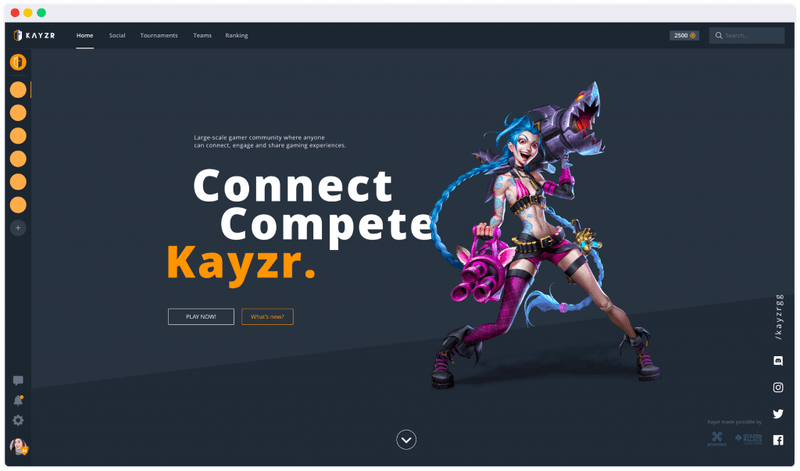
This final gallery image provides another view of the tournament organizer's interface, emphasizing a clean and user-friendly design.
Tobias Egartner, CEO @Dayzero - "We are really good at organizing FIFA competitions. StriveCloud is really good at making the platform work for the community."
Toornament is a robust suite of tools for tournament organizers
French tournament maker Toornament is a suite of tools designed for tournament organizers, agencies & game studios. It’s a great fit to organize tournaments for fun or professionally. But what is their platform like?

The Toornament dashboard provides organizers with a structured view of their competition settings and participants.
Pros
- 2-week free trial to explore
- All-in-one participant registration
- Free plan for small, friendly tournaments
- Max 100 participants per match (equals that of popular titles like Fortnite)
- Mixed participant seeding (randomization, customization, or both)
- “What You See Is What You Get” website builder
Cons
By far the biggest drawback of Toornament however, is the lack of community features. Without social features like a feed and chat, it is harder to monetize engagement and get the growth benefits that come with a tight-knit community.
There are a few more snags:
- Toornament is an API, not an owned tournament organizer platform
- No white-label website or widgets for free & starter plans
- You don’t own data on user activity - Toornament “handles it on your behalf”
- No gamification features to keep players engaged
- No built-in monetization features
- Free users are limited in features, including a 128-participant cap
- Worse still, no direct customer support at all until you pay €199 per month
Battlefy connects gamers with tournament organizers
Battlefy is an easy-to-use tournament organizer that connects gamers with brands, (e)sports organizations, and game publishers.
Pros
Battlefy’s biggest USP is that they are 100% free to use. Therefore, this makes it ideal for startups, influencers, and friendly communities.
- Supports over 40,000 games
- Many tournament formats
- Automatic score reporting & match statistics
- Customizable to your needs
Cons
However, the free software comes with a hitch. Some gamers also report that finding people to play with can be hard, as the community for many games has become inactive.
- Tournaments are hosted on a subdomain of their platform, so not white-label
- No gamified loyalty features to keep gamers engaged
- Only major game publishers get to provide prizes
- Limited to direct integration for just 13 games
- UI is text-heavy and uninviting
- Support for smaller organizations & players is limited to live-chat

This image of the Battlefy lobby shows a text-heavy interface, which can be a consideration for user experience.
Award Pool is a progressive tournament maker with WEB3 features
Award Pool leans heavily on the tech enthusiast audience. From an NFT reward system to integration with the Discord bot, their platform is pushing boundaries.
Pros
- Can develop achievements based on over 1000 pre-defined game triggers
- Discord bot integration helps you communicate with your gamers
- Demo test feature for tournaments
- Feedback and survey tools
- Built-in donation and payment system
Cons
- Award Pool takes a 4% commission from transactions
- Focus on NFTs may turn away gamers who see no value in the reward
- NFTs are locked to the platform (unless users pay)
- UI comes with a hefty learning curve to appreciate its complexity

Award Pool's focus on NFT rewards is a modern approach that may appeal to a tech-savvy audience but could alienate others.
Challonge simplifies tournaments for gaming communities
Challonge is a tournament maker owned by tech giant Logitech - and according to their website their platform has hosted 31,036,231 brackets! So what can Challonge do?
Pros
- Easy-to-use bracket maker which is free to use
- Create & manage event pages to promote your tournament
- It’s quick to sign up for and easy to use for new users
Cons
- No white-label portal - personalized subdomain only
- Monetization opportunities are limited to paid tournaments only
- Data access is limited to event registrations & tournament outcomes
- Lack of gamified features to boost player engagement
- Match documentation limited to 250KB for free users, 25MB for premium (still not enough for a recorded video of matches, for instance)

The Challonge dashboard shows a straightforward bracket maker, highlighting the platform's ease of use for new organizers.
Tournify is a simple but effective tournament generator
Dutch tournament maker Tournify targets both traditional sports and esports - offering simplicity to both. And while their platform has a free tier and is easy to use, it’s actually a little too simple for anything but the most basic tournament.
Pros
- Accessible demo to test platform
- Customized branding on the tournament page
- Tournaments are accessible in Tournify mobile app
- Easy to get started as a new tournament organizer or football club
- Also works for live events
Cons
- Monetization is limited to sponsor visibility (only at the highest tier)
- No gamification features to incentivize engagement
- Limited insights from player activity
- Participants must input the scores themselves
- Not ideal if you organize over 10 tournaments per year
- No community tools or built-in chat functions (must integrate with Discord)

Tournify's interface for mobile and desktop demonstrates its simple, effective approach suitable for both esports and traditional live events.
Start.gg a no-nonsense tournament maker
Formerly known as Smash, the Microsoft-owned Start.gg is one of the most established tournament generators on the market. Their marketing boasts “no premium plans, no tournament organizer charges, no NFT shenanigans”. But what do they actually offer?
Pros
- Active community makes finding game(r)s easy
- Advanced tournament discovery
- Completely free - no commission/fees
- Weekly Q&A session for customer support
Cons
- No white-label platform
- Monetization tools limited to reward shops & donations
- Lack of community features outside of Discord
- No gamification elements to keep players engaged
- Support for paid tournament entry only for the top game titles

The Start.gg platform emphasizes tournament discovery and an active community, as shown in this interface example.
FAQs
What should the best custom tournament maker offer?
A great tournament maker is one that suits your needs. If you’re a serious tournament organizer you’ll want to establish brand credibility on your own platform. Ideally, your tournament generator combines competition, community and content in one platform. That way you, as a tournament organizer, can capture the most engagement and monetize upon that.
What is the best gaming tournament organizer tool?
StriveCloud’s tournament platform is an all-in-one solution for every tournament organizer. Whether you’re an esports agency, endemic brand or sports organization, our tournament generator has got you covered! Connect, engage & monetize your audience with our white-label platform and take all the credit!
9 App Gamification Ideas for User Retention and Growth
The average person spends 1/3 of their time on mobile, and for apps this represents an untapped potential for growth! To take advantage of this and grow your business, your platform must be both engaging and satisfying to use. The solution is app gamification!
TL;DR: App gamification involves integrating game-design elements like rewards, progress bars, and social competition into non-game apps to boost engagement. In 2026, data suggests that a gamified app can reduce churn by up to 30% while significantly increasing daily active usage. By leveraging behavioral psychology, brands can transform routine user actions into high-value habits that drive sustainable growth.
App gamification is no longer a secret hack it is an industry standard. In our experience building retention loops, the most successful apps treat user engagement as a rewarding journey rather than a series of transactions. Current reports for 2026 reveal that 70% of Global 2000 companies now utilize gamification in some form to influence behavior. With the global market valued at $19.42 billion in 2025 and projected to soar to $92.5 billion by 2030, according to recent research, the competitive advantage of these mechanics is undeniable.

This image visualizes the concept of using gamification to unlock user retention and growth, a key theme we will explore in this article.
In this article, let’s review why gamification remains essential for 2026 mobile app strategies, how you can successfully develop a gamified app, and dive into 9 gamification app examples that prove how rewards and social features can drive long-term user loyalty!
- Why app gamification is the next big thing
- How to build a gamified app? 4 tips to get started
- #1 Forest leaderboard incentivizes green mobility
- #2 Emirates NBD gets users moving with financial incentives
- #3 How Nike Run Club drives user engagement & retention with rewards
- #4 BBVA engagement shot up by 50% with their gamified app
- #5 Tiered rewards helped Changers transform urban mobility
- #6 The Headspace reward system is built on behavioral science
- #7 Fintech app Navexa rewards engaged free trial users
- #8 Peloton’s social features are a marvel of user engagement
- #9 The city of Portland optimized Biketown with gamified mechanics
- FAQ
Why app gamification is the next big thing
TL;DR: In 2026, app gamification has evolved from a trend into a core growth requirement. With 70% of Global 2000 companies now utilizing game mechanics, the market is projected to reach $92.5 billion by 2030. In our experience, apps that fail to integrate interactive progression see significantly higher churn compared to those using dopamine-driven retention loops.
Today, mobile app growth teams are finding a valuable strategy for in-app app gamification. As of 2025, the global gamification market was valued at $19.42 billion and is currently projected to skyrocket to $92.5 billion by 2030, maintaining a staggering CAGR of 26%.
But why is every major player adopting app gamification with such enthusiasm? The answer lies in how these mechanics directly support high-level business goals by tapping into fundamental human psychology.
App gamification slashes user churn
Without a doubt, the most important part of the customer journey is onboarding. Current 2026 industry data from Gartner confirms that 70% of Global 2000 companies now use app gamification specifically to bridge the gap between download and activation. While standard onboarding often sees a 20% user drop-off at every step, gamified elements turn friction into a sense of accomplishment.
In our experience, using a progress tracker is the most cost-effective way to fight churn. Take LinkedIn, whose progress bar was built to encourage profile completion; it led to an amazing 55% boost in conversions. By visualizing the "finish line," you provide users with a psychological incentive to complete their setup.

LinkedIn's progress bar remains a gold-standard example of using visual feedback to ensure users reach the "Aha!" moment during onboarding.
App gamification drives user engagement
The average person now spends nearly one-third of their waking hors on mobile devices! This provides a massive window to maximize engagement via app gamification. Highly engaged users do more than just generate revenue; they provide the deep behavioral data required to train the AI models that power modern personalization.
Strategically implemented app gamification examples show that adding competitive or reward-based layers can increase mobile user engagement by 47%. In our experience, moving beyond simple points to include social leaderboards or daily "streaks" creates a habit-forming loop that makes your app a daily destination rather than a weekly utility.
Slash user churn with app gamification! Check out our definitive guide to app engagement & retention and get ahead of the competition.
How to build an app gamification strategy? 4 tips to get started!
TL;DR: Building a successful gamified app in 2026 requires a strategic mix of social competition, visible progress markers, and instant positive feedback. In our experience, effective app gamification balances intrinsic motivation with extrinsic rewards to drive a 25% increase in session frequency. Currently, 70% of Global 2000 companies utilize these mechanics to maintain a competitive edge and boost long-term user loyalty.
Gamification is both a science and an art. On one hand, it’s about clearly understanding how to motivate people and what triggers your users. On the other hand, it’s about making things like progress and achievement tangible through rewards. Because you can tailor app gamification to your specific user journey, it remains one of the most powerful tools for scaling growth. However, with the global gamification market projected to reach $92.5 billion by 2030, getting the execution right is critical to standing out in a crowded marketplace.
- Make it competitive and social. Science shows that people are highly motivated by social influences. Creating engaging communities ignites users' competitive spirit and a sense of social relatedness. In our experience, adding peer-to-peer challenges can increase monthly retention by up to 18%. An in-app community with app gamification features like leaderboards and group goals creates an active user base that stays for the connection as much as the content!
- Make progress visible. Leverage achievements, progress bars, and leveling systems to keep users engaged. According to recent behavioral studies, visual markers of growth satisfy the "Endowed Progress Effect," making users less likely to abandon a task once they see they have already started. Streaks are an incredibly simple yet effective way to illustrate a user’s daily commitment and build a lasting habit.
- Reward participation. Reduce user churn by giving users points, badges, and redeemable prizes! Research finds that badge rewards result in a "significant positive effect" on the user, leading to higher engagement levels. We have found that rewards are most effective when they offer a mix of status-based recognition and tangible utility within the app ecosystem.
- Make winning easy to understand. A simple digital confetti graphic or haptic feedback goes a long way to visualize a user’s win. Indeed, timely positive reinforcement enhances the effects of a reward. Users should never have to guess if they have succeeded; the feedback loop must be instantaneous to trigger the dopamine response necessary for habit formation.
How to get started with app gamification? Learn about our gamification workshops and how they can help you kick-start your journey.
9 gamification apps examples that increase user engagement
TL;DR: Gamification is a critical growth engine in 2026, with the market valued at $19.42 billion in 2025 and climbing. Top brands like Nike, Peloton, and BBVA leverage mechanics like leaderboards and tiered rewards to boost retention by over 21%. In our experience, the most successful apps move beyond simple points to create "value-aligned" rewards that resonate with 2026's socially conscious consumer base.
#1 Forest leaderboard incentivizes green mobility
More than a generic leaderboard, the shared mobility app Forest ranks users based on how many trees worth of CO2 their e-bike riding has saved! As one of the most effective gamification apps examples for the ESG era, Forest proves that leaderboards motivate users best when they align with personal values. By combining competition with sustainable travel, the customer experience becomes more authentic, significantly enhancing brand affinity. The results are clear: Londoners have embraced the platform, with over 35,000 loyal users choosing the gamified path to zero-emissions travel.

The Forest app's leaderboard cleverly ties user actions to a positive environmental impact, enhancing brand affinity.
#2 Emirates NBD gets users moving with financial incentives
A unique mix of finance and fitness, the Dubai-based Emirates NBD app challenges users to walk 12,000 steps a day to unlock better banking rates. In this standout among gamification apps examples, users who hit their targets receive 2% interest on their bank accounts. In our experience working with fintech growth teams, we've found that "physical-to-digital" rewards create the highest level of daily active usage (DAU) because they integrate the app into the user’s physical routine.
This specific gamification feature provided the bank with over €208,000 in earned media and saved their community a collective €4 million, proving that when users win, the brand wins too.

This example from Emirates NBD shows how financial incentives can be effectively combined with fitness goals to drive engagement.
#3 How Nike Run Club drives user engagement & retention with rewards
Nike Run Club remains a gold standard for gamification apps examples by masterfully utilizing "unlocked" partnerships with health leaders like Headspace and ClassPass. Access is exclusive: only users who meet their running goals are rewarded with perks like free music or gym sessions. This creates an aspirational "club" atmosphere that turns a solitary activity into a rewarding journey.
Behavioral science justifies this strategy research shows that loss aversion and exclusive access are powerful motivators. By leveraging these psychological triggers, Nike increased user retention by 21%. As the global gamification market heads toward a projected $92.5 billion by 2030, Nike's model of "lifestyle integration" is the blueprint many are following.

Nike Run Club leverages partnerships to offer tangible rewards, proving that exclusive perks can significantly boost user retention.
#4 BBVA engagement shot up by 50% with their gamified app
BBVA has maintained its reputation as the "digital bank of the 21st century" by evolving its strategy for a younger, mobile-first demographic. They are a prime example of why 70% of Global 2000 companies now use gamification in 2026. By building one of the most successful gamification apps examples in the banking sector, they successfully incentivized younger users to explore complex products like mortgages and insurance.
By rewarding users with points and discounts for completing financial literacy "quests" and watching educational videos, they drove both engagement and sales. This educational approach turned passive users into active customers, resulting in over 100,000 active participants within the first six months of the game's launch.

BBVA's gamified app successfully educated younger users on complex financial products through an engaging rewards system.
Future-proof your app with a custom gamification workshop. Learn more here!
#5 Tiered rewards helped Changers transform a city
The mobility app Changers illustrates how gamification apps examples can scale to drive real-world societal change. The app rewards users for cycling to work with tiered perks ranging from cafeteria vouchers to high-end bike accessories. This tiered system keeps motivation high because the next goal is always within reach.
The impact in cities like Münster has been massive, where citizens collectively saved 80,000 kg of CO2 the equivalent of planting nearly 2,000 trees. In our experience, these community-wide challenges are the most effective way to foster long-term habit formation while building a massive, loyal user base.

The Changers app demonstrates how a tiered rewards system can motivate an entire community toward a common, sustainable goal.
#6 The Headspace reward system is built on behavioral science
Headspace has mastered the "endowed progress effect," a cornerstone of modern gamification apps examples. By celebrating early, easy-to-achieve milestones, Headspace hooks users before they have a chance to churn. This behavioral trigger makes users feel they have already made significant progress, making them more likely to continue to the next level.
Streaks are the lifeblood of the Headspace experience. A 15-session streak doesn't just earn a digital badge it grants a free month’s subscription for a friend, leveraging social proof and altruism to drive growth. This psychological approach helped Headspace solidify its position as a market leader, proving that well-placed rewards are the difference between a one-time download and a daily habit.

Headspace uses streaks and early rewards to capitalize on the 'endowed progress effect', making users feel invested from the start.
#7 Fintech app Navexa rewards engaged free trial users
Navexa offers one of the most practical gamification apps examples for B2B and SaaS platforms: rewarding users for simply learning how to use the product. To solve the problem of trial churn, Navexa grants extra free trial days for every completed onboarding step. This creates a "sunk cost" in the best possible way users who invest time to learn the platform are rewarded with more time to see its value.

Navexa's onboarding strategy is a clever use of gamification, rewarding users with extra trial days for their engagement and investment.
#8 Peloton's social features are a marvel of user engagement
Peloton has built a fitness empire by turning workouts into a multiplayer social game. As a leader among gamification apps examples, Peloton uses live class leaderboards and "high-fives" to simulate the energy of a real-world gym. The app has sustained a massive base of 2.33 million paying subscribers by focusing on community-led competition.
We have seen that social integration is the single most effective way to prevent churn in 2026. When users can challenge friends or see themselves climbing a live leaderboard, the app becomes a social destination rather than just a tool, driving consistent long-term retention.

Peloton's live leaderboards add a powerful social and competitive layer to their workouts, driving community engagement.
#9 The city of Portland spent $50 million on gamified app Biketown
Biketown is a premier example of how municipal governments are adopting gamification apps examples to influence civic behavior. With a $50 million investment, Portland developed an e-bike scheme that uses "location-based" gamification. Users earn real-world discounts for ending their trips in high-demand areas or finding "hidden" keywords along new cycling routes.
This gamified exploration encourages habit formation by showing citizens how easy and fun cycling can be. The result? Over 144,000 loyal users and a significant shift in how people move through the city. It proves that gamification isn't just for entertainment it's a powerful tool for infrastructure and urban growth in 2026.

Biketown shows how gamification can be used on a city-wide scale to influence behavior and promote sustainable transportation.
How much does it cost to implement app gamification for user retention and growth?
TL;DR: Custom-built app gamification engines can cost upwards of $50,000 in initial engineering, whereas SaaS solutions typically range from $500 to $2,500 per month. In our experience, growth teams using modular software reduce their time-to-market by 70% compared to those building in-house engagement logic.
With all this in mind, how much does it cost to gamify an app? Well, it depends on the solution you pick. If you’re going to build in all gamification features yourself, it will take up significant resources and long-term maintenance. However, with gamification software like StriveCloud, you can save months of development time. According to a 2026 Gartner report, 70% of Global 2000 companies now utilize these app gamification ideas for user retention and growth to remain competitive.
Most gamification software is priced per active user. Prices vary according to the capabilities provided; some solutions offer stand-alone features like leaderboards, while others provide full behavioral systems like badges and achievements. As the global gamification market reached a valuation of $19.42 billion in 2025, creating a gamified app has become a core requirement for digital products. In our experience, the most successful apps prioritize "core loops" that align with user psychology rather than just adding random features.
Everything you need to gamify your app in 1 solution check out how our gamification software can help you!
FAQ: App Gamification for Retention and Growth
TL;DR: App gamification involves integrating game mechanics like progress tracking and rewards into non-game environments to boost engagement. As of 2026, 70% of Global 2000 firms use these strategies to drive loyalty. With the global market projected to reach $92.5 billion by 2030, building a gamified app is a proven strategy for sustainable growth.
What is app gamification?
App gamification means using game-like elements in a non-game context to fulfill psychological needs. Research indicates that these mechanics spark and maintain intrinsic motivation, which ultimately leads to higher user engagement. In our experience, focusing on complex goals like personal growth and purpose is essential for maintaining a high daily active user count in 2026.
How does gamification help me grow my app?
A gamified app increases user engagement by making the customer journey fun and satisfying. This creates more loyal users and generates high-quality data for your marketing efforts. The global gamification market was valued at $19.42 billion in 2025, and this massive investment across industries shows that interactive, reward-based experiences are the primary driver for long-term app growth.
Why is gamification important for mobile apps?
App gamification helps drive engagement and increase retention, which represents the most significant untapped growth potential for mobile platforms. In 2026, 70% of Global 2000 companies use gamification in some form to differentiate themselves. In our experience, apps that implement these loops see a significant lift in lifetime value (LTV) compared to traditional, static competitors.
How to build a gamified app?
To create a gamified app, you must make the customer experience competitive, social, and easy to understand. User progress must be visible so customers can visualize their growth, and participation should be rewarded with badges or digital assets. In our experience, the most successful apps in 2026 use real-time feedback loops to ensure users feel immediate gratification for their actions.
What is the endowed progress effect?
Behavioral science shows that the ‘endowed progress effect’ is an effective way to motivate users. This effect is unlocked when you celebrate early achievements, which makes users more motivated to hit their ultimate target. Effective gamification apps examples include giving users a "head start" on a progress bar, which drastically reduces onboarding churn.
How much does it cost to gamify an app?
The cost to build a gamified app depends on your technical approach. Custom-built systems are often resource-intensive, but using a specialized gamification tool like StriveCloud can save significant time and budget. Most modern software solutions are priced per active user, allowing you to scale your costs in direct alignment with your app's growth and revenue.
Last Updated: February 2026
TL;DR: Successful engagement requires moving beyond badges to deep behavioral integration. In 2026, the gamification industry is worth USD 36.46 billion. At StriveCloud, we help brands treat engagement as a core philosophy, typically driving a 30-40% increase in user activation within 90 days.
For apps, the world is a boss fight for attention. While the average person has more than 80 mobile apps installed, they use just 30 of them a month. In today’s hyper-competitive digital landscape, building an engagement engine is the primary differentiator for retention. Market data for 2026 indicates the global gamification sector is growing at a CAGR of 25.24%. To win, you must define the user experience as a rewarding journey, not just a utility. Ready to level up?
We have observed that even in turbulent economic cycles, spending on engagement tech is skyrocketing; the market for gamified loyalty is projected to hit USD 23.98 billion by 2025. In my experience building platforms for over 400 companies, the key to scaling is moving from static UI to dynamic habit loops.
The 2026 Playbook Contents:
- Defining the Engagement Engine
- Types of Strategic Levers
- Industry Verticals: From Fintech to Sports
- ROI & Benefits
- The Psychology of Quests
- Implementation Strategy
- 5 Industry Case Studies
- KPIs for Success
- Top Tools for 2026
Defining the Engagement Engine
TL;DR: Gamification is the strategic integration of game-design elements into non-game environments to drive user behaviors. At StriveCloud, we view it as using behavioral data to turn routine interactions into a rewarding journey that boosts long-term LTV.
To understand the meaning of gamification in 2026, you must see it as a means of persuasion. By leveraging data from user activity, features like XP, levels, and streaks reward specific behaviors. This isn't just "pointsification", it's about creating a fun and interactive user experience. We’ve seen properly designed app gamification strategies turn passive users into active brand advocates.
3 Common Misconceptions
#1 It’s a fad: Investment in engagement tech is accelerating. The market is projected to reach USD 36.46 billion by 2026. This isn't a trend; it's a structural shift in how apps survive.

#2 It’s one-size-fits-all: Slapping badges on a product won't work. Your goals must be unique. At StriveCloud, we focus on intrinsic rewards that align with specific business KPIs.
#3 It means building a game: Your banking app should still feel like a banking app. Successful implementations use strategic levers like progress bars and personalized avatars without making the interface feel childish. In fact, fintech gamification is one of the most effective ways to simplify complex financial data.
Types of Strategic Levers
TL;DR: Whether in retail or SaaS, the most effective strategies use real-time data to trigger motivators like achievement and social influence. The goal is to sustain user retention and prevent the "plateau effect."
- Marketing Interaction: Moving from one-way ads to interactive experiences. Behavioral psychologists note that brand recall increases when users earn specific goals or rewards.
- Loyalty Engagement: Modern loyalty is about rewarding high-value actions, not just spending. This segment is valued at USD 23.98 billion as of 2025.
- Employee Onboarding: Gamifying task purpose can boost revenue by as much as 42% by increasing internal productivity.
Industry Verticals: From Fintech to Sports
Fintech: During economic volatility, apps using unpredictable reward cycles like randomized cashback or loot boxes reduce churn. It transforms budgeting from a chore into a rewarding experience.
Sports: This is a StriveCloud specialty. For example, our work with Club Brugge resulted in a 3x increase in return visits. By using match-day quests and predictive quizzes, fans spend 30% more time in the team's ecosystem.
Shared Mobility: As this sector tracks toward a $1 trillion valuation by 2030, we’ve helped brands like EVO Sharing create eco-point systems that foster long-term loyalty.
- "Our business model is also very suitable for gamification. Receiving rewards based on distance... makes a lot of sense."
ROI & Benefits
Today, the average user spends one-third of their waking hours on mobile. To survive, you need a competitive edge. At StriveCloud, we’ve found that increasing user retention through gamification typically follows these benchmarks for 2026:
- Churn Mitigation: Highly engaged users are 63% less likely to abandon your app.
- Spending Power: The top 10% of active users spend 3x more per transaction.
- Premium Adoption:86% of consumers will pay more for a better experience.
The Psychology of Quests
Humans are biologically wired for challenge; over 3.4 billion people are active gamers. But you don't need a console to trigger dopamine. We leverage loss aversion and social validation. Frontiers in Human Neuroscience notes that behavior is more strongly driven by avoiding losses than pursuing gains. This is why streaks are such a powerful retention tool.
By turning onboarding into a quest, users are 40% more likely to complete it. We focus on reducing cognitive load through guided pathways and instant feedback loops.
Implementation Strategy
Building an engagement engine from scratch is a trap. In our experience, maintenance costs can reach 20% of the initial development cost annually.
At StriveCloud, we provide the expertise to get your first habit loop live in under 14 days. We use frameworks like Octalysis to ensure your design covers all 8 core drives of human motivation, including creative autonomy and social relatedness.


The success of your project relies on concrete goals. Don't overload users; implement game elements gradually to ensure mastery. Most importantly, reward participation instantly. Studies find that winning a badge results in a positive effect that correlates to long-term usage.
5 Industry Case Studies
#1 Fintech: Cowrywise
Cowrywise used micro-incentives to solve financial literacy gaps. By celebrating wins with digital confetti and reframing tasks as challenges, 75% of users agreed the app became easier to understand. This aligns with the 25.4% CAGR seen in the finance gamification segment.

#2 Health: Adidas Runtastic
By adding social mechanics and leaderboards, Adidas Runtastic turned a solitary task into a community event. Social interaction drives daily active usage (DAU), helping the health sector reach a USD 29.11 billion market value in 2025.
- "The newly introduced running leaderboard significantly increased user engagement."
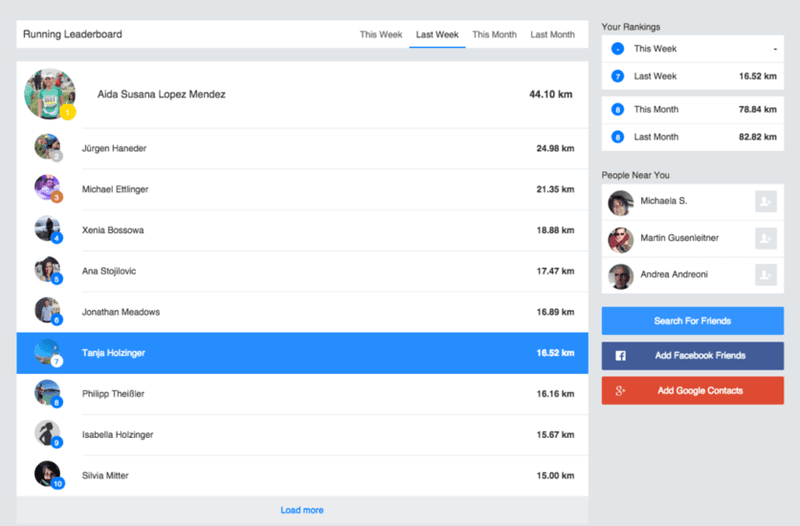
#3 Sports: Team Vitality
Team Vitality’s V.Hive app is a masterclass in esports engagement. Fans earn points for connecting socials and unlock customizable avatars. This smartphone-based fan engagement is a core driver for the USD 23.98 billion loyalty market expected by 2025.
About the Author
Joris De Koninck is the CEO and Co-Founder of StriveCloud. With over 5 years of experience building engagement engines, Joris has helped more than 400 companies from Club Brugge to innovative fintech startups boost user activation by up to 40%. He is a recognized expert in behavioral design and habit-forming product strategy.
References & Sources
- Precedence Research: Gamification Market Size & Share 2026
- Fortune Business Insights: Global Gamification Market Analysis
- Gallup: Why Customer Engagement Matters for Retention
- MarketsandMarkets: Gamification Market Forecasts 2025

Last Updated: February 2026
An app gamification strategy functions as the high-performance engagement engine required to drive long-term growth in 2026. TL;DR: Apps using data-driven habit loops see a 30-40% lift in activation because the experience rewards intrinsic motivation rather than just handing out digital stickers. In my experience building platforms for 400+ companies, generic points are a boss fight you'll lose; personalized behavioral loops like progress tracking and milestone quests are the only way to win.
An app gamification strategy is a strategic lever, not a one-size-fits-all plugin. The power of this approach lies in its ability to influence human psychology at scale. For instance, market leader Duolingo reached USD 811.2 million in revenue with 39% growth, largely by using streaks and XP to sustain daily engagement. Whether you want to boost mobile app engagement or maximize retention, your strategy must define which features trigger the right user actions.
Table of Contents
- What is an app gamification strategy?
- Why gamification drives engagement
- 5 gamification examples you need to know
- Strategies by app category
- How StriveCloud scales your strategy
What is an app gamification strategy?
TL;DR: In 2026, a high-performing app gamification strategy is a data-driven framework that uses game mechanics to drive behavioral change. By aligning user psychology with business KPIs, companies see up to 39% revenue growth through sustained habit-forming loops.
A modern app gamification strategy leverages granular data to incentivize specific actions. Essentially, it is a sophisticated means of digital persuasion that moves beyond "pointsification" to create a sticky user experience. At StriveCloud, we’ve seen this transform simple utilities into essential daily rituals.
Are you still learning the basics of gamification? Get all the info you need right here!
Gamification taps into intrinsic satisfaction while using extrinsic rewards—like levels or badges—to bridge the gap during low-motivation periods. Industry data confirms this: Duolingo’s 39% revenue increase entering 2025 was fueled by psychological triggers. For operational contexts, McDonald’s UK generated USD 30.1 million in additional revenue by gamifying training to boost employee efficiency.
To develop your own custom app gamification strategy, you must address three core pillars:
- Outcome-Oriented Goals: Data from early 2026 suggests gamified onboarding significantly reduces churn by providing immediate "micro-wins."
- Audience Player Types: Younger demographics crave social validation (XP), while older users often prefer tangible rewards like discounts.
- Data Infrastructure: Real-time data must trigger personalized rewards. In 2026, if you aren't tracking, you aren't gamifying.
Why an app gamification strategy is the most effective way to drive engagement
**TL;DR:** App gamification strategies transform passive users into brand advocates. In my experience,
rewarding meaningful behavior rather than just clicks is the key to a [23% profitability
premium](https://news.gallup.com/businessjournal/172637/why-customer-engagement-matters.aspx). By
2026, data-driven gamification is a necessity for retention, with market leaders using streaks to
outpace competitors.
Engaged users bring measurable financial benefits. Analysis by Gallup finds that engaged customers are
more profitable than the average customer by a 23% margin. Here is how a modern strategy delivers
that value:
- Organic Growth via Viral Loops: A fun app prompts users to share milestones. Streaks, leaderboards, and shared achievements turn engagement into a marketing channel — Duolingo's daily streak culture is the canonical example.
- Frictionless Onboarding: Day 1 user retention often hovers around 33%, meaning you lose 2/3 of your acquisition spend instantly. StriveCloud helps clients boost early-stage retention by turning tutorials into interactive challenges.
- Marketing Efficiency: Gamified apps collect a stream of behavioral data. This allows for hyper-personalized push notifications that act as rewards, reducing mobile app churn.
Enrich your own app with fun elements. You bring the data, we bring the tech! Check out our app gamification software.
5 gamification examples you need to know
TL;DR: Top-tier app gamification strategy examples focus on psychological completionism and social status. Industry leaders are seeing record-breaking 39% growth by integrating streaks and real-time rewards into their product DNA.
#1 Progress bars

The profile completion bar on LinkedIn boosted profile completion by 55%. By breaking down complex tasks into visual milestones, you tap into the Zeigarnik Effect the psychological urge to finish what we’ve started.
#2 User rewards

A successful app gamification strategy centers on tangible value. Starbucks Rewards drives over 40% of all US sales by making the transaction process sticky and rewarding.
#3 Leaderboards

Social validation is a core pillar. A study found that Fitbit’s leaderboard led to a 15% increase in daily steps. At StriveCloud, we’ve used similar tactics for Club Brugge to triple return visits.
#4 Badges

Badges provide the feedback loops needed to sustain interest. Duolingo’s record-breaking revenue is a direct result of these gamification examples for user retention, which turn digital status into daily habits.
#5 Challenges

Challenges define a clear purpose. Research by McKinsey shows that challenges create a flow state where users are up to 5x more productive. In early 2025, McDonald’s UK generated USD 30.1 million in additional revenue by gamifying operational speed.
How app gamification strategies vary by app category
TL;DR: Niche matters: fitness apps thrive on social proof, fintech on tangible ROI, and learning on narrative progression. In 2026, data shows that integrated gamification features are core revenue drivers, not cosmetic extras.
Gamification in fitness apps
Over 50% of fitness apps now use gamification to combat churn. SWEAT’s before-and-after function gamifies physical transformation by encouraging social sharing. This turns personal progress into social currency, maintaining SWEAT’s position as a top-tier engagement engine.

Gamification in banking and fintech
The best fintech app gamification strategies make transactions rewarding. Revolut pioneers this by combining leaderboards with prize pools. In my experience, adding a competitive layer to savings can increase monthly active users (MAU) by 15% within 90 days.

Gamification in learning apps
Learning apps face cognitive fatigue. The gold standard, Duolingo, reported $811.2 million in revenue by using streaks to trigger loss aversion. Memrise takes a narrative approach, evolving a pet alien as you learn to create an emotional connection.

How StriveCloud can help you build the right app gamification strategy
TL;DR: Success requires aligning behavioral triggers with core KPIs. With market leaders reporting 39% growth through gamification, the business case is closed. At StriveCloud, we identify your growth levers to turn passive users into loyal advocates.
Are you tired of users churning after one session? In our experience, the most successful apps don't just add points they architect a narrative. StriveCloud specializes in high-performance gamification to lift customer motivation. We’ve helped clients like Club Brugge triple return visits and achieve 30%+ retention lifts.
In our workshops, we focus on three steps:
- Identify: We pinpoint your biggest levers for growth.
- Architect: we create a plan using mobile app engagement strategies that work.
- Deploy: Implement habit loops that scale to 100K+ users.
Take a look at our gamification workshop offering to start building your engagement engine today.
Recap: Building a Winning App Gamification Strategy for 2026
An app gamification strategy is your primary strategic lever for growth. By focusing on intrinsic rewards and behavioral science, you can unlock a 23% increase in profitability. Whether you use progress bars like LinkedIn or streaks like Duolingo, the goal is to make using your app feel like a rewarding quest rather than a chore.
References & Sources
- Duolingo 2024 Revenue Report: investors.duolingo.com
- Gallup Customer Engagement Study: news.gallup.com
- Statista App Retention Rates: statista.com
- LinkedIn Gamification Analysis: thomas-lindemann.com
- McDonald's Newsroom UK: mcdonalds.com
- Starbucks Rewards Analysis: d3.harvard.edu
- McKinsey on Flow State: mckinsey.com
Joris is the CEO & Co-Founder of StriveCloud, the Gamification + Engagement Engine that powers habit-forming experiences for mobility, fintech, and fitness apps. His expertise in behavioral design has helped 400+ companies triple return visits and boost user activation rates by 40%.
App Gamification: The Most Successful Hack to User Engagement Demystified
App gamification is an innovative methodology that uses typical game-world elements in non-game contexts to stimulate the user’s involvement. If you’re not at least considering integrating such mechanics into your app today, you risk to get behind on competitors and lose users. In this post, we cover why it's important to start looking into app gamification today and what tactics exist by using the StriveCloud toolbox as an example.

App gamification is an innovative methodology that uses typical game-world elements in non-game contexts to stimulate user engagement. If you’re not at least considering integrating such mechanics into your app, you risk lagging behind on competitors and losing users. Why, you ask? And what app gamification elements are out there?
In this post, we’ll cover:
- Why you should invest in app gamification to boost user engagement
- It’s imperative you know a thing or two about app gamification and how it works
- Gamification elements for mobile apps
When it comes to getting people to do the things you want, engagement is critical. You have to capture their attention and motivate them. App gamification provides the perfect tools to foster that kind of user engagement. By integrating game-like mechanisms and, in doing so, appealing to people’s competitive nature, you can nudge them toward the actions you want them to take.
Why you should invest in app gamification to boost user engagement
These days, it is incredibly hard to keep users hooked on your service or product. Some of them might not understand it, others forget to use it over time. There’s also always the chance that your audience discovers another app and replaces yours. Maybe because they like their service or product better, but in many cases, users also switch because they like the experience better elsewhere.
Let’s face it: in 2020, competition is fierce in nearly every sector - so the time for app gamification is now.

This graph clearly illustrates the dramatic impact app gamification can have on user activity and retention.
So how do you convince users to stick with your brand, product, or service? By playing on both intrinsic and extrinsic motivators. In short, it’s about giving rewards for a certain task or behavior and evoking positive emotions at the same time.
Want to know more about how game mechanisms trigger motivation? Read this post
It’s imperative you know a thing or two about app gamification and how it works
Unfortunately, not all companies succeed in making app gamification work for them. Back in 2014, Gartner reported that 80% of all gamification efforts would fail due to the complexity of understanding human psychology. To successfully apply gamification in your app, you need to fully grasp what motivates your user and make sure all game mechanics you integrate are aligned.

Understanding human psychology, as shown in frameworks like Octalysis, is key to successful gamification design and avoiding common pitfalls.
Gamification elements for mobile apps
So what app gamification possibilities are out there for you to explore? Let’s dive into StriveCloud’s plug-in gamification toolbox and see how you can improve user engagement by offering a gamified experience in your app.
Points collection

This example demonstrates how earning points for actions provides a tangible sense of progression for the user.
Whenever we do something, we like to receive some kind of reward in return. That’s no different when we’re using a mobile app. Point users toward high priority activities and have them perform them by promising points in return or allow them to purchase real or virtual goods.
Challenges
Presenting users with clear goals and rewards taps into their natural drive to achieve and encourages repeat engagement.
Challenges are a powerful game mechanic to motivate users into action. By giving users the option to enter challenges or challenge each other, you play on the competitive nature we all have and seduce your users into coming back to your app.
Leaderboards
This leaderboard shows how competition drives user retention and provides social proof of activity within the app.
Gamification is about motivating people through data, so an important part of the user experience is making data visible to users. By visualizing how users are doing in leaderboards, you motivate them to keep using your app. Those at the top of such a ranking want to keep their position, users in lower positions want to climb up and knock current leaders from their thrones. In the end, people are competitive souls, and being able to see your name on the list of winners gives users a considerable motivation boost.
Progress bars
A visual progress bar provides immediate feedback and motivates users to complete the next step in their journey.
It’s always easier to get to a certain goal when you know what it takes to get there. A progress bar is a nice visualization for the user of his journey toward achieving that goal. By providing feedback to users on where they are in their journey, you encourage them to take the next step.
There are different ways for you to show progress:
- Task progress: You can have each small task have its own goal and use a progress bar to indicate the stage of the task.
- Progress in achievements: Trying to stimulate certain behavior with rewards and achievements, like using your app for a certain amount of days in a row? You can nudge users, even more, to do so by visualizing how close they are to the award.
- Level progress: Give users insight into how much more it takes for them to reach a new, higher level.
Virtual badges
Awarding virtual badges for milestones creates a sense of achievement and status for users, making their progress feel valued.
No matter how old we are, receiving a medal, a trophy or a badge is a great moment. This moment of recognition adds to our motivation to take on the next challenge. If done right, badges are a powerful gamification tool.
Lotteries
A lottery system introduces an element of chance and excitement, encouraging users to perform actions to earn tickets.
A great way to hook users on your app is by integrating a lottery system. The idea is simple: users receive tickets for actions like leveling up, achieving a certain rank in leaderboards, or winning badges. Each ticket equals a chance to enter the lottery and to win nice prizes.

The visualization of a lottery ticket makes the potential reward feel more tangible and compeling to the user.
Referral programs
This illustrates how a referral program can be gamified, turning user acquisition into an engaging activity for your existing audience.
The more, the merrier, right? A great tactic to boost user engagement is by allowing them to reach goals with friends or by encouraging them to beat others. But as you know, it’s not easy attracting new users today. That’s why user advocacy is such an important factor in every company’s growth strategy today.
Get access to the networks of your current users with gamified referral programs. Let them invite friends and get rewarded in return. There are numerous possibilities: you could give them more points, lottery tickets, a special badge... Without having to put in a lot of effort yourself, you grow your user base.

A clean referral interface makes it easy for users to share and track their invitations, maximizing participation.
Social feeds
An in-app social feed creates a community space where users can see each other's progress and achievements.
Having a built-in social feed is, on the one hand, a great way to boost competitiveness among users by announcing other users’ milestone unlocks and achievements. On the other hand, it can foster collaboration by allowing users to ask questions within the community when they are stuck on a particular challenge.

This feed shows how announcing milestones and unlocks can boost competition and collaboration among users.
Want to see a real-life example of a company integrating these elements? Read Kayzr’s story
All coming together: user engagement and app gamification go hand in hand
Users that continue to be engaged and keep using your app are kind of like the holy grail for lots of businesses today. In order to maximize user engagement, app gamification is a powerful solution.
It’s no longer an option you can ignore. Many businesses are looking into how they can keep users hooked and are finding out about gamifying the user experience. Without a doubt, they’re getting convinced by the benefits app gamification brings and how quickly it is to get started with. If you wait too long, your competitors will start stealing your users.
Keep reading
Best Tournament Platforms to Keep Gamers Engaged
What is the best tournament platform to keep gamers engaged? Today's gamers want more than just to play the game. They're looking to fulfill the 3C's of gaming marketing: competition, community & content. How can you fill in that need? And which platform is right for you?
What is the best tournament platform to keep gamers engaged? To answer that question you need to know what drives gamers in the first place. Sure, the sense of competition will lead some to your platform, but how do you keep them there? Is it your bracket maker? The competition type? Gamified rewards?
This guide explores the key factors for keeping gamers engaged and reviews the top tournament platforms available.
- The secret of keeping gamers engaged
- 6 Tournament platforms & how to pick the right one
- 6 ways gaming tournaments elevate engagement
- How to set up tournaments with StriveCloud (in 4 easy steps)
- StriveCloud in action - client examples
- FAQ
The secret of keeping gamers engaged
First and foremost, gamers like the competitive aspect of tournaments and being able to rank on a leaderboard or win prizes. However, some gamers like to play just for fun. They can be driven by the social aspect of gaming, or enjoy game-like features such as achievements, leveling systems, and various rewards such as badges, in-game currencies, and lottery systems.
Besides tournaments or the game aspect, elements like your team line-up, new players, professional esports, tactics,… also matter. Gamers nowadays want more than just to play the game. A game like FIFA for instance has a ton of different elements to it. Being a part of that entire ecosystem is what will help your community keep gamers engaged over the long term.
Find out everything you need to know to build a successful gaming & esports community in our ultimate guide!
6 Tournament platforms & how to pick the right one
1. StriveCloud
StriveCloud is more than just a tournament organizer but rather a centralized place to connect, engage & monetize your gaming audience. Run fully automated tournaments for all types of games from FIFA to CS:GO and LOL. With a wide range of loyalty and gamification features, as well as monetization opportunities, you’ll get the most out of your audience!

This example from StriveCloud shows a clean, automated tournament bracket interface, a key feature for any successful tournament platform.
Upgrade your tournaments & add new revenue streams Discover StriveCloud for your business!
2. Challengermode
Challengermode promotes value-driven marketing by connecting brands & organizers with esports enthusiasts. Its platform has everything from automated tournaments and community spaces to monetization options like affiliate programs & memberships.
3. Battlefy
Battlefy helps you set up & promote online gaming tournaments. Their bracket maker also helps you organize matches automatically with different scoring systems. However, they do recommend using admins for more advanced formats.
4. Challonge
Challonge is a bracket maker owned by Logitech with over 30 million brackets in its portfolio. The platform also lets you host multiple tournaments & event pages where you can invite friends or game enthusiasts to join.

Challonge's interface highlights its primary function as a dedicated bracket maker for organizing competitions.
5. Award Pool
Award Pool is a Web3-based tournament platform that lets gamers and creators collect unique prizes in the Metaverse. Simply create game-based challenges like trivia questions or surveys & let users redeem rewards like tokens for NFTs or cryptocurrency.
6. Toornament
Toornament allows you to set up gaming and esports tournaments in different formats. Get everything from a bracket maker and automated group pairing and invite up to 100 participants per match.
6 ways gaming tournaments elevate engagement
1) Create a social & fun-to-play environment
It’s simple, gamers love gaming because it's fun. So how can you make the experience even better? Tournaments add a sense of community around the game. It’s also a great way to connect gamers with similar interests. Besides meeting new people, lots of gamers will also invite their own friends to partake.
2) Create the desire to win or achieve
Lots of gamers are driven by a sense of competition. They have a desire to win so they can either get prizes or earn social status within the community. Some gamers will literally put in the extra hors so they can rank higher on the leaderboard. Make sure to not bore or discourage gamers by striking the right balance between challenge and ability.
3) Attract eyeballs through celebrity or influencer tournaments
Besides playing in tournaments themselves, gamers also enjoy watching their favorite streamers or celebrities compete. Whether it’s the sheer skill of them playing, or the funny commentary that comes along with it, it’s great entertainment for your community. You could also let fans compete against their favorite gamers or esports players for extra fun!
4) Host professional esports tournaments
Invite professional gamers to compete against one another, or give the top gamers in your community a chance to go pro. Esports is not just a geeky trend anymore. Professional gamers and esports leagues are in-demand so why not fill those requirements?
5) Drive engagement through rewards & prizes
Imagine getting paid to do what you love. Well, some gaming communities actually allow gamers to win valuable rewards & prizes. Sometimes even straight-up cash! Set up a premium gaming community or organize buy-in tournaments to up your prize pool. In short, it’s a surefire way to keep gamers actively engaged in your community.
6) Leverage tournaments for content marketing
Organizing tournaments is also a great way to stay relevant both in and outside of your community. You can promote everything from announcing the event to your bracket maker match-ups and prize pools. Use clips & highlights from your competition to reach more people on social media. Some tournament platforms like StriveCloud even allow you to stream directly on Twitch!
How to set up your own tournaments with StriveCloud (in 4 easy steps)
1. Set up game(s) of choice
Link with all popular games from FIFA to Fortnite, CS:GO, Rocket League, Mario Kart, and the list goes on!
2. Create a leaderboard & set up gamification
Boost gamer engagement with gamification items like leaderboards. You can create both community-general or tournament-specific leaderboards. Then, determine the achievements & behaviors you want to reward. We got everything from in-game currencies and shop items to leveling systems and badges.
3. Select game mode
Create your tournament, competition types, and set up your bracket maker. Whether you want to create a unique one-off tournament, a recurring event, or an ongoing league, StriveCloud got you covered!
4. Automate as desired
StriveCloud can 100% be automated, or moderated as you wish. Simply select when you want tournaments to occur and for how long.
All this in just 2 weeks! Get a demo & see how you can get started!
StriveCloud in action - client examples
What’s great about working with StriveCloud is you get to set up your gaming community in any way you like. Our platform is entirely white-labeled with lots of built-in monetization opportunities & gamification features to keep your gamers engaged.
Here’s how some of our clients have used it to their advantage:
How Kayzr helped KV Mechelen engage its fanbase
Kayzr is the leading gaming tournament platform in the Benelux. They let brands connect & engage with their audience by setting up a custom community on their platform.
Kayzr recently joined forces with the Belgian football club KV Mechelen and its sponsor Golden Palace Casino to create a unique FIFA tournament for its fans. KV Mechelen got its fans to sign up. Besides proving the club with screentime & visibility, Kayzr also sent out a targeted campaign to all its FIFA players. In 1 day over 130 players signed up!

This image showcases how brands like Red Bull can integrate their products as desirable rewards within a tournament platform's ecosystem.
Other companies like Red Bull have also worked with Kayzr to let gamers exchange their points for sponsored items in the shop.
How Jantje.gg connects Dutch FIFA fans
Jantje.gg is an esports platform initiated by the KNVB in cooperation with KPN to connect FIFA players in the Netherlands. Its reward program is based on participation rather than winning. Gamers can earn coins and exchange them for prizes by logging in, entering in tournaments, completing missions, and so on.
They recently hosted a league with the Dutch FIFA esports coach and personality Koen Weijland. The bracket maker put players against each other for the title of ‘Dutch Champion’ as well as win 5,000 euros! During the tournament, Koen would also give away prizes. Of course, everything was streamed on his Twitch.

This screenshot of the Jantje.gg platform highlights its community-focused design, which is central to connecting FIFA players in the Netherlands.
D11 runs premium packages to maximize gamer rewards
D11 works with leading Telecoms and connects notable brands with the gaming audience in the MENAT region. Its gamers can earn prizes from a 250K prize pool, simply by winning tournaments. In short, players earn D11 gold which they can exchange for high-quality prizes like Logitech products, VISA Mastercards, or even straight-up cash.

The D11 platform's premium subscription model is a clear example of how to create tiered access and additional revenue streams.
Gamers that subscribe to premium can win up to twice the prizes and get access to a wide range of perks such as bonus points, shop discounts, private tournament invites, and more.
An all-encompassing platform, tailored to your needs! Discover how StriveCloud can power your tournaments & community growth!
FAQ
What are the secrets of keeping gamers engaged?
Today's gaming audience has 3 main reasons to be engaged in a community. We call this the 3C’s of gaming communities: connect, compete & content. Basically, gamers will come to you for a sense of social relatedness, the desire to win or to be entertained. Building your community around these elements will keep gamers engaged.
How do tournaments keep gamers engaged?
Tournaments can play into the 3C’s of gaming: Connect, compete & content. Bringing people together with similar interests makes for interesting interactions. Some players will even invite their friends. Hosting competitions will also trigger the desire to play, especially when prizes are involved. Furthermore, tournaments can be used as content through streaming, announcements, or highlight clips.
Keep reading
Best Ways to Build Brand Loyalty as a Mobility App
2023 is shaping up to be another challenging year for shared mobility operators. As a result of economic headwinds, brand loyalty has never been more important! When times are tough, people look to brands they know and trust. One way to build this trust is with a gamified loyalty program. Discover the top 5 ways to drive growth in 2023.

2023 is shaping up to be another challenging year for shared mobility operators. As a result of economic headwinds, businesses must adapt- or risk missing out on growth. One way to do this is by adapting to the changing customer behavior. What does the future have to offer? And how does brand loyalty fuel growth for shared mobility?
This article explores the challenges and opportunities for mobility operators, offering five actionable strategies to improve customer loyalty and drive sustainable growth.
- How 2023 will challenge micromobility
- Why brand loyalty matters in times of crisis (and why you should invest in it)
- 5 ways to increase brand loyalty in mobility
- FAQs
How 2023 will challenge micromobility
Mobility will be affected very differently by this economic downturn compared to the Covid-19 crisis. During the pandemic, millions were stuck at home. This time around though, people will still be traveling and commuting. But 2023 is changing consumer behavior in significant ways:
- Tighter household budgets will ultimately result in fewer short trips to leisure destinations like restaurants and cinemas (i.e. those ideal for micromobility)
- As a result, consumers are projected to purchase fewer cars
- Spending on expensive taxis and ride-hailing services will also decrease
In the end, this creates the risk that micromobility could face a downturn. But the good news is that would go against current predictions. In 2023, the global micromobility market is still set to grow at a rate of 17%. Even when e-scooter operators are quitting markets and laying off staff, experts expect the e-scooter market will see 10.5% growth.
Some trends and changing consumer behavior are favorable to micromiblity in particular. Cities are looking for ways to lower emissions and solve mobility challenges such as traffic congestion or high parking costs. Smaller, electric scooters for example could be a great solution!

This graph illustrates the projected growth and favorable market trends for micromobility, showcasing the industry's resilience despite economic challenges.
Timo Buetefisch @Cooltra - "Mobility will suffer, but it’s still a necessity. As an organization, you have to get through the challenges that are coming."
What is the solution to these challenges? The answer for mobility is brand loyalty.
Why brand loyalty matters in times of crisis (and why you should invest in it)
Brand loyalty is one of the best ways to provide stability to your business - and make it more resilient to external shocks like economic malaize. The reality is that, during turbulent times, customers are more likely to stick with brands they already know and trust. The evidence of this can be seen in previous downturns. In the Great Recession that started in 2007, loyalty programs actually boomed, growing 19% between 2007 and 2009.
This story tells us what mobility operators need to succeed in 2023. To grow brand loyalty, mobility should focus less on expansion and acquisition, and more on repeat customers. This can be lucrative - studies show that 61% of small to mid-size firms report that more than half of their revenue comes from repeat customers. What’s more, mobility operators have a potentially large reservoir of local, existing customers. In Paris, for example, 85% of the city’s 1.2 million riders are Parisian residents.
Unlock growth during crisis: How to create a brand loyalty program in shared mobility!
5 ways to increase brand loyalty in mobility
#1 Build a gamified loyalty program to reward behavior change
The best way to drive growth as a mobility operator is through brand loyalty. Think about it. Many people might have to move around two, four, or even ten times a day! That’s a massive opportunity to take advantage of! One way to do that is by launching a gamified loyalty program.
Here’s why! A gamified loyalty program will:
- Incentivize customers to book more trips! Well-timed rewards will reinforce a positive feeling whenever a customer engages with your mobility service.
- Compel customers to come back to your app. (And book more trips!) Features such as outstanding loyalty points will help you stay top-of-mind.
- Create a fun and unique experience to stay top-of-mind. Build a sense of purpose and community with fun features like leaderboards, levels, and more!
- Help you differentiate on more than just pricing. Loyal customers will stay engaged for a long time and prefer you over competitors every time!
How does gamification improve brand loyalty for mobility operators?
Gamification is essentially the use of game elements and psychology in a non-game context to make the overall experience more fun and enjoyable. It makes your brand message come to life. Take HumanForest for instance. They turn taking your e-bike into becoming a CO2 saver, or a literal human forest!
They’ve built a community of loyal customers by introducing gamification inside their app. Here’s how it works in a nutshell:
- Every mile on an e-bike represents one tree saved
- For every 5 miles customers earn one TreeCoin
- You can exchange these TreeCoins for free riding minutes
- Collecting TreeCoins makes you level up from a tiny bonsai tree all the way up to a giant sequoia tree
- They even rank you on the CO2-reduced leaderboard to see who has saved the most trees
Michael Stewart, Co-founder @HumanForest - "StriveCloud helped us fulfill our brand message, in a fun and engaging way."
Accelerate your vehicle-sharing business with StriveCloud Build a custom gamified loyalty program inside your own app & sell more trips!
After all, shared mobility is very suitable for gamification. You can easily create rewards or challenges around the available customer data. EVO Sharing used this opportunity to boost the number of trips and in-app purchases.
Jennifer Dittmar @EVO Sharing - "Our business model is also very suitable for gamification. Receiving rewards based on distance, kilometers, or minutes driven makes a lot of sense to use and goes well together."

EVO Sharing's achievement system is a great example of gamification driving user engagement and loyalty by rewarding frequent usage with tangible benefits.
#2 Hook customers with an engaging app experience
The first step to brand loyalty for mobility is a great app experience. In fact, your app determines how a customer interacts with your brand outside of just using your vehicle. Besides, contextual notifications help to keep customers engaged and stay top-of-mind. Which allows them to become a part of your rider community.
Timo Buetefisch @Cooltra - "Technology is essential for the user experience in mobility. The app is absolutely everything, from the way you sign up, the way you pay, the way you unlock the vehicle, to where you can find your invoice. It’s 100% app-based. "
Uber’s driver app for instance uses gamification to enhance the driver experience. With features such as quests, badges, and earnings trackers drivers stay motivated and engaged. They can even earn extra points and money for maintaining a high feedback rating!
#3 Focus on providing great customer service
Of course, the most important need for consumers when it comes to customer service is to resolve an issue quickly. But this matters even more in mobility, where an issue could mean your customer is late for work - or worse, that their safety is at risk.
Mischa Schirris, Head of Partnerships at Mavenoid - "Many aspects of an enjoyable ride are outside of your control weather, infrastructure, policies, and other external factors. Seamless customer support, on the other hand, is one of the few things that’s actually within your control. Give it the attention it deserves as you build out your company in the space."
Experts recommend an in-app support channel where customers can solve their problems either through troubleshooting, cashback, or human intervention. At the end of the day, your users want to feel valued and appreciated, so a quick and helpful solution will create that necessary trust, and in turn, build brand loyalty.

This chart highlights key market trends that influence user expectations and the importance of responsive and effective customer support in the mobility sector.
#4 Make sure your vehicles are there when needed - optimize your fleet!
One of the main customer motivations for shared mobility is convenience. In other words, customers like the ease of getting a vehicle whenever they need it, and leaving it wherever they want. This however is a major challenge for mobility operators, as it causes low fleet utilization rates which eat into profitability.
One way to solve this is through fleet management. This helps you track the location and status of different vehicles. You can also improve this experience within your app. For example, by creating a reservation system, or making it easy to report problems with vehicles.
Finally, you can use gamified rewards that incentivize customers to leave vehicles at specific places such as charging stations. Electric scooter company Bird for instance hands out monetary rewards for bringing the “birds” back to their “nest”.
#5 Boost your user referral program
Another benefit of keeping your customers close is that they’re 4 times more likely to refer friends! In a market where 88% of people rely on word-of-mouth as their source of information, that counts! In fact, referred customers are 18% more likely to become loyal users. Want to boost your referral program? Try adding some gamified rewards!
FAQs
How is consumer behavior changing in mobility in 2023?
With new trends such as working-from-home and delivery services, consumers are going out less, and therefore don’t have the need to own their own vehicle. This is a major opportunity for shared mobility operators, especially micromobility.
Why does brand loyalty matter in times of crisis?
Brand loyalty matters during turbulent times because people stick with brands they know and trust. This has been seen many times before. In the Great Recession that started in 2007, loyalty programs boomed, growing 19% between 2007 and 2009.
How can mobility operators increase brand loyalty?
The best way to drive growth as a mobility operator is through brand loyalty. Think about it. Many people might have to move around two, four, or even ten times a day! That’s a massive opportunity to take advantage of! One way to do that is by launching a gamified loyalty program.
Boosting Trips and Loyalty With Gamification for Mobility Service
Games make up a staggering 72% of all app market revenue. Of course, your app doesn't need to be a game to be successful! With gamification features like a leaderboard, you can take inspiration from games to boost your app and meet your business strategy.
Imagine this – A bustling street corner, each person with a different destination from the next. For many, the quickest way to get to where they’re going is to hop on to one of the four electric scooters nearby, that are propped up, waiting to be picked by their next. Of the four choices, however, there are three different brands to choose from. How will they decide which one to take for a ride? Do they favor a certain brand?
The reality is that, in general, customer loyalty for a mobility service is less likely to be the deciding factor as opposed to convenience and better pricing. But it doesn’t always have to be that way. StriveCloud continuously works to find ways to get customers to keep coming back. Through gamification, customer engagement and loyalty for mobility services are greatly improved! Starting this year, their gamification software fully integrates within the Vulog platform.
- What is gamification
- More than a loyalty tool. The benefits of engaging customers with gamification.
- How to bring gamification to your mobility service with Vulog and Strivecloud
- Reap the benefits of gamification
What is gamification
Gamification means using the same elements that make playing games fun and motivating, but in a non-game environment. In the context of a mobility app, this could mean incorporating challenges for users to beat, a tiered leveling system, or a CO2 leaderboard that rewards end-users for their achievements with points, badges, or free perks hidden behind a scratch card. It’s a way to create a fun and rewarding customer experience that incentivizes end-users to use a company’s services more often, makes the service stand out, and most importantly, it rewards loyalty without compromising profit margins.
What is gamification and how does it improve the user experience?
This illustration highlights how gamification can create a rewarding and sticky user experience for mobility services.
More than a loyalty tool. The benefits of engaging customers with gamification
While gamification has the reward component of loyalty programs, it’s got the advantage of being considerably more engaging. Gamified systems encourage desired actions such as social sharing, content creation, and participation in interactive challenges, fostering a deeper and more meaningful relationship between the brand and the consumer.
Traditional loyalty programs send end-users away from the company’s platform to an external one to unlock rewards that depend on how often they use the mobility service. As more and more end-users participate in a loyalty program, the program becomes increasingly expensive for a company to sustain. With gamification, that’s not the case.
What does this mean for mobility operators? It means that fewer rewards need to be given, while the end-user feels more connected and engages with the company on a more frequent basis. Here’s some main advantages that gamification provides:
- Increased revenue by incentivizing end-users to choose the same brand, every time
- Reward loyalty without sacrificing profit
- Improve your brand awareness by giving your service the competitive advantage
- Improve customer satisfaction by creating a fun and rewarding experience around choosing to stick with a mobility service
- Improve data collection as end-users interact with the service more often
Creating lasting connections with customers is as easy as making the switch.
How to bring gamification to your mobility service with Vulog and StriveCloud
For the past year, Vulog and StriveCloud’s technologies have worked together in perfect synergetic harmony. This means that today, any Vulog customer can seamlessly add gamification to their loyalty strategy without a hassle. All the gamification mechanics in StriveCloud’s software integrate into the Vulog app without a hassle. The process is simple, just choose an option:
Option 1 - Use our standard gamification program
Choose a pre-build gamification program tailored to build loyalty in mobility. This means you get a set of pre-defined and completely configured set of gamification and reward mechanics that that will be immediately added to a pre-existing Vulog application.
How does it work? The gamification program connects the raw usage data from end-users (trips, invoices, and more) to StriveCloud gamification software, which generates member benefits based on predefined formulas. Then, end-users can claim their rewards straight in the Vulog app, without ever having to leave the provider’s platform!
Option 2 - Want customizability? We create a custom gamification program just for you!
Need something a little different? The standard gamification program is customizable! Opt into a customized approach to include additional mechanics, tailored for specific audiences and targeted user behavior.
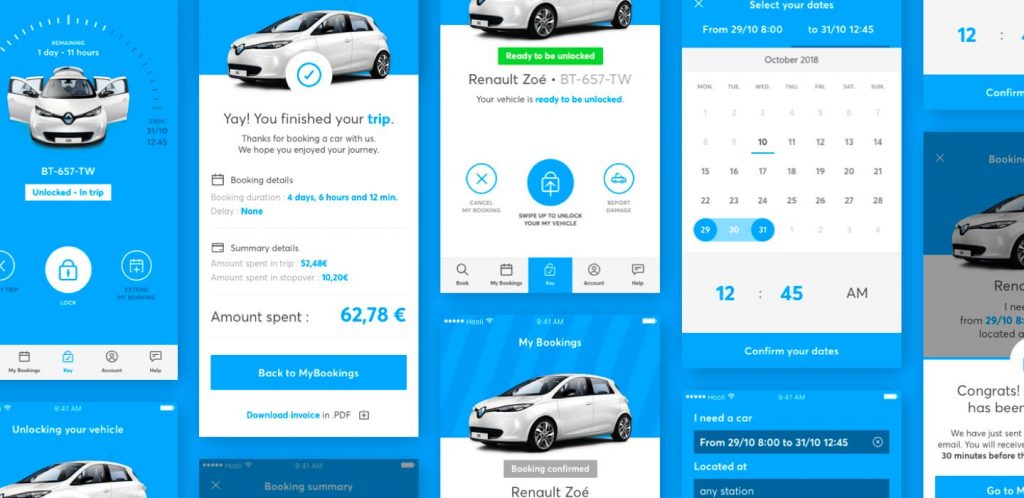
The Vulog app seamlessly integrates StriveCloud's gamification mechanics, offering options for both standard and custom loyalty programs.
Reap the benefits of gamification
On average, customers that implement gamification into their mobility app experience 3x more active customers and 2x more trips completed per customer.