App Gamification Playbook: 2026 Strategy & Design Guide

Last Updated: February 2026
TL;DR: Successful engagement requires moving beyond badges to deep behavioral integration. In 2026, the gamification industry is worth USD 36.46 billion. At StriveCloud, we help brands treat engagement as a core philosophy, typically driving a 30-40% increase in user activation within 90 days.
For apps, the world is a boss fight for attention. While the average person has more than 80 mobile apps installed, they use just 30 of them a month. In today’s hyper-competitive digital landscape, building an engagement engine is the primary differentiator for retention. Market data for 2026 indicates the global gamification sector is growing at a CAGR of 25.24%. To win, you must define the user experience as a rewarding journey, not just a utility. Ready to level up?
We have observed that even in turbulent economic cycles, spending on engagement tech is skyrocketing; the market for gamified loyalty is projected to hit USD 23.98 billion by 2025. In my experience building platforms for over 400 companies, the key to scaling is moving from static UI to dynamic habit loops.
The 2026 Playbook Contents:
- Defining the Engagement Engine
- Types of Strategic Levers
- Industry Verticals: From Fintech to Sports
- ROI & Benefits
- The Psychology of Quests
- Implementation Strategy
- 5 Industry Case Studies
- KPIs for Success
- Top Tools for 2026
Defining the Engagement Engine
TL;DR: Gamification is the strategic integration of game-design elements into non-game environments to drive user behaviors. At StriveCloud, we view it as using behavioral data to turn routine interactions into a rewarding journey that boosts long-term LTV.
To understand the meaning of gamification in 2026, you must see it as a means of persuasion. By leveraging data from user activity, features like XP, levels, and streaks reward specific behaviors. This isn't just "pointsification", it's about creating a fun and interactive user experience. We’ve seen properly designed app gamification strategies turn passive users into active brand advocates.
3 Common Misconceptions
#1 It’s a fad: Investment in engagement tech is accelerating. The market is projected to reach USD 36.46 billion by 2026. This isn't a trend; it's a structural shift in how apps survive.

#2 It’s one-size-fits-all: Slapping badges on a product won't work. Your goals must be unique. At StriveCloud, we focus on intrinsic rewards that align with specific business KPIs.
#3 It means building a game: Your banking app should still feel like a banking app. Successful implementations use strategic levers like progress bars and personalized avatars without making the interface feel childish. In fact, fintech gamification is one of the most effective ways to simplify complex financial data.
Types of Strategic Levers
TL;DR: Whether in retail or SaaS, the most effective strategies use real-time data to trigger motivators like achievement and social influence. The goal is to sustain user retention and prevent the "plateau effect."
- Marketing Interaction: Moving from one-way ads to interactive experiences. Behavioral psychologists note that brand recall increases when users earn specific goals or rewards.
- Loyalty Engagement: Modern loyalty is about rewarding high-value actions, not just spending. This segment is valued at USD 23.98 billion as of 2025.
- Employee Onboarding: Gamifying task purpose can boost revenue by as much as 42% by increasing internal productivity.
Industry Verticals: From Fintech to Sports
Fintech: During economic volatility, apps using unpredictable reward cycles like randomized cashback or loot boxes reduce churn. It transforms budgeting from a chore into a rewarding experience.
Sports: This is a StriveCloud specialty. For example, our work with Club Brugge resulted in a 3x increase in return visits. By using match-day quests and predictive quizzes, fans spend 30% more time in the team's ecosystem.
Shared Mobility: As this sector tracks toward a $1 trillion valuation by 2030, we’ve helped brands like EVO Sharing create eco-point systems that foster long-term loyalty.
- "Our business model is also very suitable for gamification. Receiving rewards based on distance... makes a lot of sense."
ROI & Benefits
Today, the average user spends one-third of their waking hours on mobile. To survive, you need a competitive edge. At StriveCloud, we’ve found that increasing user retention through gamification typically follows these benchmarks for 2026:
- Churn Mitigation: Highly engaged users are 63% less likely to abandon your app.
- Spending Power: The top 10% of active users spend 3x more per transaction.
- Premium Adoption:86% of consumers will pay more for a better experience.
The Psychology of Quests
Humans are biologically wired for challenge; over 3.4 billion people are active gamers. But you don't need a console to trigger dopamine. We leverage loss aversion and social validation. Frontiers in Human Neuroscience notes that behavior is more strongly driven by avoiding losses than pursuing gains. This is why streaks are such a powerful retention tool.
By turning onboarding into a quest, users are 40% more likely to complete it. We focus on reducing cognitive load through guided pathways and instant feedback loops.
Implementation Strategy
Building an engagement engine from scratch is a trap. In our experience, maintenance costs can reach 20% of the initial development cost annually.
At StriveCloud, we provide the expertise to get your first habit loop live in under 14 days. We use frameworks like Octalysis to ensure your design covers all 8 core drives of human motivation, including creative autonomy and social relatedness.


The success of your project relies on concrete goals. Don't overload users; implement game elements gradually to ensure mastery. Most importantly, reward participation instantly. Studies find that winning a badge results in a positive effect that correlates to long-term usage.
5 Industry Case Studies
#1 Fintech: Cowrywise
Cowrywise used micro-incentives to solve financial literacy gaps. By celebrating wins with digital confetti and reframing tasks as challenges, 75% of users agreed the app became easier to understand. This aligns with the 25.4% CAGR seen in the finance gamification segment.

#2 Health: Adidas Runtastic
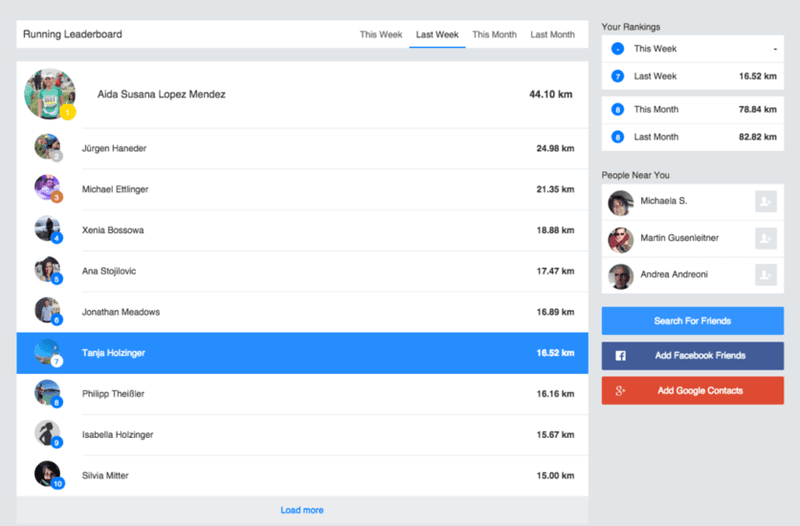
By adding social mechanics and leaderboards, Adidas Runtastic turned a solitary task into a community event. Social interaction drives daily active usage (DAU), helping the health sector reach a USD 29.11 billion market value in 2025.
- "The newly introduced running leaderboard significantly increased user engagement."
#3 Sports: Team Vitality
Team Vitality’s V.Hive app is a masterclass in esports engagement. Fans earn points for connecting socials and unlock customizable avatars. This smartphone-based fan engagement is a core driver for the USD 23.98 billion loyalty market expected by 2025.
About the Author
Joris De Koninck is the CEO and Co-Founder of StriveCloud. With over 5 years of experience building engagement engines, Joris has helped more than 400 companies from Club Brugge to innovative fintech startups boost user activation by up to 40%. He is a recognized expert in behavioral design and habit-forming product strategy.
References & Sources
- Precedence Research: Gamification Market Size & Share 2026
- Fortune Business Insights: Global Gamification Market Analysis
- Gallup: Why Customer Engagement Matters for Retention
- MarketsandMarkets: Gamification Market Forecasts 2025
.png)
Related Posts

4 Ways to Introduce Gamification Features That Improve the User Experience
Games make up a staggering 72% of all app market revenue. Of course, your app doesn't need to be a game to be successful! With gamification features like a leaderboard, you can take inspiration from games to boost your app and meet your business strategy.