

Why you need to implement gamification in learning



Gamification is widely used to enhance educational goals. Actually, the market of gamification in learning is expected to have a compound annual growth rate of a whopping 32% from 2024 to 2030! Why is it so popular and what benefits does it bring to the market? In this article, you will find out all you have to know about gamification in learning, and how you can implement it into your app!
What is gamification in learning?
Gamification in learning is taking inspiration from the world of gaming and applying it to educational goals. It taps both into intrinsic and extrinsic motivators, making it highly engaging for the learners.
While intrinsic motivation comes from within, extrinsic motivation stems from external factors. When you are intrinsically motivated, you complete actions that are enjoyable for you or provide you with personal growth. For example, you see yourself climbing up your learning level, and how much you have improved. As for extrinsic motivation, you do something to gain an external reward, like an in-app badge or a discount.
A gamified learning experience creates an interactive journey, motivating them to continue on their learning path.
Want to find out more about gamification in education? Check out how StriveCloud’s gamification features can enhance your learner engagement!
The benefits of gamifying your learning app
Gamification gives you a competitive advantage, due to many reasons. The most obvious is increased user interaction, but there are many more that go unnoticed.
- Enhanced motivation
Users gain a sense of personal growth from gamification in learning. Tools such as points and badges visualize progress and create a sense of achievement. That’s why users feel more motivated to continue with their learning journey and reach their goals, which results in improved performance outcomes.
- Increased learner engagement
Gamification elements create an immersive and fun learning experience. It increases user engagement rates anywhere from 100-150%, ensuring your learners stay interested in your app!
- Instant feedback and progress tracking
Gamification platforms offer learners instant performance feedback and progress tracking, boosting motivation. It helps users understand where they are in their journey and suggests ways to improve early on, facilitating adjusting to the learning path.
- Community and collaboration
Gamification in learning includes incorporating innovative community features. Whether it’s leaderboards, team challenges, or social sharing tools, all of these allow learners to learn with and from others. This fosters a sense of community and encourages competition, motivating the users to come back to the app more frequently.
- Augmented retention and application of knowledge
Gamification in learning allows users to implement their knowledge and skills in practical scenarios, such as quizzes and tests. By doing this repeatedly, they retain information more easily and are more likely to apply it to real-world situations.
- Learning journey personalization
Today’s customer expects a personalized experience. Luckily, gamification is adaptable to various skill levels, capabilities, and preferences. As users receive personalized challenges and get tailored recommendations, they feel more connected with your app and are more likely to stay.
Examples of gamification in educational platforms
#1 Kahoot Gamification Example: turning classrooms into gameshows
Kahoot is a learning game app where students can compete in virtual quizzes. The teacher or instructor sets up a series of questions. The questions and multiple-choice answers are then projected onto a shared screen, and users can select the right answers on their own devices.
Students receive points for every question they answer correctly and extra points for being faster than others. They can either play individually or in teams. After every question, users will see their score go up, as well as their ranking on the leaderboard.
By using app gamification, Kahoot improves student engagement with fun and interactive quizzes, encouraging screens and a sense of competition. And it clearly works - implementing gamification in learning helped the app obtain 10 billion global participants since its launch!
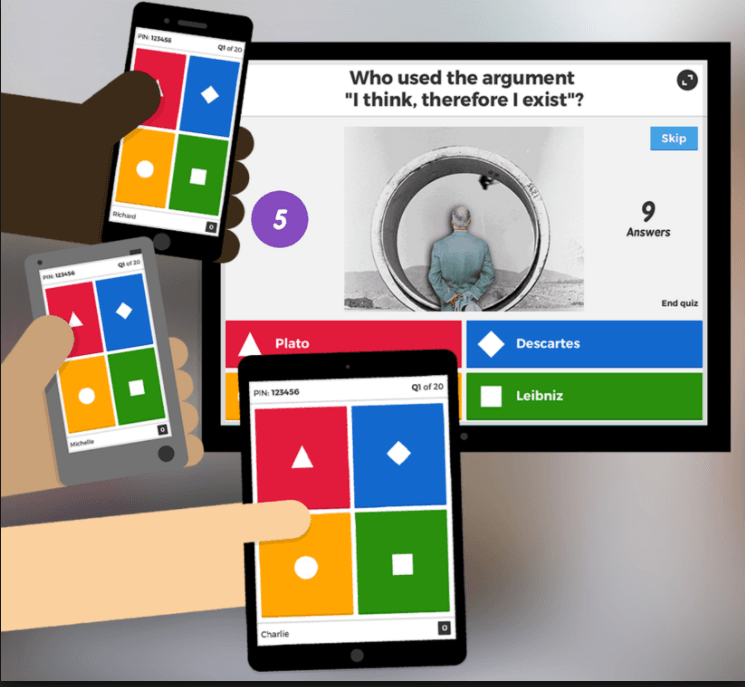
Kahoot’s quizzes encourage friendly competition
#2 Duolingo Gamification Example: makes language learning fun
Duolingo is a language learning app that has mastered gamification for apps. Instead of going through long and boring lectures, Duolingo offers fun, bite-sized lessons that make you want to keep learning!
The app uses an in-app currency called ‘lingots’/gems which rewards users for completing various activities on the app. Additionally, users can collect badges when attaining achievements such as reaching the next level or milestone. To increase user motivation even further, Duolingo adds a dash of competition with a scoreboard based on experience points.
Today the app has over 300 million active users worldwide, securing its place as the number one language-learning app.
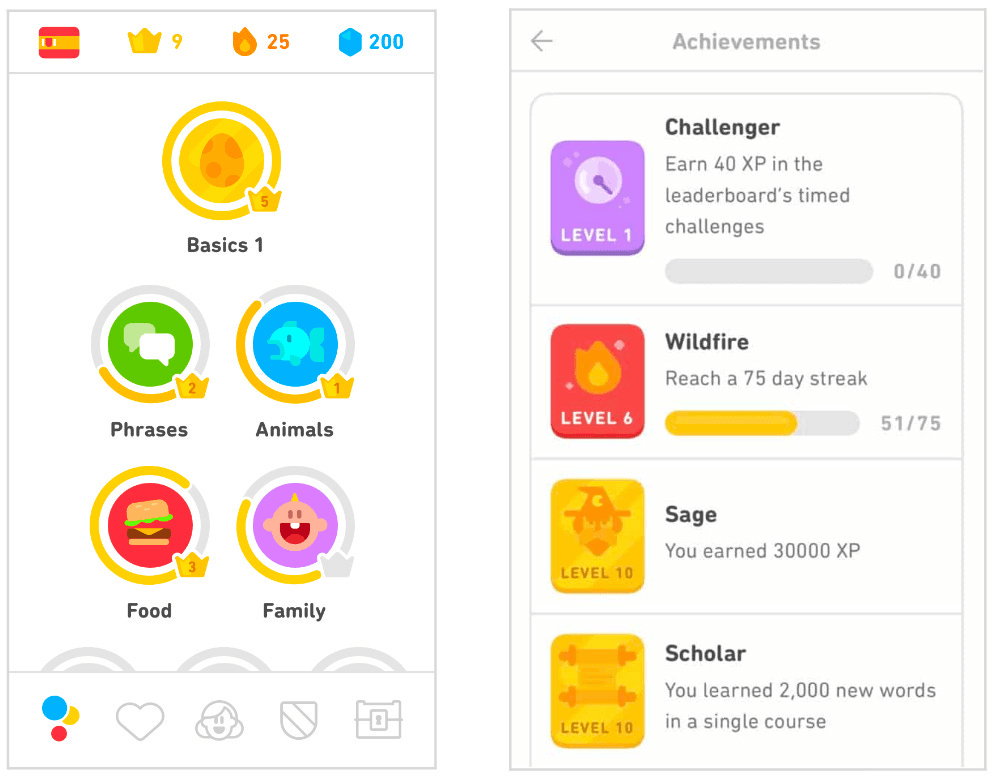
Duolingo’s use of gamification in learning
#3 PayPerks Gamification Example: education meets rewards
PayPerks is a financial education platform that uses gamification in learning to reward users for taking financial courses and saving-like behaviors. It’s mostly aimed at lower-income individuals to encourage saving and financial literacy.
PayPerks turned boring financial studies into gamified experiences with fun and easy-to-understand explanations. Their platform incentivizes real-world actions such as card usage, or online behaviors that help the user install the right habits. By employing gamification in education, they have helped millions of consumers get through tens of millions of tutorials. In addition, customers have received hundreds of thousands of dollars in prizes!
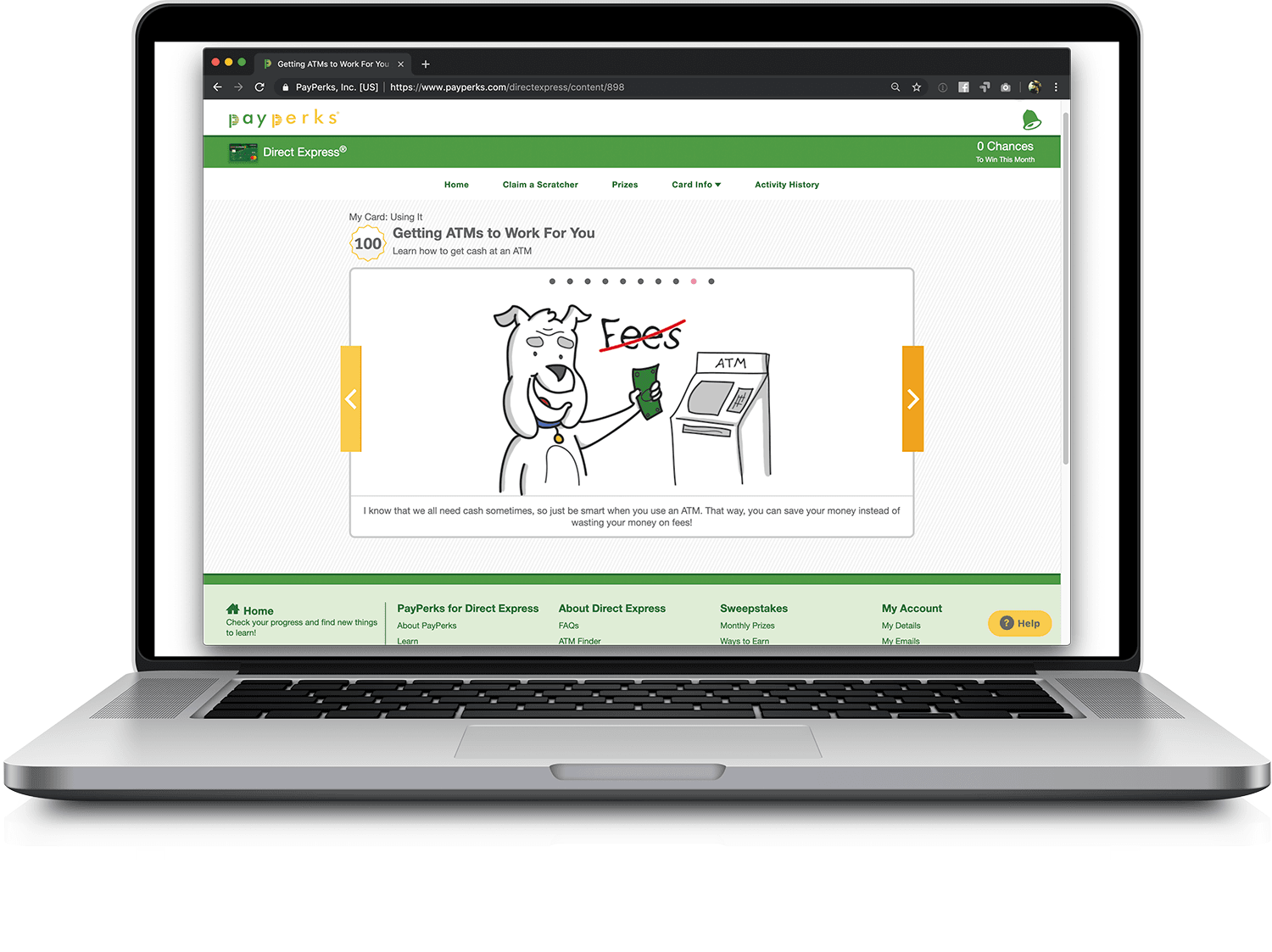
Payperk’s gamified tutorial enhances financial education
#4 Beat the GMAT Gamification Example: badges grow a community
Beat the GMAT is designed to help MBA applicants pass the tough admission test. Those tests aren’t easy – that’s why the app uses gamification to motivate users! Firstly, social features help build a tight community. For example, any prospective MBA student can post in a forum and connect with other students. To build on this, Beat the GMAT introduced badge rewards. Users could earn badges for:
- Answering a user’s question
- Contributing a written article/blog
- Posting a question or response in a forum
- And much more!
Using gamification in learning, Beat the GMAT encouraged its community to share and support each other! Badges increased forum comments by 8,000 per month and boosted the total time spent in the community by 370%!
#5 Open University Gamification Example: checklists and progress bars create better students
Even universities are reaping the benefits of gamification in learning! On the Open University’s ‘study planner’, students can find a checklist of unfinished tasks. As well, there is a progress bar that tracks the student’s total effort. For something as demanding as a full degree, these features make a huge difference!
When a checklist displays unfinished items, this harnesses a psychological phenomenon called the “Zeigarnik effect”. Basically, incomplete tasks stick with us more than those we complete! In other words, students are motivated to return and study. Moreover, checklists and progress bars provide positive reinforcement and direct students to their goals. As a result, this reduces negative feelings like anxiety or being overwhelmed! In short, Open University’s gamification in education creates better students!
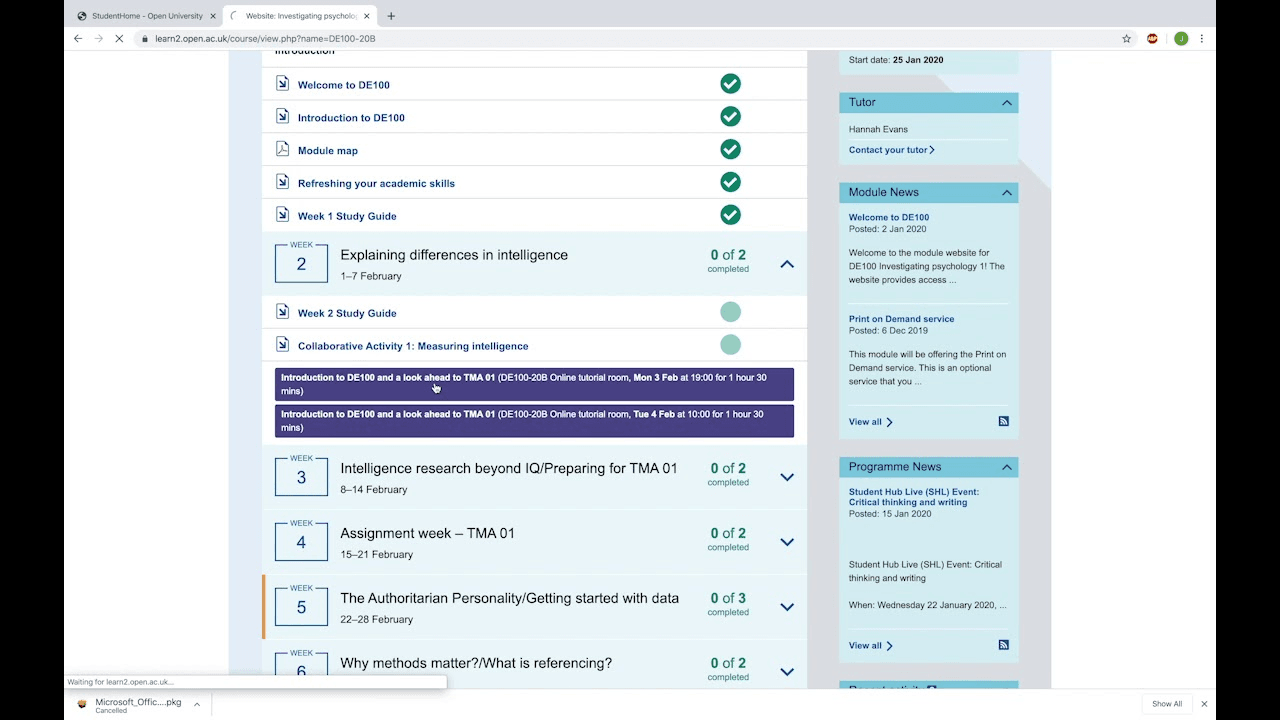
Open University Study Checklist
How to easily implement gamification in your learning app
Incorporating gamification into your strategy might be challenging. Designing your own gamification elements, and maintaining their efficiency, requires a lot of time and effort.
Using a gamification platform like StriveCloud makes the software implementation almost instant. In addition, the built-in features are easy to use, so you don’t need to hire additional members to manage them. In short, using a gamification software service provides you with easier onboarding and more possibilities to change your gamification features as you please!
StriveCloud offers 25+ gamification features to make learning more impactful. Book a free session and start enhancing your learner experience today!
.avif)
Related Posts
How to Hack Growth Like Revolut (the Secret Is Mobile App Engagement!)
Today, almost 50% of people exclusively do digital banking! That number is only set to grow even further! The fastest-growing digital bank in Europe is Revolut, which boasts 15 million+ customers. The app exploded in just 6 short years through the clever use of gamification. Want to find out how they succeeded while others didn't? Check out the full article!

Follow These 8 Simple Steps to Create a Successful Gamified App
How gamification is used in apps varies, but one thing remains the same - done right, app gamification can augment your UX and inspire a powerful sense of user motivation! Read on and discover the 8 step plan to creating a successful gamified app of your very own.