

Dive into top reads
Why You're Not Retaining Fan Engagement
It is harder than ever to create great digital experiences. With the rise of data and analytics, fans expect an experience tailored to their personal needs and preferences. But how can you gear an experience for entirely different behaviors? In this post, we'll be looking at Swiss esports agency eStudios and how they overcame their personalization challenges.

Are you losing your audience to the "anonymity gap"? In 2026, the primary reason for declining fan engagement is a lack of identity-driven personalization. Research shows that sports organizations currently know only 24% of their audience by name, resulting in generic experiences that Millennials the most commercially valuable demographic increasingly ignore. To stop the churn, you must bridge the gap between anonymous data and individual fan behavior.
In this guide, you’ll discover:
- How hyper-personalization drives long-term fan engagement
- The role of first-party data in crafting a frictionless, high-value fan experience
- What specific behavioral shifts are currently reshaping the global esports community
- How eStudios leveraged digital identity to solve their community retention challenges
In our experience working with global leagues, fan engagement is no longer a "nice-to-have" luxury; it is the core driver of modern revenue. According to the 2025-2026 WSC Sports Generational Fan Study, younger fans are the most likely to disengage entirely when content formats don’t match their specific consumption habits. This disconnect has massive financial implications. The January 2026 Dizplai Anonymous Fan Index highlights that one in three sports organizations now lose over US$1 million annually due to unmonetized anonymous fans. To retain your audience, your strategy must evolve from broad broadcasting to a documented personalization model that identifies and rewards individual fan actions in real-time.
How personalization drives fan engagement
To maximize fan engagement, organizations must move beyond generic content delivery. TL;DR: Modern fans, particularly Millennials, now ignore formats that don’t align with their specific behaviors; failing to implement data-driven personalization leads to significant revenue loss and audience churn. As Tobias, the CEO of eStudios, noticed: trivial details like naming a button can confuse the users and impact their overall experience as well as fan engagement.
In short, personalization is a process that enables you to tailor customer journeys and experiences to suit the individual needs and preferences of a customer. In our experience, when a digital experience anticipates user needs based on previous interactions, we see a measurable uplift in session duration and return rates.
Personalization is often mistakenly equated with customization. Unlike personalization, customization happens by the user's actions. In those cases, the users select their preferences. On the other hand, personalization stems from the system itself. Both can enhance a user’s experience, but only when carefully implemented.
While you may think of personalization as a nice-to-have luxury, 2026 research shows its fundamental impact on retention. According to the 2025-2026 WSC Sports Generational Fan Study, Millennials the most commercially valuable audience are the most likely to disengage when content feels irrelevant, proving that static experiences are the primary driver of audience attrition.
The financial stakes are equally high. The Dizplai Anonymous Fan Index (January 2026) reveals that sports organizations know only 24% of their audience by name on average, leading one in three to lose over US$1 million annually in revenue from unmonetized "anonymous fans." This underscores the urgent need for a documented data strategy to boost fan engagement.
Furthermore, the shift toward data is being driven by commercial partnerships. Currently, 87% of sports organizations face moderate to high pressure from sponsors to deliver measurable fan engagement data, as brands now demand granular personalization metrics before committing to long-term renewals (Dizplai Anonymous Fan Index, 2026).

The success of major streaming platforms highlights a key principle for fan engagement: using first-party data to understand and anticipate user needs is the only way to remain relevant in a crowded digital marketplace.
The role of data in personalization
To maximize fan engagement, data-driven personalization is no longer a luxury; it is the primary engine of revenue. TL;DR: Modern audiences, particularly Millennials, will ignore formats that don’t align with their specific behaviors. According to the 2025-2026 WSC Sports Generational Fan Study, irrelevant content is the leading cause of digital churn. By converting anonymous visitors into known, logged-in users, organizations can recover the average US$1 million in annual revenue currently lost to unmonetized fan data.
In our experience, data is the key to understanding your users and sustaining long-term fan engagement. It all starts with moving beyond basic demographics to knowing exactly who your fans are through their digital fingerprints. Once you analyze the real-time behaviors of your users, you can use that information to better meet their needs and even predict which specific content or offers they might want at a particular touchpoint before they even ask for it.
When deciding which data to use for personalization, you need to keep three critical factors in mind. First, you need to use genuine, first-party data. Because every fan is different, your system should learn user preferences along the way rather than relying on static profiles. While general industry data might be useful for an initial launch, it is insufficient to meet 2026 expectations where 87% of sports organizations face intense pressure from sponsors to deliver precise, measurable fan engagement metrics.
Secondly, you have to use data from all customer touchpoints. This allows you to analyze the entire customer journey from end-to-end, from social media interactions to in-app purchases. In our experience, the more interactions they have, the more tailored the experience will be. Fragmented data leads to fragmented experiences, which is why a unified data strategy is essential for retention.
Finally, you need to ensure the data is fit-for-purpose. Data privacy has evolved into a cornerstone of the user experience. Balancing both personalization and data privacy is a challenge that research firm Gartner still defines as “The privacy paradox.” With only 24% of the average sports audience known by name and contact in 2026, the organizations that win are those that provide enough value to encourage fans to share their data willingly.
Penny Gillespie, VP Analyst @ Gartner - "Organizations that combine identity data with behavioral data will outpace those that don’t. The key is to bring value to customers and keep data use in context while respecting the evolving privacy landscape of 2026."
Different behaviors in the esports fan community: The key to retaining fan engagement
TL;DR: Effectively retaining fan engagement in 2026 requires moving beyond a one-size-fits-all approach. Recent data shows that Millennials and Gen Z disengage immediately when content feels irrelevant to their specific gaming subculture. By shifting from "anonymous fans" to known, data-rich profiles, organizations can recapture the US$1 million+ in annual revenue currently lost to fragmented audience strategies.
In 2026, the esports ecosystem has matured far beyond a niche hobby into a primary entertainment pillar. However, the diversity of the landscape means there is no single "esports fan." You have sports simulation enthusiasts in FIFA or NBA 2K, tactical experts in first-person shooters like CS:GO, and high-intensity players in MOBAs like League of Legends or Battle Royale titles like Fortnite. Each demographic demands a unique experience and displays vastly different digital behaviors.
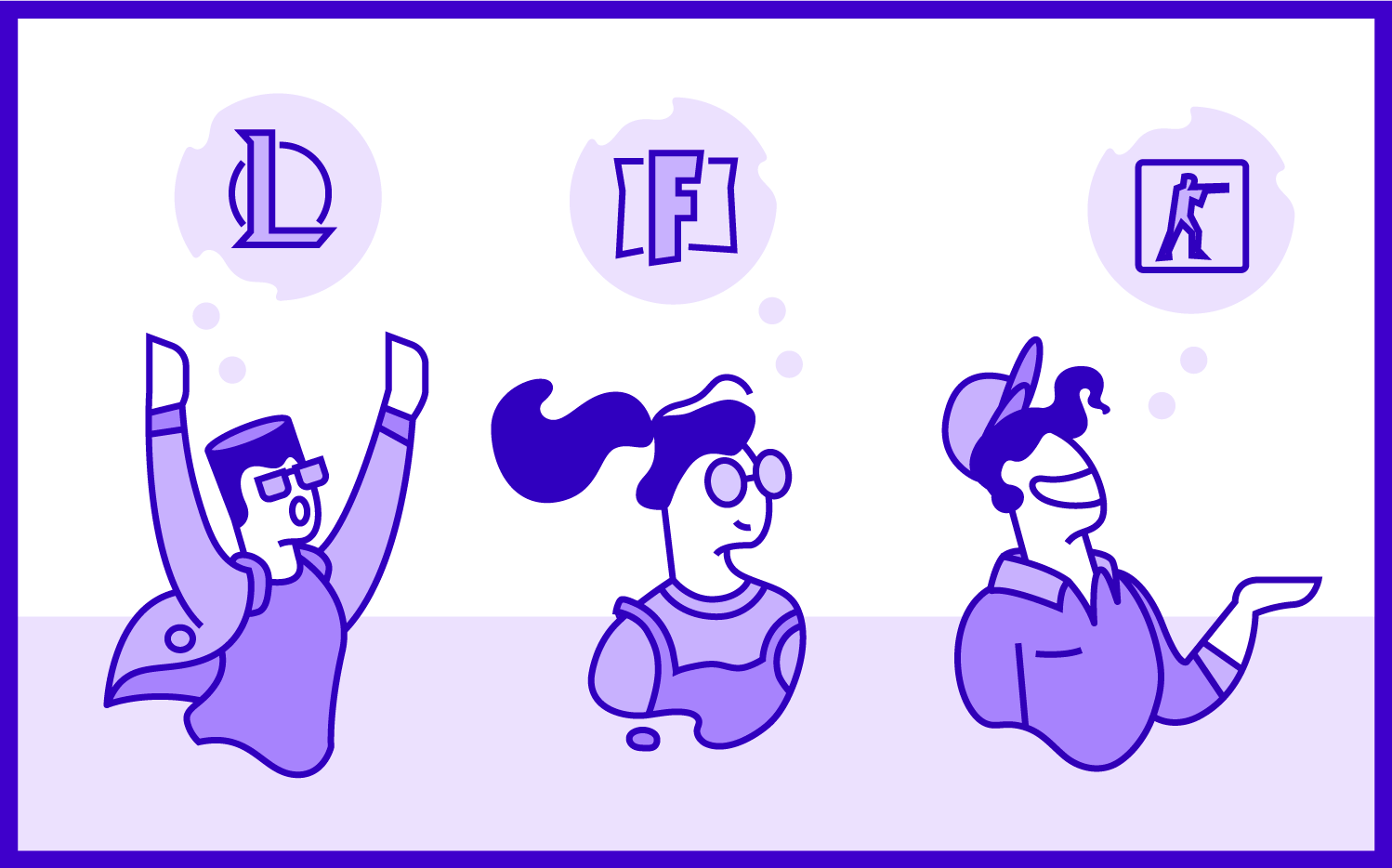
This fragmentation in gaming preferences requires a nuanced approach to retaining fan engagement. In our experience working with competitive platforms, we have seen that engagement rates can drop by up to 40% when a CS:GO fan is served content designed for a mobile-first Clash Royale player. Specificity is no longer a luxury; it is a retention requirement.
Tobias Egartner, CEO @ eStudios - "With GameTurnier the biggest community is in FIFA. Each gaming community has different behaviors. Before StriveCloud we had lots of complaints from the players. We needed a platform for FIFA behavior."
While the industry is often viewed as a monolith, research from the 2025-2026 WSC Sports Generational Fan Study highlights that fans now ignore formats that don’t match their specific gameplay behavior. Millennials the most commercially valuable audience are the most likely to disengage when content feels irrelevant. Furthermore, the 2026 Dizplai Anonymous Fan Index found that sports organizations only know 24% of their audience by name. This lack of data makes personalization impossible, leading one in three organizations to lose over US$1 million annually from unmonetized "anonymous" interactions.
Unlike traditional sports, fan loyalty in 2026 is increasingly fluid, often tied to individual streamers or specific game metas rather than a legacy team brand. Influencers bridge the gap between virtual and real-life sports; for example, FIFA fans prioritize content from real-world footballers and associated lifestyle brands. To succeed in retaining fan engagement, your strategy must be tailored to the specific social platforms and community hubs be it Discord, Twitch, or TikTok where each specific game community actually lives.
How eStudios solved the challenge of esports fan engagement through a personalized experience
TL;DR: To sustain esports fan engagement, platforms must transition from "anonymous" broadcasting to personalized, data-driven interactions. In our experience, failing to bridge this gap leads to immediate disengagement, particularly among Millennials the most commercially valuable audience who now demand content tailored to their specific behaviors. eStudios achieved this by leveraging a gamified, white-label solution to turn a frustrated community into a high-growth asset.
eStudios is a 360-degree Swiss esports startup focused on every aspect a brand needs to enter the gaming space. They also own GameTurnier, the largest gaming tournament platform in Switzerland. However, they faced a common industry hurdle: according to the Dizplai Anonymous Fan Index (January 2026), sports organizations typically know only 24% of their audience by name, leading to significant revenue leakage.
After testing several fan engagement technologies on the gaming tournament platform, they noticed friction within the FIFA community. User complaints revealed that a generic experience was driving players away. This broken UX didn't just frustrate gamers; it made it impossible for eStudios to deliver the measurable esports fan engagement data that 87% of sponsors now demand as a prerequisite for investment.
First, the platform needed a behavior-driven approach for designing a gamified user experience that lifts esports fan engagement. They required a system that could anticipate user needs and provide the 1-to-1 personalization that 2026 fans expect.
Furthermore, they needed a platform that works for multiple campaigns without requiring a total rebuild for every new brand partner.
That’s where StriveCloud comes in! StriveCloud’s white-label solution allowed eStudios to set up new platforms for their client portfolio in no time. Additionally, gamification experts helped analyze FIFA player behavior to create a frictionless experience. This is critical as the 2025-2026 WSC Sports Generational Fan Study highlights that irrelevant content is the primary driver for audience churn in the digital age.
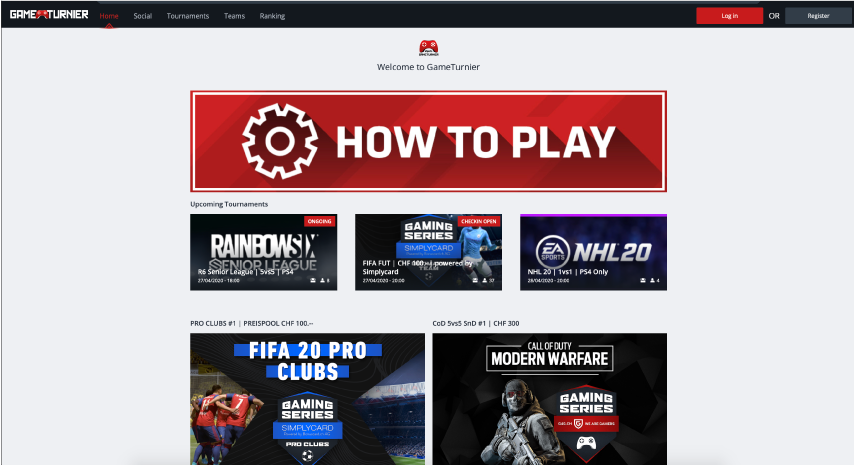
The new GameTurnier platform provides a clear overview for users, streamlining the process of finding and joining competitions while capturing vital first-party data.

Drilling down into a specific tournament page, the design focuses on a frictionless experience, which was a key factor in improving community satisfaction and meeting modern esports fan engagement benchmarks.
Tobias Egartner, CEO @ eStudios - "We are really good at organizing FIFA competitions. StriveCloud is really good at making the platform work for the community."
The new platform launch was met with immediate acclaim, and in Tobias’ own words: “It was one of the best launches ever.”
The results were astonishing. By moving away from an "anonymous fan" model which costs one in three organizations over US$1 million annually Tobias and his team were able to build lucrative new partnerships with brands. The platform shift doubled their user growth and acquisition targets, securing over 4,000 hors of eyeball time in just two months with 600 weekly played competitions.
Nevertheless, they don’t plan to stop here. There is an even bigger opportunity to use StriveCloud in other campaigns to continue scaling their esports fan engagement strategy...
Discover how you can build a more engaging and active community platform with the right tools.
Read how you can engage users on your own community platform!

Why Your Fintech App Needs a Great Loyalty System (and How to Make One!)
Loyalty leaders grow 2.5x as fast as the competition! Don't fall behind - your fintech app can create loyal users with app gamification that allows you to fully unlock customer motivation.
A well-designed loyalty system is crucial for user engagement and retention in modern fintech applications. If fintech companies want to scale user engagement, then they need a loyalty program optimized for mobile. Gone are loyalty cards in the wallet and receiving a coupon book in the post - today’s mobile world is all about innovation. What fintech apps today can do is use app gamification to motivate and boost user retention. If you make your app ‘sticky’, loyal customers will follow! As a bonus, this business model is easy to scale.
In the following article, let’s cover how app gamification can uplift a loyalty system for fintech that’s both cost-effective and highly scalable!
- Why a loyalty program is so important in fintech
- Where apps go wrong with loyalty programs
- 3 gamification features that improve user retention
- How app gamification can boost your fintech app
- Case study: the HumanForest loyalty system making London greener
- TLDR
Why a loyalty program is so important in fintech
There’s an old saying in business that says that it is more cost-effective to retain a customer than it is to convert a new one. Without a doubt, this adage on the importance of customer loyalty is as true today as when it was first said - research shows that loyalty leaders grow their revenues 2.5x as fast as their industry peers!

This chart illustrates that companies leading in customer loyalty experience significantly faster revenue growth compared to their peers. Loyalty programs typically reward users with points and discounts. By rewarding users for staying with you, you prove to them what their loyalty is worth. Remember, your customer’s lost loyalty is another company’s acquisition! A bank that offers a great sign-up deal might just poach a customer who sees no benefit from sticking with you.
An effective fintech loyalty program is possible - fintechs like Monzo and N26, for example, have built proprietary rewards ecosystems that boosted transaction volume by over 500%! But achieving user retention means giving users a real reason to stick around, which of course isn’t easy.
Want to increase loyalty like Revolut? Book a gamification workshop & go home with a roadmap tailored to your goals.
While the general app market has an annual retention rate of 35%, only three in ten consumers feel loyalty toward fintech brands. Indeed, banking does better, but those benefits tend to be consolidated among a well-established group. In fintech, full of new challengers, high churn rate is influenced by bad loyalty programs that negatively affect user retention.

The data highlights the disparity in user retention rates between the general app market and the more challenging fintech sector.
Where apps go wrong with loyalty programs
Experts advise that the pitfalls of a bad loyalty system are far-reaching:
Account inactivity
Forbes notes that each inactive account can cost banks upwards of €100 a year.
Low redemption rates
Why put effort and money into creating loyalty perks, when redemption rates are low? Loyalty programs need to be influenced by regular user research to see what works.
High transaction costs
Suppose you choose to offer discounts in your loyalty program. Of course, they can work, but implemented poorly a 5% loyalty discount can lead to a 50% decrease in profits.
High system management costs
If your loyalty program isn’t scalable, you will be overspending on administration.
Low numbers of new and retained customers
When only three in ten consumers feel loyalty toward fintech brands, repeat customers are critical to the success of your business. Bad design can push users away!
The most common design issues are that the loyalty program is too expensive, not scalable, or is simply implemented poorly. However, even if you solve those fundamental problems, there’s one more thing you might have overlooked.
A big reason behind failed loyalty programs is an overemphasis on extrinsic motivation at the expense of intrinsic motivation. In short, extrinsic motivational factors are simple, they are blunt things like the need for results, the rush of winning, or the fear of losing. But it is intrinsic motivation, extrinsic motivation’s complex and powerful brother, that leads to long-term user retention, and gamification is how you create it.
3 gamification features that improve user retention
Long-term user retention comes down to creating the right motivation - and extrinsic motivation can only go so far. Extrinsic drivers trigger initial engagement and are crucial for the discovery phase. But to create user retention, customers need a little bit more and that’s where gamification comes in. By using game-like elements, you incentivize user behavior and give people the additional push they need to engage with your app.
What is gamification and how does it work exactly? Find out all the details on our What Is Gamification? page!
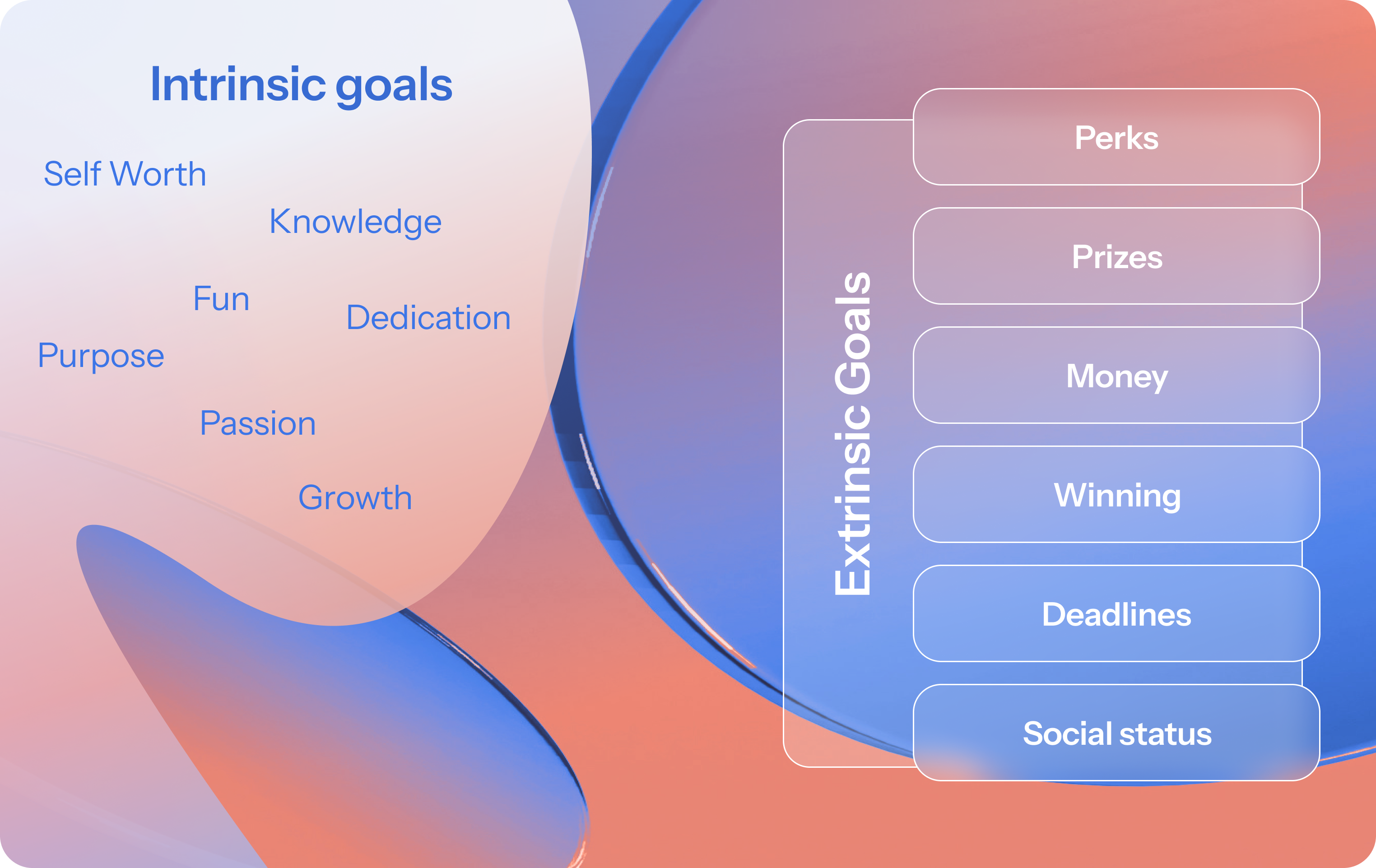
Balancing intrinsic and extrinsic motivators is key to creating a loyalty program that fosters long-term user engagement. Take these three gamification features, for instance. See how both extrinsic and intrinsic motivators help develop a user loyalty program that makes customers more active and engaged:
#1 Progress bars
Progress bars and statistics are a popular gamification feature on fintech apps, often used to help users track their savings (or get insight into their spending behavior).
Extrinsic motivation: Users get to see their savings account pile up cash. It’s a great way of self-rewarding, without the bank or fintech companies having to give out expensive prices or discounts. Basically, users are rewarded through their own saving behavior!
Intrinsic motivation: Seeing a progress bar fill up creates a feeling of growth and achievement. Users are motivated to work toward a clear goal, and even more so when they get to see the progress they’re making toward it! The farther users come to reaching their goal, the more motivated they will be to persist and thus stay active on your app.
#2 Challenges
Challenges are another powerful app gamification feature that fintech can use to activate its users. European bank OTP Banka Hrvatska, for instance, used challenges to motivate its users to complete a series of short product education videos.
Extrinsic motivation: Challenges prompt users to take action by setting a clear goal and sometimes adding a reward to it. Think of all the “30 days of doing X” challenges. The reward doesn’t have to be monetary, and can also just be achieving a set goal such as “increase your financial literacy”.
Intrinsic motivation: Users are driven by a desire to achieve a certain goal. As they complete more challenges, they’ll also feel a sense of personal progress and growth, which will only fuel their motivation more.
#3 Contextual notifications
Contextual notifications help users move forward in your app. Let’s say a user has a goal of saving a fixed amount per week, but continuously crosses the line. You might help them achieve their goal by sending a quick reminder. The same applies vice versa: a quick “good job” message can be a great way to reinforce positive user behavior and keep the user coming back.
Extrinsic motivation: notifications always make the next step clear to users. It helps them to stay focused and achieve their goals faster on your app.
Intrinsic motivation: notifications provide instant feedback to users, and can positively reinforce them to continue on the right path, or quickly help them learn and adjust.
How app gamification can boost your fintech app
Knowing what gamification is, represents just one part of the journey. You also need to know how to implement your desired features in your loyalty program! They need to work together, be consistent with your platform, and be easily adjustable to the customer feedback you’ll get upon release. The solution to those necessities is a building blocks system.
This is an app development method that’s flexible, malleable, and intuitive to use: simply drag, drop, and adjust the blocks into your app’s inner workings and the possibilities are endless. To learn more about the StriveCloud building blocks app gamification that can power your app, read our blog post on how exactly it works.
Case study: the HumanForest loyalty program making London greener
HumanForest is a London-based shared mobility company with the aim of making transportation emission-free! The app successfully promotes ecological behavior using the building blocks from StriveCloud. We helped the HumanForest team develop a gamification strategy based on their goals. By leveraging our app gamification building blocks, they spiced up the user and brand experience. This method even articulated their brand mission.
These are a few features that have transformed the HumanForest loyalty system:
An in-game currency that incentivizes green transportation
Using building blocks allows HumanForest to introduce elements one by one, and the in-game currency was one of the first that HumanForest decided to integrate. HumanForest’s TreeCoins are unique in that they represent how many trees worth of CO2 you have saved by riding an e-bike! This visualization makes the currency feel much more tangible and in turn a more valuable achievement.
Leaderboards that rank how many trees users have saved
HumanForest ranks every user in the community, based on the TreeCoins they’ve collected. Needless to say, this makes users feel more motivated! The sense of competition in the customer community motivates users to participate. The genius of using building blocks is how easy it is to implement new features like the leaderboard that complement existing ones like the TreeCoins. As a result of this strategy, the user benefits from a consistent and streamlined user experience.

The results for HumanForest? Success! An amazing 35,000 Londoners are using the platform to make their travel greener benefitting themselves, the city, and the planet. In view of their achievements, HumanForest is valued at an exciting €37.7 million, and their satisfying user experience promises to make the app a major player in the e-bike/mobility market across Europe.
TLDR
- Research shows that loyalty leaders grow revenues 2.5x as fast as their peers.
- App gamification can guide the journey in optimizing your platform.
- Fintech loyalty propositions in 2025 drive engagement toward rewards, with currency consolidation partnerships seeing a 500%+ transaction volume increase!
- But that success is rare - only three in ten consumers feel loyalty toward fintech brands, with even fewer actively demonstrating it.
- Bad loyalty programs face low switching costs for unsatisfied members, prompting brands to increase switching barriers via better loyalty systems in 2026!
- Gamification improves your loyalty system by providing intrinsic motivation.
- Intrinsic drivers are crucial for long-term user retention & loyalty.
- You can create both extrinsic and intrinsic motivation with gamification features such as progress bars, challenges, and contextual notifications.
- An easy and flexible way to implement these features is with in-app gamification building blocks such as the one by StriveCloud.
- HumanForest has used our app gamification to succeed - creating a loyal community of 35,000 across London alone
Looking to drive user motivation on your app? Discover our app gamification building blocks!
How to win the attention of a distracted audience and maximize engagement using #gamification
As the digital space turns into a saturated space, grabbing and keeping people’s attention is one of the hardest things marketers today need to accomplish. Brands and organizations are no longer competing in their own market segment, but compete against every other entertainment source for a moment of attention.
So how can modern marketers win back the attention of a distracted audience and maximize engagement? The answer is simple. By gamifying the digital experience.
Join us for this on demand webinar hosted by Vlerick Business School to learn about the different gamification tactics you can start applying now to get your audience attention and inspire them to interact with your brand or organization. We tackle:
- Why the product or service alone is no longer enough if you want to keep your audience engaged
- How gamification moves the needle between intrinsic and extrinsic motivation to maximize engagement
- How you can use game dynamics to spark emotions
- How you can use game mechanics to inspire action
- A brief look into the The Hook Canvas: a tool from the book ‘Hooked’ by Nir Eyal explaining how habits are formed, and engaging products are built
- A practical example: Zack’s journey from a young bystander to an active supporter on a gamified digital experience on StriveCloud
More resources
Webinar Slides →
About the presenter
.png)
This is a portrait of Freek Borghgraef, the co-founder of StriveCloud and Kayzr.
Freek Borghgraef
Co-founder @StriveCloud and @Kayzr
Freek is a serial entrepreneur and one of the co-founders of Kayzr and StriveCloud. He is currently leading the Customer Development and Strategic Partnership teams for both companies. He built from ground up both companies, and by doing so, he scaled Kayzr to a community of over 100k users, and launched memorable activations for brands and sports organizations by putting gamification at the core of the user experience.
About the host
Vlerick Business School
Vlerick Business School is a triple-accredited, international business school at the heart of Europe ranked number one in the Benelux for executive education and 19 in Europe.