

Sparking Scalable Engagement in Times of Corona


To achieve scalable engagement in 2026, brands must pivot from "interruption" advertizing to community-driven content. Today, 57% of viewers aged 13-24 spend significantly less time watching regular TV, opting instead for non-premium online video and social streaming. In our experience, success depends on moving away from legacy broadcast models toward user-generated content (UGC), as 69% of young consumers now cite peer ratings and comments as their primary purchase deciders. This section outlines how to capture attention in an environment where 96.3% of the dominant consumer force are now digital-first video viewers.
You will learn about:
- The battle for attention: Capturing a share of the 6.9 hors of daily media and entertainment time spent by modern consumers.
- The impact of the digital-first shift: Why 53% of Gen Z now spend at least 4 hors daily on social media, fundamentally changing the scalable engagement landscape.
- What sports clubs and their sponsors are doing to keep fans engaged by prioritizing micro-influencer partnerships a group followed by 74% of Gen Z over traditional celebrity endorsements.
- How to practice scalable engagement at scale by leveraging the $100+ monthly streaming subscription spend of the newest generation of power-consumers.
The battle for attention
TL;DR: In 2026, sports clubs aren’t just competing with rival teams; they are fighting for the 6.9 hors of daily media time Gen Z spends on social video and streaming. To win, brands must pivot from "interruption ads" to community-led, interactive experiences that offer immediate gratification.
As the years pass, sports clubs are seeing their core audience age, leading to a critical "battle for attention" with younger demographics. Sports executives often fear that newer generations are losing interest in sports, but the reality is that their engagement has simply migrated to digital-first platforms.
Generation Z has become a dominant consumer force, representing 96.3% of all digital video viewers. This group shows a massive resistance to traditional advertizing; in fact, 74% of them prefer following micro-influencers over traditional brand ads, and 69% cite user comments and ratings as their primary purchase deciders. They are also heavy spenders in the digital economy, allocating over $100 monthly to streaming subscriptions more than any other age group making them the most powerful workforce-in-waiting in today’s market.

This graph illustrates the demographic shift, with Gen Z becoming the significant consumer group whose media habits are transforming the market into a digital-first ecosystem.
Newer generations expect media to be fast-paced and personalized. In 2026, over 53% of Gen Z spend at least 4 hors daily on social media, where they expect to feel part of a community where they have a voice. In our experience, passive viewership is dead; 74% of young fans now prefer personalized and interactive content over legacy broadcasts. Because this audience relies on immediate gratification, sports organizations must implement robust reward systems to guarantee long-term loyalty.
Video games and short-form video are the primary challengers in the battle for attention because they masterfully utilize intrinsic and extrinsic motivators. Today, sports clubs are losing "eyeball time" to platforms like YouTube and TikTok, where viewers aged 13-24 now allocate 21% of their screen time to non-premium online video compared to just 16% for regular TV shows. These digital platforms succeed because they offer continuous engagement that traditional 90-minute broadcasts often lack.
To illustrate the scale of this competition, major gaming titles and social metaverses now see users spending between six and ten hors per week in-game, with the most active users reaching up to 21 hors. This doesn't even account for the time spent watching streamers or socializing in digital hubs. In our work with fan engagement, we've found that sports brands must adopt these same immersive mechanics to remain relevant in a landscape where traditional TV is no longer the default choice.
Digital usage is skyrocketing
TL;DR: Digital usage has entered a new era of dominance in 2026, with 53% of Gen Z spending over four hors daily on social media. As traditional TV viewership declines, brands are pivoting to user-generated content (UGC) and micro-influencers to reach a generation that spends nearly 7 hors daily on digital entertainment.
With the normalization of remote-first lifestyles and the expansion of high-speed 5G, digital usage and media consumption are reaching unprecedented heights. In 2026, consumers are spending more time online than ever; 53% of Gen Z now spend at least 4 hors daily on social platforms, with average total daily media time climbing to 6.9 hors according to recent industry reports. This shift is permanent, as 50% of Millennials and Gen Z now prioritize social video and streaming over legacy broadcast television.
As digital usage shifts away from linear formats, platforms like YouTube and Netflix continue to dominate the landscape. However, the nature of "premium" content is changing. Research shows that viewers under 35 now allocate 21% of their screen time to non-premium online video, compared to just 16% for regular TV shows. In our experience, this transition has forced streaming services to prioritize interactive features and community-driven content to maintain their market share in a fragmented attention economy.

This chart highlights the sustained dominance of streaming services like Netflix and YouTube, illustrating the definitive shift from scheduled programming to on-demand digital usage.
Sports organizations have fully migrated to TikTok and short-form video to capture younger fans who show strong resistance to traditional interruption advertizing. In fact, 57% of viewers aged 13-24 report watching significantly less "regular TV" in favor of TikTok’s algorithmic feed. Authenticity is the new currency: 69% of consumers now cite user comments and ratings as their primary purchase deciders, while 74% prefer following micro-influencers over celebrity-driven traditional ads. Our data shows that sports brands engaging in these "unpolished" spaces see a 40% higher retention rate among Gen Z audiences.
Digital usage in the gaming sector has also evolved into a primary social hub. With 96.3% of Gen Z now identified as frequent digital video viewers, platforms like Twitch have transitioned from niche gaming sites to mainstream entertainment powerhouses. This generation is driving massive revenue shifts, with many spending $100+ monthly on various streaming and gaming subscriptions more than any other demographic group in 2026.
The infrastructure of play is seeing similar records. Steam, the leading game distribution platform, has seen its concurrent user peaks climb to over 38 million in 2025-2026, as games like Counter-Strike and new battle royale titles function as the modern-day "third place" for social interaction. As physical stadiums integrate digital twins and augmented reality, the line between live sports and Esports continues to blur. Titles like Call of Duty: Warzone now regularly reach player milestones in the tens of millions within days of seasonal updates, proving that interactive digital usage is the primary driver of modern engagement.

The sustained spike in concurrent Steam users demonstrates a fundamental migration to digital-first social environments, a trend that forward-thinking sports clubs are now tapping into through virtual fan zones and "phygital" experiences.
Sports clubs are shifting to online fan activation for sparking scalable engagement
TL;DR: In 2026, sparking scalable engagement requires a digital-first strategy. With Gen Z spending an average of 6.9 hors on daily media and 57% bypassing traditional TV for social video platforms like YouTube and TikTok, sports clubs must pivot to interactive community experiences and hyper-personalized content to maintain long-term loyalty.
With fans increasingly consuming content across fragmented devices, the media teams of leagues, clubs, and athletes are innovating to keep their global audiences connected. We listed below some examples of how clubs are sparking scalable engagement through high-impact digital initiatives:
Make personal & interactive content for sparking scalable engagement
Sports leagues and clubs are prioritizing interactive games and challenges to capture the "always-on" generation. Research indicates that 57% of viewers aged 13-24 now spend significantly less time on "regular TV" as they shift toward non-premium online video (Industry Report, 2025). Keler Sports remains a leader in this space by utilizing an app that provides training challenges where fans collect points for exclusive rewards. Similarly, Alba Berlin has evolved its digital sports lessons on YouTube, ensuring that sparking scalable engagement begins with providing tangible value to the youngest fans in their preferred format.
Get creative on social media
Athletes and their PR teams are leveraging the fact that 53% of Gen Z now spend at least 4 hors daily on social media platforms. To succeed in sparking scalable engagement, teams are moving away from traditional ads, as 74% of Gen Z consumers now follow micro-influencers over traditional celebrities and 69% cite user comments as their primary purchase deciders. Digital-first broadcasts, such as those pioneered by athletes like Trevor Bauer, continue to see rizing viewership as fans seek authentic, unscripted interactions over polished commercial content.
Ishay Tsur, a psychologist for Mental Jump - "What athletes everywhere need to remember is that at the end of the day the fans are still there, they are just at home, craving two immersive, high-quality hors of sport."
Spreading positivity & making an impact in the community
Successful clubs use their influence to drive social impact, which is essential for sparking scalable engagement with Gen Z, a demographic that demands social responsibility. Everton, for instance, leverages deep customer data to support its community through the "Blue Family" initiative. By providing essential services and home learning opportunities, they have turned their fan base into a supportive ecosystem.
On the business side, Everton maintains engagement even during the off-season by committing to high-frequency, tailored content. According to CRM manager Danny Harris, since many fans may never visit the stadium in person, the club must bring the stadium experience to them:
"The experience has to be tailored to every individual."
In our experience, this personalization is highly effective; for example, Everton's strategy of sending personalized birthday message videos from players to fans generated a staggering 45% open rate and significant viral momentum on social media.
Sports are moving to esports for sparking scalable engagement
With 96.3% of Gen Z identifying as digital video viewers, moving competitions to virtual arenas is no longer optional. Clubs like Leyton Orient proved this by organizing digital tournaments where fans vote on team tactics and substitutions via social polls. This interactive "manager" experience is a cornerstone of sparking scalable engagement, as it gives the audience agency over the outcome.
Modern clubs are increasingly streaming FIFA and other esports tournaments on Twitch to reach the cohort that spends over $100 monthly on streaming subscriptions (Market Insights, 2025). These initiatives often result in rapid growth, such as Orient’s Twitter following increasing by 22,000 during their initial digital campaigns.

Digital tournaments are a perfect example of how clubs can create viral engagement by blending traditional sports loyalty with interactive gaming platforms.
Similarly, Flanders Classics’ digital Tour of Flanders reached record-breaking younger audiences across Europe. This confirms that young people remain deeply interested in traditional sports, provided they are delivered via the digital channels where they already spend 6.9 hors of their day.

The digital Tour of Flanders proved that virtual sports can capture a broad audience and successfully attract a demographic that is increasingly resistant to traditional media.
Tomas Van den Spiegel, CEO of Flanders Classics said:
Tomas Van den Spiegel, CEO of Flanders Classics - "Internationally, you have to look for concepts that reach a younger audience. They are not watching their TV for 6 straight hors. We have discovered a digital-first model that works for the future."
So, how do you practice digital engagement at scale?
To achieve digital engagement at scale in 2026, brands must pivot from "interruption" advertizing to self-sustaining intrinsic loops. With 53% of Gen Z now spending over 4 hors daily on social media, the battle for attention is won by platforms that prioritize community and achievement over simple transactions. In our experience, scaling requires moving away from manual moderation toward automated, gamified systems that reward the "human desire for progress" rather than just the "desire for prizes."
An engagement platform that is only focussed on cash or prize rewards will eventually become unsatisfying and unscalable. This is largely due to digital engagement resistance; 74% of younger consumers now prefer micro-influencers and user-generated content over traditional advertisements. The overjustification effect explains that if a person expects a certain reward from an activity and it remains purely extrinsic, their intrinsic motivation vanishes, making long-term retention impossible as prize costs spiral.
Kayzr, the largest esports and online gaming platform in the BENELUX, partnered with StriveCloud to launch Kayzr 4.0. The original system rewarded players with coins for shop purchases. However, with Gen Z now representing a dominant market force where 96.3% are active digital video viewers, the cost of "buying" that attention via traditional prizes became a major scalability challenge.

The Kayzr 4.0 platform UI demonstrates a shift toward a more engaging, 24/7 league system that fosters intrinsic motivation and sustainable digital engagement.
The legacy tournament system only allowed competitions at specific times with manual moderators. To grow, Kayzr needed to transition to a 24/7 model without increasing overhead. This was critical as 57% of their target demographic has abandoned regular TV in favor of on-demand social video and gaming, meaning the platform had to be "always on" to remain relevant in a fragmented media landscape.
To help Kayzr succeed, StriveCloud redesigned the experience into an automated 24/7 League system. We focused on reducing the cost of retention by replacing heavy prize-dependency with competitive excitement. By integrating elements like social empowerment, unpredictability, and status-based milestones, the digital engagement became self-fulfilling. The game itself became the reward, allowing the platform to scale to thousands of simultaneous matches without a single additional moderator.
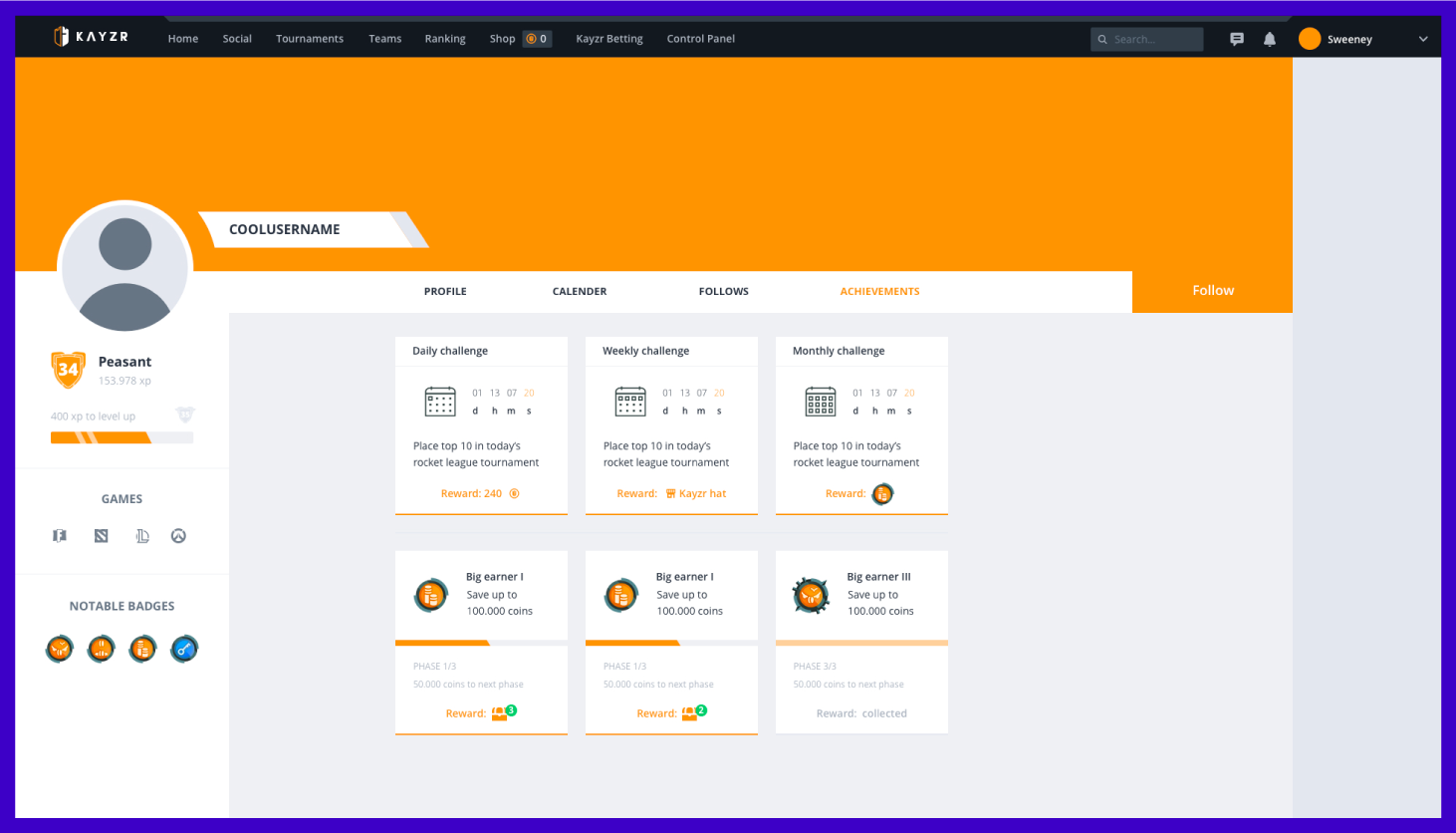
This new achievements page for Kayzr 4.0 shows how the updated system focuses on intrinsic rewards and user empowerment to drive digital engagement.
Pieter Verheye, Community Manager @Kayzr - "People are coming for the rewards, but if you take them away engagement suffers. With StriveCloud’s help we created a new reward system focused on moments of surprise and user empowerment, and engagement is higher than ever."
The results were astonishing: 30,000 gamers spent the equivalent of 15 years straight playing esports 24/7 within just one month of the update. That is 1 year of 24/7 concentrated eyeball time for sponsors, achieved through a scalable, automated architecture.
Too long, didn’t read? Here's what you missed:
TL;DR: Scalable engagement in 2026 relies on shifting from passive broadcasting to interactive, digital-first community building. With 96.3% of Gen Z now categorized as active digital video viewers, brands must prioritize user-generated content and intrinsic rewards to capture attention in a fragmented media landscape. Younger generations aren't losing interest in sports or entertainment; they are simply migrating to platforms that offer more agency. Research indicates that 57% of viewers aged 13-24 now spend less time on "regular TV" as they shift toward non-premium online video, which now accounts for 21% of their total screen time.
To achieve scalable engagement without linear cost increases, the user experience must be intrinsically rewarding. In our experience, the most successful loyalty systems focus on empowerment and unpredictability rather than just external prizes. This is critical because modern fans value peer validation over corporate messaging; 69% of young consumers cite user comments and community ratings as their primary purchase deciders. By gamifying the interaction itself, you create a self-sustaining ecosystem where participation is its own reward.
The digital landscape of 2026 is defined by constant connectivity, with 53% of Gen Z spending at least four hors daily on social media. This shift has forced sports clubs and brands to move beyond simple social media posts toward fully integrated digital events and interactive streaming. This evolution is driven by a deep-seated resistance to traditional interruption advertizing. Today, 74% of Gen Z follow micro-influencers over traditional ads, preferring the authenticity of creator-led content over the polished, one-way broadcasts of the past.
Related Posts

Changers: 3 Gamification Features That Boost Customer Motivation in Sustainable Mobility
Motivating someone out of their car and onto an e-scooter is no easy task. Apps like Changers use gamification to incentivize sustainable mobility - and research shows it works. Let's discuss the trends affecting urban mobility, as well as 3 gamification features Changers uses to make our cities greener!

What Makes Robinhood and Revolut Remarkable? the Truth About Investment App Success.
The secret to investment app success lies in high-frequency engagement; by late 2025, Revolut surpassed 60 million users while Robinhood saw a 25% YoY increase in active trading, proving that mobile-first, gamified experiences consistently outperform legacy banking models.