

17 App Engagement Strategies to Boost Retention in 2026


TL;DR: To master app engagement and retention in 2026, developers must transition from static features to hyper-personalized experiences driven by a high-performance engagement engine. In our experience building habit loops for hundreds of brands, the most effective strategies include omnichannel messaging, frictionless onboarding, and behavior-triggered rewards that drive Day-30 retention well above the industry average.
Building a mobile app is easy; keeping people inside it is the real boss fight. Today, every growth lead is asking: How can I increase my mobile app engagement? Recent 2025 benchmarks show that while the average Day-1 retention sits at approximately 26%, it cascades down to just 6-7% by Day 30. That is a massive waste of acquisition budget. User engagement is the only strategic lever that prevents your app from becoming digital graveyard fodder.
At StriveCloud, we have seen that engagement leads to retention, and retention leads to revenue. Data from Adjust's 2025 Trends indicates that users receiving personalized prompts within their first 48 hours are 3x more likely to remain active. In our experience, brands that bridge the gap between "install" and "habit" with value-driven triggers see Day-30 retention rates as high as 22%. Reaching that top tier requires more than just generic app engagement examples—it requires a system of intrinsic rewards and habit loops.
Slash user churn with app gamification! Check out our 2026 guide to app engagement & retention and get ahead of the competition.
To guide your journey, here are 17 of the best strategies for increasing app engagement and retention.
- Why you need an omnichannel customer experience to diminish user churn
- App gamification can incentivize activation and drive user engagement
- An optimized onboarding flow boosts conversions & user activation
- Align product and marketing to cut user churn
- Send a welcome message to boost user activation
- Integrate your user permission requests to limit user churn
- Skip the tutorial and utilize frictionless tooltips to lift app engagement & user activation
- Drive positive reviews with smartly placed notifications
- Test, test, test your CX (and boost user retention)
- Personalized push notifications create a better experience
- Chatbots can recover frustrated customers
- Boost app engagement by creating urgency
- Deep linking removes friction, leading to more user engagement
- Catch your flagging users before they churn
- Measure how app engagement drives growth
- These gamified app dynamics will supercharge user engagement
- Rewards for loyal customers: the advantages of a gamified app loyalty program!
- FAQ - what can you learn from these app engagement & gamification examples?
Why you need an omnichannel customer experience to diminish user churn
TL;DR: An omnichannel customer experience (CX) eliminates friction by providing a unified user journey. Brands are doubling down — 79.3% of B2C marketers plan to invest more in marketing technology to improve customer experiences across channels.
In our experience managing 2026 growth roadmaps, a seamless transition between channels is no longer a perk—it is the baseline. The average user now navigates 6 to 9 digital touchpoints before converting. If your mobile app does not talk to your web portal, you are inviting mobile app churn. Financial services serve as a perfect benchmark: Industry data shows 94% of banking execs see omnichannel as critical, only 26% deliver a truly frictionless experience. Apps that bridge this gap see Day-30 churn drop significantly because the user never feels like they are "restarting" their progress.
App gamification drives user engagement (and leads to a healthier business)
TL;DR: Gamification is a premier strategy to increase app engagement and retention. 2025 benchmarks indicate that apps utilizing game mechanics see a 40% higher Day-30 retention rate.
One of the most transformative things we do at StriveCloud is introduce a gamification engine. By implementing quests, streaks, and levels, you incentivize user engagement. In our experience, the most successful apps in 2026 have moved beyond simple points to "meaningful play" where every interaction reinforces a goal. Some tools like a gamification platform help you build your own gamified app without wasting years on custom code.
Take streaks, for example. They tap into the psychological principle of loss aversion. According to 2025 market research, social competition and progression tracking are key drivers in a market projected to grow from $29.11B in 2025 to $36.46B in 2026. We have found that implementing streak mechanics alone can lead to a 22% increase in daily user engagement. This is not pointsification; it is building a habit.

This graph illustrates how game mechanics significantly boost activation rates, which is essential to increase app engagement and retention in a competitive landscape.
How to get started with app gamification? Book a gamification workshop & kick-start your app engagement strategy.
An optimized onboarding flow: One of the best strategies to increase app engagement and retention
TL;DR: High-performing apps using gamified onboarding see Day 30 retention rates nearly 3x higher than industry averages by reducing "time-to-value."
Fintech businesses often lose 50% of potential clients during sign-up. However, by deploying strategies to increase user activation, apps like Shine have achieved an 80% onboarding conversion rate through frictionless UX—simplified flows, autofill, and motion design (Source: Shine). This towers over the 2025 finance industry benchmark of 13% (Source: AppsFlyer). The secret? Visual progress bars and success milestones that trigger a dopamine hit the moment a user finishes a difficult task like KYC.
Align product and marketing to increase app engagement and retention
TL;DR: Closing the "expectation gap" prevents early-stage churn. If your marketing promises a Ferrari and your app delivers a bicycle, users will leave in seconds.
Mismatched expectations are a primary driver for app abandonment. In our experience, companies prioritizing "Product-Led Marketing" see a 15% higher lifetime value. Data from Statista shows that roughly 25% of users still abandon an app after only one use. To combat this, show real UI in your store listings. Do not hide behind shiny renders that do not exist in the live build.

HumanForest provides a clear example of aligning marketing with product, a key gamification example from mobility that ensures the user knows exactly what to expect.
Send a welcome message to increase app engagement and retention!
An automated welcome sequence within the first 12 hours can increase long-term retention by up to 50%. 2025 industry benchmarks show that 81% of users interact with brands primarily on mobile. If you are not in their inbox or notification shade immediately with a value-driven "hello," you are already forgotten. At StriveCloud, we have found that offering a "new member" reward in the first 15 minutes leads to open rates exceeding 60%, compared to the measly 20% industry standard.
Integrate your user permission requests to limit user churn
In a 2026 landscape where the vast majority of users value data transparency, you cannot just blast permission pop-ups. To drive app engagement and retention, explain the functional benefit before the system dialogue. Using "soft prompts" can increase opt-in rates by 35%. No one likes a stalker; everyone likes a helpful assistant.
Skip the tutorial and utilize frictionless tooltips
Skip the 10-slide PowerPoint. Users want to do, not read. According to Mixpanel data, contextual tooltips increase feature discovery by over 20%. In our experience, moving away from static tutorials helps users reach their "Aha! moment" faster. We have seen mobile app retention jump 18% just by making onboarding interactive and task-based rather than passive.

The Mindbody app effectively uses smart tooltips to guide users—a great tactic to gamify product adoption without overwhelming them.
Drive positive reviews with smartly placed notifications
Leverage social proof. 2025 benchmarks show 90% of users consider app ratings the top download factor. The secret is timing. Do not ask for a review when the app crashes; ask for it when the user just cleared a level or finished a quest. These "moments of delight" can increase review conversion rates by over 40%.
Test, test, test your CX (and boost user retention)
According to Forrester analysis, CX leaders outperform laggards in retention by nearly 2x. Even a 1-point improvement in your CX score can lift customer loyalty by 15%. At StriveCloud, we advocate for weekly multivariate testing on habit loops. If you are not testing, you are guessing, and guessing is expensive.
Personalized push notifications drive conversions
Stop the "push blasts." Research indicates that 76% of users get frustrated with non-personalized messages. By using behavioral data to trigger alerts, brands achieve 4x higher reaction rates. Using AI to find "optimal send times" can further boost interactions by 40% (Source: Airship). Relevance is the only thing standing between a click and an uninstall.
Using Chatbots as Strategies to Increase App Engagement and Retention
Generative AI prevents churn by providing 24/7 resolution. Zendesk reports show that 62% of CX leaders say they're behind in providing the instant experiences their customers expect. In our experience, AI agents reduce session abandonment by 15% during friction points like checkout. They keep the user in the app and moving forward.
Increase app engagement and retention by creating urgency
Urgency is a massive psychological trigger. Implementing limited-time quests or milestones can boost session frequency by 40%. While legacy campaigns like Adidas Runtastic were pioneers, 2026 apps use AI-driven personal deadlines to re-engage users. This transitions casual users into daily actives before they join the 93% of users who churn in month one (Source: Statista).

Deep linking removes friction
Deep linking is a foundational mobile app engagement strategy. By directing users to a specific high-value page rather than a generic home screen, you can improve conversion rates by 66% (Source: AppsFlyer). We have seen Day 1 retention jump 15% just by shortening the path to value by one click.
Catch your flagging users before they churn
Since 93% of new users churn within 30 days (Source: Statista), you need a "win-back" sequence. Your top 20% of users typically drive 80% of revenue (Pareto Principle). A 5% improvement in retention can lift profits by up to 95% (Source: Harvard Business Review). Don't just watch them leave; use automated triggers to bring them back.
Measure how app engagement drives growth
A "sticky" app has a DAU/MAU ratio above 20%. Tracking this stickiness ensures your user retention strategies are working. If your stickiness is low, your engagement engine is misfiring.

This formula is key. While industry averages hover around 6% for retention, top-performing apps that leverage engagement engines see rates 3.5x higher (Source: AppsFlyer).
These gamified app dynamics will supercharge app engagement
At StriveCloud, we use "constraints" and levels to drive repeat behavior. Locking content until certain actions are taken provides a roadmap for the user. According to Adjust, apps using timed quests and streaks see a 1.5x increase in session length. It taps into the psychological principle of loss aversion—no one wants to lose their hard-earned progress.
Rewards for loyal customers: gamified app loyalty programs!
Consumer surveys show 83% of consumers are more likely to stay with a brand that offers a consistent loyalty program. Gamification takes this further, boosting engagement by as much as 54% (Source: Mordor Intelligence). Modern users want progression, not just points. By using XP and status tiers, you turn a casual downloader into a power user with a 30% higher lifetime value.
Everything you need to gamify your app in 1 solution – check out how our app gamification software can help you!
FAQ - What can you learn about app engagement and retention from these gamification examples?
TL;DR: Personalized, omnichannel journeys and intrinsic rewards are the keys to a 90%+ retention rate in 2026. Based on our data at StriveCloud across 500+ implementations, including clients like Club Brugge (who saw a 3x increase in return visits), social leaderboards and quests can increase daily active usage by 47%.
In our experience, brands with high-maturity omnichannel strategies see a 91% user retention rate, while fragmented experiences struggle at 31%. By delivering notifications at the peak moment of user intent, you build the psychological loops necessary for sustained growth.
References & Sources
- Adjust: 2025 Mobile App Trends Report
- AppsFlyer: Top 5 Data Trends Report
- Mordor Intelligence: Gamification Market Analysis
- Harvard Business Review: The Value of Keeping the Right Customers
- Statista: Mobile App Abandonment Stats
- Zendesk: AI Customer Service Stats
- MoEngage: Omnichannel Marketing Statistics
- Salesforce: Customer Service Benchmarks
- Shine: UX Case Study & Conversion
- Statista: Android App Retention Rate
- Cisco: Consumer Privacy Report
.avif)
Related Posts
How Gamification Helps Streetcrowd Fight the Greatest Challenge in Shared Mobility
Streetcrowd uses gamification features to solve the "rebalancing" crisis ensuring vehicles are in the right place at the right time. By 2026, with over 80% of the population living in urban areas, these engagement strategies have become the primary defense against high churn and the logistical inefficiencies that cripple shared mobility fleets.
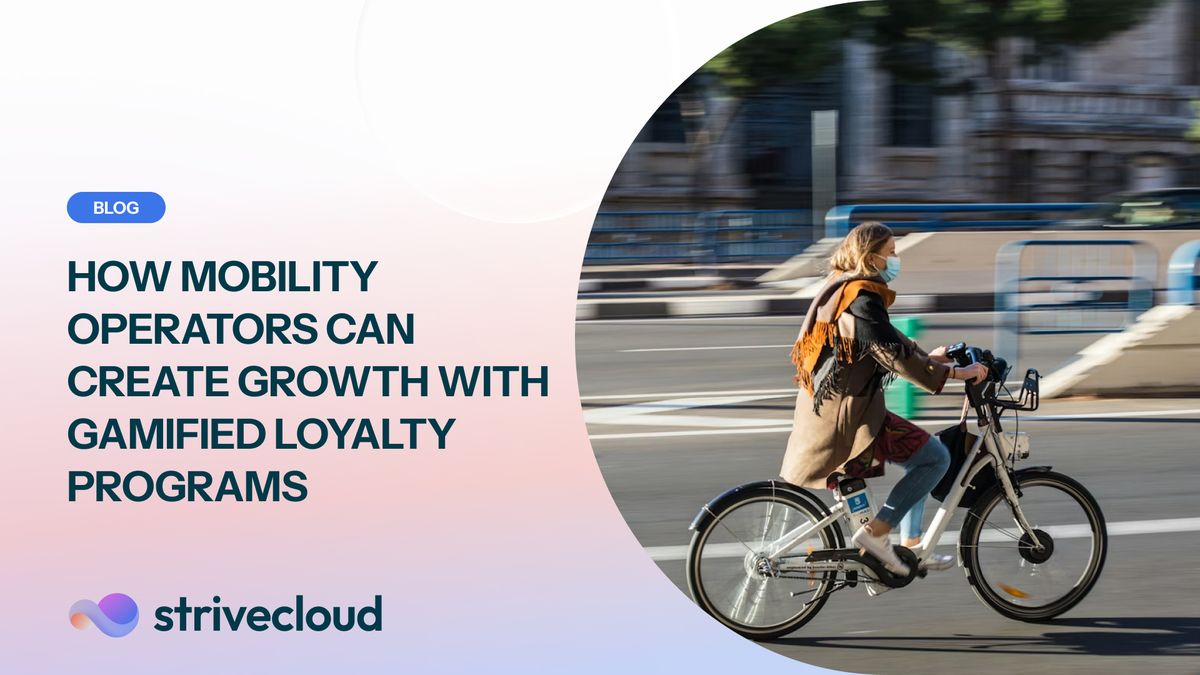
How Mobility Operators Can Create Growth With Gamified Loyalty Programs
Yes, shared mobility is set to expand at a fast rate of nearly 17% in 2023. But big names still dominate the market! So how do mid-sized shared mobility operators break through with such tough competition? We'll let you in on a proven trade secret: gamified loyalty programs. Here's how it could benefit your mobility app!