The Habit Loop, Not the Discount: How Fintech Apps Build Daily Engagement Without Cashback


Most people open their banking app to check a number and close it again. That's the whole relationship: balance, close, done. No reason to come back until the next payday or the next worry.
Fintech's answer to that problem has mostly been the same move: add a reward. Cashback for spending. Badges for saving. A prize draw for logging in. It looks like gamification. It behaves like a coupon.
The apps that actually get opened every day, not just at payday, aren't running on rewards. They're running on ownership: a goal the user set themselves, a streak they don't want to break, a status that moves because of what they actually did. That's a different mechanic, and it holds up better than a discount ever will.
The reward trap
Reward-based gamification has an honest appeal. It's fast to ship, easy to explain in a board deck, and it borrows a format everyone already understands from loyalty cards and cashback credit cards.
It also runs into three walls that get harder to ignore over time:
- Margin. Every cashback point or bonus is a real cost against a real transaction. It scales against your P&L, not just your engineering backlog.
- Fatigue. The first badge feels like recognition. The fiftieth feels like wallpaper. Reward-based mechanics need to keep escalating to hold attention, and escalation has a ceiling.
- Compliance. Financial services can't run the same flashy promo mechanics a gaming or retail app can. Prize draws, bonus multipliers, and cash-value incentives all draw more regulatory scrutiny the bigger they get.
None of that makes reward mechanics useless. It makes them expensive to sustain as the primary engine for daily engagement, which is exactly the role most fintech roadmaps hand them.
The alternative: ownership and visible progress
The apps that hold onto daily engagement without leaning on rewards tend to share two traits:
- The user sets the target, not the app. A generic save more prompt doesn't feel personal. "You're 3 days from your 30-day streak" does, because the user chose that number.
- Progress is visible in real time. Not a monthly statement. Not a quarterly summary. A number, a bar, or a streak that moves the moment the user does something.
Put together, that's a habit loop: the user acts, sees the result immediately, and feels like the progress is theirs. No coupon required.
What this looks like in practice
Current, the US neobank, built a points and streak system into everyday banking actions back in 2020. Current reports it has scaled to more than 4 million users since, with 60% of active users logging in more than three times a week, well above the 1-2 monthly check-ins typical of a traditional checking app. That's Current's own reported figure, not an independently audited one, but the direction is consistent with what a real habit loop should do to open rates.
SmartyPig skips the reward layer almost entirely. It's a savings tool built around a single visual: a progress bar that fills as the user adds money toward a goal they picked. There's no cashback sitting on top of it. The progress bar is the mechanic.
CRED replaces the static credit score with something that moves. Instead of a number that updates once a quarter from an external bureau, CRED shows a financial-health score that shifts with the user's own behavior, savings habits, spending discipline, and, again, points to something the user is building rather than something the app is handing out.
None of these three needed a bigger discount to earn a daily open. They needed a reason to check back in that had nothing to do with money changing hands.
Why this isn't just a fintech idea
This is the same mechanic behind StriveCloud's Zumba case: letting members set their own goal instead of assigning one drove a double-digit increase in app usage. Health, fitness, fintech, the vertical changes, the mechanic doesn't. People invest in progress toward something they defined. Ownership of the goal is what turns a metric into motivation, regardless of what the app actually does.
It's also the same comparison our most-read post draws out in Duolingo: the daily-open habit doesn't come from a prize, it comes from a streak the user built and doesn't want to lose.
If you want the reward-mechanics side of this story, we've broken that down separately with five fintech examples built around cashback, badges, and prize draws. Worth reading as the other half of the picture, not a contradiction of this one. Different lever, different job.

What this means if you're building the roadmap
A few practical shifts follow from treating ownership as the primary lever instead of rewards:
- Let users set the target. A savings goal, a spending limit, a habit they're trying to build. The app's job is to track it and reflect it back, not assign it.
- Make progress visible the moment it changes, not at the end of the month. Real-time feedback is what makes the loop feel alive.
- Save the reward budget for acquisition and reactivation, not retention. Rewards are good at getting someone to try a feature once. They're an expensive way to get someone to come back every day.
- Expect compliance to prefer this anyway. A streak or a progress bar carries none of the regulatory weight a cash-value incentive does.
Where StriveCloud fits
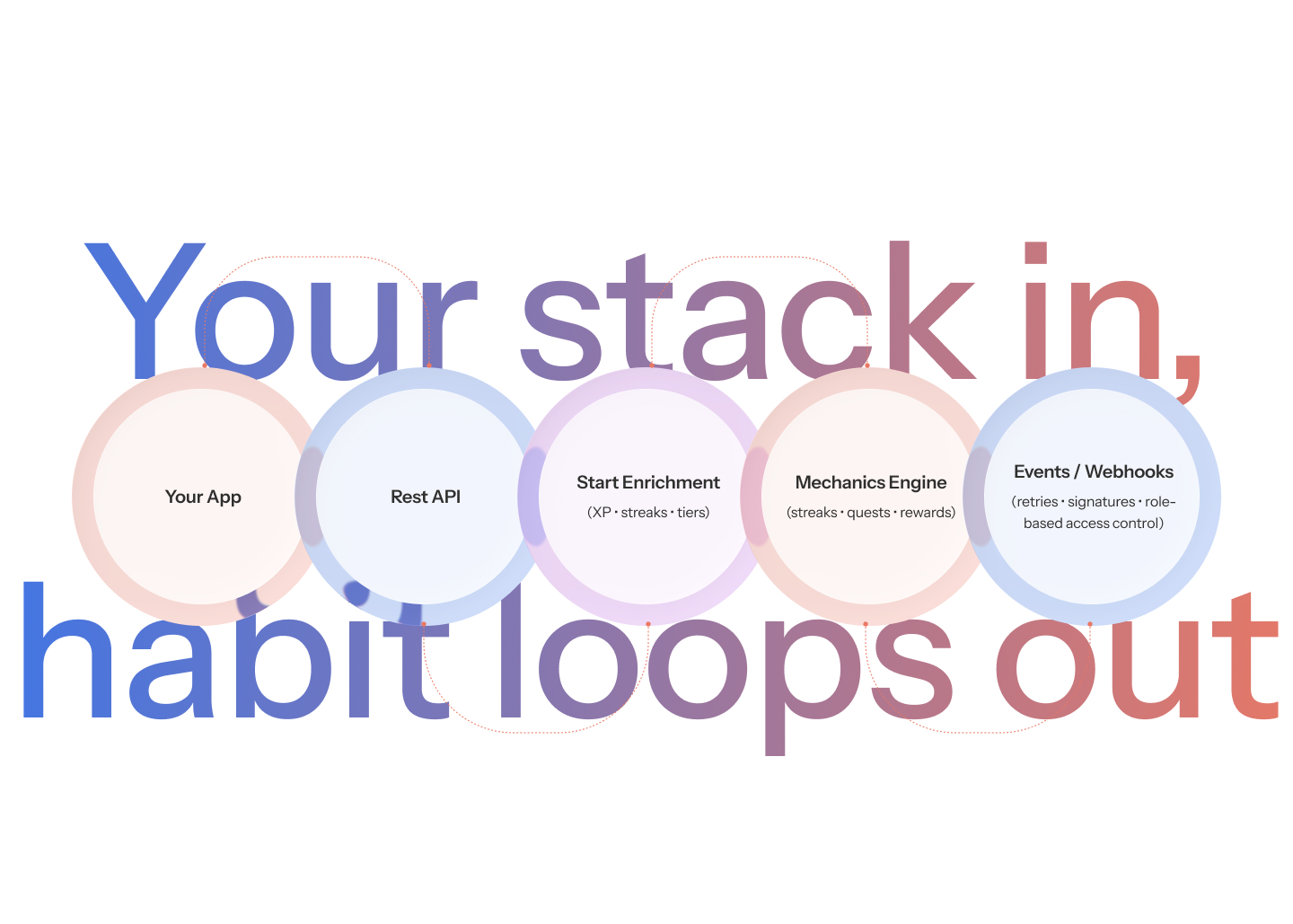
This is the layer StriveCloud builds underneath both mechanics: segmentation and triggers tied to what a user actually does in the app, not a calendar or a spend threshold. Whether the goal is a savings streak, a budget habit, or a feature a user tried once and dropped, the intervention responds to the behavior, not the discount code.
Bottom line: cashback earns a click. Ownership earns a habit. If daily engagement is the metric that matters, the second one is the lever worth building around.
.avif)
Related Posts
Best Ways to Build Brand Loyalty as a Mobility App
2023 is shaping up to be another challenging year for shared mobility operators. As a result of economic headwinds, brand loyalty has never been more important! When times are tough, people look to brands they know and trust. One way to build this trust is with a gamified loyalty program. Discover the top 5 ways to drive growth in 2023.