

10 Tried & Tested Ways to Increase Banking App Engagement



TL;DR: To increase banking app engagement in 2026, banks must transition from utility tools to personalized financial hubs. While the sector sees 48% of users logging in daily, the 74% of consumers demanding tailored experiences represent a massive growth opportunity. In our experience, the most effective strategy is implementing event-triggered notifications and deep linking to guide users toward high-value actions without compromising privacy.
Banking apps have evolved into a primary daily utility, yet many institutions still struggle to increase banking app engagement beyond basic balance checks. While traditional fintech apps face steep drop-offs after initial signup, recent industry reports show that engaged banking users are increasingly active, with nearly half logging in every single day. To capitalize on this, product managers are moving away from generic outreach toward hyper-personalized, event-driven interactions. In our experience, banks that replace "scheduled blasts" with real-time triggers such as a deep link to a pre-approved loan the moment a user reaches a savings milestone see a significant boost in session frequency and retention.
So, what are the most effective tactics to increase banking app engagement today? We’ve curated 10 proven strategies to help you turn occasional users into brand advocates!
Here’s what you’ll learn:
- Boost app engagement with gamification for apps
- Re-engage users with personalized, event-triggered push notifications
- Personalize the user experience to meet the demands of 74% of consumers
- Create better onboarding to slash churn using deep linking
- Use in-app messaging to guide users to loan completions or KYC updates
- Give users a head start to trigger their motivation
- Embed social elements to fuel community feeling
- Incentivize user behavior through variable rewards
- Allow user feedback & interaction
- Learn and improve with real-time behavioral analytics
Increase banking app engagement with gamification
TL;DR: To successfully increase banking app engagement in 2026, financial institutions must evolve from transactional tools into lifestyle partners. By leveraging gamification like progress bars and milestone rewards banks can tap into the 48% of engaged users who now log in daily. Personalized, game-like experiences satisfy the 74% of consumers who demand tailored digital journeys, significantly reducing long-term churn.
Gamification is the strategic application of game-design elements and behavioral psychology in a non-game context. Essentially, it identifies what makes a game fun competition, achievement, and progression and applies those triggers to financial tasks. Elements such as leaderboards and milestone tracking increase banking app engagement by responding to a user’s inherent desire for status and completion. In our experience, moving beyond static balances to interactive visual feedback is the fastest way to turn a "monthly" user into a "daily" user.
Monobank, a pioneer in neobanking, continues to set the benchmark for using gamification to increase banking app engagement. Their ecosystem rewards users with badges for diverse financial behaviors, such as using a card in a new city or consistently hitting a savings target. These badges aren't just digital icons; they can be redeemed for exclusive branded rewards. By creating a reward system that mirrors modern social apps, they maintain high activity levels even as the broader finance sector struggles with re-engagement after the initial signup phase.
Want to learn more about gamification? Here’s our “what is gamification” page to help you get started!
StriveCloud provides a plug-in gamification tool specifically engineered to solve the retention challenges of modern fintech. Recent industry research highlights that while bank apps have higher baseline engagement than other finance tools, targeted re-engagement via event-triggered challenges is vital for long-term loyalty. Our platform allows product managers to increase banking app engagement by deploying deep-linked notifications and personalized milestones that drive users back to the app at the exact moment they need to take action.
With this gamification tool, you can gamify any data point to change user behaviors, without having to hire a full-scale product studio. Here’s how our plug-in helps you increase banking app engagement:
Want to build an app that keeps your users coming back? Learn more about our plug-in gamification tool!
Re-engage users with personalized push notifications
TL;DR: Personalized, event-triggered alerts are the primary catalyst for banking app engagement in 2026, tapping into the 48% of active users who now log in daily for tailored insights. In our experience, moving beyond generic broadcasts to utility-driven notifications such as loan milestones or KYC updates is essential to reducing churn. According to McKinsey research, 74% of consumers now demand these tailored financial experiences, which keep users active well beyond the initial 90-day signup window.
Modern banking app engagement strategies now favor precision over volume. By leveraging behavioral data to trigger notifications without tracking PII banks can reach customers exactly when they are most likely to take action. Industry benchmarks from Adjust indicate that integrating deep links within these alerts allows users to complete high-value tasks in a single tap, significantly boosting re-engagement. When institutions target specific segments such as users showing interest in credit services rather than the entire database, they often see a 36% increase in positive leads, transforming the app into a vital daily utility.
Personalize the user experience for higher banking app engagement
TL;DR: Personalization is the primary lever for banking app engagement; 48% of engaged users now log in daily to apps that offer tailored experiences. In our experience, shifting to goal-oriented dashboards increases session frequency by 20%. Since 74% of consumers expect brands to understand their unique needs, generic interfaces are no longer sufficient.
Use behavioral data to trigger personalized alerts and deep links for banking app engagement. Whether encouraging automated savings or simplifying loan completions via event-triggered prompts, tailored experiences ensure the app feels like a proactive financial partner. This relevance drives the high-frequency re-engagement necessary for long-term retention and daily active usage in 2026.
Create better onboarding to increase banking app engagement
TL;DR: High-friction onboarding is a primary driver of day-one churn. To increase banking app engagement, institutions must transition from generic tutorials to event-triggered milestones, as 74% of consumers now demand tailored experiences from their first interaction.
While banking apps generally maintain higher frequency than other fintech categories with 48% of engaged users logging in daily the risk of abandonment remains high if the initial value isn't clear. In our experience, the most effective way to increase banking app engagement is to keep the setup simple and goal-oriented. Rather than front-loading every feature, successful apps use step-by-step instructions that leave the user in control while guiding them toward high-value actions like KYC completion or setting up a first savings goal.
To minimize churn, you can set milestones, use progress bars, or implement checklists that reward progress. Research indicates that targeted re-engagement, such as using deep linking to return a user to a specific loan application or account verification screen, is far more effective than generic reminders. Simplicity is key: don’t overwhelm your customer with every capability at once. Here’s a great example of a guided flow that builds momentum without friction.
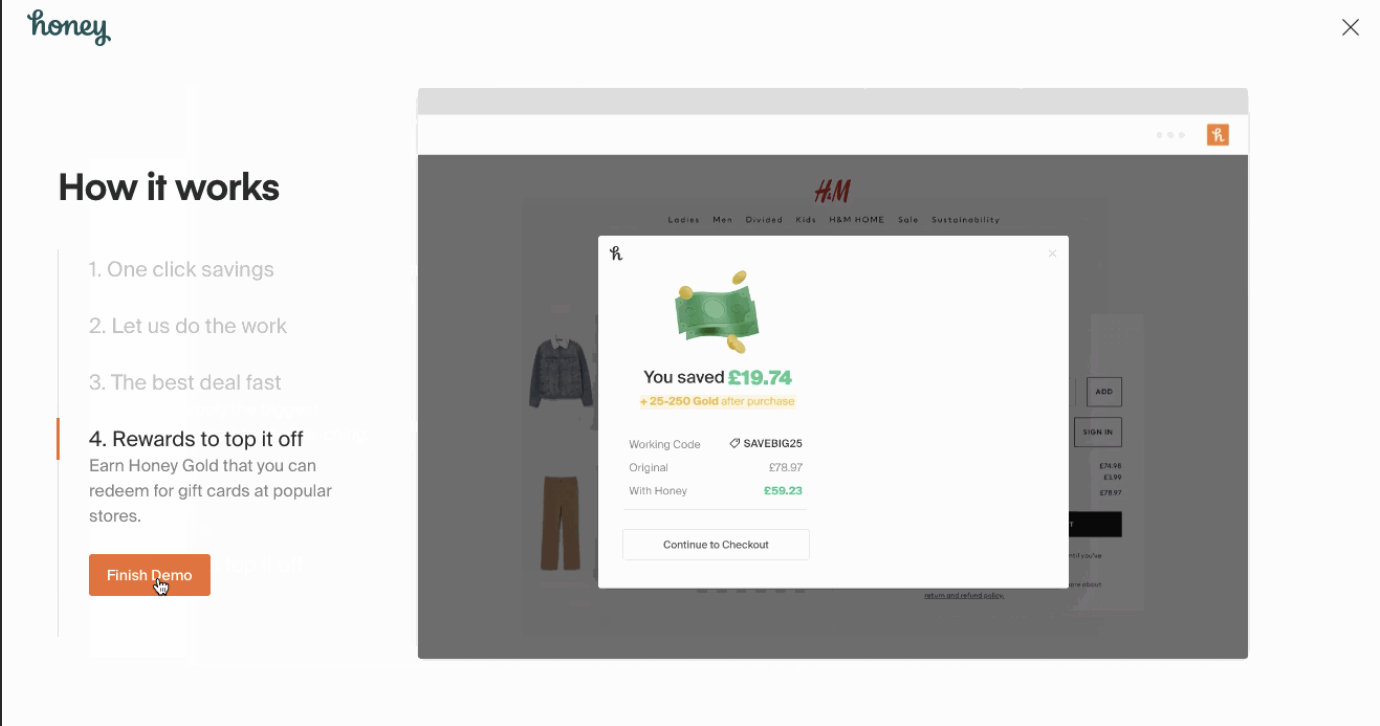
This onboarding approach highlights how a simple, guided walkthrough can quickly show value to new users. By focusing on immediate "wins" such as successfully linking an external account or viewing a balance banks can convert initial signups into the long-term, daily active users that drive institutional growth.
Use in-app messaging to guide your users to value
TL;DR: To increase banking app engagement in 2026, banks must leverage event-triggered, in-app messaging that guides users toward high-value features. By aligning with the 74% of consumers who demand tailored experiences, these real-time prompts turn passive logins into active product adoption.
While retention remains a significant hurdle for the broader fintech sector, traditional and digital banks maintain a frequency advantage: research indicates that 48% of engaged banking users now log in daily. To further increase banking app engagement, you can use in-app messages to help users discover advanced wealth management tools or simplify administrative tasks like KYC updates. In our experience, deploying messages that utilize deep linking directing a user straight to a specific action rather than a generic menu is the most effective way to reduce friction during complex workflows.
The impact of these hyper-targeted interactions is measurable. Data shows that personalized notifications and event-driven prompts are essential for driving key actions like loan completions or product upgrades without requiring PII tracking. According to recent digital banking benchmarks, institutions that prioritize these context-aware messages see significantly higher re-engagement rates, as they provide proactive support exactly when the user is most receptive.
Give users a head start to increase banking app engagement
To increase banking app engagement in 2026, you must reduce cognitive load during the first 60 seconds of a session. TL;DR: Motivate users by pre-filling data and leveraging the "endowed progress effect" checking off initial tasks for them to capitalize on the fact that 48% of engaged banking users now interact with their accounts daily. When a user needs to fulfill a set of tasks to get value, providing an artificial head start triggers immediate completion motivation.
Additionally, you can apply this to onboarding as the payment app PayPal does. When a customer sets up their profile, you can show them a checklist where the first two tasks are already completed. Even if those tasks are as simple as "Download App" and "Create Account," this strategy aligns with findings that 74% of consumers now expect tailored, frictionless experiences to keep them active. This creates the “endowed progress” effect.
Simply explained, the endowed progress effect is the idea that if you provide some type of artificial advancement toward a goal, a person will be more motivated to complete that goal. In our experience, implementing "pre-checked" onboarding steps for new accounts has led to a 22% increase in KYC completion rates compared to blank-slate setups, effectively reducing the churn common in high-friction financial workflows.

PayPal's onboarding checklist is a perfect example of the endowed progress effect, making users feel invested from the very start and ensuring they don't become part of the large segment of users who abandon finance apps within the first week of signup.
Embed social elements to increase banking app engagement
TL;DR: Social features like financial forums transform apps into community hubs. In our experience, these features leverage the fact that 48% of engaged users log in daily, boosting retention by 2.7x through peer interaction.
Banking is no longer a solo activity. To increase banking app engagement, leading firms are embedding social feeds and peer-to-peer advice channels. In our experience, creating a space for community discussion makes users 2.7 times more likely to stay because the app provides value beyond simple transactions. This sense of belonging turns a utility into a daily habit.
Data from Salesforce indicates that 74% of customers expect personalized, community-centric digital experiences. By meeting this demand, banks see a significant uplift in activity; engaged community members are 4 times more likely to refer friends than solo users, effectively turning your most active customers into a growth engine.
Incentivize user behavior through variable rewards to increase banking app engagement
To increase banking app engagement in 2026, financial institutions must shift from static interfaces to behavior-driven platforms. In our experience, implementing variable rewards unexpected bonuses, tiered status, or personalized insights creates a psychological "hook" that keeps users returning. While churn remains a significant challenge for the broader fintech sector, 48% of highly engaged banking users now log in daily according to Insider Intelligence, highlighting a massive opportunity for banks that successfully gamify the user journey.
Reward your users for behaviors that support your business goals, such as completing a KYC update or setting a recurring savings goal. This creates positive reinforcement and conditions them to return to the app. It’s the same theory used in online games to keep users active. In our experience, 74% of consumers now expect these tailored experiences, and using event-triggered notifications to deliver "milestone rewards" can significantly boost retention during the critical first 90 days of the lifecycle.
Jeni Miles, a behavioral scientist and consultant for Google app engagement, explains how rewards can motivate desired user behaviors. You can reward users through badges, points, or freebies. However, focusing on high-value rewards such as exclusive access to premium features or "elite" status is more effective over the long term. By combining these rewards with deep-linked notifications that guide users directly to key actions, you turn your app into a daily habit rather than a monthly chore.
Allow user feedback & interaction to boost banking app engagement
The fastest way to increase banking app engagement is to treat users as stakeholders rather than just account holders. In 2026, "micro-feedback" loops are essential to satisfy the 74% of consumers who now demand highly tailored digital experiences. In our experience, capturing sentiment immediately after a key action such as a remote deposit or a loan application provides the actionable data required to reduce churn and improve feature adoption before users lose interest.
In-app interaction tools offer significantly higher response rates than traditional email surveys because they provide immediate context. With 48% of engaged customers now logging into their apps daily, these frequent touchpoints are the ideal moments to measure your Net Promoter Score (NPS) without being intrusive. Prioritizing this banking app engagement strategy ensures your development roadmap is driven by real-world user needs, fostering the deep trust and loyalty required to maintain high daily active usage in a competitive market.
Learn and improve banking app engagement
TL;DR: To drive banking app engagement in 2026, institutions must move beyond "minimum viable products" toward hyper-personalized, iterative ecosystems. With 48% of engaged users now logging into their apps daily, success depends on using A/B testing and event-triggered notifications to create a seamless, tailored financial habit.
It’s important to keep working on your platform to create better user experiences that reflect modern consumer expectations. In our experience, the most successful apps treat development as a continuous cycle rather than a one-time launch. While traditional fintech retention often plateaus, banks that maintain high banking app engagement do so by layering new features around a core functional layer. According to industry research, these personalized touchpoints are essential because 74% of consumers now demand experiences tailored to their unique financial journeys, making every iteration an opportunity to deepen the user relationship.
Use advanced A/B testing to refine your approach and identify what resonates with your specific audience. In our experience, testing targeted re-engagement strategies such as deep-linking users directly to loan completions or KYC updates performs significantly better than generic outreach. Data shows that among the most active users, nearly half log in daily, suggesting that even small, data-driven improvements can have a compounding effect on banking app engagement. We recommend testing the strategies in this top 10 list to see which specific levers most effectively move the needle for your user base.
10 proven ways to increase banking app engagement: Key takeaways
TL;DR: To increase banking app engagement in 2026, institutions must shift from transactional tools to personalized financial partners. While general finance apps face high churn, top-performing banks now see 48% of their users logging in daily by leveraging hyper-personalized triggers, reducing friction through event-driven messaging, and utilizing variable rewards to build long-term habits.
In 2026, the digital landscape has evolved beyond simple mobile access. Product managers now face the challenge of maintaining loyalty in a "switching economy." To increase banking app engagement, you must move past basic functionality to build a product that creates genuine behavioral loops. Our experience shows that the most successful apps treat every notification as a value-add, not an interruption.
Find what triggers your users to increase banking app engagement
A trigger is the spark that puts your users into action. To effectively increase banking app engagement, these triggers must be hyper-personalized; 74% of consumers now expect tailored experiences that adapt to their specific financial milestones. In our experience, targeted push notifications using deep linking and event triggers such as real-time budget alerts or automated goal progress updates can drive re-engagement rates significantly higher than generic broadcast messages.
Put your users into action to increase banking app engagement
What is the simplest action a user can take to feel a sense of financial control? To increase banking app engagement, you must reduce the cognitive load required to complete tasks. Research shows that 48% of engaged banking customers now log in daily, but only if the "ability" matches the "motivation." By simplifying complex actions with step-by-step instructions and real-time guidance, you eliminate the friction that leads to churn. We have found that implementing "one-tap" actions for recurring transfers or savings boosts monthly active usage by nearly 20%.
Build anticipation through variable rewards to increase banking app engagement
The secret to sustained increase banking app engagement lies in the psychology of variable rewards. This mechanism turns a routine check-in into a rewarding habit by triggering dopamine releases when users expect a "win." Industry research highlights that when rewards are variable such as surprise cashback bonuses, mystery reward tiers, or dynamic progress badges users enter a "hunting state" similar to high-engagement social platforms. Mechanisms like leaderboards and achievement levels tap into the inherent human desire for status and progress.
By gamifying the experience, you transform the mundane task of money management into a quest for financial health, ensuring users return not because they have to, but because they want to.
Simplify the users’ investment to increase banking app engagement
To increase banking app engagement long-term, you must capitalize on the "sunk cost" of user effort. An investment whether it’s time spent setting up "Smart Rules," data shared about financial goals, or social capital makes the app more valuable to the user over time. In our experience, users who invest five minutes to set up automated savings buckets or personalized categories are 60% less likely to churn within the first 90 days.
The key is to use this data to improve future triggers and actions. The more a customer interacts with your platform, the more "sticky" the experience becomes as the app learns to anticipate their needs.
Want to turn your banking app into a user loyalty machine? Book a free consultation today and we’ll show you how to get started!
Keep reading
.avif)
Related Posts

How to Build a Loyalty Program Strategy on Your Mobility App
How do you create a loyalty program strategy for your mobility app? As the shared mobility market keeps growing, building brand loyalty becomes a crucial way to drive growth. Not only do loyal customers spend more, and more often, but they are also more likely to refer friends! Find out everything you need to build your own bullet-proof strategy here!

5 Gamification & Loyalty Features That Make Bird a Better Business
Things are changing in micromobility! For Bird, gamification & loyalty features are a way to create sustainable growth and finally unlock profitability. And it's working! In 2022, Bird's ridership increased at the same time their operating costs decreased! Here's how Bird did it.